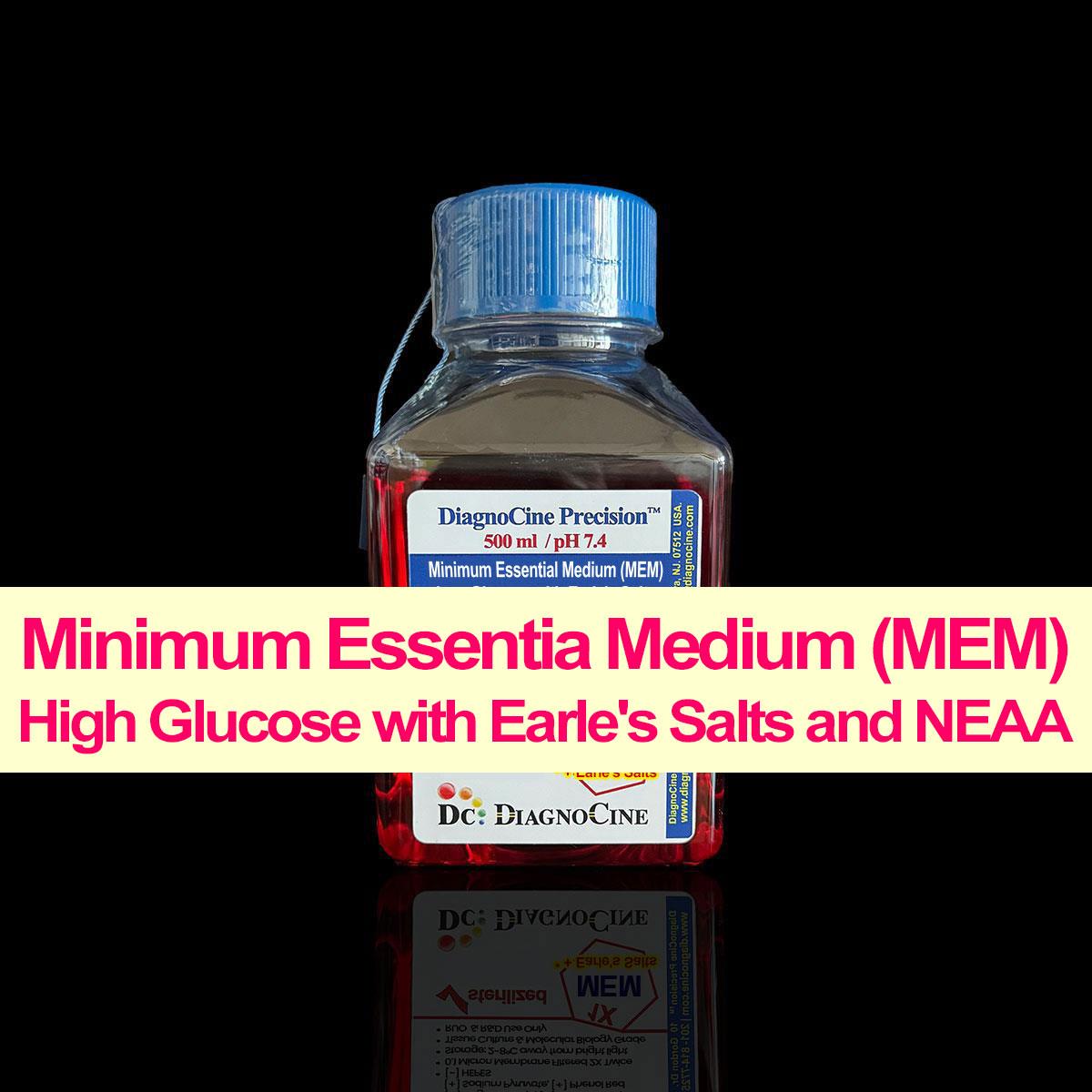
FluxMPS™ Minimum Essential Medium (MEM), High Glucose with Earle's Salts and NEAA
Select See the table below
- See the table below
FluxMPS™ Minimum Essential Medium (MEM), High Glucose with Earle's Salts and NEAA
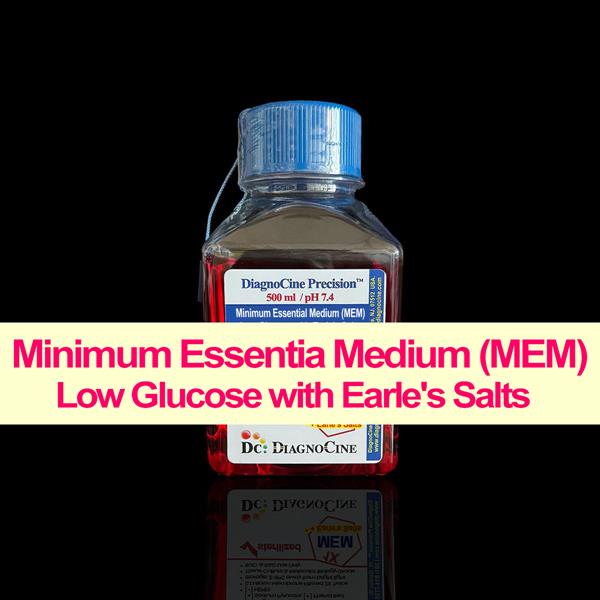
FluxMPS™ MEM, High Glucose with Earle's Salts and NEAA is a 1X liquid, ready-to-use formulation of Harry Eagle's 1959 Minimum Essential Medium, supplied at 4.5 g/L glucose with Earle's balanced salt solution and the 100X non-essential amino acid (NEAA) supplement pre-incorporated. The 32-configuration family lets researchers select exactly which distinguishing supplements — L-Glutamine, Sodium Pyruvate, Sodium Bicarbonate, HEPES, and Phenol Red — are present in the finished medium, then filter every microfluidic-grade batch through the quadruple-stage FluxMPS™ system before it reaches an OoC, ToC, or LoC platform.
- 32 variants spanning a standard bicarbonate-buffered MEM line (16 configurations) and a HEPES-supplemented MEM line (16 configurations), each independently toggling L-Glutamine, Sodium Pyruvate, Sodium Bicarbonate, and Phenol Red
- Formulated on Earle's balanced salt solution with the 100X NEAA supplement (glycine, L-alanine, L-asparagine, L-aspartic acid, L-glutamic acid, L-proline, L-serine) incorporated as standard
- 4.5 g/L (High Glucose) standard glucose concentration — above the 1.0 g/L glucose level of standard Eagle 1959 MEM — for extended culture periods and rapidly dividing or metabolically demanding cell types
- Optional 25 mM HEPES supplementation across a parallel 16-configuration line for applications needing supplemental buffering outside a CO2 incubator
- Purified through FluxMPS™ quadruple-stage 0.1 micron / 0.04 micron filtration, engineered for organ-on-chip (OoC), tissue-on-chip (ToC), and lab-on-chip (LoC) microfluidic platforms
- Validated across HeLa, HEP-2, HT-1080, BHK-21, MCF-7, primary rat astrocytes, primary cortical/hippocampal neurons, COS-1/COS-7, and the WI-38, MRC-5, and IMR-90 human diploid fibroblast strains used in viral vaccine manufacture
- Available in 500 mL and 1000 mL sizes; store at 2-8°C protected from light; every standard concentration, buffer, and additive is customizable on request
- Concentration1X
- Glucose4.5 g/L (High Glucose)
- Salt baseEarle's Balanced Salts
- NEAAIncluded (standard)
- Configurable supplementsGlutamine / Pyruvate / Bicarbonate / HEPES / Phenol Red
- BufferingSodium bicarbonate/CO2, optional 25 mM HEPES
- FiltrationFluxMPS™ quadruple-stage, 0.04 micron final
- Sizes500 mL, 1000 mL
- Storage2-8°C, protected from light
At-a-Glance Supplement Matrix
Check the supplement(s) your protocol requires, press Search, and every matching configuration lights up below. Click the catalog number or the View button to go straight to that product page.
| Name | Cat No. | L-Glutamine | Sodium Pyruvate | Sodium Bicarbonate | HEPES | Phenol Red | Product Page |
|---|---|---|---|---|---|---|---|
| MEM, High Glucose with Earle's Salts and NEAA | DCP-MEMG1X | check | check | check | remove | check | Viewarrow_forward |
| MEM, High Glucose, NEAA, w/o L-Glutamine | DCP-MEMG-Q1X | remove | check | check | remove | check | Viewarrow_forward |
| MEM, High Glucose, NEAA, w/o Sodium Pyruvate | DCP-MEMG-P1X | check | remove | check | remove | check | Viewarrow_forward |
| MEM, High Glucose, NEAA, w/o Sodium Bicarbonate | DCP-MEMG-B1X | check | check | remove | remove | check | Viewarrow_forward |
| MEM, High Glucose, NEAA, w/o Phenol Red | DCP-MEMG-R1X | check | check | check | remove | remove | Viewarrow_forward |
| MEM, High Glucose, NEAA, w/o L-Glutamine, Sodium Pyruvate | DCP-MEMG-QP1X | remove | remove | check | remove | check | Viewarrow_forward |
| MEM, High Glucose, NEAA, w/o L-Glutamine, Sodium Bicarbonate | DCP-MEMG-QB1X | remove | check | remove | remove | check | Viewarrow_forward |
| MEM, High Glucose, NEAA, w/o L-Glutamine, Phenol Red | DCP-MEMG-QR1X | remove | check | check | remove | remove | Viewarrow_forward |
| MEM, High Glucose, NEAA, w/o Sodium Pyruvate, Sodium Bicarbonate | DCP-MEMG-PB1X | check | remove | remove | remove | check | Viewarrow_forward |
| MEM, High Glucose, NEAA, w/o Sodium Pyruvate, Phenol Red | DCP-MEMG-PR1X | check | remove | check | remove | remove | Viewarrow_forward |
| MEM, High Glucose, NEAA, w/o Sodium Bicarbonate, Phenol Red | DCP-MEMG-BR1X | check | check | remove | remove | remove | Viewarrow_forward |
| MEM, High Glucose, NEAA, w/o L-Glutamine, Sodium Pyruvate, Sodium Bicarbonate | DCP-MEMG-QPB1X | remove | remove | remove | remove | check | Viewarrow_forward |
| MEM, High Glucose, NEAA, w/o L-Glutamine, Sodium Pyruvate, Phenol Red | DCP-MEMG-QPR1X | remove | remove | check | remove | remove | Viewarrow_forward |
| MEM, High Glucose, NEAA, w/o L-Glutamine, Sodium Bicarbonate, Phenol Red | DCP-MEMG-QBR1X | remove | check | remove | remove | remove | Viewarrow_forward |
| MEM, High Glucose, NEAA, w/o Sodium Pyruvate, Sodium Bicarbonate, Phenol Red | DCP-MEMG-PBR1X | check | remove | remove | remove | remove | Viewarrow_forward |
| MEM, High Glucose, NEAA, w/o L-Glutamine, Sodium Pyruvate, Sodium Bicarbonate, Phenol Red | DCP-MEMG-QPBR1X | remove | remove | remove | remove | remove | Viewarrow_forward |
| MEM, High Glucose, NEAA + HEPES | DCP-MEMGH1X | check | check | check | check | check | Viewarrow_forward |
| MEM, High Glucose, NEAA + HEPES, w/o L-Glutamine | DCP-MEMGH-Q1X | remove | check | check | check | check | Viewarrow_forward |
| MEM, High Glucose, NEAA + HEPES, w/o Sodium Pyruvate | DCP-MEMGH-P1X | check | remove | check | check | check | Viewarrow_forward |
| MEM, High Glucose, NEAA + HEPES, w/o Sodium Bicarbonate | DCP-MEMGH-B1X | check | check | remove | check | check | Viewarrow_forward |
| MEM, High Glucose, NEAA + HEPES, w/o Phenol Red | DCP-MEMGH-R1X | check | check | check | check | remove | Viewarrow_forward |
| MEM, High Glucose, NEAA + HEPES, w/o L-Glutamine, Sodium Pyruvate | DCP-MEMGH-QP1X | remove | remove | check | check | check | Viewarrow_forward |
| MEM, High Glucose, NEAA + HEPES, w/o L-Glutamine, Sodium Bicarbonate | DCP-MEMGH-QB1X | remove | check | remove | check | check | Viewarrow_forward |
| MEM, High Glucose, NEAA + HEPES, w/o L-Glutamine, Phenol Red | DCP-MEMGH-QR1X | remove | check | check | check | remove | Viewarrow_forward |
| MEM, High Glucose, NEAA + HEPES, w/o Sodium Pyruvate, Sodium Bicarbonate | DCP-MEMGH-PB1X | check | remove | remove | check | check | Viewarrow_forward |
| MEM, High Glucose, NEAA + HEPES, w/o Sodium Pyruvate, Phenol Red | DCP-MEMGH-PR1X | check | remove | check | check | remove | Viewarrow_forward |
| MEM, High Glucose, NEAA + HEPES, w/o Sodium Bicarbonate, Phenol Red | DCP-MEMGH-BR1X | check | check | remove | check | remove | Viewarrow_forward |
| MEM, High Glucose, NEAA + HEPES, w/o L-Glutamine, Sodium Pyruvate, Sodium Bicarbonate | DCP-MEMGH-QPB1X | remove | remove | remove | check | check | Viewarrow_forward |
| MEM, High Glucose, NEAA + HEPES, w/o L-Glutamine, Sodium Pyruvate, Phenol Red | DCP-MEMGH-QPR1X | remove | remove | check | check | remove | Viewarrow_forward |
| MEM, High Glucose, NEAA + HEPES, w/o L-Glutamine, Sodium Bicarbonate, Phenol Red | DCP-MEMGH-QBR1X | remove | check | remove | check | remove | Viewarrow_forward |
| MEM, High Glucose, NEAA + HEPES, w/o Sodium Pyruvate, Sodium Bicarbonate, Phenol Red | DCP-MEMGH-PBR1X | check | remove | remove | check | remove | Viewarrow_forward |
| MEM, High Glucose, NEAA + HEPES, w/o L-Glutamine, Sodium Pyruvate, Sodium Bicarbonate, Phenol Red | DCP-MEMGH-QPBR1X | remove | remove | remove | check | remove | Viewarrow_forward |
Minimum Essential Medium (MEM) / Eagle's MEM (EMEM)
Minimum Essential Medium (MEM), also designated Eagle's MEM (EMEM), is a basal synthetic cell culture medium developed by Harry Eagle at the National Institutes of Health and first published in 1959. It is a direct refinement of Eagle's earlier Basal Medium Eagle (BME, 1955), differing principally in higher concentrations of the same 13 amino acids — raised to levels that more closely approximate the protein composition of cultured human cells — and in the substitution of pyridoxal hydrochloride for pyridoxine and the removal of biotin from the vitamin complement. Together, BME and MEM define the minimal nutritional framework from which all subsequent Eagle-lineage media (DMEM, IMDM, Alpha-MEM) were derived. MEM remains one of the most widely used basal media in mammalian cell culture, supporting a broad spectrum of adherent normal and transformed cell lines and serving as the standard maintenance medium for human diploid fibroblast strains used in vaccine production.
Origins and Development
Harry Eagle's Research Program (1951-1959)
MEM's conceptual foundation was established across a series of publications beginning in 1951, in which Harry Eagle systematically defined which amino acids, vitamins, and ionic species were individually necessary and collectively sufficient for the survival and growth of cultured mammalian cells. Working first with mouse fibroblasts (L cells) and then with human HeLa cells at the National Microbiological Institute, NIH, Bethesda, Eagle used omission experiments — depriving cultures of individual components and measuring viability — to identify the essential set. His 1955 paper, "Nutrition Needs of Mammalian Cells in Tissue Culture" (Science 122(3168): 501-514; PMID 13255879; DOI 10.1126/science.122.3168.501), identified 13 amino acids (including glutamine), 6 vitamins, 6 ionic species, and glucose as both necessary and sufficient for cell propagation, and combined them into BME. BME proved adequate for HeLa and L cells under optimal conditions but was nutritionally limiting for normal mammalian fibroblasts and for certain HeLa subtypes that required higher amino acid concentrations to maintain growth. Eagle's follow-up studies showed that for many cell types the BME amino acid concentrations sat below growth-saturating levels, cells grew more slowly or required more frequent refeeding than was experimentally convenient, and that raising those concentrations improved both the rate and the duration of growth before medium exhaustion.
The 1959 MEM Paper
Eagle published the result in "Amino Acid Metabolism in Mammalian Cell Cultures," Science 130(3373): 432-437, August 21, 1959 (PMID 13675766; DOI 10.1126/science.130.3373.432). He later described it (1977 retrospective) as "a progress report rather than a review, in large part summarizing studies from a single laboratory," and noted explicitly that "BME and MEM did not result from a planned attempt to develop a culture medium; the original objective was rather to define those components which were essential for the survival and growth of animal cells." The paper confirmed that every cultured cell type examined, whether human or animal, required at least 13 amino acids for survival and growth. Glutamine was identified as more than a nitrogen source: Eagle proposed that it is oxidized to CO2, providing significant energy for cultured cells, an observation subsequently confirmed and expanded into the modern understanding of glutamine as a primary energy and biosynthetic substrate in rapidly proliferating cells. The 1959 paper was cited 2,255 times in 1961-1975 alone, and has been cited over 8,000 times in total (Semantic Scholar), reflecting its foundational role in defining the standard conditions for mammalian cell culture.
Relationship to BME
MEM is a modification of BME that "differs primarily in the increased concentration of some of the factors described as being growth-limiting." The relationship is one of degree rather than composition: the same 13 amino acids and (with the single exception of biotin) the same vitamin complement, but with amino acid concentrations adjusted upward — approximately doubled for most amino acids — to levels that conform more closely to the protein composition of cultured human cells, permitting cultures to be maintained for somewhat longer periods without refeeding. Biotin is absent from MEM's standard vitamin set, a deliberate removal by Eagle after experimental evidence showed it was unnecessary for the cell types studied. The result is a slightly leaner vitamin profile (8 vitamins in MEM vs. 9 in BME), combined with a more nutritionally generous amino acid profile.
The FluxMPS™ MEM, High Glucose with Earle's Salts and NEAA family presented on this page builds on this 1959 Eagle formulation: it uses Earle's balanced salts, raises glucose to 4.5 g/L (High Glucose) from the standard 1.0 g/L level, and pre-incorporates the 100X NEAA supplement so that L-cystine/glycine/L-alanine/L-asparagine/L-aspartic acid/L-glutamic acid/L-proline/L-serine biosynthetic burden is reduced without a separate addition step. A parallel 25 mM HEPES-supplemented line is offered for protocols needing supplemental buffering outside a 5-10% CO2 incubator.
The MEM Family Tree
- BME (Basal Medium Eagle, 1955) — Eagle's original defined medium: 13 amino acids, 9 vitamins (including biotin), 6 ionic species, and glucose, identified by omission experiments in mouse L cells and human HeLa cells.
- MEM (Eagle's MEM / EMEM, 1959) — a direct modification of BME: the same 13 amino acids at roughly doubled concentrations for most amino acids, pyridoxal hydrochloride in place of pyridoxine, and biotin removed (8 vitamins vs. BME's 9). BME and MEM together define the minimal nutritional framework from which all subsequent Eagle-lineage media — DMEM, IMDM, and Alpha-MEM — were derived.
- MEM + NEAA — standard MEM supplemented with the 100X non-essential amino acid concentrate (glycine, L-alanine, L-asparagine, L-aspartic acid, L-glutamic acid, L-proline, L-serine) at 1% v/v; the configuration pre-incorporated as standard in the FluxMPS™ MEM, High Glucose family on this page.
- Alpha-MEM (Alpha Modification, 1971) — first described by Stanners, Eliceiri, and Green (Nature New Biology 230(11): 52-54) in a study of mouse-hamster hybrid cells; adds the full NEAA set, sodium pyruvate, lipoic acid, vitamin B12, D-biotin, ascorbic acid, and (in one variant) ribonucleosides and deoxyribonucleosides to standard MEM. The nucleoside-free variant is the standard selection medium for DHFR-negative CHO cell lines (DG44, DXB11) in recombinant protein production, and Alpha-MEM is also the standard medium for mesenchymal stem cell (MSC) culture and osteoblast/osteoclast differentiation.
- DMEM (Dulbecco & Freeman, 1959) — a sibling Eagle-lineage medium built on the same minimal-essential framework as BME/MEM, adding glycine and serine to the essential amino acid set and supporting higher glucose and higher-density adherent culture (e.g., HEK293).
- NEAA add-back system — the deliberate exclusion of non-essential amino acids from BME/MEM led directly to the 100X NEAA supplement now used universally across MEM, DMEM, RPMI, and F-12.
Standard MEM Formulation Reference (Earle's Salts, with L-Glutamine)
The tables below reproduce the canonical Eagle 1959 MEM formulation (no NEAA, no nucleosides, no sodium pyruvate) that serves as the base against which the FluxMPS™ High Glucose + NEAA configuration and every other variant on this page is defined. All values are as published in the source formulation record; no additional numeric values are implied for any specific catalog number beyond what is stated here and in the supplement matrix above.
| Ingredient (Earle's Salt Set) | mg/L |
|---|---|
| Calcium chloride, anhydrous (CaCl2) | 200.000 |
| Magnesium sulfate, anhydrous (MgSO4) | 97.670 |
| Potassium chloride (KCl) | 400.000 |
| Sodium bicarbonate (NaHCO3) | 2200.000 |
| Sodium chloride (NaCl) | 6800.000 |
| Sodium phosphate monobasic monohydrate (NaH2PO4.H2O) | 140.000 |
| Amino Acid | mg/L |
|---|---|
| L-Arginine hydrochloride | 126.000 |
| L-Cystine 2HCl | 31.000 |
| L-Glutamine | 292.000 |
| L-Histidine hydrochloride monohydrate | 42.000 |
| L-Isoleucine | 52.000 |
| L-Leucine | 52.000 |
| L-Lysine hydrochloride | 73.000 |
| L-Methionine | 15.000 |
| L-Phenylalanine | 32.000 |
| L-Threonine | 48.000 |
| L-Tryptophan | 10.000 |
| L-Tyrosine disodium salt dihydrate | 52.000 |
| L-Valine | 46.000 |
| Vitamin | mg/L |
|---|---|
| Choline chloride | 1.000 |
| D-Calcium pantothenate | 1.000 |
| Folic acid | 1.000 |
| myo-Inositol | 2.000 |
| Niacinamide (Nicotinamide) | 1.000 |
| Pyridoxal hydrochloride | 1.000 |
| Riboflavin | 0.100 |
| Thiamine hydrochloride | 1.000 |
| Other Components | Amount |
|---|---|
| Standard MEM base | |
| D-Glucose (Dextrose), standard MEM | 1000.000 mg/L |
| D-Glucose (Dextrose), High Glucose (this family) | 4500.000 mg/L |
| Sodium bicarbonate (NaHCO3) | 2200.000 mg/L |
| Phenol red sodium salt | 10.000 mg/L |
| 100X NEAA supplement (10 mM per amino acid; standard in this family) | |
| Glycine | 750 mg/L (100X) / 7.5 mg/L (1X) |
| L-Alanine | 890 mg/L (100X) / 8.9 mg/L (1X) |
| L-Asparagine.H2O | 1500 mg/L (100X) / 15.0 mg/L (1X) |
| L-Aspartic acid | 1330 mg/L (100X) / 13.3 mg/L (1X) |
| L-Glutamic acid | 1470 mg/L (100X) / 14.7 mg/L (1X) |
| L-Proline | 1150 mg/L (100X) / 11.5 mg/L (1X) |
| L-Serine | 1050 mg/L (100X) / 10.5 mg/L (1X) |
Standard MEM contains no sodium pyruvate, no ferric nitrate, no non-essential amino acids beyond the NEAA add-back, no nucleosides, no lipids, and no antioxidants. No iron source is present in the base formulation; iron is supplied through serum transferrin. Absent from standard MEM vitamins: biotin, vitamin B12, ascorbic acid, pyridoxine, and PABA. L-Glutamine at 292 mg/L (2.0 mM) is unstable in aqueous solution, degrading to pyroglutamate and ammonia over weeks to months at 4°C, which is why glutamine-containing and glutamine-free configurations are offered separately in the matrix above.
MEM vs. Related Classical Eagle-Lineage Media
| Feature | BME (1955) | MEM (1959) | Alpha-MEM (1971) | DMEM (1959) |
|---|---|---|---|---|
| Essential amino acids | 13 (standard set) | 13 (same set, ~2x conc.) | 13 (same + NEAA = 20) | 15 (adds Gly, Ser) |
| Non-essential amino acids | None | None (add NEAA) | 7 | Gly + Ser only |
| Vitamins | 9 (incl. biotin) | 8 (no biotin) | 11 | 8 (no biotin, no B12) |
| Vitamin B6 form | Pyridoxal HCl | Pyridoxal HCl | Pyridoxal HCl | Pyridoxine HCl |
| Glucose | 1000 mg/L | 1000 mg/L (standard) / 4500 mg/L (this High Glucose family) | 1000 mg/L | 1000 or 4500 mg/L |
| Sodium pyruvate | None | None (standard) / configurable in this family | 110 mg/L | Optional (110) |
| Iron source | None | None | None | Fe(NO3)3.9H2O 0.1 |
| Nucleosides | None | None | Optional (4+4) | None |
| Biotin | Present | Absent | Present | Absent |
| Vitamin B12 | Absent | Absent | 1.36 mg/L | Absent |
| Ascorbic acid | Absent | Absent | 50 mg/L | Absent |
| NaHCO3 (Earle's) | 2200 | 2200 | 2200 | 3700 |
| pH (with NaHCO3) | ~7.2-7.4 | 7.3-7.9 | ~7.2 | ~7.2 |
| Osmolality (mOsm/kg) | ~280-300 | 290-330 | ~290-320 | ~320-355 |
| Primary application | Minimal defined; HeLa, L cells | HDCS/fibroblast, vaccine, neurons | MSC, CHO DHFR selection | High-density adherent, HEK293 |
BME: Eagle 1955. MEM: Eagle 1959. Alpha-MEM: Stanners 1971. DMEM: Dulbecco & Freeman 1959.
Why FluxMPS™
Quadruple-Stage Purity
Every FluxMPS™ MEM configuration is purified to 0.04 microns — finer than any ready-to-use cell culture media currently available — before it ever reaches your chip.
Engineered for Microfluidics
Designed from the ground up for Organ-on-Chip (OoC), Tissue-on-Chip (ToC), and Lab-on-Chip (LoC) platforms, where the medium itself is part of the instrument.
Particulate & Aggregate Removal
The quadruple-stage architecture eliminates microscopic particulates and protein aggregates that silently block micro-channels and disrupt laminar flow.
Optical Clarity
Optical clarity supports real-time imaging and integrated biosensing on Organ-on-Chip platforms without background interference.
Regulatory-Aligned Foundation
Formulated to support FDA-recognized physiological modeling standards, providing a validated, reproducible media foundation as downstream data moves toward regulatory scrutiny.
Translational Research Ready
A single, consistent media platform supporting drug discovery, toxicology screening, and translational research from bench through preclinical modeling.
Quadruple-Stage Filtration
Every FluxMPS™ MEM batch passes through a four-stage filtration train before final fill, engineered specifically for microfluidic cell culture applications.
-
1
0.1 µmPre-filtration Stage One
Bulk particulate reduction prior to sterile filtration.
-
2
0.1 µmPre-filtration Stage Two
Second-pass pre-filtration to protect the downstream sterile filters and extend their working life.
-
3
0.04 µmSterile Filtration Stage One
First sterile-filtration pass at 0.04 microns — finer than any ready-to-use cell culture media currently available.
-
4
0.04 µmSterile Filtration Stage Two
Second sterile-filtration pass, eliminating microscopic particulates and protein aggregates before final fill.
Built for Continuous Flow
Zero-clogging performance across complex micro-channel geometries and long-term automated perfusion studies running continuously for weeks.

Validated Cell Lines & Applications
HeLa
Human cervical carcinoma cells — the prototype cell type for which MEM was developed and validated.
HEP-2, HT-1080, MCF-7
Human epidermoid carcinoma (larynx), human fibrosarcoma, and human breast adenocarcinoma — standard adherent lines routinely maintained in MEM.
BHK-21 (C-13)
Baby hamster kidney fibroblasts, routinely passaged in MEM supplemented with 10% FBS.
Primary Astrocytes & Neurons
Primary rat astrocytes are maintained in MEM + NEAA; mouse and human cortical/hippocampal primary neurons use MEM-based standard plating and maintenance protocols, often with added NEAA and B27.
COS-1, COS-7
SV40-transformed African green monkey kidney cell lines, widely used in transient transfection and recombinant protein expression studies.
Human Diploid Fibroblasts (WI-38, MRC-5, IMR-90)
MEM + 10% FBS is the standard maintenance and production medium for the WI-38 (Wistar Institute, ~1962), MRC-5 (Medical Research Council strain 5, 1966), and IMR-90 human diploid cell strains, the WHO-recommended substrates for licensed viral vaccine manufacture (rubella/MMR, rabies, hepatitis A, varicella, zoster, poliovirus). MEM also supports diagnostic and research viral isolation of cytomegalovirus (CMV), herpes simplex virus (HSV), varicella-zoster virus (VZV), and adenovirus on MRC-5 and WI-38 monolayers.
MEM as the Analytical Standard
Nutritional Studies & Amino Acid Biology
Because MEM's composition is precisely defined, studies of individual amino acid requirements, transport kinetics, and limiting nutrients could be performed by varying single components against a controlled background. The canonical finding that lysine is the first limiting amino acid for protein synthesis in mammary cells was defined against "the minimal essential medium as published by Eagle (Science 130:432, 1959)."
Platform for NEAA & Supplement Development
The deliberate exclusion of non-essential amino acids from BME/MEM led to the NEAA add-back system — a 100X supplement now used universally, not only with MEM but also with DMEM, RPMI, and F-12. Eagle's essential/non-essential split institutionalized this distinction in cell-culture practice.
Parent of Alpha-MEM & CHO DHFR Selection
Stanners (1971) used MEM as the base for Alpha-MEM precisely because its minimal, defined character made the addition of controlled nucleoside/deoxynucleoside pools — and DHFR-based selection — unambiguous. The nucleoside-free Alpha-MEM/DHFR system is now the dominant platform for stable cell line generation in industrial recombinant protein manufacturing.
Practical Considerations
Glutamine at 2.0 mM degrades to pyroglutamate and ammonia during refrigerated storage (roughly a 3-6 month half-life at 4°C); stable dipeptide substitutes such as GlutaMAX replace it at equimolar concentration for long-term storage. Eliminating CaCl2 from the Earle's set is a standard route to adapt adherent cells to suspension culture. Because MEM contains no iron in the base, cultures depend on serum transferrin, or on recombinant transferrin/ferric citrate for serum-free work. Phenol-red-free MEM is used for estrogen receptor biology, reporter assays, and fluorescence-based live-cell imaging where phenol red's estrogenic activity or background absorbance would interfere.
Frequently Asked Questions
Verified References
- Eagle, H. (1959). Amino Acid Metabolism in Mammalian Cell Cultures. Science, 130(3373): 432-437. PMID 13675766. DOI 10.1126/science.130.3373.432.
- Eagle, H. (1955). Nutrition Needs of Mammalian Cells in Tissue Culture. Science, 122(3168): 501-514. PMID 13255879. DOI 10.1126/science.122.3168.501.
- Stanners, C.P., Eliceiri, G.L. & Green, H. (1971). Two types of ribosome in mouse-hamster hybrid cells. Nature New Biology, 230(11): 52-54.
- Hayflick, L. & Moorhead, P.S. (1961). The serial cultivation of human diploid cell strains. Exp. Cell Res., 25(3): 585-621. PMID 13905658.
- Eagle, H. (1955). The specific amino acid requirements of a human carcinoma cell (strain HeLa) in tissue culture. J. Exp. Med., 102(1): 37-48. PMC2136494.
- Yao, T. & Asayama, Y. (2017). Animal-cell culture media: History, characteristics, and current issues. Reprod. Med. Biol., 16(2): 99-117. PMC5661806.
FluxMPS™ — Precision Cell Culture Media for Microphysiological Systems
Built for the architecture of the future. Not the flask of the past.
Traditional cell culture media were formulated for static well plates and flasks — environments that tolerate impurities, precipitates, and particle loads that would immediately compromise a microfluidic system. FluxMPS™ was designed from the ground up for Organ-on-Chip (OoC), Tissue-on-Chip (ToC), and Lab-on-Chip (LoC) platforms, where the medium itself is part of the instrument.
Purity That Protects Your Platform
FluxMPS™ is purified to 0.04 microns — finer than any ready-to-use cell culture media currently available. At this level, the microscopic particulates and protein aggregates that silently block micro-channels, disrupt laminar flow, and generate false biological signals are eliminated before the media ever reaches your chip.
The result: your platform stays operational, your data stays clean, and your biology drives the result — not your media.
Engineered for Flow, Not Just Growth
The name FluxMPS™ reflects its core design principle. Every component is optimized for consistent, laminar flow performance across:
- Complex micro-channel geometries
- Capillary-bed and vascular simulations
- Long-term automated perfusion studies running continuously for weeks
Zero-clogging performance is not a feature — it is the baseline specification.
Applications & Performance
| Application | What FluxMPS™ Delivers |
|---|---|
| Microfluidics | Stable shear stress; no channel blockage |
| Metabolic Tracing | Ultra-pure matrix with no contaminant interference |
| Long-term Perfusion | Consistent formulation stability over weeks of continuous flow |
| Organ-on-Chip | Optical clarity for real-time imaging and integrated biosensing |
Regulatory Foundation
FluxMPS™ is formulated to support FDA-recognized physiological modeling standards, providing a validated, reproducible media foundation for drug discovery, toxicology screening, and translational research. When your downstream data needs to stand up to regulatory scrutiny, your upstream media cannot be an afterthought.
The Bottom Line
Microfluidic platforms are precision instruments. They require precision inputs.
FluxMPS™ is the only ready-to-use cell culture medium engineered specifically to meet that standard — protecting your chip, your cells, and your science.