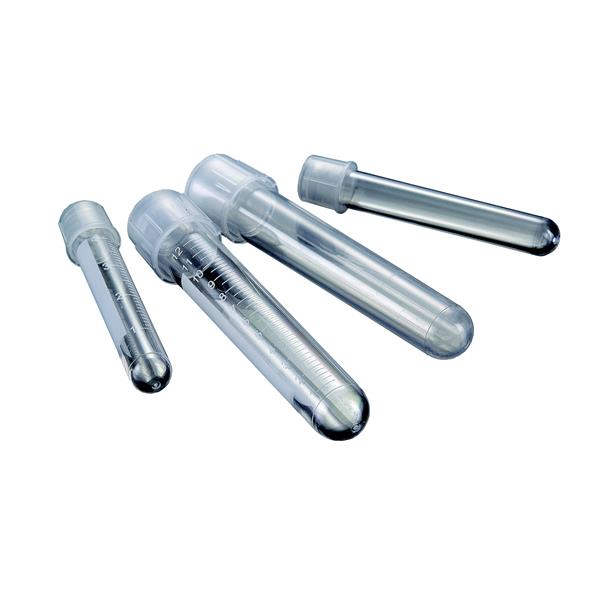

FluxMPS™ RPMI 1640 Medium with High Glucose
Select See the table below
- See the table below
FluxMPS™ RPMI 1640 Medium with High Glucose
FluxMPS™ RPMI 1640 Medium with High Glucose is a 1X liquid, ready-to-use formulation of the classic medium developed in 1966 at the Roswell Park Memorial Institute, supplied at an elevated 4.5 g/L glucose concentration to support the growth and metabolism of certain cell types, particularly cancer cells and rapidly dividing cells. The 34-configuration family lets researchers select exactly which distinguishing components — L-Glutamine, Sodium Pyruvate, Sodium Bicarbonate, HEPES, and Phenol Red — are present in the finished medium, and includes an ATCC Modification line, then filters every microfluidic-grade batch through the quadruple-stage FluxMPS™ system before it reaches an OoC, ToC, or LoC platform.
- 34 configurations: a standard bicarbonate-buffered High Glucose RPMI line (16 configurations), a HEPES-supplemented line (16 configurations), and two ATCC Modification configurations (with and without Phenol Red, each carrying 10 mM HEPES)
- 4.5 g/L standard glucose concentration — the purpose of high-glucose RPMI is primarily to support the growth and metabolism of certain cell types, particularly cancer cells and rapidly dividing cells
- Energy source: glucose serves as the primary energy source for cells in culture; the high glucose concentration ensures that rapidly proliferating cells have an abundant supply of energy to support their growth and metabolic needs
- Cancer cell metabolism: many cancer cell lines exhibit altered metabolism, often characterized by increased glucose uptake and utilization (the Warburg effect), making high-glucose media particularly suitable for culturing cancer cells
- Versatility: suitable for a wide range of mammalian cell types, including HeLa, Jurkat, MCF-7, PC12, PBMC, astrocytes, and various carcinomas
- Cell-specific requirements: some cell types may require higher glucose concentrations for optimal growth and function, and the high-glucose formulation ensures these cells have sufficient glucose available
- Extended culture periods: the increased glucose concentration can support cell growth for longer periods without medium depletion, beneficial for certain experimental protocols or cell types with high metabolic demands
- Standardization: a standardized high-glucose formulation allows for consistency across experiments and between different research groups, facilitating reproducibility in cell culture studies
- Bicarbonate buffering system requiring a 5-10% CO2 atmosphere to maintain a physiological pH, with an optional 25 mM HEPES-supplemented line for procedures outside a CO2 incubator
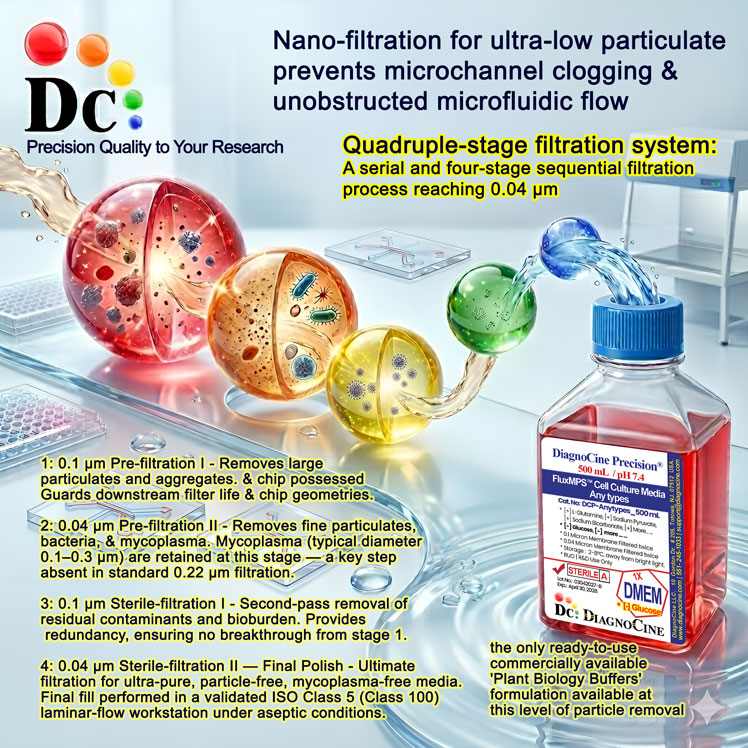
- Purified through FluxMPS™ quadruple-stage 0.1 micron / 0.04 micron filtration, engineered for organ-on-chip (OoC), tissue-on-chip (ToC), and lab-on-chip (LoC) microfluidic platforms
- Available in 500 mL and 1000 mL sizes; store at 2-8°C protected from light; every standard concentration, buffer, and additive is customizable on request
- Concentration1X
- Glucose4.5 g/L (High Glucose)
- BufferingSodium bicarbonate/CO2, optional 25 mM HEPES
- Configurable supplementsGlutamine / Pyruvate / Bicarbonate / HEPES / Phenol Red
- Special variantATCC Modification, 10 mM HEPES (with/without Phenol Red)
- FiltrationFluxMPS™ quadruple-stage, 0.04 micron final
- Sizes500 mL, 1000 mL
- Storage2-8°C, protected from light
At-a-Glance Supplement Matrix
Check the supplement(s) your protocol requires, press Search, and every matching configuration lights up below. Click the catalog number or the View button to go straight to that product page.
| Name | Cat No. | L-Glutamine | Sodium Pyruvate | Sodium Bicarbonate | HEPES | Phenol Red | Special | Product Page |
|---|---|---|---|---|---|---|---|---|
| RPMI 1640, High Glucose | DCP-RPMIWOHB1X | check | check | check | remove | check | Viewarrow_forward | |
| RPMI 1640, High Glucose, ATCC Modification | DCP-RPMIA1X | check | check | check | check | check | ATCC Modification / 10mM HEPES | Viewarrow_forward |
| RPMI 1640, High Glucose, w/o L-Glutamine | DCP-RPMIG-Q1X | remove | check | check | remove | check | Viewarrow_forward | |
| RPMI 1640, High Glucose, w/o Sodium Pyruvate | DCP-RPMIG-P1X | check | remove | check | remove | check | Viewarrow_forward | |
| RPMI 1640, High Glucose, w/o Sodium Bicarbonate | DCP-RPMIG-B1X | check | check | remove | remove | check | Viewarrow_forward | |
| RPMI 1640, High Glucose, w/o Phenol Red | DCP-RPMIG-R1X | check | check | check | remove | remove | Viewarrow_forward | |
| RPMI 1640, High Glucose, w/o L-Glutamine, Sodium Pyruvate | DCP-RPMIG-QP1X | remove | remove | check | remove | check | Viewarrow_forward | |
| RPMI 1640, High Glucose, w/o L-Glutamine, Sodium Bicarbonate | DCP-RPMIG-QB1X | remove | check | remove | remove | check | Viewarrow_forward | |
| RPMI 1640, High Glucose, w/o L-Glutamine, Phenol Red | DCP-RPMIG-QR1X | remove | check | check | remove | remove | Viewarrow_forward | |
| RPMI 1640, High Glucose, w/o Sodium Pyruvate, Sodium Bicarbonate | DCP-RPMIG-PB1X | check | remove | remove | remove | check | Viewarrow_forward | |
| RPMI 1640, High Glucose, w/o Sodium Pyruvate, Phenol Red | DCP-RPMIG-PR1X | check | remove | check | remove | remove | Viewarrow_forward | |
| RPMI 1640, High Glucose, w/o Sodium Bicarbonate, Phenol Red | DCP-RPMIG-BR1X | check | check | remove | remove | remove | Viewarrow_forward | |
| RPMI 1640, High Glucose, w/o L-Glutamine, Sodium Pyruvate, Sodium Bicarbonate | DCP-RPMIG-QPB1X | remove | remove | remove | remove | check | Viewarrow_forward | |
| RPMI 1640, High Glucose, w/o L-Glutamine, Sodium Pyruvate, Phenol Red | DCP-RPMIG-QPR1X | remove | remove | check | remove | remove | Viewarrow_forward | |
| RPMI 1640, High Glucose, w/o L-Glutamine, Sodium Bicarbonate, Phenol Red | DCP-RPMIG-QBR1X | remove | check | remove | remove | remove | Viewarrow_forward | |
| RPMI 1640, High Glucose, w/o Sodium Pyruvate, Sodium Bicarbonate, Phenol Red | DCP-RPMIG-PBR1X | check | remove | remove | remove | remove | Viewarrow_forward | |
| RPMI 1640, High Glucose, w/o L-Glutamine, Sodium Pyruvate, Sodium Bicarbonate, Phenol Red | DCP-RPMIG-QPBR1X | remove | remove | remove | remove | remove | Viewarrow_forward | |
| RPMI 1640, High Glucose + HEPES | DCP-RPMIGH1X | check | check | check | check | check | Viewarrow_forward | |
| RPMI 1640, High Glucose + HEPES, w/o L-Glutamine | DCP-RPMIGH-Q1X | remove | check | check | check | check | Viewarrow_forward | |
| RPMI 1640, High Glucose + HEPES, w/o Sodium Pyruvate | DCP-RPMIGH-P1X | check | remove | check | check | check | Viewarrow_forward | |
| RPMI 1640, High Glucose + HEPES, w/o Sodium Bicarbonate | DCP-RPMIGH-B1X | check | check | remove | check | check | Viewarrow_forward | |
| RPMI 1640, High Glucose + HEPES, w/o Phenol Red | DCP-RPMIGH-R1X | check | check | check | check | remove | Viewarrow_forward | |
| RPMI 1640, High Glucose + HEPES, w/o L-Glutamine, Sodium Pyruvate | DCP-RPMIGH-QP1X | remove | remove | check | check | check | Viewarrow_forward | |
| RPMI 1640, High Glucose + HEPES, w/o L-Glutamine, Sodium Bicarbonate | DCP-RPMIGH-QB1X | remove | check | remove | check | check | Viewarrow_forward | |
| RPMI 1640, High Glucose + HEPES, w/o L-Glutamine, Phenol Red | DCP-RPMIGH-QR1X | remove | check | check | check | remove | Viewarrow_forward | |
| RPMI 1640, High Glucose + HEPES, w/o Sodium Pyruvate, Sodium Bicarbonate | DCP-RPMIGH-PB1X | check | remove | remove | check | check | Viewarrow_forward | |
| RPMI 1640, High Glucose + HEPES, w/o Sodium Pyruvate, Phenol Red | DCP-RPMIGH-PR1X | check | remove | check | check | remove | Viewarrow_forward | |
| RPMI 1640, High Glucose + HEPES, w/o Sodium Bicarbonate, Phenol Red | DCP-RPMIGH-BR1X | check | check | remove | check | remove | Viewarrow_forward | |
| RPMI 1640, High Glucose + HEPES, w/o L-Glutamine, Sodium Pyruvate, Sodium Bicarbonate | DCP-RPMIGH-QPB1X | remove | remove | remove | check | check | Viewarrow_forward | |
| RPMI 1640, High Glucose + HEPES, w/o L-Glutamine, Sodium Pyruvate, Phenol Red | DCP-RPMIGH-QPR1X | remove | remove | check | check | remove | Viewarrow_forward | |
| RPMI 1640, High Glucose + HEPES, w/o L-Glutamine, Sodium Bicarbonate, Phenol Red | DCP-RPMIGH-QBR1X | remove | check | remove | check | remove | Viewarrow_forward | |
| RPMI 1640, High Glucose + HEPES, w/o Sodium Pyruvate, Sodium Bicarbonate, Phenol Red | DCP-RPMIGH-PBR1X | check | remove | remove | check | remove | Viewarrow_forward | |
| RPMI 1640, High Glucose + HEPES, w/o L-Glutamine, Sodium Pyruvate, Sodium Bicarbonate, Phenol Red | DCP-RPMIGH-QPBR1X | remove | remove | remove | check | remove | Viewarrow_forward | |
| RPMI 1640, High Glucose, ATCC Modification, w/o Phenol Red | DCP-RPMIA-R1X | check | check | check | check | remove | ATCC Modification / 10mM HEPES | Viewarrow_forward |
RPMI 1640 (Roswell Park Memorial Institute Medium 1640)
RPMI 1640 is a basal synthetic cell culture medium developed in 1966 at the Roswell Park Comprehensive Cancer Center (then Roswell Park Memorial Institute), Buffalo, New York, by George E. Moore, Robert E. Gerner, and H. Addison Franklin. It was originally formulated to support the growth of normal and neoplastic human leukocytes in suspension, and it remains the default basal medium for all human lymphoid and hematopoietic cell culture more than six decades after its introduction. RPMI 1640 is structurally a modification of the RPMI 1630 series of media — itself a derivative of McCoy's 5A — and carries several compositional features absent from Eagle-lineage media (BME, MEM, DMEM): the highest inositol content of any classical medium (35 mg/L), calcium nitrate in place of calcium chloride as the sole calcium source, the highest phosphate concentration of any classical medium (800 mg/L Na2HPO4), reduced glutathione, vitamin B12, biotin, and para-aminobenzoic acid (PABA). These features reflect its design for non-adherent blood cells rather than substrate-dependent fibroblasts and epithelial lines.
Origins and Development
Roswell Park Memorial Institute and the Suspension Culture Problem
During the early 1960s, the growth of human lymphoid cells in vitro remained a significant technical challenge. Existing media — Eagle's BME, MEM, DMEM, and their derivatives — had been optimized for adherent cell types grown in monolayer and did not sustain long-term proliferation of primary human lymphocytes or lymphoblastoid cell lines in suspension. The underlying problem was nutritional: lymphoid cells in suspension experience a different metabolic microenvironment from adherent fibroblasts, with higher demands for inositol (a phospholipid membrane precursor), specific vitamins (B12, biotin), and antioxidant protection (glutathione), and they are more sensitive to calcium-driven adhesion to plastic surfaces. Moore and colleagues at Roswell Park Memorial Institute addressed these limitations by systematically modifying the RPMI 1630 medium series, an in-house set of formulations already in use at the institute, to improve support for lymphoid suspension cultures.
The 1967 Publication
Moore, Gerner, and Franklin published the foundational paper as "Culture of normal human leukocytes," JAMA, 199(8): 519-524, February 20, 1967. The paper described the successful long-term culture of normal peripheral human leukocytes in RPMI 1640 supplemented with serum, providing a practical tool for lymphocyte biology and establishing the medium's suitability for immunological research. The medium was developed one year before the publication, in 1966, and the 1967 paper reports the result of that development work.
Why High Glucose (4.5 g/L)
The purpose of having RPMI 1640 medium with high glucose (4.5 g/L) is primarily to support the growth and metabolism of certain cell types, particularly cancer cells and rapidly dividing cells. Glucose serves as the main energy source for most cultured cells, and a higher concentration provides more readily available energy for rapidly dividing cells or those with high metabolic demands, which is particularly beneficial for prolonged culture periods, allowing cells to grow for longer without requiring frequent medium changes. Many cancer cell lines exhibit altered metabolism, often characterized by increased glucose uptake and utilization (the Warburg effect), which makes high-glucose media particularly suitable for culturing cancer cells. The FluxMPS™ RPMI 1640, High Glucose family presented on this page also includes an ATCC Modification line, carrying 10 mM HEPES as standard.
RPMI 1640 Lineage: McCoy's 5A to RPMI 1630 to RPMI 1640
RPMI 1640 sits at the end of an indirect lineage from Basal Medium Eagle. The developmental chain is:
- BME (Eagle, 1955) — Eagle lineage baseline; the original defined medium of 13 amino acids, 9 vitamins, 6 ionic species, and glucose.
- McCoy's 5A Medium (McCoy, Lui, & Brander, 1959) — a BME-derived modification developed at the University of Texas for the culture of Novikoff hepatoma cells; contains non-essential amino acids, nucleosides, and additional components beyond the Eagle essential set.
- RPMI 1630 series (Moore et al., early 1960s) — in-house modifications of McCoy's 5A at Roswell Park; the direct parent of RPMI 1640.
- RPMI 1640 (Moore, Gerner & Franklin, 1966/1967) — the final optimized formulation with elevated inositol, calcium nitrate, high phosphate, glutathione, and a full vitamin B12/biotin/PABA complement.
- RPMI 1640, High Glucose (this family) — the FluxMPS™ family on this page, formulated at 4.5 g/L glucose to support the growth and metabolism of rapidly dividing and metabolically demanding cells, including an ATCC Modification variant carrying 10 mM HEPES as standard.
RPMI 1640 Standard Formulation Reference
The tables below reproduce the canonical RPMI 1640 formulation as published in the source formulation record; the standard glucose entry (2000 mg/L) is shown alongside this family's 4.5 g/L High Glucose level. All values are as stated in the source; no additional numeric values are implied for any specific catalog number beyond what is stated here and in the supplement matrix above.
| Ingredient | mg/L |
|---|---|
| Calcium nitrate tetrahydrate [Ca(NO3)2.4H2O] | 100.000 |
| Magnesium sulfate, anhydrous (MgSO4) | 48.840 |
| Potassium chloride (KCl) | 400.000 |
| Sodium bicarbonate (NaHCO3) | 2000.000 |
| Sodium chloride (NaCl) | 6000.000 |
| Sodium phosphate dibasic, anhydrous (Na2HPO4) | 800.000 |
| Amino Acid | mg/L |
|---|---|
| Glycine | 10.000 |
| L-Arginine (free base) | 200.000 |
| L-Asparagine (free base) | 50.000 |
| L-Aspartic acid | 20.000 |
| L-Cystine 2HCl | 65.000 |
| L-Glutamic acid | 20.000 |
| L-Glutamine | 300.000 |
| L-Histidine (free base) | 15.000 |
| L-Hydroxyproline | 20.000 |
| L-Isoleucine | 50.000 |
| L-Leucine | 50.000 |
| L-Lysine hydrochloride | 40.000 |
| L-Methionine | 15.000 |
| L-Phenylalanine | 15.000 |
| L-Proline | 20.000 |
| L-Serine | 30.000 |
| L-Threonine | 20.000 |
| L-Tryptophan | 5.000 |
| L-Tyrosine disodium salt dihydrate | 29.000 |
| L-Valine | 20.000 |
| Vitamin | mg/L |
|---|---|
| D-Biotin | 0.200 |
| Choline chloride | 3.000 |
| D-Calcium pantothenate | 0.250 |
| Folic acid | 1.000 |
| myo-Inositol | 35.000 |
| Niacinamide (Nicotinamide) | 1.000 |
| para-Aminobenzoic acid (PABA) | 1.000 |
| Pyridoxine hydrochloride | 1.000 |
| Riboflavin | 0.200 |
| Thiamine hydrochloride | 1.000 |
| Vitamin B12 (Cyanocobalamin) | 0.005 |
| Other Components | Amount |
|---|---|
| Standard vs. this family | |
| D-Glucose (Dextrose), standard RPMI 1640 | 2000.000 mg/L (~11.1 mM) |
| D-Glucose (Dextrose), High Glucose (this family) | 4500.000 mg/L |
| Glutathione (reduced, GSH) | 1.000 mg/L |
| Sodium bicarbonate (NaHCO3) | 2000.000 mg/L (2.0 g/L) |
| Phenol red sodium salt | 5.000 mg/L |
| ATCC Modification (this family's ATCC configurations) | |
| L-Glutamine (ATCC-added) | 2 mM |
| HEPES (ATCC-added) | 10 mM |
| Sodium pyruvate (ATCC-added) | 1 mM |
| Glucose (ATCC-modified) | 4500 mg/L |
| Sodium bicarbonate (ATCC-reduced, for use at 5% CO2) | 1500 mg/L (1.5 g/L) |
Sodium pyruvate is absent from the standard RPMI 1640 base, though many commercial pre-formulated RPMI variants (including the ATCC 30-2001 formulation) add sodium pyruvate at 1 mM (110 mg/L) as an additional energy source. No ferric nitrate; iron is supplied entirely through serum. Calcium nitrate (rather than calcium chloride) provides calcium at approximately 0.42 mM while contributing nitrate ions rather than chloride, deliberately chosen to minimize calcium-dependent cell-substrate adhesion in support of non-adherent suspension culture of lymphoid cells. The ATCC-formulated RPMI 1640 (Cat. 30-2001) adds 2 mM L-glutamine, 10 mM HEPES, 1 mM sodium pyruvate, 4500 mg/L glucose, and reduces NaHCO3 to 1500 mg/L for use specifically at 5% CO2; this represents a substantially modified formulation, and users should be aware of the elevated glucose (4.5 g/L vs. standard 2.0 g/L) when comparing experimental results across laboratories.
RPMI 1640 vs. Classical Media
| Feature | RPMI 1640 | Standard MEM | High-Glucose DMEM | IMDM | Medium 199 |
|---|---|---|---|---|---|
| Developer & year | Moore, Gerner & Franklin - Roswell Park, 1966/1967 | Eagle - NIH, 1959 | Dulbecco & Freeman, 1959 | Iscove & Melchers, 1978 | Morgan, Morton & Parker - CMRL, 1950 |
| Lineage | McCoy's 5A → RPMI 1630 → RPMI 1640 | BME → MEM | BME → DMEM | DMEM derivative | CMRL (original) |
| Amino acids (entries) | 20 (19 of 20 standard, no Ala; + Hyp) | 13 (essential only) | 15 (+ Gly, Ser) | 17 | 21 (19 proteinogenic, no Asn; + cystine, + Hyp) |
| Vitamins (count) | 11 | 8 | 8 | 10 | 17 |
| Vitamin B12 | 0.005 mg/L | Absent | Absent | 0.013 mg/L | Absent |
| Biotin | 0.200 mg/L | Absent | Absent | Present | 0.010 mg/L |
| PABA | 1.000 mg/L | Absent | Absent | Absent | 0.050 mg/L |
| myo-Inositol | 35.000 mg/L | 2.000 mg/L | 7.200 mg/L | 7.200 mg/L | 0.050 mg/L |
| Vitamin B6 form | Pyridoxine HCl | Pyridoxal HCl | Pyridoxine HCl | Pyridoxal HCl | Both pyridoxal + pyridoxine HCl |
| Reduced glutathione | 1.000 mg/L | Absent | Absent | Absent | 0.050 mg/L |
| Glucose | 2000 mg/L standard (~11.1 mM); 4500 mg/L (this High Glucose family) | 1000 mg/L (~5.5 mM) | 4500 mg/L (25 mM) | 4500 mg/L (25 mM) | 1000 mg/L (~5.5 mM) |
| Sodium pyruvate | None (standard); optional add; ATCC Mod. adds 1 mM | None | Optional (110 mg/L) | 110 mg/L | None |
| Calcium source | Ca(NO3)2.4H2O 100 mg/L | CaCl2 anhydrous 200 mg/L | CaCl2.2H2O 265 mg/L | CaCl2.2H2O 265 mg/L | CaCl2.2H2O 265 mg/L |
| Calcium concentration | ~0.42 mM | ~1.8 mM | ~1.8 mM | ~1.8 mM | ~1.8 mM |
| Iron source | None (serum-dependent) | None | Fe(NO3)3.9H2O 0.1 mg/L | KNO3 (transferrin-dependent) | Fe(NO3)3.9H2O 0.72 mg/L |
| Phosphate | Na2HPO4 800 mg/L (~5.6 mM) | NaH2PO4 140 mg/L (~1.0 mM) | NaH2PO4.H2O 125 mg/L (~0.9 mM) | NaH2PO4 113 mg/L | NaH2PO4 122 mg/L |
| NaHCO3 | 2000 mg/L standard; 1500 mg/L in ATCC Mod. (5% CO2) | 2200 mg/L | 3700 mg/L | 3024 mg/L | 2200 mg/L |
| CO2 required | 5-10% | 5-10% | 5-10% | 5-10% | 5-10% |
| pH (with NaHCO3) | 7.0-7.4 | 7.3-7.9 | ~7.2 | ~7.2 | 7.2 |
| Osmolality | 255-310 mOsm/kg | 290-330 mOsm/kg | 320-355 mOsm/kg | ~290-320 mOsm/kg | 310-350 mOsm/kg |
| Serum supplement | 10% FBS (5-20%) | 10% FBS | 10% FBS | 10% FBS | 10% FBS |
| Primary application | Human lymphocytes, PBMCs, Jurkat, hybridomas, cancer cells with high glucose demand | Fibroblasts, neurons, WI-38, MRC-5 | HEK293, MEFs, high-density adherent | Lymphocytes, hematopoietic cells, serum reduction | Chick fibroblasts, oocyte IVM, virology |
| Culture format | Suspension dominant, monolayer capable | Monolayer | Monolayer | Suspension and monolayer | Monolayer and organ culture |
RPMI 1640: Moore, Gerner & Franklin, Roswell Park, 1966/1967. MEM: Eagle 1959. DMEM: Dulbecco & Freeman 1959. IMDM: Iscove & Melchers 1978. Medium 199: Morgan, Morton & Parker, CMRL, 1950.
Why FluxMPS™
Quadruple-Stage Purity
Every FluxMPS™ RPMI 1640 configuration is purified to 0.04 microns — finer than any ready-to-use cell culture media currently available — before it ever reaches your chip.
Engineered for Microfluidics
Designed from the ground up for Organ-on-Chip (OoC), Tissue-on-Chip (ToC), and Lab-on-Chip (LoC) platforms, where the medium itself is part of the instrument.
Particulate & Aggregate Removal
The quadruple-stage architecture eliminates microscopic particulates and protein aggregates that silently block micro-channels and disrupt laminar flow — a particular concern for suspension and rapidly proliferating cancer cultures.
Optical Clarity
Optical clarity supports real-time imaging and integrated biosensing on Organ-on-Chip platforms without background interference.
Regulatory-Aligned Foundation
Formulated to support FDA-recognized physiological modeling standards, providing a validated, reproducible media foundation as downstream data moves toward regulatory scrutiny.
Translational Research Ready
A single, consistent media platform supporting drug discovery, toxicology screening, and translational research from bench through preclinical modeling.
Quadruple-Stage Filtration
Every FluxMPS™ RPMI 1640 batch passes through a four-stage filtration train before final fill, engineered specifically for microfluidic cell culture applications.
-
1
0.1 µmPre-filtration Stage One
Bulk particulate reduction prior to sterile filtration.
-
2
0.1 µmPre-filtration Stage Two
Second-pass pre-filtration to protect the downstream sterile filters and extend their working life.
-
3
0.04 µmSterile Filtration Stage One
First sterile-filtration pass at 0.04 microns — finer than any ready-to-use cell culture media currently available.
-
4
0.04 µmSterile Filtration Stage Two
Second sterile-filtration pass, eliminating microscopic particulates and protein aggregates before final fill.
Built for Continuous Flow
Zero-clogging performance across complex micro-channel geometries and long-term automated perfusion studies running continuously for weeks.
Validated Cell Lines & Applications
RPMI 1640 is a versatile medium that supports the cultivation of many adherent and suspension cell types, such as lymphocytes, Jurkat cells, HeLa cells, bone marrow cells, hybridomas, and carcinomas. High-glucose RPMI 1640 is suitable for a wide range of mammalian cell types, including HeLa, Jurkat, MCF-7, PC12, PBMC, astrocytes, and various carcinomas.
HeLa & MCF-7
Many cancer cell lines exhibit altered metabolism, often characterized by increased glucose uptake and utilization (the Warburg effect), making high-glucose RPMI 1640 particularly suitable for culturing cancer cell lines such as HeLa (cervical carcinoma) and MCF-7 (breast adenocarcinoma).
Jurkat, PBMC
Jurkat (human T-cell leukemia) is the canonical T-cell signaling model line; PBMCs (peripheral blood mononuclear cells) are isolated by density gradient centrifugation and cultured with stimulation by PHA, PMA/ionomycin, or anti-CD3/anti-CD28 in standard T-cell activation assays.
PC12 & Astrocytes
PC12 cells and astrocytes are among the mammalian cell types for which high-glucose RPMI 1640 is suitable, supporting cell-specific requirements for optimal growth and function where higher glucose concentrations are needed.
Hybridoma Culture & Monoclonal Antibodies
RPMI 1640 is the standard medium for murine and human hybridoma culture and cell fusion protocols: SP2/0 and NS0 myeloma fusion partners and derived hybridomas are maintained in RPMI 1640 + 10-20% FBS, with HAT/HT-supplemented RPMI 1640 used for post-fusion selection.
Reproducible High-Glucose Culture
Using a standardized high-glucose formulation allows for consistency across experiments and between different research groups, facilitating reproducibility in cell culture studies, and supports extended culture periods for cell types with high metabolic demands.
Various Carcinomas & Bone Marrow Cells
RPMI 1640 supports various cell types including HeLa, BHK-21, 293, HEP-2, HT-1080, MCF-7, fibroblasts, bone marrow cells, and primary rat astrocytes, and is used in a wide range of biological research applications such as cell biology studies, virus propagation, and toxicity testing.
RPMI 1640 in Physiologic Media Research & Practical Considerations
Physiologic Media Comparator
RPMI 1640 serves as one of the two primary "conventional supraphysiologic comparator" media (alongside high-glucose DMEM) in the physiologic media literature. The Cantor (2019) Trends in Cell Biology review identifies RPMI 1640 alongside DMEM as exhibiting amino acid concentrations that markedly differ from human plasma, and a glucose level that, at standard 11.1 mM, remains supraphysiologic relative to blood (~5 mM); the 4.5 g/L (25 mM) High Glucose configuration in this family raises that level further for applications prioritizing energy supply over plasma-like fidelity.
Commercial Variants & Modifications
RPMI 1640 + HEPES (25 mM) is the dominant formulation for Plasmodium falciparum culture, PBMC assays requiring extended bench time, and T-cell activation assays. The ATCC-modified formulation (30-2001) adds L-glutamine, 10 mM HEPES, sodium pyruvate, elevated glucose, and reduced NaHCO3 for use at 5% CO2 — both configurations are offered in this family. High-glucose (4.5 g/L) variants also serve hybridoma production with increased energy demand.
Practical Considerations
L-Glutamine degrades spontaneously to pyroglutamate and ammonia during liquid-phase storage; liquid RPMI 1640 is frequently supplied without L-glutamine, and stable dipeptide alternatives (L-alanyl-L-glutamine) are available. Phenol red at 5 mg/L is half the concentration used in DMEM and MEM, reducing background absorbance in plate reader assays; phenol-red-free RPMI 1640 is available for estrogen-receptor and luminescence-based cytotoxicity assays.
Hybridoma High-Glucose Variant & Cold Storage Caution
For large-scale hybridoma production, high-glucose RPMI 1640 (4.5 g/L glucose, with HEPES and L-glutamine) is preferred over the standard 2.0 g/L formulation to prevent glucose depletion in dense suspension cultures during extended production runs. Separately, research has documented that RPMI 1640 is particularly deleterious during cold storage of adherent kidney cell lines, attributable to the combination of low calcium and high phosphate; this limitation is specific to hypothermic storage and does not affect standard culture conditions.
Frequently Asked Questions
Verified References
- Moore, G.E., Gerner, R.E. & Franklin, H.A. (1967). Culture of normal human leukocytes. JAMA, 199(8): 519-524. PMID 4960081. DOI 10.1001/jama.1967.03120080061009.
- Trager, W. & Jensen, J.B. (1976). Human malaria parasites in continuous culture. Science, 193(4254): 673-675. PMID 781840.
- Cantor, J.R. (2019). The Rise of Physiologic Media. Trends in Cell Biology, 29(11): 854-861. PMC7001851. PMID 31623927.
- Yao, T. & Asayama, Y. (2017). Animal-cell culture media: History, characteristics, and current issues. Reprod. Med. Biol., 16(2): 99-117. PMC5661806.
- Moore, G.E., Gerner, R.E. & Franklin, H.A. (1968). New York State Journal of Medicine, 68: 2054. Follow-up characterization of RPMI-series media.
- Moore, G.E., et al. (1976). TCA Manual, 3: 503.
FluxMPS™ — Precision Cell Culture Media for Microphysiological Systems
Built for the architecture of the future. Not the flask of the past.
Traditional cell culture media were formulated for static well plates and flasks — environments that tolerate impurities, precipitates, and particle loads that would immediately compromise a microfluidic system. FluxMPS™ was designed from the ground up for Organ-on-Chip (OoC), Tissue-on-Chip (ToC), and Lab-on-Chip (LoC) platforms, where the medium itself is part of the instrument.
Purity That Protects Your Platform
FluxMPS™ is purified to 0.04 microns — finer than any ready-to-use cell culture media currently available. At this level, the microscopic particulates and protein aggregates that silently block micro-channels, disrupt laminar flow, and generate false biological signals are eliminated before the media ever reaches your chip.
The result: your platform stays operational, your data stays clean, and your biology drives the result — not your media.
Engineered for Flow, Not Just Growth
The name FluxMPS™ reflects its core design principle. Every component is optimized for consistent, laminar flow performance across:
- Complex micro-channel geometries
- Capillary-bed and vascular simulations
- Long-term automated perfusion studies running continuously for weeks
Zero-clogging performance is not a feature — it is the baseline specification.
Applications & Performance
| Application | What FluxMPS™ Delivers |
|---|---|
| Microfluidics | Stable shear stress; no channel blockage |
| Metabolic Tracing | Ultra-pure matrix with no contaminant interference |
| Long-term Perfusion | Consistent formulation stability over weeks of continuous flow |
| Organ-on-Chip | Optical clarity for real-time imaging and integrated biosensing |
Regulatory Foundation
FluxMPS™ is formulated to support FDA-recognized physiological modeling standards, providing a validated, reproducible media foundation for drug discovery, toxicology screening, and translational research. When your downstream data needs to stand up to regulatory scrutiny, your upstream media cannot be an afterthought.
The Bottom Line
Microfluidic platforms are precision instruments. They require precision inputs.
FluxMPS™ is the only ready-to-use cell culture medium engineered specifically to meet that standard — protecting your chip, your cells, and your science.