Plant Biology Buffers - Category Selection Guide
This is a category reference page, not a product page — every catalog number below has its own product page. Click View on the row you need.
| Product | Cat. No. | Catalog Group | Product Page |
|---|---|---|---|
| FluxMPS™, PEG-Ca2+ Transformation Solution | DCP-PEGCA1X | Protoplast & Transformation Solutions | Viewarrow_forward |
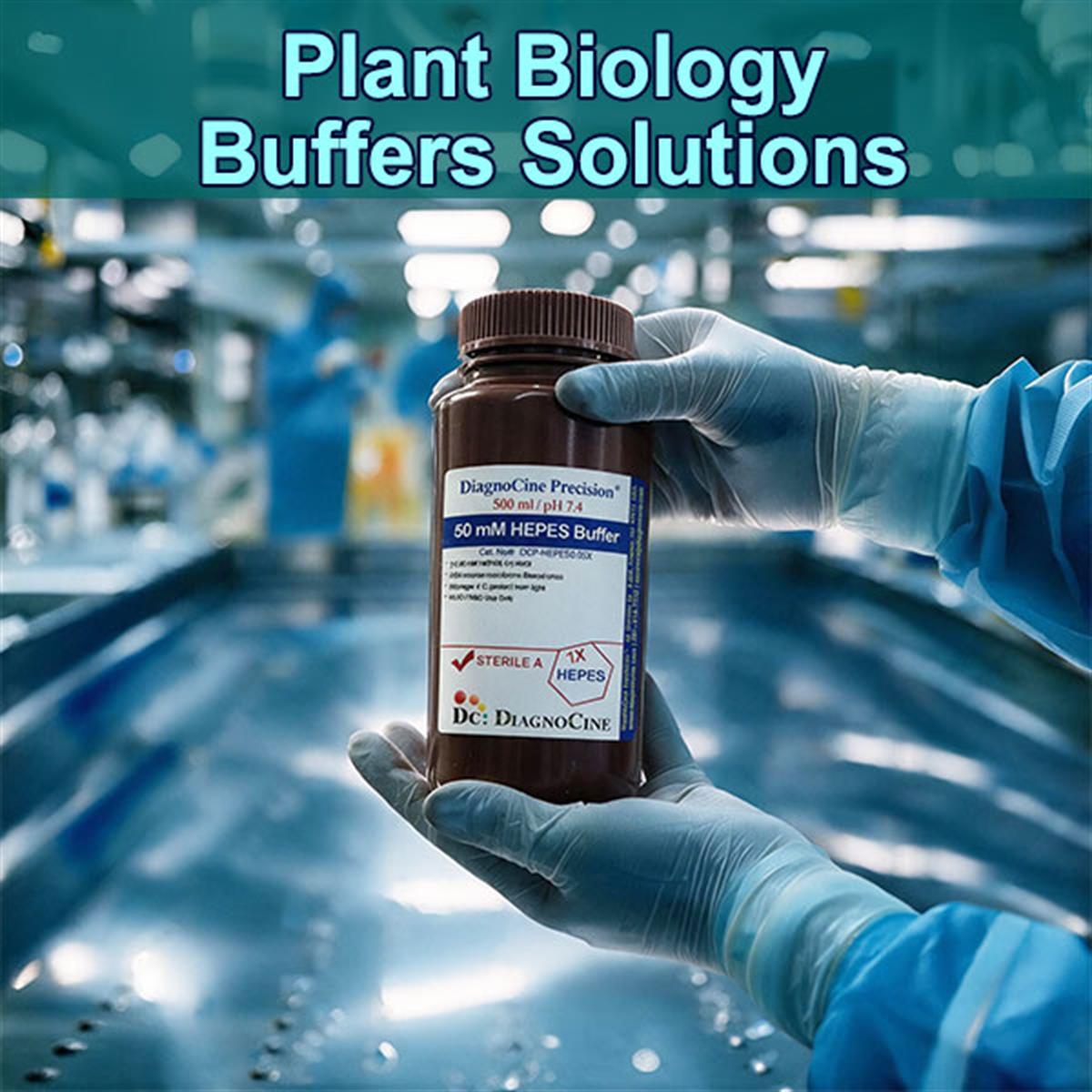
| FluxMPS™, Microfluidic-Ready, 50 mM HEPES Buffer | DCP-HEPES0.05X | Core Chemical Buffers & Diagnostic Staining Kits | Viewarrow_forward |
| FluxMPS™, Microfluidic-Ready, Honda Nuclei Isolation Buffer | DCP-HONDA1X | Nucleic Acid & Organelle Isolation Buffers | Viewarrow_forward |
| FluxMPS™, Microfluidic-Ready, 100 mM MES Buffer | DCP-MES0.1X | Core Chemical Buffers & Diagnostic Staining Kits | Viewarrow_forward |
| FluxMPS™, Microfluidic-Ready, MMG Protoplast Buffer | DCP-MMGPB1X | Protoplast & Transformation Solutions | Viewarrow_forward |
| FluxMPS™, Plant-Adapted RIPA Lysis Buffer | DCP-PRIPA1X | Protein Extraction & Processing Solutions | Viewarrow_forward |
| FluxMPS™, CTAB DNA Extraction Buffer | DCP-CTAB1X | Nucleic Acid & Organelle Isolation Buffers | Viewarrow_forward |
| FluxMPS™, CTAB RNA Lysis Buffer | DCP-CTABRNA1X | Nucleic Acid & Organelle Isolation Buffers | Viewarrow_forward |
| FluxMPS™, HEPES-Sorbitol Chloroplast Buffer | DCP-HSCB1X | Nucleic Acid & Organelle Isolation Buffers | Viewarrow_forward |
| FluxMPS™, AGPC RNA Lysis Buffer | DCP-AGPC1X | Nucleic Acid & Organelle Isolation Buffers | Viewarrow_forward |
| FluxMPS™, W5 Protoplast Buffer | DCP-W5PB1X | Protoplast & Transformation Solutions | Viewarrow_forward |
| FluxMPS™, DAB Staining Kit | DCP-DABSK | Core Chemical Buffers & Diagnostic Staining Kits | Viewarrow_forward |
| FluxMPS™, NBT Plant Tissue ROS Detection Kit | DCP-NBT | Core Chemical Buffers & Diagnostic Staining Kits | Viewarrow_forward |
| FluxMPS™, Protein Storage Buffer | DCP-PSB1X | Protein Extraction & Processing Solutions | Viewarrow_forward |
| FluxMPS™, PVP Protein Extraction Buffer | DCP-PVPPC1X | Protein Extraction & Processing Solutions | Viewarrow_forward |
| FluxMPS™, TCA Protein Precipitation Kit | DCP-TCAK | Protein Extraction & Processing Solutions | Viewarrow_forward |
New to plant-specific buffers? See what plant tissue demands of a buffer · Browse by application · Compare composition and best use · Read the FAQ
Why plant tissue needs its own buffer chemistry
Plant cells pose biochemical challenges that animal systems don't. They're wrapped in rigid, polysaccharide-rich cell walls and packed with secondary metabolites — polyphenols, tannins, and complex polysaccharides — that interfere with extraction and downstream analysis. Plant biology buffers are engineered to neutralize these interfering compounds while stabilizing fragile organelles, protoplasts, and nucleic acids.
- Standard mammalian or bacterial buffers frequently fail on plant tissue because of structural and chemical differences.
- Osmotic protection for protoplasts — wall-less plant cells burst without osmotic support; protoplast buffers use precise sugar-alcohol concentrations (sorbitol, mannitol) to balance osmotic pressure.
- Polyphenol and polysaccharide management — extraction buffers use polymers (PVP/PVPP) to bind phenolics and high-salt/CTAB conditions to keep them from co-precipitating with nucleic acids and proteins.
- Organelle structural hold — dedicated buffers hold exact osmolarity and ionic conditions to recover functional, intact machinery from fragile chloroplasts and other plant organelles.
- Sixteen formulations across four groups: protoplast & transformation solutions, nucleic acid & organelle isolation buffers, protein extraction & processing solutions, and core chemical buffers & diagnostic staining kits.
- Applications span genetic transformation, genomic & transcriptomic isolation, organelle enrichment, in situ histochemistry, and protein extraction & proteomics.
- Formulations in this catalog16
- Catalog groups4
- Protoplast & transformation solutions3
- Nucleic acid & organelle isolation buffers5
- Protein extraction & processing solutions4
- Core chemical buffers & staining kits4
- Microfluidic-Ready formulations3
- Ready-to-use kits3
- Method milestones covered (1960–2007)4
- Peer-reviewed key references4
Six ways plant tissue defeats a general-purpose buffer
Each card below restates one structural or chemical property of plant material named in the source description, and what it does to an extraction or an isolation.
Rigid, polysaccharide-rich cell wall
Plant cells are wrapped in a rigid, polysaccharide-rich cell wall. It has to be stripped enzymatically or disrupted mechanically before the cell contents are accessible at all — a step that has no counterpart in animal systems.
Polyphenols and tannins
Plant tissue is packed with secondary metabolites — polyphenols and tannins — that interfere with extraction and downstream analysis. Plant lysates are full of readily oxidizing phenols, which is also what drives sample browning.
Complex polysaccharides and starch
Plant lysates are full of starches. Left unmanaged, they co-precipitate with nucleic acids and proteins — which is precisely what high-salt and CTAB conditions are formulated to prevent.
Wall-less cells burst without osmotic support
Once the wall is removed the protoplast has no structural support. Protoplast buffers use precise sugar-alcohol concentrations — sorbitol, mannitol — to balance osmotic pressure and keep the cell intact.
Fragile organelles
Chloroplasts and other plant organelles are fragile. Dedicated buffers hold exact osmolarity and ionic conditions so what comes out of the gradient is functional, intact machinery rather than membrane debris.
Borrowed buffers fail
Standard mammalian or bacterial buffers frequently fail on plant tissue because of structural and chemical differences. Substituting one is not a cost saving — it is a failed prep.
The selection question is which interference you are fighting
Every formulation in this catalog exists to neutralize a specific interfering compound class or to hold a specific fragile structure together. Identify the interference first — wall, phenolics, starch, or osmotic collapse — and the group narrows to one.
Four publications that defined these solutions
The formulations in this catalog trace to four method papers. Each entry below reproduces the development and its significance as stated in the source description.
-
1
1960Enzymatic isolation of plant protoplasts
Edward C. Cocking used fungal cellulase enzymes to strip the cell wall and isolate intact plant protoplasts (from tomato root tips), published in Nature.[1] This opened the field of protoplast biology; because a wall-less plant cell has no structural support, it created the need for precise osmotic stabilizing solutions — later formalized as W5, MMG, and others.
-
2
1966The Honda organelle-isolation medium
Honda, Hongladarom & Laties published a new plant-organelle isolation medium in the Journal of Experimental Botany, using high-molecular-weight polymers (Ficoll, Dextran) to gently co-isolate intact nuclei, mitochondria, and chloroplasts.[2] This established the “Honda medium”, still the basis for gentle plant nuclei and organelle isolation today.
-
3
1987The CTAB rapid DNA extraction protocol
Doyle & Doyle published the CTAB (cetyltrimethylammonium bromide) rapid DNA extraction protocol in Phytochemical Bulletin.[3] It solved the polysaccharide/polyphenol problem — CTAB selectively complexes nucleic acids away from plant starches and proteins — becoming the global standard for plant genomic DNA.
-
4
2007W5, MMG and PEG-calcium standardized
Yoo, Cho & Sheen published the definitive Nature Protocols method for Arabidopsis mesophyll protoplast transient expression, standardizing W5, MMG, and PEG-calcium solutions.[4] This made PEG-calcium protoplast transfection a routine, reproducible tool across plant molecular biology.
What plant tissue demands of a buffer
Three requirements separate a plant buffer from a general-purpose one. Each row reproduces the source's own statement, split into the problem and the formulation response.
| Requirement | Why standard buffers fall short | How plant biology buffers respond |
|---|---|---|
| Osmotic protection for protoplasts | Wall-less plant cells burst without osmotic support. | Protoplast buffers use precise sugar-alcohol concentrations (sorbitol, mannitol) to balance osmotic pressure. |
| Polyphenol and polysaccharide management | Plant lysates are full of starches and readily oxidizing phenols. | Extraction buffers use polymers (PVP/PVPP) to bind phenolics and high-salt/CTAB conditions to keep them from co-precipitating with nucleic acids and proteins. |
| Organelle structural hold | Chloroplasts and other plant organelles are fragile. | Dedicated buffers hold exact osmolarity and ionic conditions to recover functional, intact machinery. |
Browse the catalog by workflow
Each tab carries one of the application areas named in the source description, with the catalog numbers that serve it.
- FluxMPS™, PEG-Ca2+ Transformation Solution Cat. No. DCP-PEGCA1X
- FluxMPS™, Microfluidic-Ready, MMG Protoplast Buffer Cat. No. DCP-MMGPB1X
- FluxMPS™, W5 Protoplast Buffer Cat. No. DCP-W5PB1X
- FluxMPS™, CTAB DNA Extraction Buffer Cat. No. DCP-CTAB1X
- FluxMPS™, CTAB RNA Lysis Buffer Cat. No. DCP-CTABRNA1X
- FluxMPS™, AGPC RNA Lysis Buffer Cat. No. DCP-AGPC1X
- FluxMPS™, Microfluidic-Ready, Honda Nuclei Isolation Buffer Cat. No. DCP-HONDA1X
- FluxMPS™, HEPES-Sorbitol Chloroplast Buffer Cat. No. DCP-HSCB1X
- FluxMPS™, DAB Staining Kit Cat. No. DCP-DABSK
- FluxMPS™, NBT Plant Tissue ROS Detection Kit Cat. No. DCP-NBT
- FluxMPS™, Plant-Adapted RIPA Lysis Buffer Cat. No. DCP-PRIPA1X
- FluxMPS™, PVP Protein Extraction Buffer Cat. No. DCP-PVPPC1X
- FluxMPS™, TCA Protein Precipitation Kit Cat. No. DCP-TCAK
- FluxMPS™, Protein Storage Buffer Cat. No. DCP-PSB1X
- FluxMPS™, Microfluidic-Ready, 100 mM MES Buffer Cat. No. DCP-MES0.1X
- FluxMPS™, Microfluidic-Ready, 50 mM HEPES Buffer Cat. No. DCP-HEPES0.05X
Core composition and best use, formulation by formulation
All sixteen formulations, reproduced row-for-row from the source product comparison table, with the matching catalog number added for cross-reference.
| Product | Core Composition | Best Use |
|---|---|---|
| Protoplast & Transformation Solutions | ||
| PEG-Ca2+ Transformation SolutionCat. No. DCP-PEGCA1X | Polyethylene glycol + calcium | Transient or stable transformation of wall-less protoplasts (plant or yeast) with plasmid DNA |
| W5 Protoplast BufferCat. No. DCP-W5PB1X | High-salt (NaCl/CaCl2-based) solution | Washing, harvesting, and maintaining isolated protoplasts in a viable, unburst state |
| MMG Protoplast BufferCat. No. DCP-MMGPB1X | Mannitol + MgCl2 + MES | Resuspension medium for protoplasts during active PEG-mediated transfection |
| Nucleic Acid & Organelle Isolation Buffers | ||
| CTAB DNA Extraction BufferCat. No. DCP-CTAB1X | Cationic detergent (CTAB) | Gold-standard plant genomic DNA isolation; separates DNA from structural polysaccharides |
| CTAB RNA Lysis BufferCat. No. DCP-CTABRNA1X | CTAB-based lysis matrix | Plant transcriptomics; disrupts cell matrix while preventing starch co-precipitation with RNA |
| Honda Nuclei Isolation Buffer (microfluidic-ready)Cat. No. DCP-HONDA1X | Polymer/osmotic gentle-isolation medium | Gentle mechanical isolation of intact plant nuclei for transcriptomics or flow cytometry |
| HEPES-Sorbitol Chloroplast BufferCat. No. DCP-HSCB1X | Osmotically balanced HEPES/sorbitol | Harvesting intact, functional chloroplasts from leaf homogenates |
| AGPC RNA Lysis BufferCat. No. DCP-AGPC1X | Acid guanidinium thiocyanate-phenol-chloroform | Total RNA extraction from challenging plant/vegetable matrices |
| Protein Extraction & Processing Solutions | ||
| Plant-Adapted RIPA Lysis BufferCat. No. DCP-PRIPA1X | RIPA base + plant-specific additives | Total protein extraction from tough plant cell walls while limiting sample browning |
| PVP Protein Extraction BufferCat. No. DCP-PVPPC1X | Polyvinylpyrrolidone-based | Binds and clears polyphenols so extracted enzymes stay active |
| TCA Protein Precipitation KitCat. No. DCP-TCAK | Trichloroacetic acid | Concentrating dilute plant protein and washing away pigments/sugars |
| Protein Storage BufferCat. No. DCP-PSB1X | Stabilizing storage solution | Preserving structural and enzymatic integrity of isolated plant proteins under refrigeration |
| Core Chemical Buffers & Diagnostic Staining Kits | ||
| 100 mM MES Buffer (microfluidic-ready)Cat. No. DCP-MES0.1X | Ultra-pure MES, ~pH 5.5–6.7 | Slightly acidic buffering that replicates the native cell wall/apoplast environment |
| 50 mM HEPES Buffer (microfluidic-ready)Cat. No. DCP-HEPES0.05X | Ultra-pure HEPES, physiological pH | Enzymatic assays, single-cell plant microfluidics, tissue culture |
| DAB Staining KitCat. No. DCP-DABSK | 3,3'-Diaminobenzidine | Histochemical localization of hydrogen peroxide (H2O2) during pathogen/drought stress |
| NBT ROS Detection KitCat. No. DCP-NBT | Nitroblue tetrazolium | Staining superoxide (O2•-) accumulation in plant tissue |
Frequently asked questions
Method papers behind these formulations
The source description's reference list, reproduced in full. Digital object identifiers were verified against the publishers' records and added where one exists.
- Cocking, E. C. (1960). A method for the isolation of plant protoplasts and vacuoles. Nature, 187, 962–963. — The first enzymatic isolation of plant protoplasts, founding the field of protoplast biology. doi:10.1038/187962a0
- Honda, S. I., Hongladarom, T., & Laties, G. G. (1966). A new isolation medium for plant organelles. Journal of Experimental Botany, 17(3), 460–472. — Origin of the “Honda medium” for gentle isolation of intact plant nuclei and organelles. doi:10.1093/jxb/17.3.460
- Doyle, J. J., & Doyle, J. L. (1987). A rapid DNA isolation procedure for small quantities of fresh leaf tissue. Phytochemical Bulletin, 19(1), 11–15. — The CTAB method that became the standard for plant genomic DNA extraction.
- Yoo, S. D., Cho, Y. H., & Sheen, J. (2007). Arabidopsis mesophyll protoplasts: a versatile cell system for transient gene expression analysis. Nature Protocols, 2(7), 1565–1572. — The definitive modern protocol standardizing W5, MMG, and PEG-calcium solutions for plant protoplast transfection. doi:10.1038/nprot.2007.199