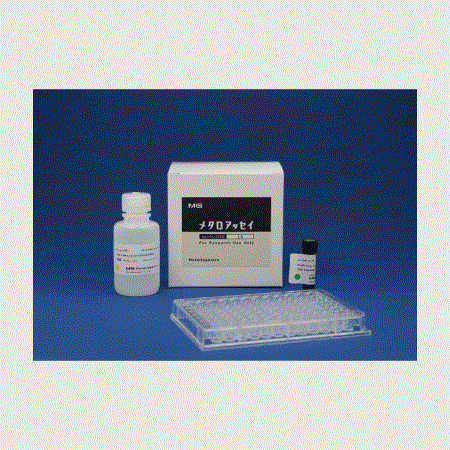
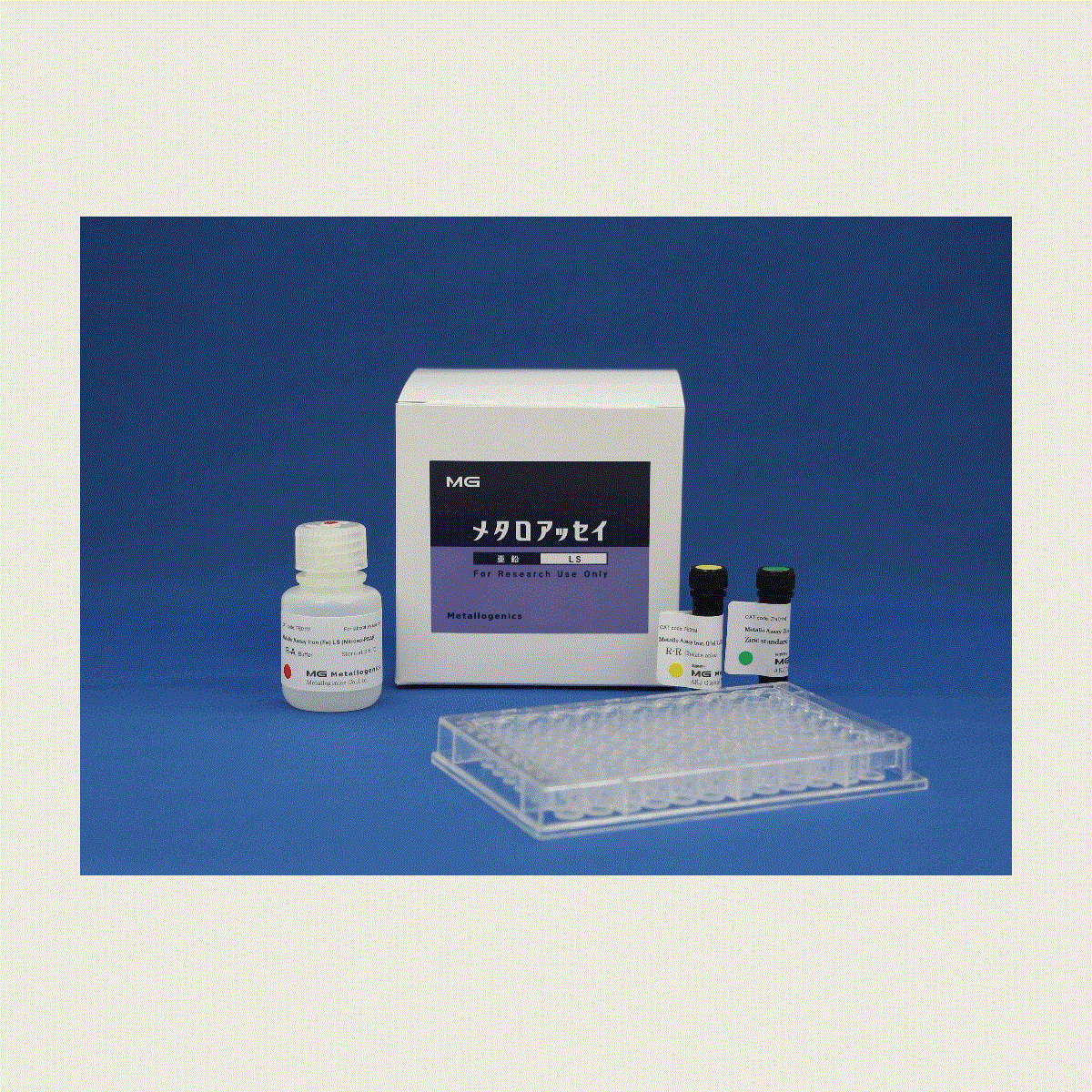
Zinc Assay kit LS - 5-Br-PAPS method
Zinc Assay kit LS - 5-Br-PAPS method
Cat. No. FNK-ZN01ME
Size 50 tests / 1 kit
Store 4 oC
Measuring range 4 - 1000 ug/dl
Wavelength (maximume wavelength) 550 - 580 nm (560nm)
Chromogen 5-Br-PAPS
Target Copper Zinc (Zn2+)
Description
Metallo Assay Zinc Assay kit is intended for the quantitative determination of zinc in biological sample by 96-well reader use. Target: zinc (Zn2+) Measuring range: 4 -1,000 μg/Dl Species: all. Sample: serum, plasma, urine, saliva, tissue extract, cell lysate, biological fluid, food, beverage etc. Apparatus: UV/Vis 96-well reader or spectrophotometer. Wavelength: 560 nm (550-580nm) Procedure: 10 min
Now, the trace metals can be measured easily by microplate reader!
"Metallo Assay LS" Series

This product is a direct colorimetric assay kit without deproteinization of the sample. At alkaline pH, in a buffered media, zinc reacts with the specific complex, forms a stable colored complex. The color intensity is proportional to the amount of zinc present in the sample.
Zinc is a cofactor of more than 200 kinds of metalloenzymes, and is also a trace element concerned in synthetic of ribonucleic acid or protein. It is widely known that acute zinc deficiency during the growth stage of the mammalian, results in a severe impairment of the skin or hair, and may lead to arrested development. Zinc is essential to reproduction of cell and its relevant supply is necessary for healthy growth.
- Unstableness of incubation temperature may result in unstable results.
- Use disposable test tube and glassware washed with 1M HNO3 or 1M HCl solution and distilled water.
- Accuracy in pipetting volume for samples and reagents may affect the quality of assay. Please note that samples, standards and Working Reagent must be poured accurately µL level.
- Temperature for chromogen reaction may affect optical density. Please try to extend or shorten chromogen reaction time depending on room temperature.
- In the cell lysate or the tissue extract use as specimen, high concentration of proteins or lipid, may affect observed value. Please remove its by ultrafiltration or centrifugation.
- Species of zinc-porphyrins cannot be measured in this assay kit.
Expiration: 1 year from the date of manufacture. After the bottles are opened, the kit should be used in 1 month.
Operation
removed by filtration or centrifugation. EDTA-plasma cannot
be used.
6M HCl/ 1mL of lysate.). Centrifuge at 6,000 rpm for 15 min.
Collect the supernatant and use it for assay.
30 min. Centrifuge at 6,000 rpm for 15 min. Collect the
supernatant and use it for assay.
2. Assay preparation
(2)Prepare enough working Reagent (WR).
3. Assay procedure.
(1 assay sample 242µL)
?Assay
(1) Add 230 µL of Working Reagent ( WR ) to each well.
(2) Add 12 µL of Distilled water (Blank) / STD (Standard)/ sample into each well and incubate at room temperature for 5 min.
(3) Read the absorbance at 560 nm (main) and 700nm(sub).
--> OD
(Sensitivity: 550nm max, 570nm 60%, 580nm 20% or less)
Assay Result


Example of use
- Metallomics research
- Trace metal research as effector of enzyme / transcription activity
- Quantification of heavy metal accumulated in body
- Quantification of trace metal for drag discovery support research
- Research of relation between plant growth factor and trace metal
- Research for metabolism / kinetics mechanism of trace metal in the cell
- Trace metal research as trigger of reactive oxygen species (ROS)
- Research of relation between trace metal metabolism / dynamic derangement and disease
- Research of trace metal as a cofactor of antioxidant enzyme
- ...and more!
- Makino. T, Saito. M, Horiguchi. D, and Kina. K : A highly sensitive calorimetric determination of serum zinc using water-soluble pyridylazo dye. Clinical Chimica Acta, 120, p127-135 (1982).
- Joshua. C, Jia. H, Hirokazu. H, Besim. Ben-N, Bruce. M, Makoto. O: The Therapeutic Effect on Bone Mineral Formation from Biomimetic Zinc Containing Tricalcium Phosphate (ZnTCP) in Zinc-Deficient Osteoporotic Mice. PLoS One, 8(8) (2013)