


Flamma® 774 ADIBO
Size of product (mg)
-
1 mg

-
5 mg

-
25 mg




Flamma® 774 ADIBO
Cat. No. List below
Description
Flamma® Fluors 774 ADIBO participates in copper-free click chemistry reactions:
-Reaction Type: Strain-promoted azide-alkyne cycloaddition (SPAAC)
-Product: Forms 1,4-disubstituted 1,2,3-triazole
-Compatibility: Reacts inside living systems without the need for coupling reagents or catalysts
-Bioorthogonality: Does not interfere with native biochemical processes
-Pre-requisite: Azide functionality must be introduced onto the target biomolecule through chemical or genetic modification
Its applications include cellular imaging (provides high-contrast visualization of labeled structures in cells), nucleotide functionalization (useful for labeling nucleic acids), in vivo imaging (excellent for deep tissue imaging due to NIR properties), biomolecule labeling (versatile tool for tagging various biomolecules in living systems).
The ADIBO group's strain-promoted reactivity allows for efficient labeling without the need for copper catalysts, making it ideal for in vivo applications. It is suitable for both in vitro and in vivo applications due to its biocompatibility and NIR properties. It can be used to study protein-protein interactions, track cellular processes, and develop novel imaging probes. The high molecular weight and cyclooctyne structure may affect cell permeability, which should be considered for intracellular applications.
Flamma® Fluors 774 ADIBO represents a significant advancement in NIR fluorescent labeling technology, offering researchers a powerful and flexible tool for exploring complex biological systems with high specificity, sensitivity, and biocompatibility, particularly in live-cell and in vivo imaging contexts.
What are the advantages?
1. Copper-Free Chemistry: Eliminates the need for potentially toxic copper catalysts
2. High Sensitivity: High extinction coefficient ensures strong signal generation
3. Low Protein Interference: Low CF280 value minimizes interference with protein absorbance measurements
4. Bioorthogonality: Click chemistry reaction occurs without interfering with native biological processes
5. Versatility: Compatible with various imaging systems due to its spectral similarity to widely used NIR dyes
6. Rapid Reaction Kinetics: SPAAC reactions typically proceed faster than traditional CuAAC reactions
- Fluorophore: Flamma® Fluors 774
- Reactive group: ADIBO
- Excitation/Emission Max.(nm): 774/800
- Spectrally similar dyes: Cy7.5, DyLight800, IRDye800
- Extinction coefficient: ≥ 152,000 cm-1M-1
- CF280: 0.1
- Appearance: Green Solid
- Molecular Weight: 1187.38 g/mol
- Solubility: DMF
- Storage conditions: -20 ℃, protect from light
| Quick link (Cat.#) | FSD series | EXmax (nm) | EMmax (nm) | Spectrally similar dyes |
| DWC1001 | Flamma® 496 ADIBO | 496 | 520 | Alexa488, FITC, Cy2 |
| DWC1011 | Flamma® 552 ADIBO | 550 | 564 | Alexa555, DyLight549, Cy3, ATTO550 |
| DWC1415 | Flamma® 581 ADIBO | 581 | 596 | Alexa594, DyLight594 |
| DWC1021 | Flamma® 648 ADIBO | 648 | 663 | Alexa647, DyLight650, Cy5 |
| DWC1051 | Flamma® 675 ADIBO | 674 | 691 | Alexa680, DyLight680, Cy5.5, IRDye680LT |
| DWC1031 | Flamma® 749 ADIBO | 749 | 774 | Alexa750, DyLight755, Cy7.5, IRDye750 |
| DWC1061 | Flamma® 774 ADIBO | 774 | 800 | Cy7.5, DyLight800, IRDye800 |
Background
Flamma® Fluors
BioActs offers a broad range of Flamma® Fluors dyes equipped with variety of reactive and functional groups, which can cover the full spectral range from UV to NIR with their excellent fluorescence performance. Characteristic features of these superior dyes are strong absorption, high fluorescence quantum yield and high photostability. Flamma® dyes maintain good fluorescence activity and stability after conjugation to biomolecules and allow the detection of low-abundance biological structures with great sensitivity. The dyes are compatible with optical conditions of most of fluorescent equipment and are ideal for any applications in biological studies.
- Covering the full spectral range from UV to NIR
- Equipped with a variety of reactive groups: NHS and Sulfo-NHS ester, Vinylsulfone, Maleimide, Click chemistry, isothiocyanate, hydrazide and hydrophobic substances.
- High quantum yields and photostability
- High purity and compatible with most of biomolecules
Flamma® Fluors for Click Chemistry

The most widely utilized click chemistry is 1,3-dipolar cycloaddition between an azide and an alkyne to produce 1,4-disubstituted 1,2,3-triazole. There are two types of 1,3-dipolar cycloaddition methods: copper(I)-catalyzed azide-alkyne cycloaddition (CuAAC) and strain-promoted azide-alkyne cycloaddition (SPAAC). BioActs offers Flamma® Fluors Alkyne dyes for CuAAC, Flamma® Fluors ADIBO products for SPAAC and Flamma® Fluors Azide dyes for both CuAAC and SPAAC.

Figure 1. Absorption (upper) and emission (bottom) spectra overlap of Flamma® Fluors

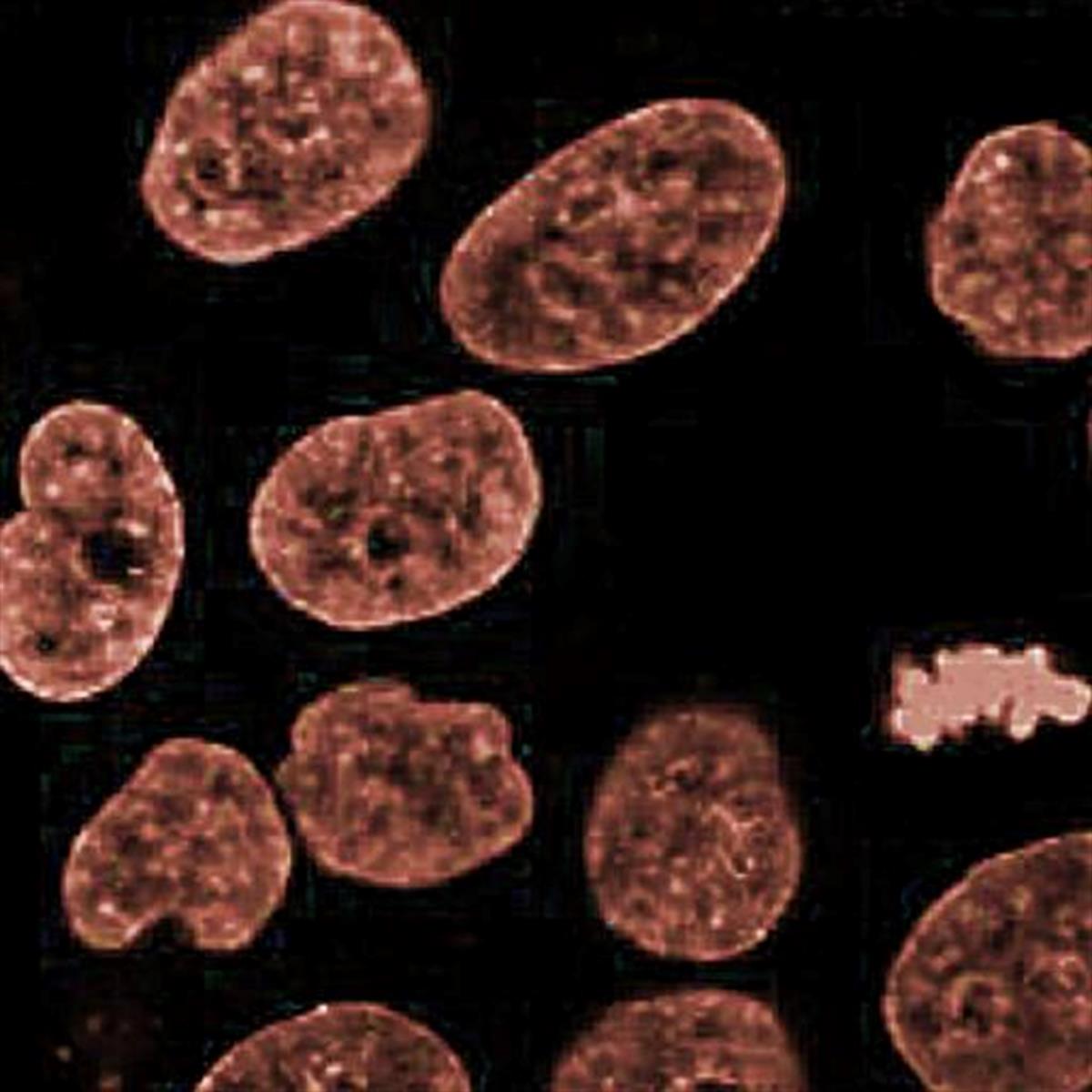
Figure 2. Immunofluorescence imaging and in situ hybridization imaging

Figure 3. Fluorescence images of Flamma® 749 (upper) and Flamma® 774 (bottom) carboxylic acid injected mouse model
Citation & Reference
1. Xu, Peisheng. Zwitterionic chitosan derivatives for pH-sensitive stealth coating. Biomacromolecules 11.9 (2010): 2352-2358.
2. Ibrahim, Basma M. A strategy to deliver genes to cystic fibrosis lungs: a battle with environment. Journal of controlled release 155.2 (2011): 289-295.
3. Oh, Keun Sang. Accurate sequential detection of primary tumor and metastatic lymphatics using a temperature-induced phase transition nanoparticulate system. International journal of nanomedicine 9 (2014): 2955.
4. Yhee, Ji Young. Tumor-targeting transferrin nanoparticles for systemic polymerized siRNA delivery in tumor-bearing mice. Bioconjugate chemistry 24.11 (2013): 1850-1860.
5. Yoon, Hong Yeol. Glycol chitosan nanoparticles as specialized cancer therapeutic vehicles: Sequential delivery of doxorubicin and Bcl-2 siRNA. Scientific reports 4 (2014).
6. Ryu, Ju Hee. Early diagnosis of arthritis in mice with collagen?induced arthritis, using a fluorogenic matrix metalloproteinase 3–specific polymeric probe. Arthritis & Rheumatism 63.12 (2011): 3824-3832.
7. Hollis, Christin P. In vivo investigation of hybrid paclitaxel nanocrystals with dual fluorescent probes for cancer theranostics. Pharmaceutical research 31.6 (2014): 1450-1459.
8. Koo, Heebeom. The movement of self-assembled amphiphilic polymeric nanoparticles in the vitreous and retina after intravitreal injection. Biomaterials 33.12 (2012): 3485-3493.
9. Zhu, Lei. Real-time monitoring of caspase cascade activation in living cells. Journal of controlled release 163.1 (2012): 55-62.
10. Yoon, Hong Yeol. Bioreducible hyaluronic acid conjugates as siRNA carrier for tumor targeting. Journal of Controlled Release 172.3 (2013): 653-661.
11. Yhee, Ji Young. Cancer-targeted MDR-1 siRNA delivery using self-cross-linked glycol chitosan nanoparticles to overcome drug resistance. Journal of Controlled Release 198 (2015): 1-9.
12. Park, Jin Woo. Wide-Ranged Fluorescent Molecular Weight Size Markers for Electrophoresis. Bulletin of the Korean Chemical Society 34.1 (2013): 29-30.
13. Huang, Xinglu. Multiplex Imaging of an Intracellular Proteolytic Cascade by using a Broad?Spectrum Nanoquencher. Angewandte Chemie International Edition 51.7 (2012): 1625-1630.
