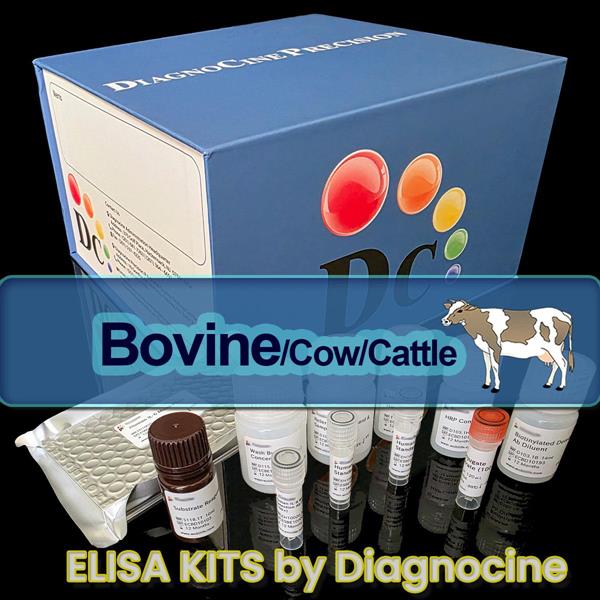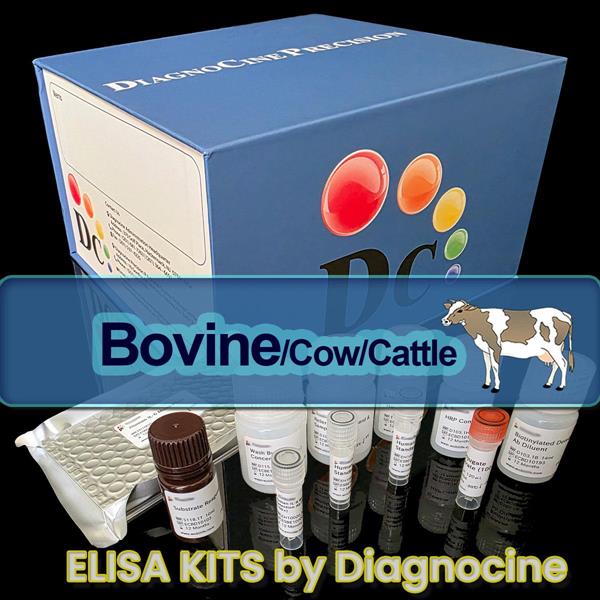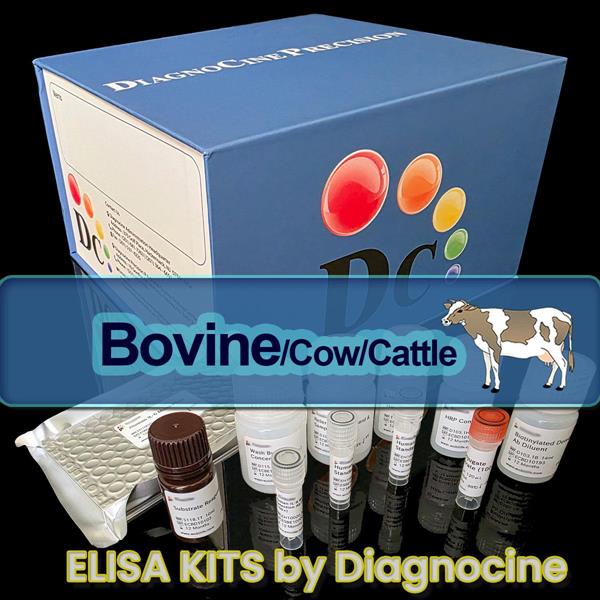
Human Tumor necrosis factor soluble receptor Ⅰ,TNFsR-ⅠELISA KIT
The Ultimate 1-Stop ELISA Marketplace:
60,000+ ELISA kits Available to Serve Scientists from All Fields of Life Science
Always Powered by Diagnocine for Precision Research.
Most comprehensive buffers, reagents and detection agents are provided with each kit to optimize data output.
All-inclusive format covers everything from sample preparation to signal detection. Every step can be customized and optimized for your precision research.
DiagnoCine Precision buffers and reagents are Made in USA ISO 13485 Certified
Why waste time searching for your ELISA kit when you can get everything in one place? Diagnocine can provide you with all the ELISA needs you have (customized ELISAs also available) on the planet through a single, streamlined ordering process.
* all types of species
* HRP and AP detection
* Low target signal enhancement
* Inquire about a trial version or a customized version
4 core reagents below are included with every order, plus 1 of the 2 detection-specific reagents (matched automatically to your kit type) — 5 components, every time.
+ the 5th component, matched to your kit's detection method:
If you have any questions or need additional information, please call us at 551-245-1033 or email us at support@diagnocine.com. Our team will be happy to assist you.
Universal Compatibility
All buffers and detection reagents work seamlessly across target proteins, bridging the gap in assay consistency.
1-Stop Convenience
Consolidate your lab's purchasing. Source all ELISA needs and experience optimal buffers and reagents in a single shipment.
Enhanced Precision
Designed by scientists for scientists, all components are engineered to deliver sharper results and an optical signal.
Human Tumor necrosis factor soluble receptor Ⅰ,TNFsR-ⅠELISA KIT
Sandwich quantitative immunoassay for Human Tumor necrosis factor soluble receptor Ⅰ,TNFsR-ⅠELISA KIT in human serum, plasma, tissue homogenates, urine, saliva, cell culture supernates available in multiple catalog sizes:
Note: Please send inquiries regarding Trial 24T orders to support@diagnocine.com.
| Uniprot No. | P19438 |
| Species | Homo sapiens (Human) |
| Sample types | serum, plasma, tissue homogenates, urine, saliva, cell culture supernates |
| Detection range | 7.8 pg/ml-500 pg/ml |
| Sensitivity | 1.95 pg/ml |
| Assay time | 1-5h |
| Sample loading volume | 50-100μL |
| Detection wavelength | 450 nm |
| Assay principle | Sandwich (Quantitative) |
| Data analysis | Standard curve + Curve Expert software |
| Research area | Signal Transduction |
| Storage condition | 2-8°C (see protocol for full details) |
| Shipping condition | 4 °C |
| Shelf life | 6 months |
10 business days
Processing + 3-5 days shipping
In Stock : USA
Worldwide shipping available
Antibody capture
450 nm detection
Standard curve
Quantification
In this sandwich ELISA, Human Tumor necrosis factor soluble receptor Ⅰ,TNFsR-ⅠELISA KIT in the sample is captured between a pre-coated capture antibody and a detection antibody. Signal intensity is proportional to analyte concentration. Quantification uses a standard curve fitted with Curve Expert software, covering 7.8 pg/ml-500 pg/ml with a minimum detectable dose of 1.95 pg/ml.
This ELISA kit provides quantitative measurement of soluble TNFRSF1A (sTNFR1) in human samples, supporting research into TNF-α signaling and inflammatory pathway regulation. Because sTNFR1 is shed from cell surfaces during inflammation and serves as both a biomarker and a decoy receptor modulating TNF-α bioavailability, accurate quantification across biological compartments is essential for interpreting TNF signaling dynamics.
Detection Range: The 7.8–500 pg/ml range captures circulating sTNFR1 levels in healthy serum (typically 1–2 ng/ml), meaning most serum and plasma samples will require dilution, while lower-abundance matrices like urine, saliva, and conditioned media can often be measured neat or with minimal preparation.
- This study demonstrated that TNFR1 expression levels are related to major depressive disorder and conjunctly mediate the effect of childhood maltreatment history on the risk of developing major depressive disorder. PMID: 28384542
- serum level did not decrease significantly after tonsillectomy with steroid pulse therapy in IgA nephropathy PMID: 28389814
- Polymorphism of Promoter Region of TNFRSF1A Gene is associated with Radiotherapy Induced Oral Mucositis in Head and Neck Cancer. PMID: 28401452
- Report of a severe case of TRAPS associated with a novel mutation, Thr90Pro, in the TNFRSF1A gene in an infant and several family members. PMID: 28427379
- Circulating TNFR1 and 2 were shown to be associated with cardiovascular disease, independent of age, sex, inflammatory markers, and other cardiovascular disease risk factors, in the chronic kidney disease patients PMID: 28489742
- These results indicate that TNFRI-Fc and hHO-1 overexpression may apparently induce free iron in the liver and exert oxidative stress by enhancing reactive oxygen species production and block normal postneonatal liver metabolism. PMID: 28503569
- TNFR1 is associated longitudinally with kidney function decline but not with myocardial infarct, heart failure, or mortality risk after adjustment PMID: 28601698
- Serum TNFR1 is a biomarker for patients with chronic kidney disease. PMID: 28667032
- Collectively, this study provides more insights into RELT expression, RELT family member function, and the mechanism of RELT-induced death. PMID: 28688764
- In this article we will review the role of ubiquitination and proteolysis in these diverse events focusing on our own contributions to the lysosomal apoptotic pathway linked to the subcellular compartmentalization of TNF-R1 PMID: 28765050
- High plasma levels of TNFR1 and TNFR2 were associated with incident intracerebral hemorrhage. PMID: 28830973
- One third of our childhood MS patients had a heterozygous mutation in the TNFRSF1A and/or MEFV gene. This proportion by far exceeds the number of mutations expected and was higher than in adult MS patients, suggesting that these mutations might contribute to the pathogenesis of childhood MS. PMID: 28927886
- Case Report: heterozygous missense variants in TNFRSF1A identified in family members with familial Mediterranean fever. PMID: 29148404
- atopic dermatits patients had increased TNFR1 expression on immune cells PMID: 29212072
- Polymorphisms in the TNFR1 gene may have an impact on the symptomatology of schizophrenia in men. rs4149577 and rs1860545 SNPs were associated with the intensity of the Positive and Negative Syndrome Scale (PANSS) excitement symptoms in men, which may contribute to the risk of violent behavior. PMID: 29317797
- five single nucleotide polymorphisms in the TNFRSF1A gene are not associated with autoimmune thyroid diseases in the Chinese Han population, but rs4149570 shows a weak association with Hashimoto's thyroiditis after adjusting for gender and age. PMID: 29401539
- this study evaluated TNFR1 -609G/T polymorphisms association with RA susceptibility in a sample of Mexican patients. Our results suggest that the TNFR1 -609G/T polymorphisms are not associated with RA susceptibility in a sample of Mexican patients. PMID: 29404828
- RACK1 associates with MOAP-1 via electrostatic associations similar to those observed between MOAP-1/RASSF1A and MOAP-1/TNF-R1. These events illustrate the complex nature of MOAP-1 regulation and characterizes the important role of the scaffolding protein, RACK1, in influencing MOAP-1 biology. PMID: 29470995
- The TNFRSF1A c.625+10 G allele was associated with late response to anti-TNFalpha therapy but TNFRSF1A gene SNPs is not associated with spondyloarthritis. PMID: 29579081
- Genotype rs767455 was associated with the susceptibility of ankylosing spondylitis(AS), G allele of rs767455 exhibited an association with the risk of developing AS. Only rs1061622 was significantly associated with long-term efficacy of etanercept. The results suggest that TNFRSF1A and TNFRSF1B polymorphisms were associated with susceptibility, severity, and the long-term therapeutic efficacy of etanercept of AS patients. PMID: 30075559
- It has been demonstrated that the molecular genetic marker +36G TNFR1 (OR=1,25) is involved in the formation Essential Hypertension in individuals with Metabolic Syndrome. PMID: 30289218
Intra-assay Precision (Precision within an assay): CV%<8% | ||||||
Three samples of known concentration were tested twenty times on one plate to assess. | ||||||
Inter-assay Precision (Precision between assays): CV%<10% | ||||||
Three samples of known concentration were tested in twenty assays to assess. | ||||||
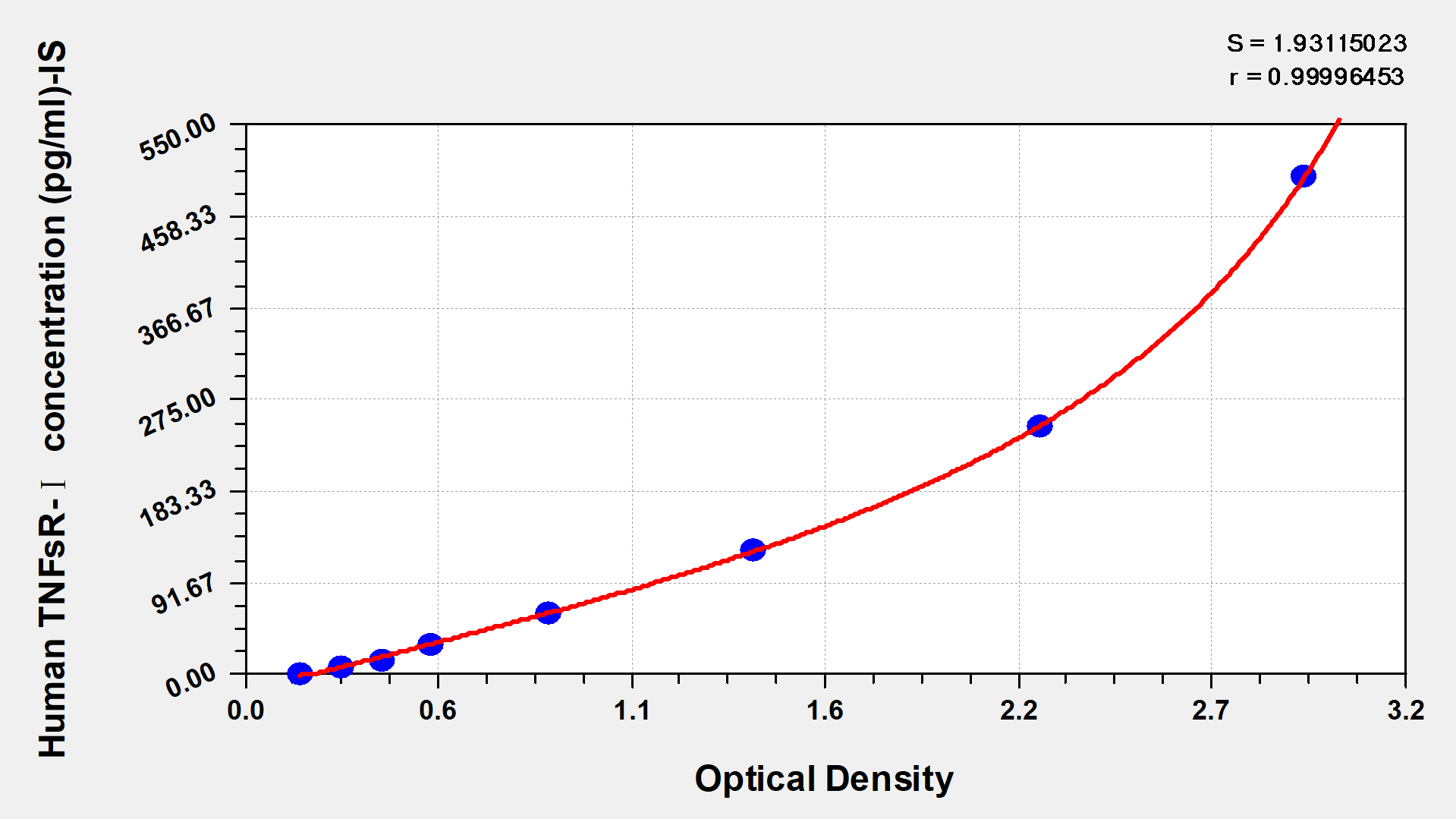
These standard curves are provided for demonstration only. A standard curve should be generated for each set of samples assayed. | |||||||
| |||||||
pg/ml | OD1 | OD2 | Average | Corrected | |||
500 | 3.009 | 2.904 | 2.956 | 2.783 | |||
250 | 2.282 | 2.167 | 2.225 | 2.052 | |||
125 | 1.430 | 1.428 | 1.429 | 1.256 | |||
62.5 | 0.869 | 0.849 | 0.859 | 0.686 | |||
31.2 | 0.537 | 0.521 | 0.529 | 0.356 | |||
15.6 | 0.401 | 0.393 | 0.397 | 0.224 | |||
7.8 | 0.283 | 0.289 | 0.286 | 0.113 | |||
0 | 0.171 | 0.175 | 0.173 |
| |||
To assess the linearity of the assay, samples were spiked with high concentrations of human TNFsR-Ⅰ in various matrices and diluted with the Sample Diluent to produce samples with values within the dynamic range of the assay. | ||||||
| Sample | Serum(n=4) | ||||
1:4 | Average % | 85 | ||||
Range % | 80-92 | |||||
1:8 | Average % | 92 | ||||
Range % | 87-98 | |||||
1:16 | Average % | 97 | ||||
Range % | 90-105 | |||||
1:32 | Average % | 93 | ||||
Range % | 86-98 | |||||
The recovery of human TNFsR-Ⅰspiked to levels throughout the range of the assay in various matrices was evaluated. Samples were diluted prior to assay as directed in the Sample Preparation section. | ||||||
Sample Type | Average % Recovery | Range | ||||
Serum (n=5) | 91 | 85-97 | ||||
EDTA plasma (n=4) | 96 | 90-103 | ||||