ALPQuench-TBS
FluxMPS™ ALPQuench-TBS
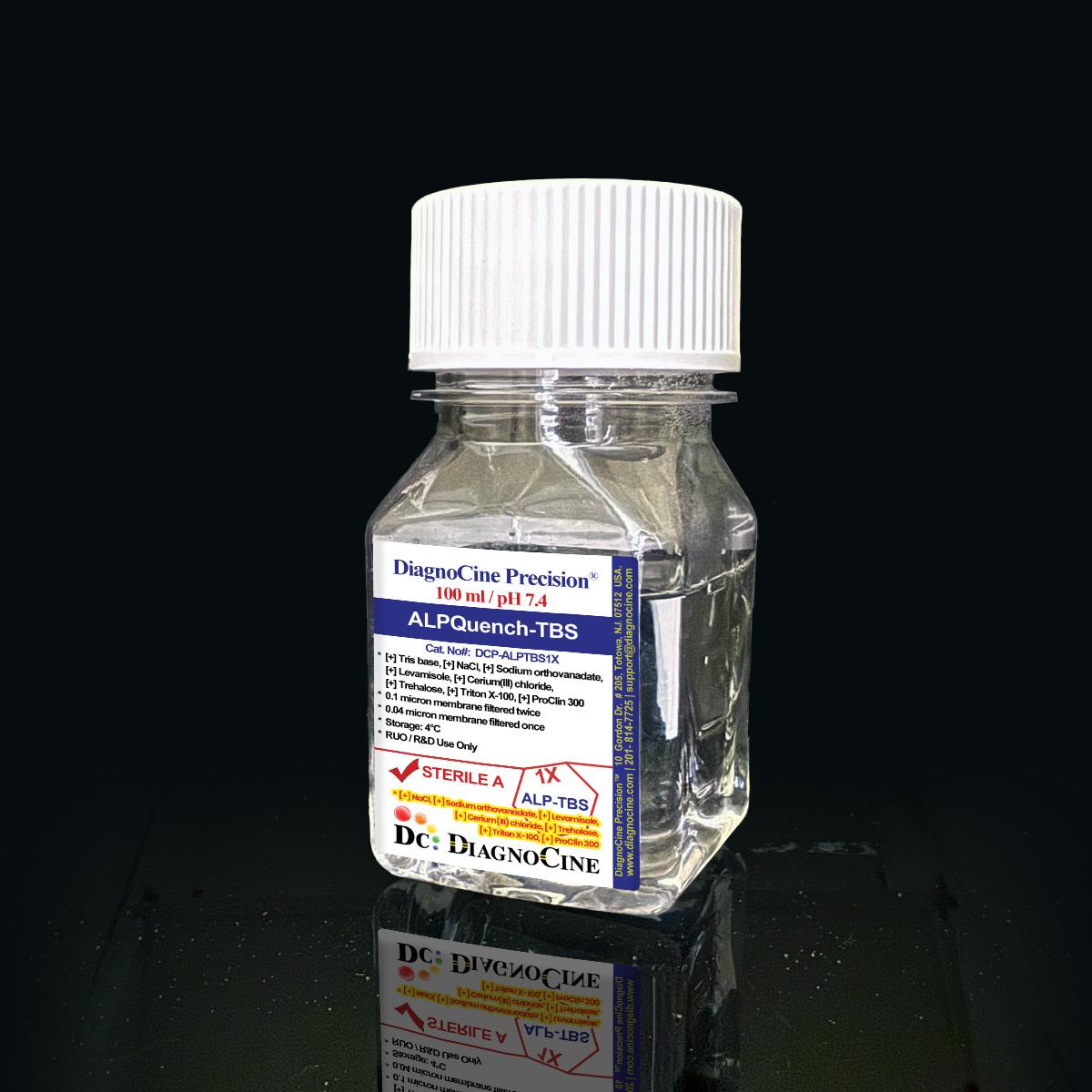
ALPQuench-TBS is an MPS-grade, Tris-buffered saline (TBS) formulation engineered to completely neutralize residual alkaline phosphatase (ALP) activity between sequential immunolabeling cycles. Dual-stage filtered through a 0.1 µm membrane and a 0.04 µm membrane, it delivers ultra-clean, low-background performance for multiplex immunohistochemistry, immunofluorescence, and ELISA workflows without disturbing tissue morphology or downstream antibody-antigen interactions.
- Dual-stage filtered: 0.1 µm membrane once and 0.04 µm membrane once for ultra-clean, low-background immunoassay performance
- Complete alkaline phosphatase (ALP) inactivation between sequential staining rounds, preventing signal overlap and cross-reactivity
- Tris-buffered saline (TBS) base at pH 7.4, optimized for pH stability and compatibility with TBS-based immunoreagents
- Ultrapure, non-sterile clear liquid, compatible with FFPE and frozen tissue sections as well as ELISA-based applications
- Manufactured under ISO 13485-certified and CE-approved facilities
- Customizable concentration, pH, and additive composition available on request
- pH7.4
- Buffer BaseTris, 50 mM
- Ionic Component (NaCl)150 mM
- AppearanceClear, Colorless Liquid
- SterilityNon-Sterile
- Filtration0.1 µm x1 + 0.04 µm x1
- Storage4°C
- Shelf Life1 year
- FormatLiquid, 100 mL
- Water QualityUltrapure Type 1 (18.2 MΩ·cm)
Engineered where standard ALP quenching buffers fail
Conventional single-pass 0.22 µm-filtered quenching buffers can leave subvisible particulates that accumulate in multiplex staining workflows and introduce inconsistent background. ALPQuench-TBS is built for cleaner, more reproducible sequential immunolabeling.
Ultra-clean, low-particulate purity
Sequential 0.1 µm and 0.04 µm membrane filtration reduces particulate carryover that can interfere with clean, non-overlapping multiplex labeling.
Precise, stable pH
Buffered at pH 7.4 with a defined 50 mM Tris / 150 mM NaCl base for consistent antibody-antigen interactions across staining rounds.
Ultrapure-grade water
Formulated in Ultrapure Type 1 water (18.2 MΩ·cm) consistent with USP <85> water-quality expectations.
Low background for imaging & assays
Complete ALP inactivation between staining cycles minimizes non-specific background in both chromogenic and fluorescent detection systems.
Defined, traceable composition
A named formulation of Tris Base, sodium chloride, sodium orthovanadate, (-)-tetramisole hydrochloride, cerium(III) chloride, trehalose, Triton X-100, and ProClin 300 — see the full composition table below.
Customization on demand
Alternate concentrations, additional chemicals/compounds/proteins/supplements, different pH, and other modifications are available on request.
Dual-stage filtration system
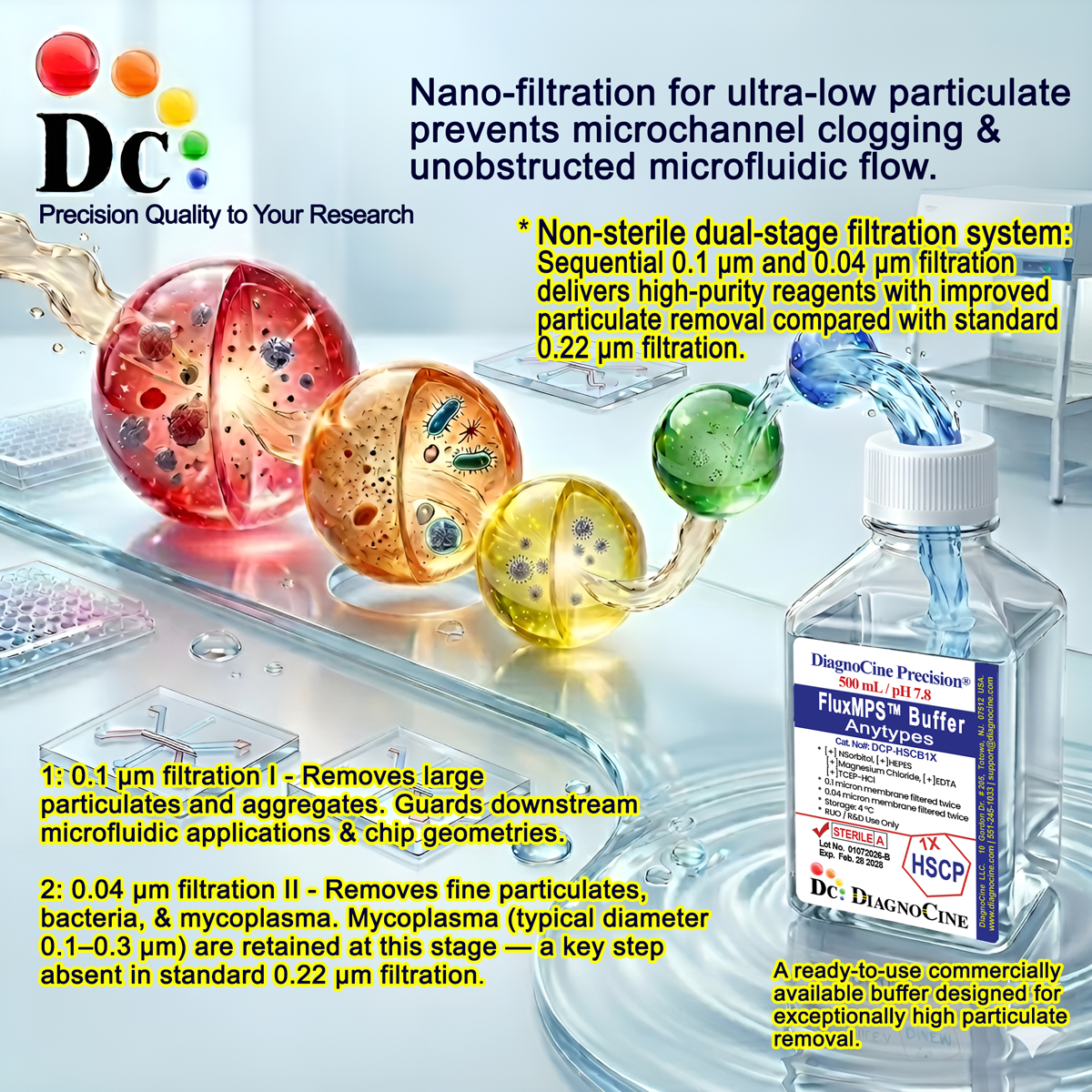
ALPQuench-TBS is processed through a sequential 0.1 µm and 0.04 µm membrane filtration pathway, positioning its purity above a single-pass conventional buffer.
-
1
0.1 µm Pre-filtration I
Removes large particulates and aggregates, protecting the integrity of the downstream 0.04 µm polishing step.
-
2
0.04 µm Pre-filtration II
Retains fine particulates for a cleaner working solution suited to sequential, multi-round immunolabeling protocols.
Performance vs. conventional buffer
Sequential 0.1 µm and 0.04 µm membrane filtration removes finer particulates than a single-pass 0.22 µm-filtered ALP quenching buffer, supporting cleaner, non-overlapping multiplex labeling.
© Diagnocine® — DCP-ALPTBS1X
Built for sequential, ALP-based immunolabeling
ALPQuench-TBS is especially valuable for protocols involving multiple ALP-conjugated antibodies, enabling clear, non-overlapping labeling of various targets within a single specimen.
Automated Bioreactors & Robotics
For automated IHC/IF staining platforms requiring standardized ALP quenching steps, an optional 0.01 µm (10 nm) ultra-filtered variant of ALPQuench-TBS can be prepared to further reduce particulate exposure to automated valves, dispense lines, and optical sensors.
- Total Particulate Exclusion — ultra-fine filtration for automated fluidic pathways
- Valve & Sensor Protection — reduced particulate load protects automated dispense hardware
- Standardized Quenching — consistent ALP inactivation across automated staining runs
Inquiry Required: the 0.01 µm ultra-filtered variant is available by request — contact support@diagnocine.com to configure ALPQuench-TBS for your automated staining platform.
Multiplex Immunohistochemistry (mIHC)
Sequential ALP-based staining cycles in TBS-based systems, with complete ALP inactivation between rounds.
Multi-Round Immunofluorescence
Requires ALP inactivation between labeling steps without disrupting subsequent antibody-antigen interactions.
Multi-ALP ELISA Workflows
Supports ELISA procedures involving multiple ALP-conjugated antibodies or detection reagents.
High-Background Tissue Quenching
Suppresses endogenous alkaline phosphatase in tissues with high background activity, e.g., intestine, liver, kidney.
Same-Species Antibody Protocols
Enables multi-round IHC protocols using same-species primary antibodies with ALP-conjugated secondaries.
Automated IHC/IF Platforms
Standardized ALP quenching steps for automated IHC/IF staining platforms.
Complete quality profile
Physical, purity, storage, and regulatory parameters for ALPQuench-TBS.
| Parameter | Specification |
|---|---|
| Formulation / Composition | Tris-buffered saline with ALP inhibitors and stabilizers — see full composition table below |
| Appearance | Clear, Colorless Liquid |
| pH (USP <791>) | 7.4 |
| Buffer Composition | Tris Base 50 mM, Sodium Chloride 150 mM |
| Parameter | Specification |
|---|---|
| Sterility | Non-Sterile |
| Filtration System | 0.1 µm x1 + 0.04 µm x1 |
| Water Quality | Ultrapure Type 1 water (18.2 MΩ·cm) |
| Manufacturing Standard | ISO 13485:2016 |
| Fill Environment | ISO Class 5 (Class 100) |
| Parameter | Specification |
|---|---|
| Storage Temperature | 4°C |
| Shelf Life | 1 year |
| Parameter | Specification |
|---|---|
| Raw Material Grade | Ultrapure, dual-stage filtered components |
| Manufacturing QMS | ISO 13485-certified facilities |
| Regulatory Alignment | CE-approved facilities |
| Traceability | Final packaging, QA, and testing performed at the DiagnoCine R&D and Quality Testing Center; customization and assembly performed at DiagnoCine Precision, Totowa, New Jersey, USA |
| Intended Use | Research Use Only (RUO) |
Full composition
ALPQuench-TBS is a defined Tris-buffered saline formulation combining ALP inhibitors and stabilizing agents.
| Component | CAS Number | Concentration |
|---|---|---|
| Tris Base | 77-86-1 | 50 mM |
| Sodium Chloride (NaCl) | 7647-14-5 | 150 mM |
| Sodium Orthovanadate | 13721-39-6 | 10 mM |
| (-)-Tetramisole Hydrochloride | 16595-80-5 | 1 mM |
| Cerium(III) chloride | 7790-86-5 | 5 mM |
| Trehalose | 99-20-7 | 1% |
| Triton X-100 | 9002-93-1 | 0.05% |
| ProClin 300 | 0.05% |
Manufacturing & compliance
ALPQuench-TBS is manufactured, packaged, and tested under a controlled quality system.
ISO 13485:2016 QMS
Manufactured under ISO 13485-certified and CE-approved facilities (Suppliers of DiagnoCine Precision).
Ultrapure Type 1 Water
Formulated in Ultrapure Type 1 water (18.2 MΩ·cm) for a low-background TBS base.
ISO Class 5 Fill & Finish
Final packaging, quality assurance, and testing performed at the DiagnoCine R&D and Quality Testing Center.
Micro-Batch Precision
Customization requests and assembly accomplished at DiagnoCine Precision in Totowa, New Jersey, USA.
Filtration Verification
Sequential 0.1 µm and 0.04 µm membrane filtration is applied during manufacture.
Sterility Status
Supplied Non-Sterile, per USP <71> classification conventions.
Appearance / pH Verification
Clear, Colorless Liquid; pH 7.4 (USP <791>).
Documentation / CoA
A Certificate of Analysis is available on request.
Dual-stage filtered vs. conventional ALP quenching buffer
A side-by-side view of ALPQuench-TBS against conventional single-pass filtered alternatives.
| Parameter | DCP-ALPTBS1X (FluxMPS™) | Conventional ALP Quench Buffer (0.22 µm filtered) | Standard Alternative (0.22 µm filtered) |
|---|---|---|---|
| Complete ALP Inactivation | check_circle | cancel | cancel |
| Final Filtration Pore Size | 0.04 µm | 0.22 µm | 0.22 µm |
| Number of Filtration Stages | 2 | 1 | 1 |
| TBS-Optimized Buffer Base | check_circle | check_circle | cancel |
| Manufacturing QMS | ISO 13485-certified | Not specified | Not specified |
| Custom Formulation | check_circle | cancel | cancel |
Frequently asked questions
Common questions about ALPQuench-TBS (DCP-ALPTBS1X).
Supporting literature
Curated peer-reviewed literature relevant to ALP quenching, TBS buffer chemistry, and multiplex immunolabeling.
- Van Belle H. Alkaline phosphatase. I. Kinetics and inhibition by levamisole of purified isoenzymes from humans. Clin Chem. 1976. doi:10.1093/clinchem/22.7.972
- Tramu G, Pillez A, Leonardelli J. An efficient method of antibody elution for the successive or simultaneous localization of two antigens by immunocytochemistry. J Histochem Cytochem. 1978. doi:10.1177/26.4.767491
- Van Noorden CJF, Frederiks WM. Enzyme Histochemistry: A Laboratory Manual of Current Methods. Royal Microscopical Society Handbook. 1992.
- Tornehave D, Hougaard DM, Larsson L. Microwaving for double indirect immunofluorescence with primary antibodies from the same species and for staining of mouse tissues with mouse monoclonal antibodies. Histochem Cell Biol. 2000. doi:10.1007/s004180000257
- Bolt MW, Mahoney PA. Application of fluorescein-based, multiplex immunohistochemistry to solid tumor biomarker discovery. J Histotechnol. 2016.
- Fritschy JM. Is my antibody-staining specific? How to deal with pitfalls of immunohistochemistry. Eur J Neurosci. 2008. doi:10.1111/j.1460-9568.2008.06148.x
- Toth ZE, Mezey E. Simultaneous visualization of multiple antigens with tyramide signal amplification using antibodies from the same species. J Histochem Cytochem. 2007. doi:10.1369/jhc.6A7101.2006
- Stack EC, Wang C, Roman KA, Hoyt CC. Multiplexed immunohistochemistry, imaging, and quantitation: a review. Methods. 2014. doi:10.1016/j.ymeth.2014.08.016
- Richardson DS, Lichtman JW. Clarifying tissue clearing. Cell. 2015. doi:10.1016/j.cell.2015.06.067