FluxMPS™ AZ PRESERVER™, AZP-A1
An MPS-grade cell and organoid preservation solution engineered for short-term, low-temperature storage and transportation. AZP-A1 simply replaces the existing culture medium to minimize cellular stress in mammalian cells and organoids that are difficult to cryopreserve, without requiring complicated handling procedures.
- Manufactured with single-stage 0.1 µm filtered processing for microchannel-safe use
- Sterility tested and confirmed free from bacterial and fungal contamination
- Simple, direct medium-replacement workflow — no complicated procedures required
- Supports short-term storage and transportation of cells and organoids difficult to cryopreserve
- Enables direct transportation of organoids to animals
- Manufactured with Ultrapure Type 1 water (18.2 MΩ·cm)
- Supplied at 100 mL; stored at -20°C
- Custom formulations and packaging available on request
- Storage Temperature-20°C
- Size100 mL
- SterilityConfirmed free of bacterial & fungal contamination
- Physical FormLiquid, ready-to-use solution
- FiltrationSingle-stage 0.1 µm
- Primary UseShort-term cold storage & transport
- Manufacturing StandardISO 13485:2016
- Water QualityUltrapure Type 1 (18.2 MΩ·cm)
- Intended UseResearch Use Only (RUO)
- DocumentationCertificate of Analysis available
Engineered where standard preservation reagents fail
Conventional refrigerated storage and DMSO-based cryoprotectants can subject sensitive cells and organoids to osmotic and cold stress, complicated handling steps, and inconsistent contamination control. AZ PRESERVER, AZP-A1 addresses these gaps with a simple, sterility-tested, single-stage-filtered formulation.
Microchannel-safe purity
Manufactured with single-stage 0.1 µm filtered processing to support use in fine-bore transfer lines and microfluidic-adjacent workflows.
Consistent preservation performance
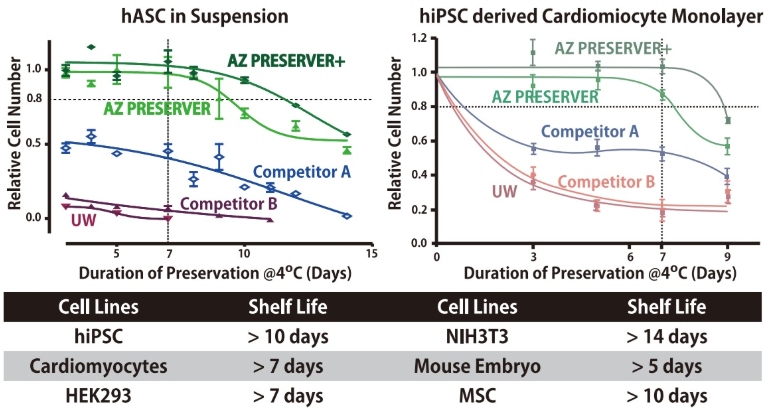
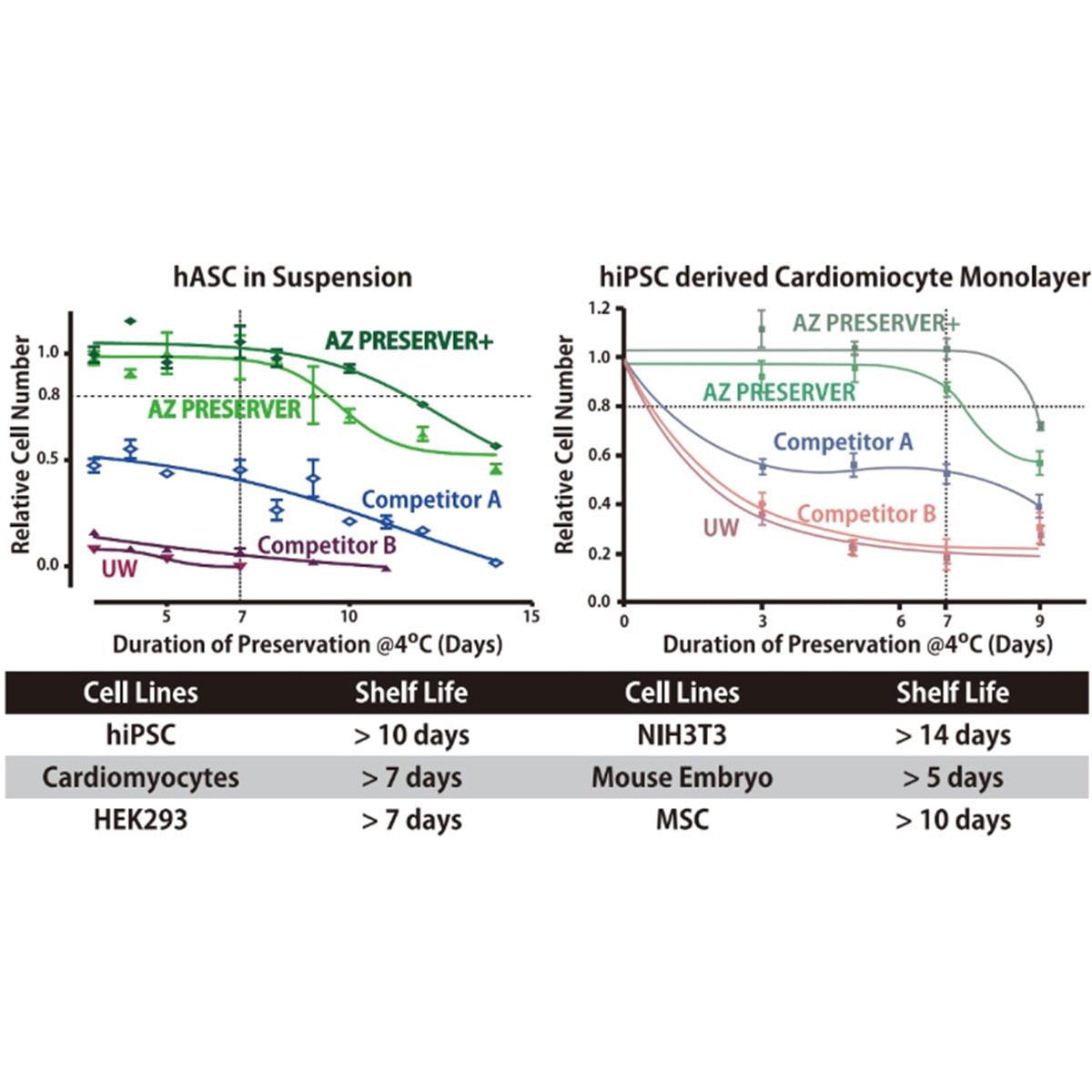
Minimizes cellular stress during refrigerated storage, supporting superior preservation performance versus untreated culture medium.
Ultrapure-grade water
Formulated using Ultrapure Type 1 water (18.2 MΩ·cm) in line with USP <85> supporting practices.
Seamless workflow integration
Simply replace the existing culture medium of mammalian cells or organoids with AZ PRESERVER — no complicated procedures required.
Sterility-validated manufacturing
Sterility testing confirms the product is free from bacterial and fungal contamination prior to release.
Customization on demand
Packaging size and formulation adjustments available on request — contact support@diagnocine.com.
Single-stage 0.1 µm filtration
AZ PRESERVER, AZP-A1 is manufactured with single-stage 0.1 µm filtered processing, supporting the product's sterility testing outcome of confirmed freedom from bacterial and fungal contamination.
-
1
0.1 µm Sterile Filtration
Removes particulates and bioburden as part of the manufacturing process supporting the product's confirmed sterility.
Performance vs. conventional buffer
Single-stage 0.1 µm filtered processing supports the product's confirmed freedom from bacterial and fungal contamination.
Where AZ PRESERVER, AZP-A1 fits your workflow
Designed for short-term, low-temperature storage and transportation of mammalian cells and organoids — particularly those that are difficult to cryopreserve.
Automated Bioreactors & Robotics
For automated bioreactor and robotic handling systems, an optional 0.01 µm (10 nm) ultra-filtered variant of AZ PRESERVER is available on request to further support valve- and sensor-sensitive equipment.
- Total Particulate Exclusion — available on request
- Valve & Sensor Protection — available on request
- Extended Perfusion Stability — available on request
Inquiry Required: contact support@diagnocine.com to request the 0.01 µm ultra-filtered grade for automated systems.
Micro Physiological System (MPS) & Chip
Supports low-temperature handling of cells and organoids destined for chip-based culture formats.
Direct Medium Replacement
Simply replace culture medium with AZ PRESERVER prior to storage or shipment — no complicated procedures required.
iPSC-Derived Model Handling
Suited to short-term storage of iPSC-derived models that are difficult to cryopreserve.
Organoid Storage & Transport
Enables short-term storage and direct transportation of organoids, including transportation of organoids to animals.
Refrigerated Storage & Shipping
Formulated to minimize cellular stress during refrigerated storage ahead of downstream use.
Mammalian Cell Preservation
Applicable to mammalian cells requiring short-term preservation without a cryopreservation step.
Specifications
Values reflect only what is documented for AZ PRESERVER, AZP-A1; unpublished parameters are omitted rather than estimated.
| Parameter | Specification |
|---|---|
| Formulation / Composition | Proprietary formulation; specific components not disclosed |
| Physical Form | Liquid, ready-to-use solution |
| Parameter | Specification |
|---|---|
| Sterility (Bacterial & Fungal)USP <71> | Confirmed free from bacterial and fungal contamination |
| Water Quality | Ultrapure Type 1 water (18.2 MΩ·cm) |
| Manufacturing StandardISO 13485 | ISO 13485:2016 |
| Parameter | Specification |
|---|---|
| Storage Temperature | -20°C |
| Size | 100 mL |
| Parameter | Specification |
|---|---|
| Manufacturing QMSISO 13485 | ISO 13485:2016 |
| Regulatory Alignment | 21 CFR Part 820 (cGMP) aligned |
| Production Method | Single-stage 0.1 µm filtered processing |
| Intended Use | Research Use Only (RUO) |
Full composition
AZ PRESERVER, AZP-A1 is a proprietary preservation formulation. The Source Description does not publish individual component concentrations; this is reported accurately rather than estimated.
| Component | CAS Number | Concentration |
|---|---|---|
| Proprietary preservation formulation | Not disclosed |
Manufacturing & compliance
AZ PRESERVER, AZP-A1 is produced under a controlled quality management system with documented sterility testing.
ISO 13485:2016 QMS
Manufactured under an ISO 13485:2016-aligned quality management system.
Ultrapure Type 1 Water
Formulated using Ultrapure Type 1 water (18.2 MΩ·cm).
Sterility-Validated Fill
Sterility testing confirms the product is free from bacterial and fungal contamination.
Micro-Batch Precision
Produced in controlled batches with documented release testing.
Sterility (USP <71>)
Tested to confirm freedom from bacterial and fungal contamination.
Manufacturing Environment
Produced under documented, controlled manufacturing conditions.
Storage Compliance
Maintains preservation performance when stored at -20°C as directed.
Documentation / CoA
Certificate of Analysis available upon request.
How FNK-AZP-A1 compares
A comparison of AZ PRESERVER, AZP-A1 against conventional cryopreservation reagents and standard refrigerated storage buffers.
| Parameter | FNK-AZP-A1 (FluxMPS™) | Conventional Cryopreservation Reagent (DMSO-based) | Standard Refrigerated Storage Buffer |
|---|---|---|---|
| No complicated procedure (direct medium replacement) | check_circle | cancel | check_circle |
| Suitable for cells/organoids difficult to cryopreserve | check_circle | cancel | cancel |
| Sterility tested (bacterial & fungal) | check_circle | check_circle | cancel |
| Single-stage 0.1 µm filtered manufacturing | check_circle | cancel | cancel |
| Ultrapure Type 1 water manufacturing | check_circle | cancel | cancel |
| ISO 13485:2016 manufacturing | check_circle | cancel | cancel |
| Supports direct organoid-to-animal transport | check_circle | cancel | cancel |
| Custom formulation available | check_circle | cancel | cancel |
Frequently asked questions
Common questions about AZ PRESERVER, AZP-A1 (Cat. No. FNK-AZP-A1).
Supporting literature
Curated literature relevant to short-term cell and organoid preservation, cold-chain handling, and organoid transport.
- Baust, J.M. et al. Cryopreservation: An emerging paradigm change. Organogenesis. doi:10.4161/org.5.3.10021
- Fuller, B.J. Cryoprotectants: The essential antifreezes to protect life in the frozen state. CryoLetters. doi:10.1023/A:1013753930449
- Giwa, S. et al. The promise of organ and tissue preservation to transform medicine. Nature Biotechnology. doi:10.1038/nbt.3889
- Drost, J. & Clevers, H. Organoids in cancer research. Nature Reviews Cancer. doi:10.1038/s41568-018-0007-6
- Bhatia, S.N. & Ingber, D.E. Microfluidic organs-on-chips. Nature Biotechnology. doi:10.1038/nbt.2989
- Taylor, M.J. et al. Hypothermic preservation of biological systems. Cryobiology. doi:10.1016/j.cryobiol.2019.02.010
- Clevers, H. Modeling development and disease with organoids. Cell. doi:10.1016/j.cell.2016.05.082
- Fahy, G.M. & Wowk, B. Principles of cryopreservation by vitrification. Methods in Molecular Biology. doi:10.1007/978-1-4939-2193-5_2