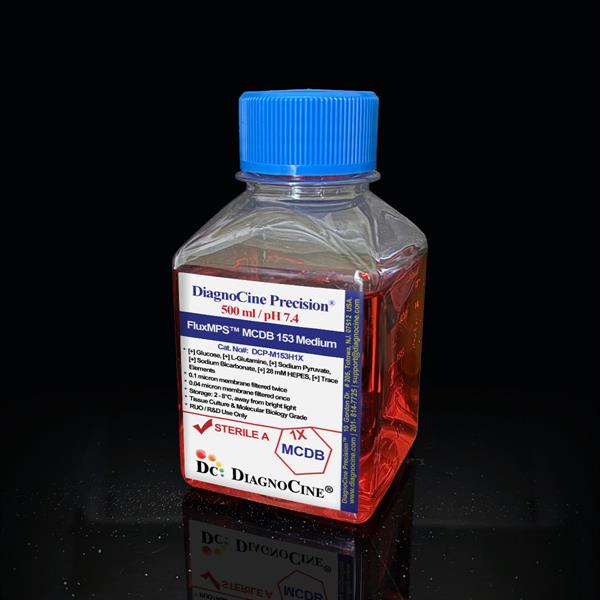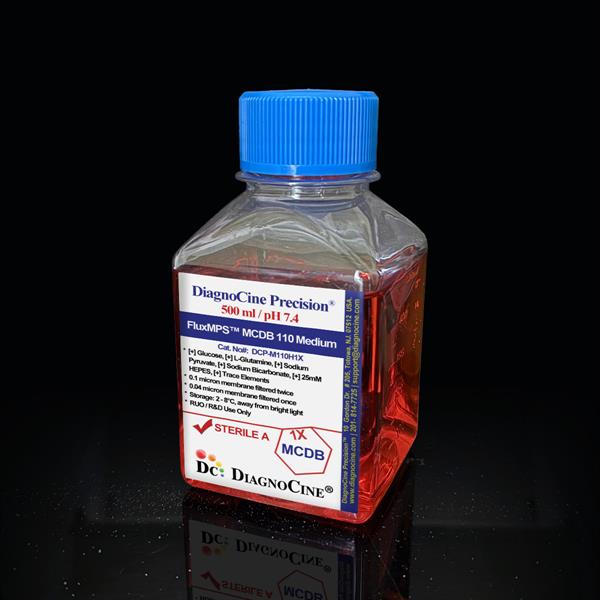
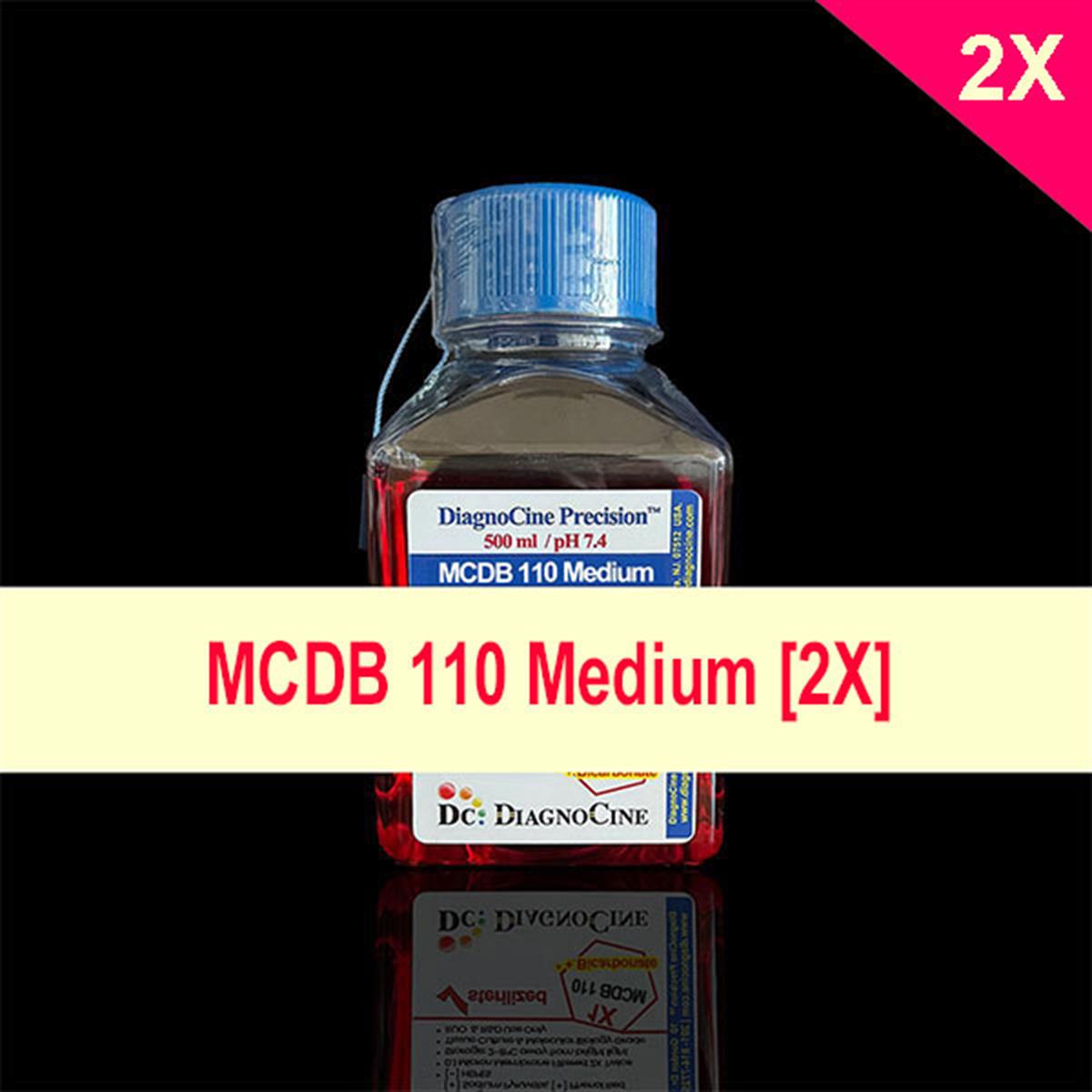
FluxMPS™ MCDB 110 Medium [2X] Family
Select See the table below
- See the table below
FluxMPS™ MCDB 110 Medium [2X] Family
MCDB 110 is a chemically defined medium designed for the growth and maintenance of human fibroblasts. A modification of MCDB 104, optimized alongside MCDB 105, it supports the long-term survival and rapid clonal growth of human diploid fibroblast-like cells including WI-38, MRC-5, IMR-90, and low-passage human foreskin fibroblasts. The FluxMPS™ MCDB 110 [2X] family supplies this formulation at double strength, so that agar, collagen, hydrogels, cell suspensions, or treatment solutions can be added at an equal volume without diluting the medium below 1X. FluxMPS™ delivers this formulation through a 0.04 micron quadruple-stage filtration process engineered for microfluidic, Organ-on-Chip (OoC), and Lab-on-Chip (LoC) platforms.
- Two double-strength FluxMPS™ configurations: MCDB 110: 2X Liquid (DCP-M110H2X, with sodium bicarbonate) and MCDB 110 w/o Sodium Bicarbonate: 2X Liquid (DCP-M110H-B2X)
- 2X concentrate: mix with an equal volume of a compatible solution or matrix for a final 1X medium
- Designed for the growth and maintenance of human fibroblasts; supports long-term survival and rapid clonal growth of human diploid fibroblast-like cells
- Glucose 1.44 g/L in the 2X concentrate (0.72 g/L at 1X); HEPES 50 mM at 2X (standard 25 mM at 1X)
- Both configurations include L-Glutamine, Sodium Pyruvate, HEPES, and Phenol Red as standard, plus a trace-element supplement (V, Cu, Fe, Mn, Mo, Ni, Si, Se, Sn, Zn); Sodium Bicarbonate is included in DCP-M110H2X (3,000 mg/L at 2X; 1,500 mg/L at 1X) and omitted in DCP-M110H-B2X
- For clonal growth of WI-38, MRC-5, IMR-90, and foreskin fibroblasts, low-protein or defined fibroblast media, soft-agar and overlay work, and 3D hydrogel culture
- Purified through FluxMPS™ quadruple-stage filtration — two 0.1 micron pre-filtration stages followed by two 0.04 micron final filtration stages — for microfluidic and Organ-on-Chip / Tissue-on-Chip / Lab-on-Chip compatibility
- Can be used with low levels of dialyzed fetal bovine serum protein (FBSP), or supplemented with hormones and growth factors for serum-free culture conditions
- Available in a 500 mL size; stored at 2-8°C away from bright light; fully customizable via support@diagnocine.com
- Concentration2X (double strength)
- Working strength1X after 1:1 mixing
- Glucose1.44 g/L at 2X (0.72 g/L at 1X)
- HEPES concentration50 mM at 2X (25 mM at 1X)
- L-GlutamineIncluded (both)
- Sodium PyruvateIncluded (both)
- Sodium BicarbonateVariant-dependent
- Phenol RedIncluded (both)
- SpecialWith Trace Elements
- Filtration0.1 / 0.1 / 0.04 / 0.04 µm
- Size500 mL
- Storage2-8°C, protect from light
At-a-Glance Supplement Matrix
Check the supplement(s) you require, press Search to confirm which 2X configuration(s) include them, then click straight through to the product page via the catalog-number link or the View button.
| Name | Cat No. | L-Glutamine | Pyruvate | Bicarbonate | HEPES | Phenol Red | Special | Product Page |
|---|---|---|---|---|---|---|---|---|
| MCDB 110: 2X Liquid | DCP-M110H2X | check | check | check | check | check | With Trace Elements | Viewarrow_forward |
| MCDB 110 w/o Sodium Bicarbonate: 2X Liquid | DCP-M110H-B2X | check | check | remove | check | check | With Trace Elements | Viewarrow_forward |
About MCDB 110 Medium [2X]
MCDB media were developed for the culture of specific cell types without a serum supplement. The media were supplemented with growth factors, hormones, trace elements, or low levels of dialyzed fetal bovine serum protein (FBSP), and each MCDB medium was formulated for a specific cell type: MCDB 105 and 110 for rapid clonal growth of normal human diploid cells, MCDB 131 originally for human micro-vascular endothelial cells (HMVEC), and MCDB 151, 201, and 302 originally for human keratinocytes, clonal growth of chick embryo fibroblasts, and CHO cells respectively.
MCDB 110 medium is a specialized cell culture medium designed for the growth and maintenance of human fibroblasts. It is a modification of MCDB 104, optimized alongside MCDB 105 to support the long-term survival and rapid clonal growth of human diploid fibroblast-like cells, including WI-38, MRC-5, IMR-90, and low-passage human foreskin fibroblasts. This medium is formulated to provide a defined and optimally balanced nutritional environment that selectively promotes the growth of these specific cell types.
MCDB 110 can be used with low levels of dialyzed fetal bovine serum protein (FBSP) or supplemented with hormones and growth factors for serum-free culture conditions. Like other MCDB media, it contains a carefully balanced mixture of inorganic salts, amino acids, vitamins, and other nutrients tailored to the specific requirements of human fibroblasts. The use of MCDB 110 allows researchers to cultivate these cells under well-defined conditions, which is particularly valuable for studies requiring precise control over the cellular environment.
Why a 2X (Double-Strength) Format
MCDB 110 Medium 2X is a double-strength version of the corresponding 1X basal formulation. It is intended for laboratory preparation of customized fibroblast media in which equal-volume or other major additions would otherwise reduce basal nutrients below 1X. Every formulated component is supplied at twice its working level, so mixing the concentrate with an equal volume of a compatible solution or matrix lands the final medium at 1X: glucose falls from 1.44 g/L to 0.72 g/L, HEPES from 50 mM to 25 mM, and, in DCP-M110H2X, sodium bicarbonate from 3,000 mg/L to 1,500 mg/L. DCP-M110H-B2X is supplied without sodium bicarbonate. A common version includes trace elements, L-glutamine, sodium pyruvate, HEPES, and phenol red, while bicarbonate may vary by configuration. The basal medium alone should not be described as a complete fibroblast growth medium unless all required supplements are included.
Origins & Development
MCDB media are a family of chemically defined, cell-type-specific basal formulations developed at the Department of Molecular, Cellular and Developmental Biology (MCDB) at the University of Colorado, Boulder, primarily by Richard G. Ham and Wallace L. McKeehan during the 1970s and 1980s. The department acronym gives the series its name; the department itself was founded in 1968 by pioneering cell biologist Keith Porter, its first chair. Unlike the classical Eagle-lineage media (BME, MEM, DMEM), which were designed as general-purpose basal formulations to be supplemented with serum, each MCDB medium was engineered from the ground up, qualitatively and quantitatively, to support the clonal growth and long-term maintenance of one specific, defined cell type.
The MCDB program was catalyzed by a 1976 discovery: McKeehan, Hamilton, and Ham reported in PNAS that selenium is an essential trace nutrient for clonal growth of WI-38 diploid human fibroblasts at minimal serum-protein concentrations, and that higher serum levels had simply been masking the requirement by supplying selenium as a contaminant. This finding showed that systematic trace-element supplementation could substantially reduce serum dependence and directly stimulated the formal MCDB series, beginning with MCDB 104 in 1977.
MCDB 105 (developed ~1978-1980) was a modification of MCDB 104 optimized for long-term survival and rapid clonal growth of human diploid fibroblast-like cells, including WI-38, MRC-5, IMR-90, and low-passage human foreskin fibroblasts. It differs from MCDB 104 principally in its salt system, further-adjusted amino acid concentrations, and the use of folinic acid in place of folic acid. MCDB 110 was developed in close succession and became the basis for a landmark 1981 serum-free system: Bettger, Boyce, Walthall, and Ham reported in PNAS (78(9): 5588-5592, 1981; PMID 7029539) that MCDB 110 supplemented with insulin, EGF, dexamethasone, prostaglandins E1 and F2-alpha, phosphoenolpyruvate, dithiothreitol, glutathione, and a liposome preparation supported rapid clonal growth and serial passage of WI-38, Flow 2000, MRC-5, and IMR-90 with less than 1 µg/mL total protein — the first demonstration of rapid clonal growth of normal human diploid cells in a totally protein-free, chemically defined medium.
In 1979, Ham and McKeehan codified the principles, nomenclature, and nutritional basis of the entire MCDB program in "Media and growth requirements," Chapter 5 of Methods in Enzymology (58: 44-93), which remains a key primary reference for the series.
The MCDB Series Family Tree
MCDB 110 is one of several cell-type-specific media that Ham, McKeehan, and colleagues derived from Ham's F-12 during the systematic MCDB nutritional-optimization program, developed in close succession to its direct parent, MCDB 105.
| Medium | Year | Primary Developers | Primary Target Cell | Parent Medium |
|---|---|---|---|---|
| MCDB 104 | 1977 | McKeehan, McKeehan, Hammond, Ham | WI-38 human lung fibroblasts | Ham's F-12 |
| MCDB 105 | ~1978-1980 | Ham, McKeehan | WI-38, MRC-5, IMR-90 fibroblasts | MCDB 104 |
| MCDB 110 | ~1980-1981 | Bettger, Boyce, Walthall, Ham | Human diploid fibroblasts (serum-free) | MCDB 105 |
| MCDB 131 | 1987 | Knedler, Ham | Human microvascular endothelial cells | MCDB 402 |
| MCDB 151 | 1980 | Peehl, Ham | Human epidermal keratinocytes (low-serum) | Ham's F-12 |
| MCDB 152 | 1982 | Tsao, Walthall, Ham | Human keratinocytes (defined) | MCDB 151 |
| MCDB 153 | 1983 | Boyce, Ham | Human epidermal keratinocytes (serum-free) | MCDB 151/152 |
| MCDB 201 | 1977 | McKeehan, Ham | Chick embryo fibroblasts | Ham's F-12 |
| MCDB 301/302 | 1977 | Hamilton, Ham | CHO cells (protein-free) | Ham's F-12 |
| MCDB 120 | 1988 | Ham et al. | Human muscle satellite cells | Ham's F-12 |
Composition
MCDB 110 provides a carefully balanced mixture of inorganic salts, amino acids, vitamins, and other nutrients tailored to human fibroblast requirements, supplied with a trace-element supplement ("Special: with Trace Elements") and, in the standard configuration, sodium bicarbonate.
| Concentration | 2X (double strength); 1X after 1:1 mixing |
| Glucose | 1.44 g/L at 2X (1,441 mg/L); 0.720 g/L at 1X |
| HEPES | 50 mM at 2X; standard 25mM at 1X |
| L-Glutamine | Included (both configurations); 731 mg/L at 2X |
| Sodium Pyruvate | Included (both configurations); 220 mg/L at 2X |
| Sodium Bicarbonate | Included in MCDB 110: 2X Liquid (DCP-M110H2X), 3,000 mg/L at 2X (1,500 mg/L at 1X); omitted in MCDB 110 w/o Sodium Bicarbonate: 2X Liquid (DCP-M110H-B2X) |
| Phenol Red | Included (both configurations); 2.484 mg/L at 2X |
| Special | With Trace Elements (both configurations): V, Cu, Fe, Mn, Mo, Ni, Si, Se, Sn, Zn |
| Size | 500 mL |
| Storage | 2-8°C, away from bright light |
Reference: Related MCDB-Series Composition (for context only — not MCDB 110)
MCDB 110 was developed in close succession to its direct parent, MCDB 105; the following source-verified tables describe MCDB 105 and MCDB 153, two other F-12-derived members of the MCDB series, provided here for lineage context.
| Ingredient | mg/L (1X) |
|---|---|
| Ammonium metavanadate | 0.000585 |
| Calcium chloride dihydrate | 147.000 |
| Cupric sulfate pentahydrate | 0.00025 |
| Ferrous sulfate heptahydrate | 1.390 |
| Magnesium sulfate (anhydrous) | 120.380 |
| Manganese sulfate | 0.000151 |
| Molybdic acid ammonium tetrahydrate | 0.00124 |
| Nickel chloride | 0.00012 |
| Potassium dihydrogen phosphate | 408.270 |
| Sodium chloride | 6546.000 |
| Sodium metasilicate nonahydrate | 0.1421 |
| Sodium selenite | 0.0052 |
| Stannous chloride monohydrate | 0.000113 |
| Zinc sulfate heptahydrate | 0.144 |
| Ingredient | mg/L (1X) |
|---|---|
| Glycine | 7.510 |
| L-Alanine | 8.910 |
| L-Arginine hydrochloride | 210.700 |
| L-Asparagine monohydrate | 15.000 |
| L-Aspartic acid | 13.310 |
| L-Cysteine hydrochloride monohydrate | 8.780 |
| L-Glutamic acid | 14.710 |
| L-Glutamine | 365.300 |
| L-Histidine hydrochloride monohydrate | 20.970 |
| L-Isoleucine | 3.940 |
| L-Leucine | 13.120 |
| L-Lysine hydrochloride | 36.540 |
| L-Methionine | 4.480 |
| L-Phenylalanine | 4.960 |
| L-Proline | 34.530 |
| L-Serine | 10.510 |
| L-Threonine | 11.910 |
| L-Tryptophan | 2.040 |
| L-Tyrosine disodium salt dihydrate | 7.840 |
| L-Valine | 11.720 |
| Ingredient | mg/L (1X) |
|---|---|
| Choline chloride | 13.960 |
| D-Biotin | 0.007339 |
| D-Calcium pantothenate | 0.238 |
| Folinic acid (calcium salt) | 0.000512 |
| Niacinamide | 6.110 |
| Pyridoxine hydrochloride | 0.0617 |
| Riboflavin | 0.113 |
| Thiamine hydrochloride | 0.337 |
| Vitamin B12 | 0.136 |
| myo-Inositol | 18.020 |
| Ingredient | mg/L (1X) |
|---|---|
| Adenine hydrochloride | 1.720 |
| D-Glucose | 720.640 |
| HEPES buffer | 5958.000 |
| Linoleic acid | 0.0028 |
| Phenol red sodium salt | 1.242 |
| Putrescine dihydrochloride | 0.000161 |
| Sodium pyruvate | 110.000 |
| Thioctic acid (alpha-lipoic acid) | 0.00206 |
| Thymidine | 0.0727 |
| Ingredient | mg/L (1X) |
|---|---|
| Ammonium metavanadate | 0.000585 |
| Calcium chloride dihydrate | 4.411 |
| Cupric sulfate pentahydrate | 0.00275 |
| Disodium hydrogen phosphate (anhydrous) | 284.088 |
| Ferrous sulfate heptahydrate | 1.390 |
| Magnesium chloride hexahydrate | 122.000 |
| Manganese sulfate | 0.000151 |
| Molybdic acid ammonium tetrahydrate | 0.00124 |
| Nickel chloride | 0.00012 |
| Potassium chloride | 111.830 |
| Sodium acetate (anhydrous) | 301.530 |
| Sodium chloride | 7599.000 |
| Sodium metasilicate nonahydrate | 0.1421 |
| Sodium selenite | 0.0038 |
| Stannous chloride monohydrate | 0.000113 |
| Zinc sulfate heptahydrate | 0.144 |
| Ingredient | mg/L (1X) |
|---|---|
| Glycine | 7.510 |
| L-Alanine | 8.910 |
| L-Arginine hydrochloride | 210.700 |
| L-Asparagine monohydrate | 15.000 |
| L-Aspartic acid | 3.990 |
| L-Cysteine hydrochloride monohydrate | 42.040 |
| L-Glutamic acid | 14.710 |
| L-Glutamine | 877.200 |
| L-Histidine hydrochloride monohydrate | 16.770 |
| L-Isoleucine | 1.968 |
| L-Leucine | 65.600 |
| L-Lysine hydrochloride | 18.270 |
| L-Methionine | 4.480 |
| L-Phenylalanine | 4.960 |
| L-Proline | 34.530 |
| L-Serine | 63.060 |
| L-Threonine | 11.910 |
| L-Tryptophan | 3.060 |
| L-Tyrosine disodium salt dihydrate | 3.410 |
| L-Valine | 35.130 |
| Ingredient | mg/L (1X) |
|---|---|
| Choline chloride | 13.960 |
| D-Biotin | 0.0146 |
| D-Pantothenic acid (hemicalcium) | 0.238 |
| Folic acid | 0.790 |
| Niacinamide | 0.03663 |
| Pyridoxine hydrochloride | 0.06171 |
| Riboflavin | 0.0376 |
| Thiamine hydrochloride | 0.337 |
| Vitamin B12 | 0.407 |
| myo-Inositol | 18.020 |
| Ingredient | mg/L (1X) |
|---|---|
| Adenine hydrochloride | 30.880 |
| D-Glucose | 1081.000 |
| HEPES buffer | 6600.000 |
| Phenol red sodium salt | 1.242 |
| Putrescine dihydrochloride | 0.161 |
| Sodium pyruvate | 55.000 |
| Thioctic acid (alpha-lipoic acid) | 0.206 |
| Thymidine | 0.727 |
Media Lineage Comparison
Context on how other F-12-derived MCDB-series media compare to one another, and how the series as a whole differs from classical Eagle-lineage basal media. All values in these lineage tables refer to 1X working strength.
| Feature | MCDB 105 (MCDB 110 parent) | MCDB 153 | MCDB 131 |
|---|---|---|---|
| Primary developer & year | McKeehan, Ham (~1978-1980) | Boyce & Ham (1983) | Knedler & Ham (1987) |
| Target cell type | Human diploid fibroblasts | Human epidermal keratinocytes | Human microvascular endothelial cells |
| Parent formulation | MCDB 104 → Ham's F-12 | MCDB 151/152 → Ham's F-12 | MCDB 402 → Ham's F-12 |
| Glucose | 720.64 mg/L (~4.0 mM) | 1081.0 mg/L (~6.0 mM) | 1000 mg/L (~5.5 mM) |
| Calcium (CaCl2·2H2O) | 147.0 mg/L | 4.411 mg/L (very low) | 235.2 mg/L |
| Magnesium | MgSO4 120.38 mg/L (~1 mM) | MgCl2·6H2O 122.0 mg/L | MgSO4 1204.0 mg/L (10 mM) |
| Selenium (Na2SeO3) | 0.0052 mg/L | 0.0038 mg/L | 0.0038 mg/L |
| Glutamine | 365.3 mg/L | 877.2 mg/L | Listed separately; not in base |
| Folinic acid | Yes (calcium salt) | No (folic acid 0.790 mg/L) | Yes (calcium salt) |
| HEPES | 5958 mg/L (25 mM) | 6600 mg/L (28 mM) | None; bicarbonate only |
| Sodium bicarbonate | Without (HEPES-buffered) | Without (add 1.176 g/L for CO2 system) | 1.176 g/L (requires 5-10% CO2) |
| Serum requirement | Low-serum (dFBS ~25 µg/mL) or serum-free | Serum-free with EGF, insulin, hydrocortisone, BPE | 0.7% dFBS + EGF + hydrocortisone |
| Osmolality | 240-280 mOsm/kg (without NaHCO3) | 320-360 mOsm/kg (with NaHCO3) | 280 ± 20 mOsm/kg |
Distinguishing Features Documented Across the MCDB Series
The following features are documented across the characterized MCDB-series media in Diagnocine's source materials (chiefly MCDB 104, 105, 110, 131, 151, 152, 153, 201); MCDB 110-specific per-component values beyond glucose, HEPES, and the supplement matrix above were not published in these sources.
- Comprehensive trace-element panel covering selenium, zinc, copper, iron, manganese, molybdenum, vanadium, nickel, tin, and silicon — elements absent from DMEM, MEM, BME, and RPMI 1640
- Folinic acid (leucovorin) used in place of folic acid in MCDB 105 and MCDB 131, bypassing the dihydrofolate reductase activation step — a feature MCDB 110 inherits directly from its MCDB 105 parent formulation
- Adenine supplementation as a free purine source (1.7 mg/L in MCDB 105 to 30.9 mg/L in MCDB 153), absent from classical Eagle media (DMEM, MEM)
- Thymidine inclusion as a preformed pyrimidine nucleoside, allowing cells to bypass de novo synthesis
- Putrescine dihydrochloride, a polyamine growth factor and precursor to spermidine and spermine, absent from DMEM, MEM, BME, RPMI 1640, and IMDM
- HEPES as a flexible buffering strategy in MCDB 105 and 153 (supplied without sodium bicarbonate; bicarbonate/CO2 added by the user when desired), consistent with MCDB 110's own standard 25mM HEPES concentration at 1X (50 mM in the 2X concentrate)
- Protein-free serum-free system foundation. MCDB 110, supplemented with insulin, EGF, dexamethasone, prostaglandins, phosphoenolpyruvate, dithiothreitol, glutathione, and a liposome preparation, was the first medium demonstrated to support rapid clonal growth of normal human diploid cells in a totally protein-free, chemically defined system, at less than 1 µg/mL total protein
MCDB Composition vs. Classical Media: Key Distinctions
| Feature | DMEM (high-glucose) | MEM | MCDB 105 | MCDB 153 | MCDB 131 |
|---|---|---|---|---|---|
| Amino acids | 15 (no Asn, Asp, Glu, Pro, Ala) | 13 | 20 (all proteinogenic) | 20 | 19 |
| Selenium | Absent | Absent | 0.0052 mg/L | 0.0038 mg/L | 0.0038 mg/L |
| Folinic acid | Absent | Absent | Present | Absent (folic acid) | Present |
| Adenine | Absent | Absent | 1.72 mg/L | 30.88 mg/L | 0.135 mg/L |
| Thymidine | Absent | Absent | 0.0727 mg/L | 0.727 mg/L | Present |
| Putrescine | Absent | Absent | Present | 0.161 mg/L | Present |
| Multi-trace elements | Absent (Fe(NO3)3 only) | Absent | Multi-element | Multi-element | Multi-element |
| HEPES | Absent | Absent | 25 mM | 28 mM | Absent |
| Glucose | 4500 mg/L | 1000 mg/L | 720.64 mg/L (~4 mM) | 1081 mg/L (~6 mM) | 1000 mg/L |
| Calcium | 265 mg/L | 200 mg/L | 147 mg/L | 4.411 mg/L | 235.2 mg/L |
| Serum requirement | 10% FBS typical | 5-10% FBS | Low-serum or serum-free | Serum-free with supplements | 0.7-2% dFBS or defined |
MCDB 110: 1X vs. 2X
| Feature | MCDB 110, 1X | MCDB 110, 2X |
|---|---|---|
| Supplied concentration | 1X (ready to use) | 2X (double strength) |
| Preparation before use | None | Mix with an equal volume of a compatible solution or matrix for a final 1X medium |
| Component concentrations as supplied | Standard 1X formulation | Twice the 1X value, before dilution |
| Composition at working strength | Standard formulation | Standard formulation, after 1:1 dilution |
| Glucose | 0.720 g/L | 1.44 g/L (0.72 g/L after 1:1 dilution) |
| HEPES | 25mM (standard) | 50 mM (25 mM after 1:1 dilution) |
| Sodium bicarbonate | Included in the standard configuration; omitted in w/o Bicarbonate | 3,000 mg/L in DCP-M110H2X (1,500 mg/L at 1X); omitted in DCP-M110H-B2X |
| Catalog variants | 2 | 2 |
| Catalog number suffix | ...1X | ...2X (e.g., DCP-M110H2X) |
| Filtration | Quadruple-stage, 0.04 micron final | Quadruple-stage, 0.04 micron final |
| Sizes | 500 mL, 1000 mL | 500 mL |
| Storage | 2-8°C, away from bright light | 2-8°C, away from bright light |
Why FluxMPS™
Quadruple-Stage 0.04 Micron Filtration
Purified finer than any ready-to-use cell culture media currently available, removing particulates and protein aggregates before they reach the chip.
Engineered for Microfluidic Flow
Formulated for Organ-on-Chip (OoC), Tissue-on-Chip (ToC), and Lab-on-Chip (LoC) platforms, where the medium is itself part of the instrument.
Optical Clarity
Supports real-time imaging and integrated biosensing across long-duration culture and perfusion studies.
Protein-Free Fibroblast Heritage
Rooted in the first demonstration of rapid clonal growth of normal human diploid cells in a totally protein-free, chemically defined medium.
Fully Customizable
Standard 2X concentration (mix 1:1 for 1X), 1.44 g/L glucose, and 50 mM HEPES at 2X can be adjusted, along with chemical additions, proteins, supplements, and pH, on request.
Regulatory-Aligned Foundation
Formulated to support FDA-recognized physiological modeling standards for drug discovery, toxicology screening, and translational research.
Quadruple-Stage Filtration
FluxMPS™ media pass through four sequential filtration stages — two 0.1 micron pre-filtration stages followed by two 0.04 micron final filtration stages. Every FluxMPS™ formulation, including MCDB 110 Medium [2X], passes through this architecture before reaching your platform.
-
01
0.1 µmPre-Filtration Stage 1 (0.1 µm)
Removes larger particulates and aggregates from the formulated medium.
-
02
0.1 µmPre-Filtration Stage 2 (0.1 µm)
A second 0.1 micron pass further reduces particulate and aggregate load ahead of the final filtration stages.
-
03
0.04 µmFinal Filtration Stage 1 (0.04 µm)
Fine filtration engineered for microfluidic channel compatibility.
-
04
0.04 µmFinal Filtration Stage 2 (0.04 µm)
A second 0.04 micron pass for the optical clarity and particulate control that OoC/ToC/LoC platforms require.
Filtration Performance

Validated Cell Lines & Applications
WI-38 Fibroblasts
A primary validated human diploid lung fibroblast cell type for MCDB 105 / 110.
MRC-5 & IMR-90 Fibroblasts
Additional human diploid lung fibroblast lines supported for long-term survival and rapid clonal growth.
Flow 2000 Cells
Supported under totally serum-free, protein-free conditions with serial passage.
Low-Passage Human Foreskin Fibroblasts
Includes fibroblast-like cells from amniotic fluid, fetal lung, and newborn foreskin.
Vaccine Production
Vaccine production from human diploid cells (WI-38, MRC-5) in MCDB 105/110-based serum-free systems.
Broader MCDB / F-12 Lineage Applications
Part of the F-12-derived MCDB series that also supports keratinocytes, endothelial cells, and CHO cells in related family members.
Scientific Applications
Totally Protein-Free Serum-Free Culture
MCDB 110, supplemented with insulin, EGF, dexamethasone, prostaglandins, phosphoenolpyruvate, dithiothreitol, glutathione, and a liposome preparation, supports rapid clonal growth and serial passage at less than 1 µg/mL total protein.
Precisely Controlled Culture Environments
Its defined formulation allows researchers to cultivate fibroblast cells under well-defined conditions, valuable for studies requiring precise control over the cellular environment.
Bicarbonate / HEPES-Buffered Culture Options
The standard MCDB 110: 2X Liquid configuration includes sodium bicarbonate; the w/o Sodium Bicarbonate configuration is available for workflows relying on its HEPES buffering (50 mM at 2X; standard 25mM at 1X).
Custom Formulation Studies
Standard glucose, HEPES, concentration, and supplement levels can be customized, with additions of chemicals, compounds, proteins, or a different pH available on request.
Soft-Agar & Semi-Solid Culture
Mix 1:1 with molten agar, agarose, or methylcellulose for anchorage-independent growth, semi-solid cloning, and overlay assays at 1X medium strength.
3D Hydrogel Embedding
The 2X strength compensates for dilution in collagen, agarose, alginate, fibrin, PEG, hyaluronic acid, and GelMA preparations, including microfluidic and organ-on-chip gel loading.
Frequently Asked Questions
Verified References
- McKeehan, W.L., McKeehan, K.A., Hammond, S.L. & Ham, R.G. (1977). Improved medium for clonal growth of human diploid fibroblasts at low concentrations of serum protein. In Vitro, 13(7): 399-416. PMID 301851. DOI 10.1007/BF02615100.
- McKeehan, W.L., Hamilton, W.G. & Ham, R.G. (1976). Selenium is an essential trace nutrient for the growth of WI-38 diploid human fibroblasts. Proc. Natl. Acad. Sci. USA, 73(6): 2023-2027. DOI 10.1073/pnas.73.6.2023.
- Hamilton, W.G. & Ham, R.G. (1977). Clonal growth of Chinese hamster cell lines in protein-free media. In Vitro, 13(9): 537-547.
- McKeehan, W.L. & Ham, R.G. (1977). [MCDB 201 reference] Dev. Biol. Stand., 37: 97-98.
- Ham, R.G. & McKeehan, W.L. (1979). Media and growth requirements. Methods in Enzymology, 58: 44-93.
- Peehl, D.M. & Ham, R.G. (1980). Clonal growth of human keratinocytes with small amounts of dialyzed serum. In Vitro, 16(6): 526-540. PMID 6156122. DOI 10.1007/BF02626466.
- Bettger, W.J., Boyce, S.T., Walthall, B.J. & Ham, R.G. (1981). Rapid clonal growth and serial passage of human diploid fibroblasts in a lipid-enriched synthetic medium supplemented with EGF, insulin, and dexamethasone. Proc. Natl. Acad. Sci. USA, 78(9): 5588-5592. PMID 7029539. DOI 10.1073/pnas.78.9.5588.
- Tsao, M.C., Walthall, B.J. & Ham, R.G. (1982). Clonal growth of normal human epidermal keratinocytes in a defined medium. J. Cell Physiol., 110(2): 219-229. PMID 7040427. DOI 10.1002/jcp.1041100217.
- Boyce, S.T. & Ham, R.G. (1983). Calcium-regulated differentiation of normal human epidermal keratinocytes in chemically defined clonal culture and serum-free serial culture. J. Invest. Dermatol., 81(1 Suppl): 33s-40s. PMID 6345690. DOI 10.1111/1523-1747.ep12540422.
- Knedler, A. & Ham, R.G. (1987). Optimized medium for clonal growth of human microvascular endothelial cells with minimal serum. In Vitro Cell. Dev. Biol., 23(7): 481-491. PMID 3301790. DOI 10.1007/BF02628418.
- Ham, R.G. et al. (1988). Improved media for normal human muscle satellite cells. In Vitro Cell. Dev. Biol., 24(8): 833-844. PMID 3045074. (MCDB 120.)
- McKeehan, W.L. & Ham, R.G. (1976). Stimulation of clonal growth of normal fibroblasts with substrata coated with basic polymers. J. Cell Biol., 71: 727-734.
FluxMPS™ — Precision Cell Culture Media for Microphysiological Systems
Built for the architecture of the future. Not the flask of the past.
Traditional cell culture media were formulated for static well plates and flasks — environments that tolerate impurities, precipitates, and particle loads that would immediately compromise a microfluidic system. FluxMPS™ was designed from the ground up for Organ-on-Chip (OoC), Tissue-on-Chip (ToC), and Lab-on-Chip (LoC) platforms, where the medium itself is part of the instrument.
Purity That Protects Your Platform
FluxMPS™ is purified to 0.04 microns — finer than any ready-to-use cell culture media currently available. At this level, the microscopic particulates and protein aggregates that silently block micro-channels, disrupt laminar flow, and generate false biological signals are eliminated before the media ever reaches your chip.
The result: your platform stays operational, your data stays clean, and your biology drives the result — not your media.
Engineered for Flow, Not Just Growth
The name FluxMPS™ reflects its core design principle. Every component is optimized for consistent, laminar flow performance across:
- Complex micro-channel geometries
- Capillary-bed and vascular simulations
- Long-term automated perfusion studies running continuously for weeks
Zero-clogging performance is not a feature — it is the baseline specification.
Applications & Performance
| Application | What FluxMPS™ Delivers |
|---|---|
| Microfluidics | Stable shear stress; no channel blockage |
| Metabolic Tracing | Ultra-pure matrix with no contaminant interference |
| Long-term Perfusion | Consistent formulation stability over weeks of continuous flow |
| Organ-on-Chip | Optical clarity for real-time imaging and integrated biosensing |
Regulatory Foundation
FluxMPS™ is formulated to support FDA-recognized physiological modeling standards, providing a validated, reproducible media foundation for drug discovery, toxicology screening, and translational research. When your downstream data needs to stand up to regulatory scrutiny, your upstream media cannot be an afterthought.
The Bottom Line
Microfluidic platforms are precision instruments. They require precision inputs.
FluxMPS™ is the only ready-to-use cell culture medium engineered specifically to meet that standard — protecting your chip, your cells, and your science.