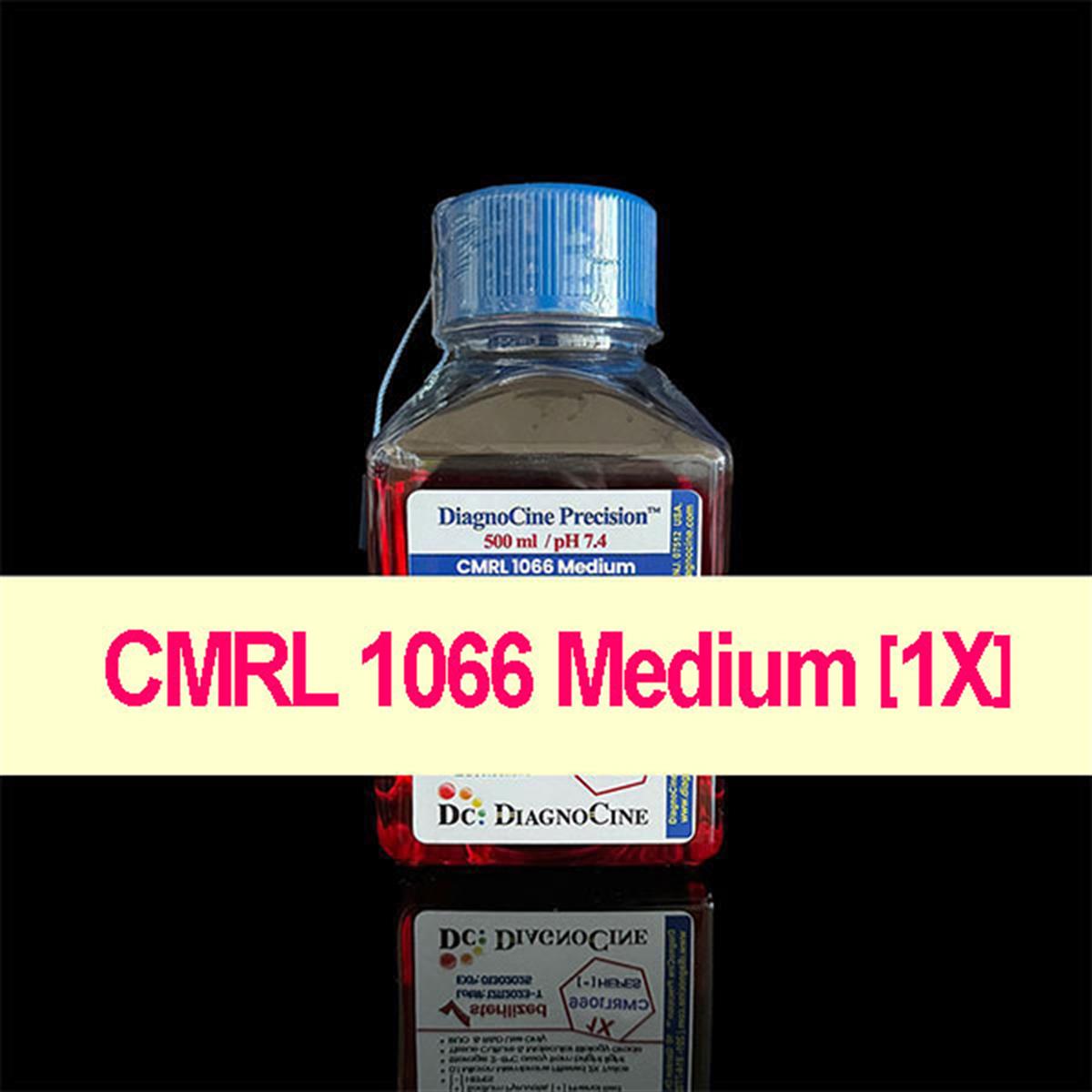
FluxMPS™ CMRL 1066 Medium
Select CMRL1066 Medium
- See the table below
FluxMPS™ CMRL 1066 Medium
CMRL 1066 is a defined cell culture medium originally developed in the late 1950s by Connaught Medical Research Laboratories. It is a less complex and extensively modified version of Medium 199, designed initially for long-term cultivation of mouse L cells without protein supplementation. Although originally formulated for serum-free conditions, CMRL 1066 can support the growth of various cell lines when supplemented with serum. This versatile medium contains a balanced mixture of amino acids, vitamins, inorganic salts, and other nutrients necessary for cell growth. CMRL 1066 has been widely used in research and biotechnology applications, including the culture of human pancreatic islets. Every FluxMPS™ variant is purified through quadruple-stage 0.04 micron filtration, engineered for organ-on-chip (OoC), tissue-on-chip (ToC), and lab-on-chip (LoC) microfluidic culture systems.
- 9 variants across L-Glutamine, Sodium Bicarbonate, and Phenol Red inclusion/exclusion, plus a specialty formulation without Pyridoxal hydrochloride
- 58-component chemically defined formulation — one of the most nutritionally complete classical media, including coenzymes and DNA nucleoside precursors absent from DMEM, MEM, and RPMI 1640
- A substantially modified and simplified derivative of Medium 199, retaining its nucleic acid derivatives and coenzymes
- Field-standard basal medium for human pancreatic islet isolation, culture, and preservation, closely associated with the Edmonton Protocol
- Reduced glutathione at approximately 200x the concentration found in Medium 199, supporting intracellular reducing capacity
- FluxMPS™ quadruple-stage 0.04 micron filtration — finer than any ready-to-use cell culture media currently available
- Available in 500 mL and 1000 mL sizes; 2-8°C storage away from bright light; fully customizable on request (including HEPES buffering)
- Concentration1X
- Glucose1.0 g/L (5.5 mM), Low Glucose
- L-GlutamineConfigurable (+/-); add 2 mM if not in base
- Sodium BicarbonateConfigurable (+/-), 2200 mg/L
- Phenol RedConfigurable (+/-)
- CoenzymesCoA, cocarboxylase (TPP), NAD, NADP, FAD
- DNA nucleosidesDeoxyadenosine, deoxycytidine, deoxyguanosine, thymidine
- Sizes500 mL / 1000 mL
- Storage2-8 C, away from light
Select Your CMRL 1066 Medium Configuration
Please select the supplement(s) of interest, then click Search. Check the supplement(s) you need below and press Search to instantly highlight every matching variant. Each row links straight through to its product page via the catalog number or the View button.
| Name | Cat No. | L-Glutamine | Bicarbonate | Phenol Red | Product Page |
|---|---|---|---|---|---|
| CMRL | DCP-CMRL1X | check | check | check | Viewarrow_forward |
| CMRL w/o Glutamine | DCP-CMRL-Q1X | remove | check | check | Viewarrow_forward |
| CMRL w/o Bicarbonate | DCP-CMRL-B1X | check | remove | check | Viewarrow_forward |
| CMRL w/o Phenol Red | DCP-CMRL-R1X | check | check | remove | Viewarrow_forward |
| CMRL w/o Glutamine, Bicarbonate | DCP-CMRL-QB1X | remove | remove | check | Viewarrow_forward |
| CMRL w/o Glutamine, Phenol Red | DCP-CMRL-QR1X | remove | check | remove | Viewarrow_forward |
| CMRL w/o Bicarbonate, Phenol Red | DCP-CMRL-BR1X | check | remove | remove | Viewarrow_forward |
| CMRL w/o Glutamine, Bicarbonate, Phenol Red | DCP-CMRL-QBR1X | remove | remove | remove | Viewarrow_forward |
| CMRL w/o Pyridoxal Hydrochloride (w/o Pyridoxal hydrochloride) | DCP-CMRL-YY1X | check | check | check | Viewarrow_forward |
About CMRL 1066 Medium
CMRL 1066 is a chemically defined, nucleoside- and coenzyme-rich cell culture medium developed at the Connaught Medical Research Laboratories (CMRL), University of Toronto, Canada, in the late 1950s. It is a substantially modified and simplified derivative of Medium 199 (Morgan, Morton & Parker, 1950), originally formulated for the long-term cultivation of mouse L-strain (Earle's) fibroblasts under serum-free conditions, making it one of the earliest mammalian cell culture media designed explicitly for protein-free growth. Its distinguishing chemical profile — 58 components including an exceptionally broad vitamin-coenzyme panel, DNA nucleoside precursors, reduced glutathione, glucuronic acid, and Tween 80 — reflects the ambition of its developers to fully replace undefined biological supplements with chemically pure constituents.
Although its serum-free applications are now largely superseded by later defined media, CMRL 1066 has found an enduring and clinically important second life as a standard basal medium for the isolation, culture, and preservation of human pancreatic islets in transplantation, associated with the Edmonton Protocol (Shapiro et al., 2000) and used across international transplant centers.
Origins and Development: The Connaught Laboratories Medium Series
CMRL 1066 did not emerge as a single designed formulation but as the end product of a sustained, iterative research program at the Connaught Medical Research Laboratories, University of Toronto, spanning roughly a decade. The Connaught group, principally Raymond C. Parker, George M. Healy, and their colleagues, had been systematically defining the nutritional requirements of animal cells in tissue culture since the early 1950s. Their progressive medium series included:
- Synthetic Medium No. 703 — Healy, Fisher & Parker (1954), Can. J. Biochem. Physiol. 32(3): 327-337; an early synthetic medium testing systematic amino acid and vitamin combinations in stationary culture.
- Synthetic Medium No. 858 — Healy, Fisher & Parker (1955), Proc. Soc. Exp. Biol. Med. 89(1): 71-77; a further refinement, expanding the coenzyme content and evaluating growth responses of Earle's L cells.
- CMRL 1066 — Parker, R.C., Castor, L.N. & McCulloch, E.A. (1957), "Altered Cell Strains In Continuous Culture: A General Survey," Special Publications of the New York Academy of Sciences, 5: 303-313.
Relationship to Medium 199
CMRL 1066 is explicitly described in its own technical literature as a less complex and extensively modified version of Medium 199. Medium 199, developed by Morgan, Morton & Parker in 1950 (Proc. Soc. Exp. Biol. Med. 73(1): 1-8), was the first comprehensive chemically defined medium and contained over 60 components, including amino acids, vitamins, nucleic acid bases, lipid precursors, and coenzymes. CMRL 1066 retains the Medium 199 philosophy of chemical completeness, specifically preserving the nucleic acid derivatives and coenzymes omitted in the intermediate H597 modification of Medium 199 used for poliovirus vaccine production, while simplifying and adjusting concentrations to sustain L-cell growth.
A particularly notable compositional feature inherited and amplified from Medium 199 is the inclusion of reduced glutathione. CMRL 1066 contains glutathione at approximately 200 times the concentration found in Medium 199 (10 mg/L vs approximately 0.05 mg/L), reflecting the Connaught group's emphasis on intracellular reducing capacity for serum-free maintenance of rapidly dividing cells.
Subsequent CMRL Derivatives
- CMRL 1415 — Healy & Parker (1966), J. Cell Biol. 30(3): 531-538. PMID: 5971005. An improved chemically defined medium for newly explanted mouse embryo cells, devised by systematic modification of CMRL 1066; contains 50 components and incorporates galactose, pyruvate, and enhanced phosphate buffering. Omitting sodium bicarbonate yields CMRL-1415-ATM for open-atmosphere use.
- CMRL 1969 — Healy, Teleki, Seefried, Walton & Macmorine (1971), Appl. Microbiol. 21(1): 1-5. An improved medium for primary monkey kidney cells and human diploid cell strains, used to advantage for poliovirus production; improvements attributed to free-base amino acids and increased dibasic sodium phosphate.
Composition
The following formulation matches the standard CMRL 1066 vendor composition (HiMedia/CDH and Sigma). All concentrations are in mg/L. The complete formulation contains 58 components and is supplied without L-glutamine (added separately) and in some preparations without phenol red. Per-lot Certificate of Analysis (CoA) requests can be directed to support@diagnocine.com.
Inorganic Salts
| Salt | mg/L |
|---|---|
| Calcium chloride dihydrate (CaCl2 * 2H2O) | 265.00 |
| Magnesium sulfate anhydrous (MgSO4) | 97.72 |
| Potassium chloride (KCl) | 400.00 |
| Sodium acetate anhydrous (CH3COONa) | 50.00 |
| Sodium bicarbonate (NaHCO3) | 2200.00 |
| Sodium chloride (NaCl) | 6800.00 |
| Sodium dihydrogen phosphate anhydrous (NaH2PO4) | 122.00 |
Amino Acids
CMRL 1066 contains 20 amino acids in the base (L-glutamine-free) formulation, including the unusual amino acid trans-4-hydroxy-L-proline and a dual cysteine/cystine system; with L-glutamine added separately, the complete medium has 21 amino acids.
| Amino Acid | mg/L |
|---|---|
| Glycine | 50.00 |
| L-Alanine | 25.00 |
| L-Arginine (free base) | 57.87 |
| L-Aspartic acid | 30.00 |
| L-Cysteine hydrochloride monohydrate | 260.00 |
| L-Cystine | 20.00 |
| L-Glutamic acid | 75.00 |
| L-Histidine hydrochloride monohydrate | 20.00 |
| L-Isoleucine | 20.00 |
| L-Leucine | 60.00 |
| L-Lysine hydrochloride | 70.00 |
| L-Methionine | 15.00 |
| L-Phenylalanine | 25.00 |
| L-Proline | 40.00 |
| L-Serine | 25.00 |
| L-Threonine | 30.00 |
| L-Tryptophan | 10.00 |
| L-Tyrosine (disodium salt) | 40.00 |
| L-Valine | 25.00 |
| Trans-4-hydroxy-L-proline | 10.00 |
| L-Glutamine (added separately) | 292 mg/L |
Vitamins
| Vitamin | mg/L |
|---|---|
| D-Biotin | 0.010 |
| Folic acid | 0.010 |
| L-Ascorbic acid (sodium salt) | 50.000 |
| Niacinamide (nicotinamide) | 0.025 |
| Nicotinic acid | 0.025 |
| Pyridoxal hydrochloride | 0.025 |
| Pyridoxine hydrochloride | 0.025 |
| Riboflavin | 0.010 |
| Thiamine hydrochloride | 0.010 |
| myo-Inositol | 0.050 |
| Choline chloride | 0.500 |
| D-Calcium pantothenate | 0.010 |
| p-Aminobenzoic acid (PABA) | 0.050 |
Ascorbic acid (50 mg/L): the highest-concentration vitamin in CMRL 1066, absent from DMEM and MEM; antioxidant and cofactor for prolyl/lysyl hydroxylases in collagen biosynthesis. PABA (0.050 mg/L): a B-complex factor retained from Medium 199. Dual vitamin B6: both pyridoxal HCl and pyridoxine HCl at 0.025 mg/L each. Biotin (0.010 mg/L): present, unlike DMEM and Click's EHAA.
Coenzymes and Metabolic Cofactors
These components are absent from DMEM, MEM, RPMI 1640, and Click's EHAA.
| Coenzyme / Cofactor | mg/L |
|---|---|
| Coenzyme A sodium salt (CoA * Na) | 2.500 |
| Cocarboxylase (thiamine pyrophosphate, TPP) | 1.000 |
| Beta-NAD (nicotinamide adenine dinucleotide, oxidized) | 7.000 |
| Beta-NADP sodium salt (NADP) | 1.000 |
| FAD disodium salt (flavin adenine dinucleotide) | 0.106 |
Metabolic rationale: CoA (fatty acid synthesis, TCA cycle, amino acid catabolism), cocarboxylase/TPP (pyruvate and alpha-ketoglutarate dehydrogenase), beta-NAD and beta-NADP (central redox coenzymes), and FAD (respiratory chain, flavoenzymes) were included as preformed coenzymes to bypass potential rate-limiting biosynthetic steps under serum-free conditions.
DNA Nucleoside Precursors
| Nucleoside | mg/L |
|---|---|
| 2'-Deoxyadenosine | 10.00 |
| 2'-Deoxycytidine hydrochloride | 11.60 |
| 2'-Deoxyguanosine | 10.00 |
| 5-Methyldeoxycytidine | 0.10 |
| Thymidine | 10.00 |
Unlike Click's EHAA (which provides ribonucleoside precursors), CMRL 1066 provides deoxyribonucleoside precursors — the direct building blocks of DNA synthesis. (Some vendors list the methylated component as "5-methylcytosine HCl" rather than 5-methyldeoxycytidine; the concentration is 0.1 mg/L either way.)
Other Components
| Component | mg/L |
|---|---|
| D-Glucose anhydrous | 1000.00 |
| L-Glutathione (reduced) | 10.00 |
| D-Glucuronic acid sodium salt | 3.88 |
| Uridine-5'-triphosphate sodium salt (UTP * Na) | 1.00 |
| Cholesterol | 0.20 |
| Tween 80 (polyoxyethylene sorbitan monooleate) | 5.00 |
| Phenol red sodium salt | approximately 20-21 |
Reduced glutathione (10 mg/L): approximately 200x the level in Medium 199; principal intracellular non-protein thiol and the central mechanism by which CMRL 1066 maintains viable cells under protein-free conditions. Tween 80 (5 mg/L): non-ionic surfactant to solubilize cholesterol and deliver lipids, substituting for serum albumin's lipid-carrier role. Cholesterol (0.20 mg/L): direct lipid supplement. D-Glucuronic acid (3.88 mg/L): glycosaminoglycan biosynthesis precursor. UTP (1 mg/L): preformed ribonucleotide triphosphate for RNA biosynthesis.
Complete Composition Summary
| Category | Details |
|---|---|
| Total components | 58 |
| Salt system | Earle's-type (MgSO4; NaCl; single monobasic NaH2PO4); distinctive sodium acetate (50 mg/L) |
| Amino acids | 20 in base + L-glutamine added separately = 21 total (including trans-4-hydroxy-L-proline and dual cysteine/cystine) |
| Classical vitamins | 13 — including biotin, ascorbic acid, PABA, dual B6 (pyridoxal + pyridoxine); no B12 |
| Coenzymes | CoA, cocarboxylase (TPP), beta-NAD (7.0), beta-NADP (1.0), FAD; absent from other classical media |
| DNA nucleosides | 2'-deoxyadenosine, 2'-deoxycytidine HCl, 2'-deoxyguanosine, 5-methyldeoxycytidine, thymidine |
| Glucose | 1000 mg/L (5.5 mM); low glucose |
| Glutathione (reduced) | 10 mg/L — approximately 200x Medium 199 |
| Lipid supplements | Cholesterol 0.20 mg/L + Tween 80 5 mg/L |
| NaHCO3 | 2200 mg/L (some vendors 2750); requires 5-10% CO2 |
| pH | 7.4 |
| Osmolality | 300-340 mOsm/kg H2O |
| L-Glutamine | Not in base; add 10 mL of 200 mM stock per liter (= 2 mM final) |
| Serum supplement | Serum-free in original design; when supplemented, horse or calf serum is classically preferred for monkey kidney and many diploid lines |
Media Lineage Comparison
| Feature | CMRL 1066 | DMEM (High Glucose) |
|---|---|---|
| Parent medium | Medium 199 (modified) | BME (modified) |
| Developer | Parker et al., CMRL, 1957 | Dulbecco & Freeman, 1959 |
| Total components | 58 | approximately 30 |
| Amino acids (base) | 20 (+glutamine = 21; includes hydroxyproline; dual Cys/Cystine) | 15 |
| Biotin | Yes | No |
| Ascorbic acid | Yes, 50 mg/L | No |
| PABA | Yes | No |
| Coenzymes (CoA, TPP, NAD, NADP, FAD) | Yes | No |
| DNA deoxyribonucleosides | Yes (5 types) | No |
| Glutathione | Yes, 10 mg/L | No |
| Lipid supplements | Cholesterol + Tween 80 | No |
| Sodium acetate | Yes, 50 mg/L | No |
| Glucose | 1000 mg/L | 4500 mg/L |
| NaHCO3 | 2200 mg/L | 3700 mg/L |
| Serum-free design | Yes (original intent) | No |
| pH | approximately 6.8-7.6 | approximately 7.2 |
| Osmolality | 300-340 mOsm/kg | approximately 320-355 mOsm/kg |
Validated Cell Types and Applications
Founding Applications (Serum-Free)
Mouse L-Strain (Earle's) Fibroblasts
CMRL 1066 was optimized for long-term maintenance of monolayer L-cell cultures under serum-free, protein-free conditions; it is the cell line on which the entire CMRL series was evaluated.
Monkey Kidney Cells (Cloning)
CMRL 1066 is documented as a medium for cloning monkey kidney cells under defined conditions.
Extended Applications (With Serum)
General Fibroblast-Like & Permanent Cell Lines
With horse or calf serum (10%), CMRL 1066 supports a wide variety of mammalian cell types, particularly fibroblast-like adherent lines, and has been used with human and monkey cells.
Bovine Uterine & Oviduct Epithelial Cells
In a published comparative study, these cells showed the highest 8-day growth rates in CMRL 1066 versus Medium 199, MEM, Menezo's B2, and Ham's F-12.
Mouse Myeloma Tumor Stem Cells
CMRL 1066 was reported to contain an unidentified labile factor required by myeloma cells but not hematopoietic cells in soft-agar colony assays.
Borrelia burgdorferi (BSK Medium)
CMRL 1066 (10x) is a principal ingredient of Barbour-Stoenner-Kelly (BSK/BSK-II) medium, the standard medium for cultivating the Lyme disease spirochete.
Principal Contemporary Application: Human Pancreatic Islet Culture
CMRL 1066 (supplemented) is a field-standard basal medium for the isolation, processing, culture, and preservation of isolated human pancreatic islets in clinical islet transplantation. It is closely associated with the Edmonton Protocol (Shapiro, A.M.J. et al., 2000, N. Engl. J. Med. 343(4): 230-238). Note, however, that the original Edmonton Protocol transplanted freshly isolated islets (typically within approximately 2 hours of isolation), so CMRL 1066 served as the isolation/processing medium rather than a pretransplant culture medium in that protocol; extended islet culture in CMRL 1066 subsequently became standard and is now widely used.
The biochemical rationale for CMRL 1066 in islet work connects directly to its composition:
- Ascorbic acid (50 mg/L) — antioxidant protection; role in beta-cell function
- Reduced glutathione (10 mg/L) — defense against oxidative stress during isolation
- Glucose (5.5 mM) — near-euglycemic, avoiding supra-physiological glucose toxicity
- Coenzymes (NAD, CoA, FAD) — support the metabolically active islet endocrine cells
- DNA deoxyribonucleosides — support islet cell viability during culture
Standard supplementation for islet culture typically includes 10% FCS or human serum albumin, L-glutamine (2 mM), penicillin, and streptomycin. Enriched protocols build on the CMRL 1066 base with zinc, insulin, transferrin, selenium (ITS; "Memphis media" = CMRL + ITS), sodium pyruvate, and antioxidants. The Edmonton group's international multicenter trial (Shapiro et al., N. Engl. J. Med. 2006; 355(13): 1318-1330) validated the CMRL 1066-based protocol across sites.
Why FluxMPS™ CMRL 1066 Medium
Quadruple-Stage 0.04 Micron Filtration
Purified to 0.04 microns — finer than any ready-to-use cell culture media currently available — removing the microscopic particulates and protein aggregates that silently block micro-channels.
Built for OoC / ToC / LoC Platforms
Engineered from the ground up for Organ-on-Chip, Tissue-on-Chip, and Lab-on-Chip platforms, where the medium itself is part of the instrument and cannot be an afterthought.
Particulate & Aggregate Removal
Eliminates particulates and protein aggregates that disrupt laminar flow and generate false biological signals before the media ever reaches the chip.
Optical Clarity
Supports real-time imaging and integrated biosensing on Organ-on-Chip platforms, where optical clarity of the medium is essential to data quality.
FDA-Recognized Physiological Modeling Standards
Formulated to support FDA-recognized physiological modeling standards, providing a validated, reproducible media foundation for regulatory-facing studies.
Drug Discovery, Toxicology & Translational Research
A validated foundation for drug discovery, toxicology screening, and translational research, where downstream data must stand up to regulatory scrutiny.
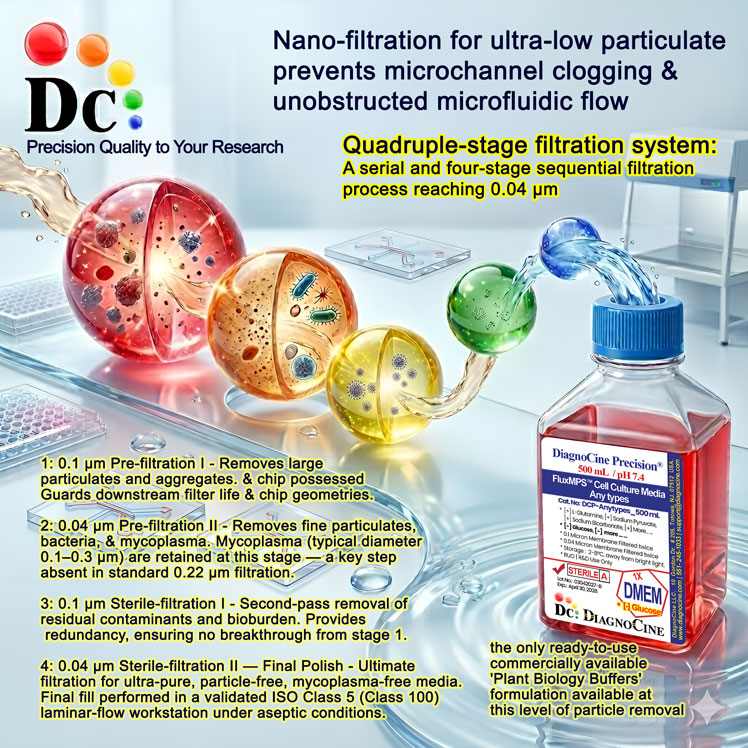
Quadruple-Stage Filtration System
Every FluxMPS™ CMRL 1066 Medium variant passes through the same four-stage architecture before reaching your chip.
-
01
Pre-Filtration Stage 1 0.1 µm
Initial coarse particulate removal.
-
02
Pre-Filtration Stage 2 0.1 µm
Secondary particulate and aggregate reduction.
-
03
Sterile Filtration Stage 1 0.04 µm
Fine sterile filtration below standard 0.22 micron practice.
-
04
Sterile Filtration Stage 2 0.04 µm
Final polish for microfluidic-grade clarity.
Engineered for Flow, Not Just Growth
Every component is optimized for consistent, laminar flow performance across complex micro-channel geometries, capillary-bed and vascular simulations, and long-term automated perfusion studies running continuously for weeks.
Frequently Asked Questions
Verified Bibliography
- Parker, R.C., Castor, L.N. & McCulloch, E.A. (1957). Altered Cell Strains In Continuous Culture: A General Survey. Special Publications of the New York Academy of Sciences, 5: 303-313.
- Morgan, J.F., Morton, H.J. & Parker, R.C. (1950). Nutrition of animal cells in tissue culture. I. Initial studies on a synthetic medium. Proc. Soc. Exp. Biol. Med., 73(1): 1-8. DOI: 10.3181/00379727-73-17557
- Healy, G.M., Fisher, D.C. & Parker, R.C. (1954). Nutrition of animal cells in tissue culture. IX. Synthetic medium No. 703. Can. J. Biochem. Physiol., 32(3): 327-337.
- Healy, G.M., Fisher, D.C. & Parker, R.C. (1955). Nutrition of animal cells in tissue culture. X. Synthetic medium No. 858. Proc. Soc. Exp. Biol. Med., 89(1): 71-77. DOI: 10.3181/00379727-89-21719
- Healy, G.M. & Parker, R.C. (1966). An improved chemically defined basal medium (CMRL-1415) for newly explanted mouse embryo cells. J. Cell Biol., 30(3): 531-538. PMID: 5971005. PMCID: PMC2107014. DOI: 10.1083/jcb.30.3.531
- Healy, G.M., Teleki, S., Seefried, A.V., Walton, M.J. & Macmorine, H.G. (1971). Improved Chemically Defined Basal Medium (CMRL-1969) for Primary Monkey Kidney and Human Diploid Cells. Appl. Microbiol., 21(1): 1-5. PMCID: PMC377105
- Shapiro, A.M.J., Lakey, J.R.T., Ryan, E.A., et al. (2000). Islet Transplantation in Seven Patients with Type 1 Diabetes Mellitus Using a Glucocorticoid-Free Immunosuppressive Regimen. N. Engl. J. Med., 343(4): 230-238. DOI: 10.1056/NEJM200007273430401
- Shapiro, A.M.J., et al. (2006). International Trial of the Edmonton Protocol for Islet Transplantation. N. Engl. J. Med., 355(13): 1318-1330. DOI: 10.1056/NEJMoa061267
- Yao, T. & Asayama, Y. (2017). Animal-cell culture media: History, characteristics, and current issues. Reproductive Medicine and Biology, 16(2): 99-117. PMC5661806
FluxMPS™ — Precision Cell Culture Media for Microphysiological Systems
Built for the architecture of the future. Not the flask of the past.
Traditional cell culture media were formulated for static well plates and flasks — environments that tolerate impurities, precipitates, and particle loads that would immediately compromise a microfluidic system. FluxMPS™ was designed from the ground up for Organ-on-Chip (OoC), Tissue-on-Chip (ToC), and Lab-on-Chip (LoC) platforms, where the medium itself is part of the instrument.
Purity That Protects Your Platform
FluxMPS™ is purified to 0.04 microns — finer than any ready-to-use cell culture media currently available. At this level, the microscopic particulates and protein aggregates that silently block micro-channels, disrupt laminar flow, and generate false biological signals are eliminated before the media ever reaches your chip.
The result: your platform stays operational, your data stays clean, and your biology drives the result — not your media.
Engineered for Flow, Not Just Growth
The name FluxMPS™ reflects its core design principle. Every component is optimized for consistent, laminar flow performance across:
- Complex micro-channel geometries
- Capillary-bed and vascular simulations
- Long-term automated perfusion studies running continuously for weeks
Zero-clogging performance is not a feature — it is the baseline specification.
Applications & Performance
| Application | What FluxMPS™ Delivers |
|---|---|
| Microfluidics | Stable shear stress; no channel blockage |
| Metabolic Tracing | Ultra-pure matrix with no contaminant interference |
| Long-term Perfusion | Consistent formulation stability over weeks of continuous flow |
| Organ-on-Chip | Optical clarity for real-time imaging and integrated biosensing |
Regulatory Foundation
FluxMPS™ is formulated to support FDA-recognized physiological modeling standards, providing a validated, reproducible media foundation for drug discovery, toxicology screening, and translational research. When your downstream data needs to stand up to regulatory scrutiny, your upstream media cannot be an afterthought.
The Bottom Line
Microfluidic platforms are precision instruments. They require precision inputs.
FluxMPS™ is the only ready-to-use cell culture medium engineered specifically to meet that standard — protecting your chip, your cells, and your science.