

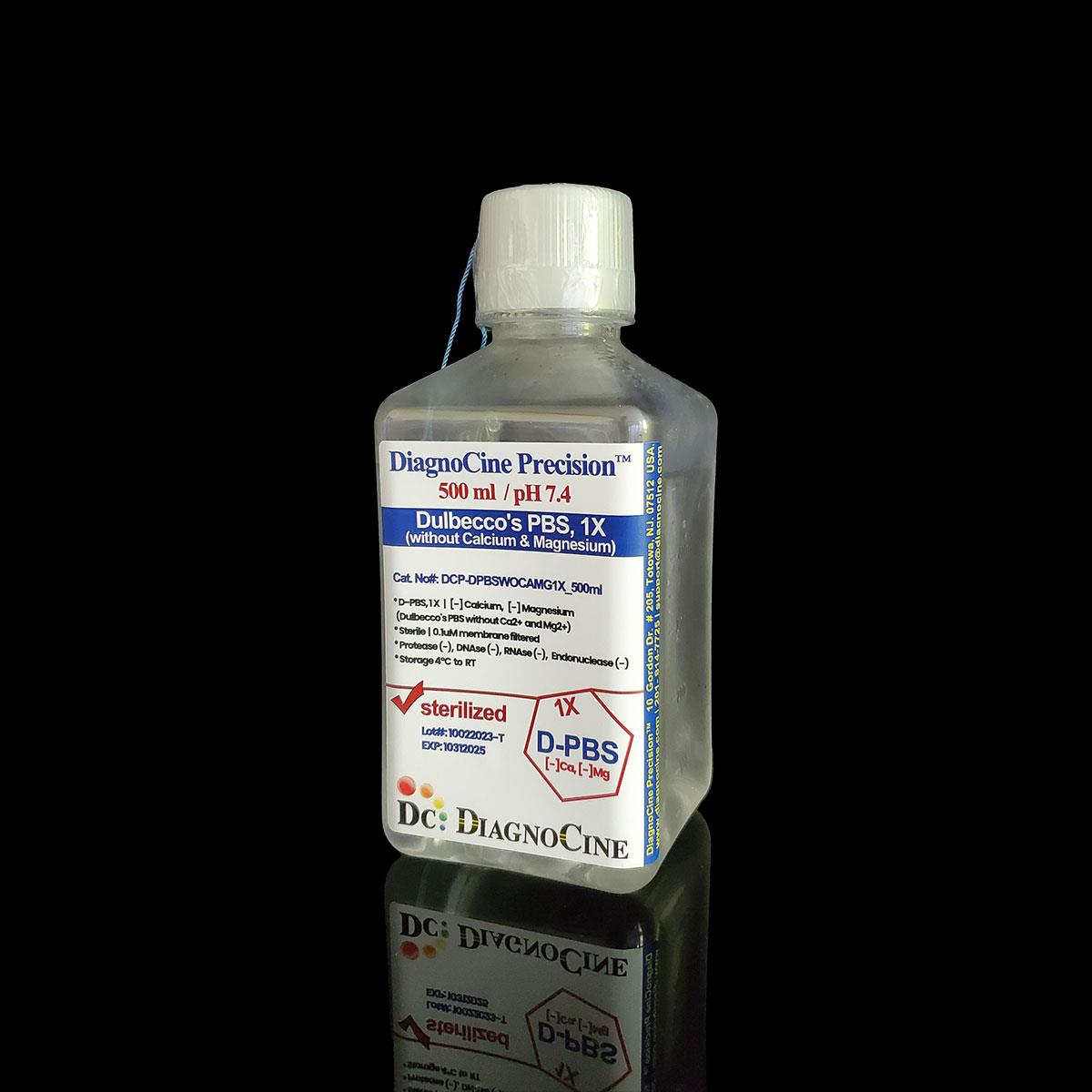
Dulbecco's PBS without Ca2+and Mg2+ (D-PBS), Sterile
FluxMPS™ Dulbecco's PBS without Ca2+ and Mg2+ (D-PBS), Sterile
An MPS-grade Dulbecco's phosphate buffered saline formulated to pH 7.4 without calcium or magnesium, prepared in ASTM Type 1 ultrapure deionized water and sterile-filtered through a 0.1 µm membrane for microchannel-safe use in organ-on-a-chip, microfluidic, and general cell culture workflows. Free of calcium, magnesium, protease, DNase, RNase, and endonuclease activity, and manufactured under ISO 13485-certified, CE-approved facilities.
- Formulated to pH 7.4 without calcium or magnesium for gentle, isotonic cell washing and dissociation prep
- Sterile-filtered through a 0.1 µm membrane, applied twice (2X), in a controlled clean environment
- Prepared with ASTM 0.05 µS/cm Type 1 Ultrapure water, deionized
- Protease-, DNase-, RNase-, and endonuclease-negative; calcium- and magnesium-free
- Tissue Culture and Molecular Biology grade, manufactured under ISO 13485-certified, CE-approved facilities
- Supplied as a clear, colorless, ready-to-use sterile liquid
- Custom pH, concentration (2X, 4X, 5X, 10X), and additive formulations available on request
- pH7.4
- FormulationKCl, KH2PO4, Na2HPO4, NaCl (Ca/Mg-free)
- Water QualityASTM Type 1 Ultrapure, 0.05 µS/cm, deionized
- Filtration0.1 µm membrane, applied twice
- AppearanceClear, colorless sterile liquid
- Purity MarkersProtease-, DNase-, RNase-, Endonuclease-negative
- StorageRoom temperature; 4°C recommended long-term
- GradeTissue Culture & Molecular Biology grade
- ManufacturingISO 13485-certified, CE-approved facility
- Intended UseRUO — Research Use Only
Engineered where standard buffers fail
Conventional 0.22 µm-filtered buffers can carry subvisible particulates that accumulate in microchannels, drift in pH or ionic composition during storage, and introduce background into sensitive assays. FluxMPS™ buffers are built around a defined, lot-traceable formulation and a validated filtration process to reduce these risks.
Microchannel-safe purity
Sterile-filtered through a 0.1 µm membrane, applied twice, in a controlled clean environment to reduce particulate load before it reaches microfluidic channels.
Precise, stable pH
Formulated to pH 7.4 with a defined balanced-salt composition, supporting the physiological milieu required to sustain cell viability and osmotic balance in vitro.
Ultrapure-grade water
Prepared with ASTM 0.05 µS/cm Type 1 Ultrapure, deionized water as the base for the formulation.
Low background for imaging & assays
Calcium- and magnesium-free formulation avoids interference with trypsinization, dissociation, and downstream imaging or biosensor readouts.
Defined, traceable composition
Every salt component is disclosed with its molar and mass concentration, with final packaging, quality assurance, and testing performed at the DiagnoCine R&D and Quality Testing Center.
Customization on demand
Alternate pH, concentration (2X, 4X, 5X, 10X), and the addition of chemicals, detergents, inhibitors, proteins, or other components are available — contact support@diagnocine.com.
Single-stage 0.1 µm filtration, applied twice
This buffer is sterile-filtered through a 0.1 µm membrane in a controlled clean environment, with the pass repeated twice (2X) to reinforce sterility assurance before fill.
-
1
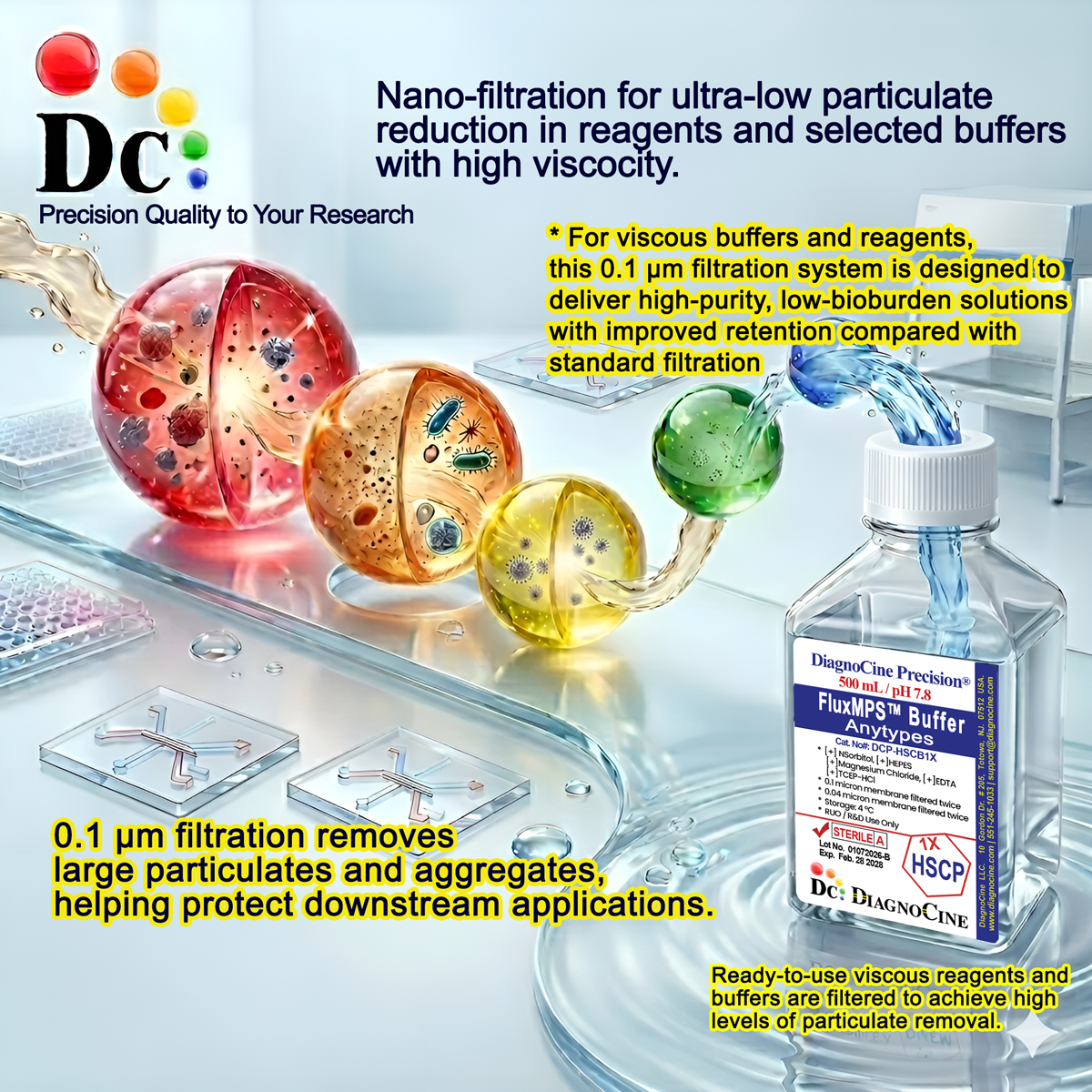
0.1 µm Sterile Filtration
All reagents are passed through a 0.1 µm membrane filter, applied twice (2X), in a controlled clean environment. This largely prevents mycoplasma contamination, since the smallest mycoplasma organisms are approximately 0.2 micron — above the filter's rated pore size.
Performance vs. conventional buffer
Two sequential passes through a 0.1 µm membrane, performed in a controlled clean environment, provide an added layer of sterility assurance beyond the single-pass 0.22 µm filtration commonly used for standard laboratory buffers.
© Diagnocine® — DCP-DPBSWOCAMG1X
Where D-PBS without Ca2+/Mg2+ is used
Dulbecco's phosphate-buffered saline is a balanced salt solution with osmotic balance similar to mammalian systems, used to sustain the physiological and structural integrity of cells outside their regular growth environment. Without calcium and magnesium, it protects cells from acute fluctuations and supports more effective trypsinization and dissociation. Common uses include general cell culture, washing adhesion cells before dissociation, transporting cells or tissue samples, diluting cells for counting, and preparing reagents that supply inorganic salts for basic cell metabolism.
Automated Bioreactors & Robotics
For automated perfusion systems and robotics-driven workflows, an optional 0.01 µm (10 nm) ultra-filtered variant of this buffer is available on request to further protect sensitive valves, sensors, and long-duration perfusion loops.
- Total Particulate Exclusion for automated fluidic pathways
- Valve & Sensor Protection in closed-loop perfusion systems
- Extended Perfusion Stability for long-duration culture runs
Inquiry Required: the 0.01 µm ultra-filtered grade is a custom order — contact support@diagnocine.com to request this variant.
Micro Physiological System (MPS) & Chip
Buffer exchange and washing in microfluidic devices and tissue chips.
Wash, Dilution & Reconstitution
Washing adhesion cells before dissociation, diluting cells for counting, and preparing reagents that provide inorganic salts for cell metabolism.
iPSC-Derived Model Handling
Gentle, calcium- and magnesium-free washing that avoids interfering with dissociation of iPSC-derived models.
Endothelial & Primary Cell Perfusion
Isotonic buffer exchange for primary and endothelial cell perfusion workflows.
ELISA, Blotting & Blocking
Low-background wash buffer for immunoassay and blotting workflows.
Microscopy & Optical Sensing
Clear, colorless, low-particulate buffer suited to optical and biosensor-based readouts.
Physical, chemical & quality parameters
Specification values below reflect only data stated for this product; parameters not disclosed in the source documentation are omitted rather than estimated.
| Parameter | Specification |
|---|---|
| Formulation | Potassium chloride, potassium phosphate monobasic, sodium phosphate dibasic, and sodium chloride, without calcium or magnesium |
| Appearance | Sterilized liquid, clear, colorless |
| pH | 7.4 |
| Molarity / Concentration | 2.67 mM KCl; 1.47 mM KH2PO4; 8.10 mM Na2HPO4; 8.1 mM NaCl |
| Parameter | Specification |
|---|---|
| Filtration Process USP <788> | 0.1 µm membrane, applied twice, in a controlled clean environment |
| Component Purity | Protease-negative, DNase-negative, RNase-negative, Endonuclease-negative |
| Water Quality | ASTM 0.05 µS/cm Type 1 Ultrapure, deionized |
| Fill Environment ISO 13485 | ISO Class 5 (Class 100) controlled environment |
| Parameter | Specification |
|---|---|
| Storage Temperature | Room temperature; 4°C recommended for long-term storage |
| Stability / Deterioration Indicators | Precipitate or particulate matter, cloudy appearance, color change, and/or pH change indicate deterioration |
| Parameter | Specification |
|---|---|
| Raw Material Grade | Tissue Culture & Molecular Biology grade |
| Manufacturing QMS ISO 13485 | ISO 13485-certified, CE-approved facility |
| Regulatory Alignment | RUO — Research Use Only |
| Intended Use | Laboratory research use only; not intended for any animal or human therapeutic use, human or animal consumption, or diagnostic use |
| Production Site | Customization and assembly performed at DiagnoCine Precision, Totowa, New Jersey, USA |
| Traceability | Final packaging, quality assurance, and testing performed at the DiagnoCine R&D and Quality Testing Center |
Full composition
All component concentrations are shown as stated for this product, with CAS numbers added where known.
| Component | CAS Number | Concentration |
|---|---|---|
| Potassium Chloride (KCl) | 7447-40-7 | 2.67 mM (200.00 mg/L) |
| Potassium Phosphate Monobasic (KH2PO4) | 7778-77-0 | 1.47 mM (200 mg/L) |
| Sodium Phosphate Dibasic (Na2HPO4) | 7558-79-4 | 8.10 mM (1150 mg/L) |
| Sodium Chloride (NaCl) | 7647-14-5 | 8.1 mM (8000 mg/L) |
Manufacturing & compliance
This buffer is manufactured under ISO 13485-certified, CE-approved facilities, with final packaging, quality assurance, and testing performed at the DiagnoCine R&D and Quality Testing Center.
ISO 13485:2016 QMS
Manufactured under ISO 13485-certified, CE-approved facilities.
Ultrapure Type 1 Water
Prepared with ASTM 0.05 µS/cm Type 1 Ultrapure, deionized water.
ISO Class 5 Fill & Finish
Filtered and filled within an ISO Class 5 (Class 100) controlled environment.
Micro-Batch Precision
Custom pH, concentration, and additive formulations assembled at DiagnoCine Precision, Totowa, New Jersey, USA.
Filtration Assurance
Sterile-filtered through a 0.1 µm membrane, applied twice, in a controlled clean environment.
Component Purity
Protease-, DNase-, RNase-, and endonuclease-negative; calcium- and magnesium-free.
Water Quality
ASTM 0.05 µS/cm Type 1 Ultrapure, deionized water used as formulation base.
Documentation / CoA
Certificate of Analysis available on request.
How DCP-DPBSWOCAMG1X compares
A qualitative comparison against conventional single-pass 0.22 µm-filtered buffer and a standard alternative.
| Parameter | DCP-DPBSWOCAMG1X (FluxMPS™) | Conventional Buffer (0.22 µm filtered) | Standard Alternative (0.22 µm filtered) |
|---|---|---|---|
| Calcium/Magnesium-free formulation | check_circle | cancel | cancel |
| Final filtration pore size | 0.1 µm | 0.22 µm | 0.22 µm |
| Filtration passes | Twice (2X) | Once | Once |
| Water quality | ASTM Type 1 Ultrapure, 0.05 µS/cm | Not specified | Not specified |
| Manufacturing QMS | check_circle ISO 13485 | cancel | cancel |
| Microfluidic channel compatibility | check_circle | cancel | cancel |
| Protease/DNase/RNase-free | check_circle | Not specified | Not specified |
| Custom formulation available | check_circle | cancel | cancel |
Frequently asked questions
Answers below reflect only the specifications published for this product.
Supporting literature
General references relevant to D-PBS use in cell culture and organ-on-a-chip/microfluidic systems.
- Dulbecco R, Vogt M. Plaque formation and isolation of pure lines with poliomyelitis viruses. J Exp Med. 1954;99(2):167-182. doi:10.1084/jem.99.2.167
- Bhatia SN, Ingber DE. Microfluidic organs-on-chips. Nat Biotechnol. 2014;32(8):760-772. doi:10.1038/nbt.2989
- Huh D, Matthews BD, Mammoto A, et al. Reconstituting organ-level lung functions on a chip. Science. 2010;328(5986):1662-1668. doi:10.1126/science.1188302
- Low LA, Mummery C, Berridge BR, Austin CP, Tagle DA. Organs-on-chips: into the next decade. Nat Rev Drug Discov. 2021;20(5):345-361. doi:10.1038/s41573-020-0079-3
- Ingber DE. Human organs-on-chips for disease modeling, drug development and personalized medicine. Nat Rev Genet. 2022;23:467-491. doi:10.1038/s41576-022-00466-9
- Sung JH, Wang YI, Narasimhan Sriram N, et al. Recent advances in body-on-a-chip systems. Anal Chem. 2019;91(1):330-351. doi:10.1021/acs.analchem.8b05293
- Zhang B, Radisic M. Organ-on-a-chip devices advance to market. Lab Chip. 2017;17(14):2395-2420. doi:10.1039/C6LC01554A
- van Meer BJ, de Vries H, Firth KSA, et al. Small molecule absorption by PDMS in the context of drug response bioassays. Biochem Biophys Res Commun. 2017;482(2):323-328. doi:10.1016/j.bbrc.2016.11.062
- Low LA, Tagle DA. Tissue chips - innovative tools for drug development and disease modeling. Lab Chip. 2017;17(18):3026-3036. doi:10.1039/C7LC00462A