

FAM ADIBO
Size of product (mg)
-
5 mg

-
25 mg

FAM ADIBO
Cat. No. List below
Description
Key features:
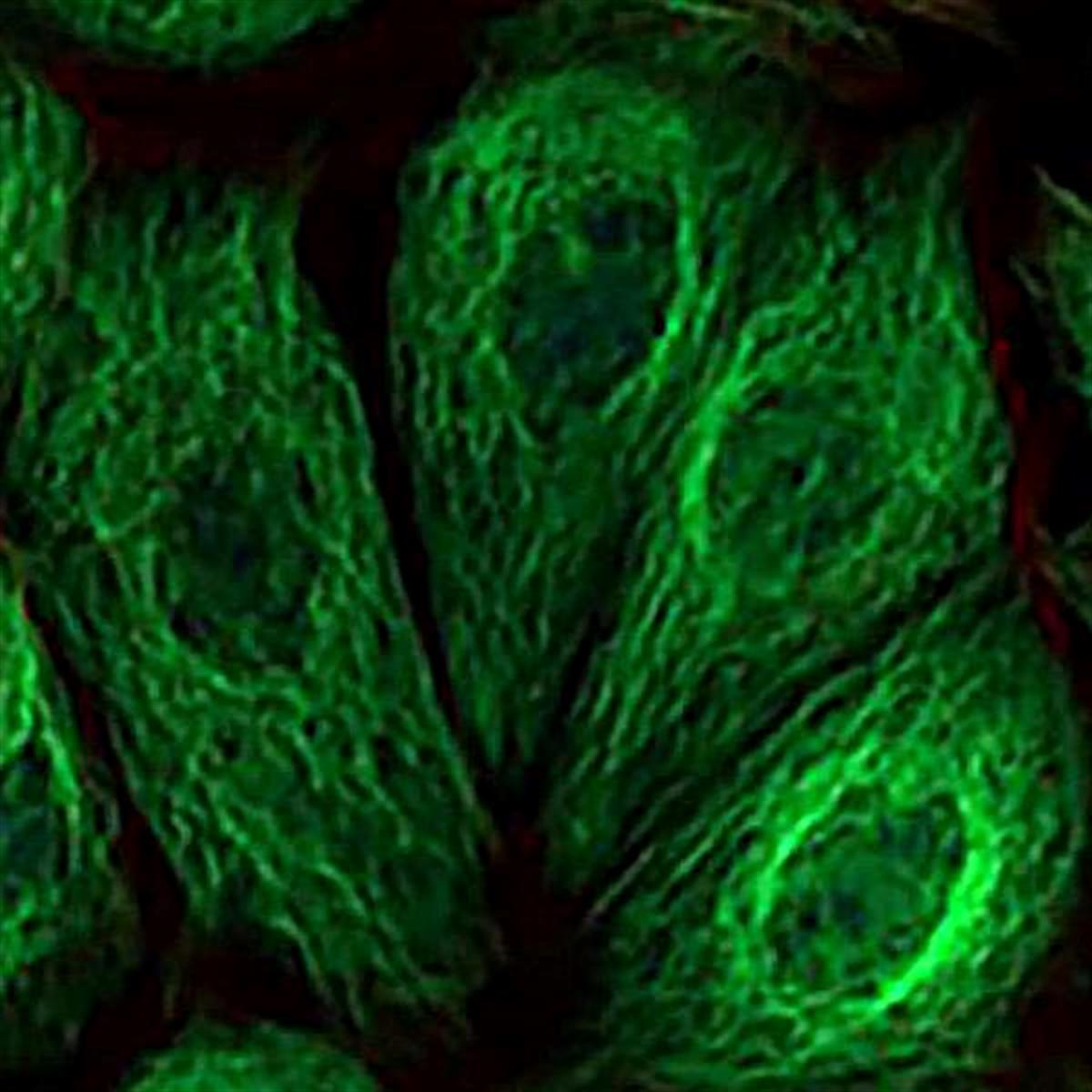
1. Bright green fluorescence
2. Excitation/Emission maxima: 494/522 nm
3. Extinction coefficient: ≥ 52,000 cm?¹M?¹
4. Molecular Weight: 636.66 g/mol
5. Appearance: Yellow solid
6. Solubility: DMF
7. Storage: -20°C, protected from light
Applications:
1. Cellular imaging
2. Nucleotide functionalization
3. Protein labeling
4. Biomolecule tracking in living systems
5. Flow cytometry
6. Fluorescence microscopy
7. Single-molecule detection
Advantages:
1. Efficient excitation with 488 nm laser line
2. Spectrally similar to popular dyes like Alexa 488 and Cy2
3. Forms stable 1,4-disubstituted 1,2,3-triazole linkages
4. No coupling reagents or catalysts required
5. Minimal interference with native biochemical processes
6. Bioorthogonal labeling strategy
7. High specificity and efficiency in click reactions
8. Versatile labeling of azide-modified biomolecules
9. Compatible with complex biological samples
10. Suitable for in vivo applications due to copper-free chemistry
FAM ADIBO couples with azide-functionalized biomolecules through strain-promoted azide-alkyne cycloaddition, forming a stable 1,4-disubstituted 1,2,3-triazole linkage. This reaction occurs efficiently inside living systems without the need for coupling reagents or catalysts, making it ideal for in vivo applications. To utilize FAM ADIBO, researchers must first introduce azide functionality onto the target biomolecule through chemical or genetic modification.
The SPAAC approach offers several advantages over traditional labeling methods and copper-catalyzed click chemistry. It provides high specificity, efficiency, and bioorthogonality, allowing for sensitive detection in complex biological samples with minimal background signal. The reaction proceeds under physiological conditions without the need for potentially toxic copper catalysts, making it highly suitable for live-cell imaging and in vivo studies.
- Fluorophore: FAM
- Reactive group: Strained azide
- Excitation/Emission Max.(nm): 494/522
- Spectrally similar dyes: Alexa488, Cy2
- Extinction coefficient: ≥ 52,000 cm-1M-1
- Appearance: Yellow Solid
- Molecular Weight: 636.66 g/mol
- Solubility: DMF
- Storage conditions: -20 ℃, protect from light
| Quick link (Cat.#) | Series | Quick link (Cat.#) | Series |
| CWS1025 | FAM NHS ester | CWSN1025 | FAM Sulfo-NHS ester |
| CWA1020 | FAM Vinylsulfone | CWM1003 | FAM Maleimide |
| CWZ1003 | FAM Azide | CWH1003 | FAM Hydrazide |
| CWK1003 | FAM Alkyne | PWK1701 | FAM PEG4-Alkyne |
| DWF1001 | FAM ADIBO | CWE1003 | FAM Amine |
| CWT1003 | FAM Thiol | CWR2003 | FAM Dichlorotriazine |
Background
Other Labeling Dyes
BioActs provides other traditionally used dyes such as 5(6)-Carboxyfluorescein (FAM) and 5(6)-Carboxytetramethylrhodamine (TAMRA) dyes for labeling of biomolecules. FAM is one of popular green fluorescent reagents used for labeling peptides, proteins and nucleotides. In addition to relatively high absorptivity, good fluorescence quantum yield and good water solubility, FAM has an excitation maximum that closely matches the 488 nm spectral line of the argon-ion laser. TAMRA fluorophore has been a widely used for preparing bioconjugates, especially fluorescent antibody and avidin derivatives. TAMRA dye is also widely utilized for oligonucleotide labeling and automated DNA sequencing applications. TAMRA is often used as FRET acceptor for FAM fluorophore.
- Other fluorescent dyes such as Cyanine, ICG, TAMRA, FAM, etc. are also available.
- All dyes are equipped with various reactive and functional groups.
- High quality and excellent performance
Table 1. FAM dye applications


Figure 1. Structure of FAM and TAMRA dyes
Citation & Reference
1. PYARE L. KHANNAA. 4',5'-Dimethoxy-6-carboxyfluorescein: a novel dipole-dipole coupled fluorescence energy transfer acceptor useful for fluorescence immunoassays. Anal Biochem 108.1 (1980): 156-61.
2. Torimura M. Fluorescence-quenching phenomenon by photoinduced electron transfer between a fluorescent dye and a nucleotide base. Anal Sci 17.1 (2001): 155-60.
3. Sylvie Soulie-Begu. In-vivo pharmacokinetic study of two fluorescein derivatives by fluorescence spectroscopy. Optical Biopsies 2627 (1995).
4. Danny van Lierop. Positively charged silver nanoparticles and their effect on Surfaceenhanced Raman scattering of dye-labelled oligonucleotides. Chem. Commun 48 (2012): 8192-8194.
5. Pete Theisen. Fluorescent Dye Phosphoramidite Labelling of Oligonucleotides. Tetrahedron Letters 33.35 (1992): 5033-5036.
