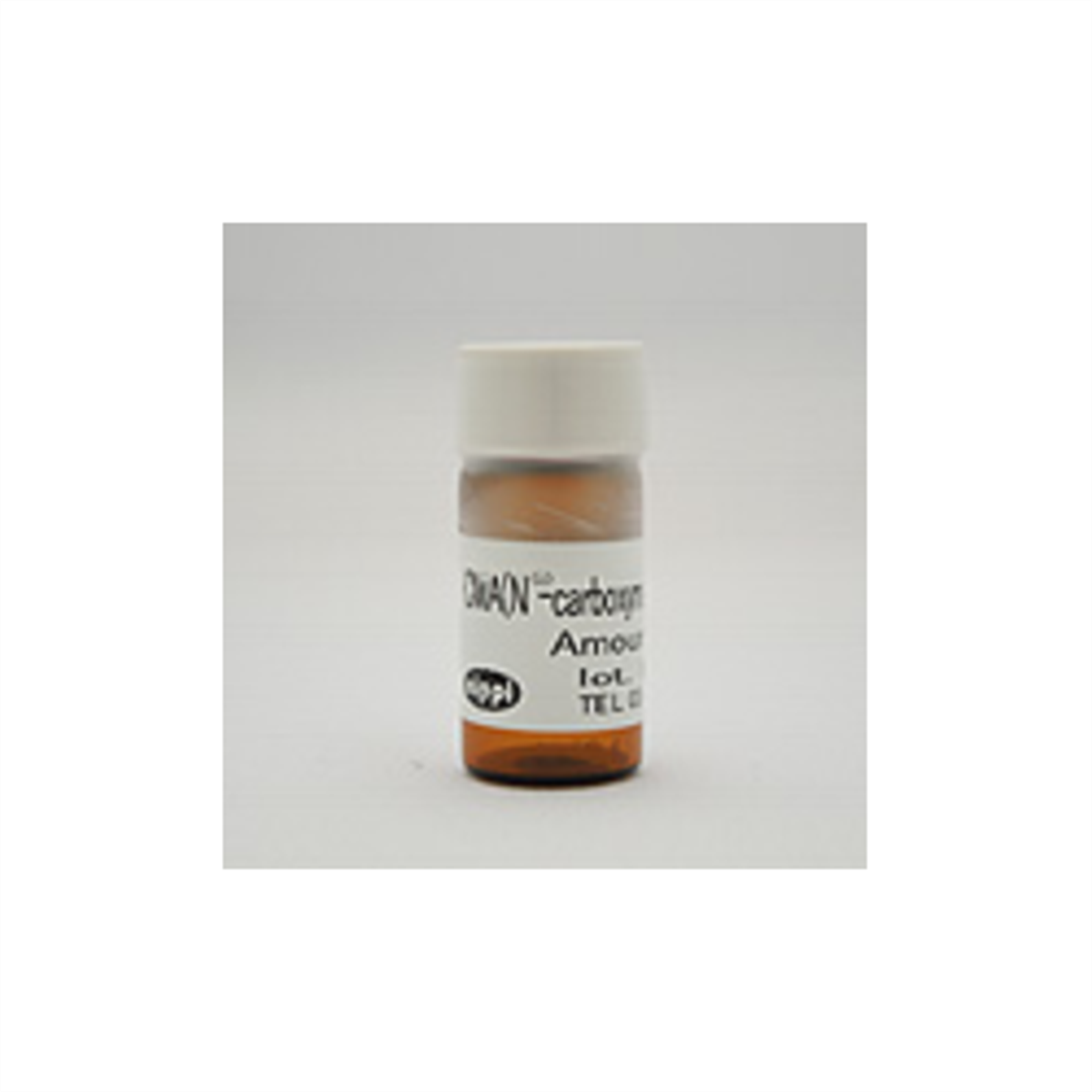
CML (Nε-carboxymethyllysine), 5 mg
CML (Nε-carboxymethyllysine)
Cat. No. CML-1_05, CML-1_10
Size 5 mg, 10 mg
Storage 4°C
Shipping RT
Description
Glucose and other reducing sugars react with an amino group and form complex compounds. This process, so called glycation, involves post-translational modification and possibly increases the risk of various diseases. In particular, the accumulation of advanced glycation end products (AGEs) in long lived tissues is reported that are increased not only by aging or diabetes, but by inflammation and oxidative stress.
We have carboxymethyl arginine (CMA), carboxymethyl lysine (CML), glycated bovine serum albumin standard, anti CML monoclonal antibody, anti-carboxyethyl lysine monoclonal antibody, etc.
CML (Nε-carboxymethyllysine)
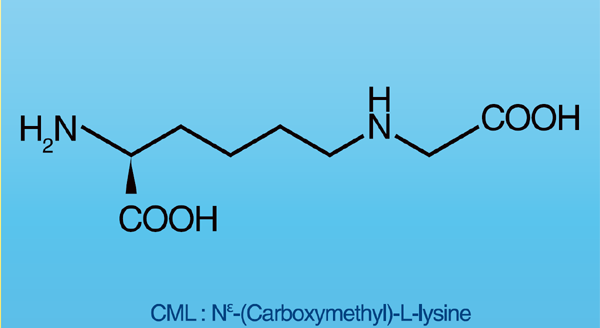
CML is major AGE for lysine residue and is reported as a major antigenic AGE structure. CML is generated by the oxxidative cleavage of Amadori products or directly reaction between lysine residue and glyoxal. CML is suggested to be an important biological marker of oxidative stress in vivo.
[Kislinger et al, J.Biol.Chem., 1999]
AGEs standard
- CMA : Nω-(Carboxymethyl)-L-arginine (#CMA-1_02 for 2 mg / #CMA-1_05 for 5 mg)
- CML : Nε-(Carboxymethyl)-L-lysine (#CML-1_05 for 5 mg / #CML-1_10 for 10 mg)
AGEs-BSA standard
- CML-BSA (#892405)
- 2.3 mol of CML is generated in 1 mol of BSA by incubation with glyoxilic acid.
- HPLC purified this material is ready to use as standard in ELISA
- A part of lysine in BSA is carboxymethylated by glyoxylic acid.
- CEL-BSA (#892406)
- 2.6 mol of CEL is generated in 1 mol of BSA by incubation with pyruvic acid.
- HPLC purified this material is ready to use as standard in ELISA. Nε-(Carboxyethyl)-L-lysine (CEL) is thought to generate from the reaction between lysine residue and methylglyoxal (MG) in vivo proteins.
- A part of lysine in BSA is carboxyethylated by pyruvic acid in this product.
- AGEs-BSA (#AGEs-BSA)
- BSA is incubated with glucose and some kinds of AGEs are generated in this glycated BSA.
- The content of CML is determined as 0.4 mol per 1 mol of BSA.
- CML amount is quantified by HPLC. Usable as standard for ELISA.
- AGEs-BSA standard, glycated by glucose.
| Product No. | Size | Link |
| FNK-CML-105 | 5 mg |  |
| FNK-CML-110 | 10 mg | |