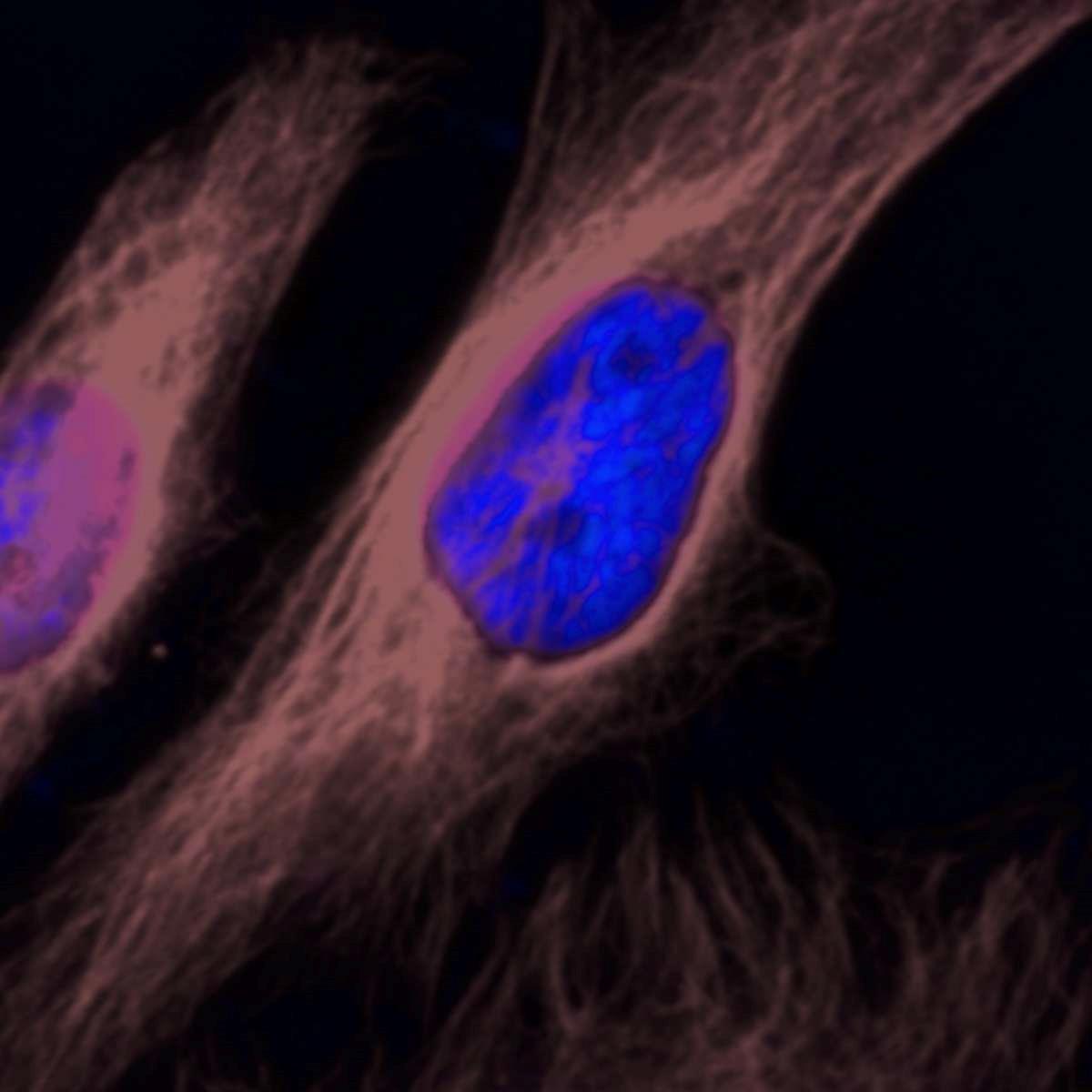
Biotin, Flamma® 749
Size of product (mg)
-
1 mg

-
5 mg

Biotin, Flamma® 749
Cat. No. List below
Description
Biotin, Flamma® 749 consists of two key components:
1. Biotin: A small vitamin (244 daltons) found in all living cells, known for its exceptionally high binding affinity to avidin and streptavidin.
2. Flamma® 749: A near-infrared (NIR) fluorescent dye covalently attached to the biotin molecule.
*This conjugation results in a multifunctional molecule that retains biotin's strong binding properties while gaining the fluorescent capabilities of Flamma® 740.*
Biotin, Flamma® 749 is suitable for various biotechnology and life science applications, including:
cell surface labeling, enzyme-linked immunosorbent assay (ELISA), immunohistochemistry, affinity purification, fluorescence-activated cell sorting (FACS). electrophoretic mobility shift assay (EMSA). in vitro and in vivo imaging, animal model studies, and medical diagnostics.
Biotin, Flamma® 749 represents a powerful tool for researchers in life sciences, offering a unique combination of high-affinity binding and advanced NIR fluorescence detection. Its versatility and sensitivity make it an excellent choice for a wide range of applications, from basic research to advanced medical diagnostics.
What are the advantages?
1. High Affinity Binding: The biotin-avidin/streptavidin interaction is one of the strongest non-covalent bonds in nature, ensuring stable and specific labeling.
2. NIR Fluorescence: Flamma® 749's near-infrared emission allows for deep tissue penetration and reduced background autofluorescence.
3. Stability: The biotin-avidin/streptavidin complex remains stable under various conditions, including high temperatures, wide pH ranges, and in the presence of denaturing agents.
4. Versatility: Can be used with a variety of biotinylated molecules, including antibodies, enzymes, and small molecules.
5. Sensitivity: The bright fluorescence of Flamma® 749 enables detection of low-abundance targets.
Specifications
- Fluorophore label: Flamma® 749
- Reactive group: Biotin
- Reacting toward: Avidin / Streptavidin
- Excitation/Emission Max.(nm): 749/774
- Molecular weight: 951.22 g/mol
- Storage conditions: 4 ℃, protect from light
Table 1. List of fluorescent dye conjugates of Streptavidin
| Quick link (Cat.#) | Series | Ex * (nm) | Em* (nm) |
| RFP0716 | Streptavidin, Flamma® 496 | 496 | 516 |
| RFP0705 | Streptavidin, Flamma® 552 | 550 | 565 |
| RFP0711 | Streptavidin, Flamma® 648 | 648 | 663 |
| RFP0712 | Streptavidin, Flamma® 675 | 675 | 691 |
| RFP0713 | Streptavidin, Flamma® 749 | 749 | 774 |
| RFP0714 | Streptavidin, Flamma® 774 | 774 | 806 |
Table 2. List of fluorescent dye conjugates of Biotin
| Quick link (Cat.#) | Series | Ex * (nm) | Em* (nm) | Molar mass (g/mol) |
| RFP0616 | Biotin, Flamma® 496 | 496 | 516 | 654.64 |
| RFP0605 | Biotin, Flamma® 552 | 550 | 565 | 913.18 |
| RFP0611 | Biotin, Flamma® 648 | 648 | 663 | 927.20 |
| RFP0612 | Biotin, Flamma® 675 | 675 | 691 | 1185.43 |
| RFP0613 | Biotin, Flamma® 749 | 749 | 774 | 951.22 |
| RFP0614 | Biotin, Flamma® 774 | 774 | 806 | 1169.25 |
Background
Streptavidin is smaller (53 KDa) and has a little lower affinity than avidin yet displays less non-specific binding due to near-neutral pI value and lack of carbohydrates. Biotin, a 244 dalton vitamin found in all living cells, binds with high affinity to avidin and streptavidin. In biotechnology, biotin is conjugated to antibodies, enzymes, reporter to form the tetravalent binding nature of biotin-avidin/streptavidin complex. Biotinavidin/streptavidin binding has high affinity, which has been utilized in diverse applications such as ELISA, immunohistochemistry, cell surface labeling, affinity purification, FACS, EMSA, etc. The bond formation between biotin and avidin/streptavidin is very rapid, and once formed, is stable at high temperature and in a wide range of pH, organic solvents and denaturing agents. The system is a simple yet elegant and can be incorporated into virtually every immunoassay where an antibody is conjugated with biotin and then detected with avidin or streptavidin conjugated to various commercially available fluorophores and reporters. BioActs offers a variety of fluorescent dye conjugated streptavidin and biotin as effective detecting and analytic probes for diverse applications in biochemical and biological research fields.
♦ Conjugated with a wide range of fluorescent dyes
♦ Can be utilized in a variety of applications.
♦ Bright and photostable fluorescence
♦ High water solubility
Fluorescent Streptavidin & Biotin
Avidin and streptavidin are both tetrameric proteins composed of four identical subunits, each bind four biotins (vitamin H) per molecule with high binding affinity and specificity (Kd ~ 1015 M for avidin and ~ 1014 M for streptavidin). Although the primary sequence homogeneity of both proteins are 30%, their tertiary and quaternary structure are almost identical, and anti-avidin and anti-streptavidin antibodies are not immunologically cross reactive. Avidin, a 67 KDa glycoprotein with an isoelectric point of about 10.5, has the higher affinity than streptavidin, however it also displays more nonspecific binding and aggregation due to its oligosaccharide component (mannose and N-acetylglucosamine) and positive charge. Streptavidin is smaller (53 KDa) and has a little lower affinity than avidin yet displays less non-specific binding due to near-neutral pI value and lack of carbohydrates. Biotin, a 244 dalton vitamin found in all living cells, binds with high affinity to avidin and streptavidin. In biotechnology, biotin is conjugated to antibodies, enzymes, reporter to form the tetravalent binding nature of biotin-avidin/streptavidin complex. The valeric acid side of biotin can be incorporated with various functional groups, reporters and fluorophores that can be utilized in a wide range of biological structures and processes.
Biotin-avidin/streptavidin binding has high affinity, which has been utilized in diverse applications such as ELISA, immunohistochemistry, cell surface labeling, affinity purification, FACS, EMSA, etc. The bond formation between biotin and avidin/streptavidin is very rapid, and once formed, is stable at high temperature and in a wide range of pH, organic solvents and denaturing agents. The system is a simple yet elegant and can be incorporated into virtually every immunoassay where an antibody is conjugated with biotin and then detected with avidin or streptavidin conjugated to various commercially available fluorophores and reporters. These features of biotin and avidin/streptavidin are useful for purifying or detecting proteins conjugated to either component of the interaction. Although biotin-avidin/streptavidin system is simple and easy to use, it also has some limitations: biotinylated compounds might non-selectively bind to any biotin-binding protein, endogenous biotin can cause background noise, and harsh conditions are needed to break their interaction that might limit its application. BioActs offers a variety of fluorescent dye conjugated avidin, streptavidin and biotin as effective detecting and analytic probes for diverse applications in biochemical and biological research fields.
Preparation of fluorescence labeled Streptavidin/Biotin solutions
To dissolve dye-labeled compound powder in 0.5–1.0 mL of PBS or other suitable buffer.
The dye-conjugates are stable for at least one years when stored as directed.
For longer storage, divide solutions into aliquots and freeze at <–20°C.
Avoid from light, repeated freezing and thawing of solutions.
Labeling with conjugates of Streptavidin
Streptavidin conjugates are used as secondary detection reagents in many biotechnical applications.
These reagents can also be employed to bind biotin and its derivatives.
♦ Direct Streptavidin labeling procedure: Biotin-labeled primary probes such as antibodies, nucleic acids or lectins are conjugated to tissues, cell surfaces or other biomolecules. Excess protein is removed by washing, and detection is facilitated by fluorescent avidin/streptavidin.
♦ Indirect Streptavidin labeling procedure: Biotin-labeled antibodies or oligonucleotides are conjugated to tissues, cell surfaces or other biomolecules. This preparation is then treated with unlabeled streptavidin, and excess reagents are removed by washing. Detection is realized by treating of fluorescent biotin derivatives.
Alternatively, an unlabeled primary antibody is attached to a biomolecular target, which would be bound by the biotinlabeled secondary antibody. The complex is detected by the direct or indirect procedures described above.
♦ Centrifuge protein conjugate solutions briefly before using, and only the supernatant should be used for the experiment in order to eliminate any aggregates, thereby reducing the background signal.
Staining protocols may vary depending on the experimental condition, thus determine appropriate dilution for conjugates
empirically.
Citation & Reference
1. Ting-Wei Wu. Fluorescent Probe Encapsulated in Avidin Protein to Eliminate Nonspecific Fluorescence and Increase Detection Sensitivity in Blood Serum. Anal Chem 88.16 (2016): 7873-7.
2. Qian Sun. Discrimination between streptavidin and avidin with fluorescent affinity-based probes. Analyst 140 (2015): 4648-4653.
3. Yung-Peng Wu. Target-activated streptavidin–biotin controlled binding probe. Chem. Sci 9 (2018): 770-776.
4. Akshay Jain. The principles and applications of avidin-based nanoparticles in drug delivery and diagnosis. Journal of Controlled Release 245.10 (2017): 27-40.
5. MEIR WILCHEK. Introduction to Avidin-Biotin Technology. Methods Enzymol 184 (1990): 5-13.
6. JEANNE BENTLEY LAWRENCE. Interphase and Metaphase Resolution of Different Distances Within the Human Dystrophin Gene. Science New Series 249.4971 (1990): 928-932.