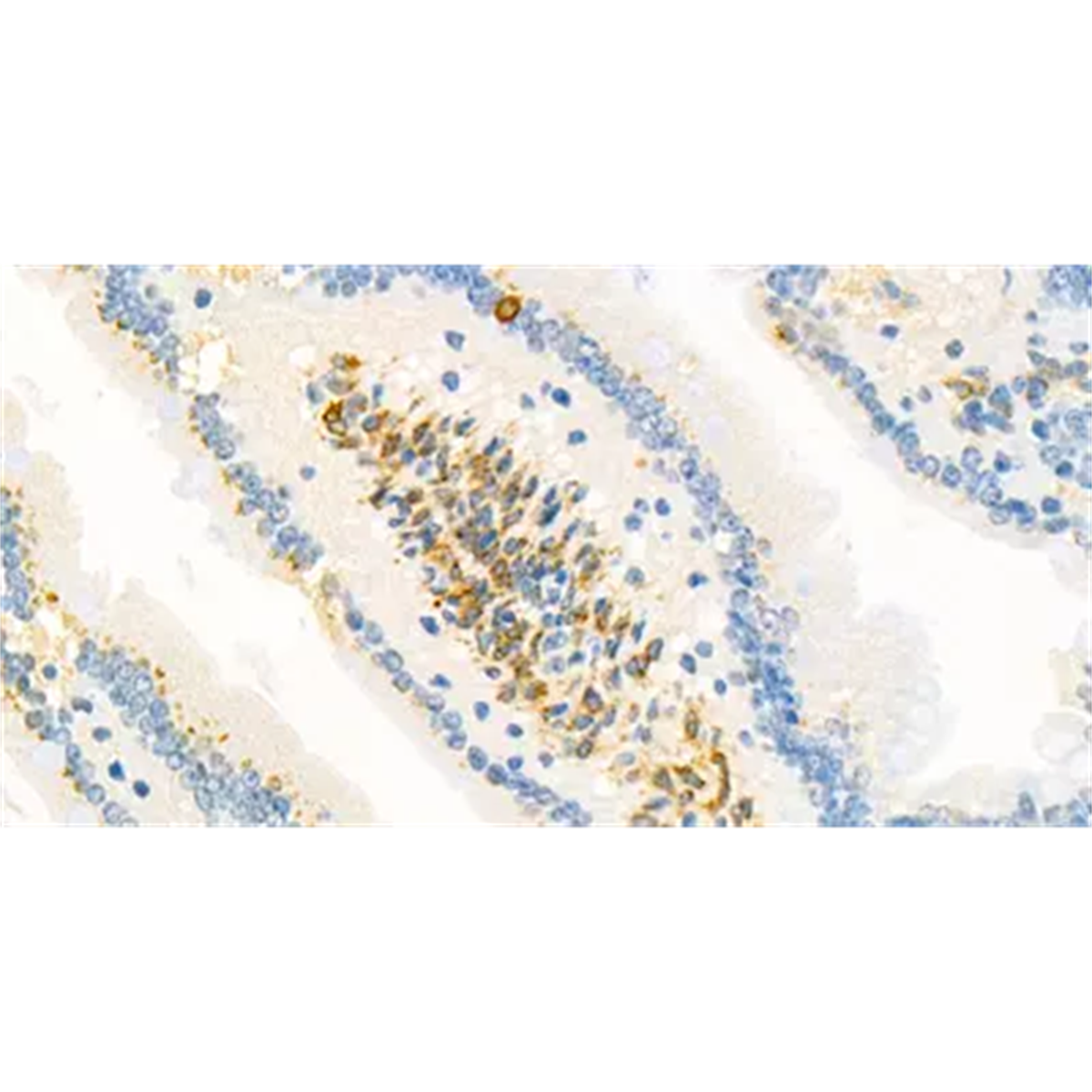
Anti-COX1 Rabbit Polyclonal Antibody
Anti-COX1 Rabbit Polyclonal Antibody
General information
| Cat. No. | :SB-GB112401 |
| Size | :100 uL |
| Protein full name | :Prostaglandin G/H synthase 1 |
| Synonym | :Cyclooxygenase-1, COX-1, PGH synthase 1, PGHS-1, PHS 1, Ptgs1, Cox1, Prostaglandin H2 synthase 1, Prostaglandin-endoperoxide synthase 1 |
| Immunogen | :Recombinant protein corresponding to Mouse COX1 / Cyclooxygenase 1 |
| Isotype | :IgG |
| Purity | :Affinity purification |
| Subcellular location | :Endoplasmic reticulum |
| Uniprot ID | :P22437, Q63921 |
| Storage | :Store at -20 ℃ for one year. Avoid repeated freeze/thaw cycles. |
| Shipping Condition | :Dry Ice |
| Storage Buffer | :PBS with 0.02% sodium azide,100 μg/ml BSA and 50% glycerol. |
Application
| Applications | Species | Dilution | Positive Tissue |
| IHC | Human, Rat | 1: 400-1: 800 | liver, duodenum, skin, spleen, intestine |
| IF | Human, Rat | 1: 400-1: 800 | duodenum, lung |
Description
PTGS1(Prostaglandin G/H synthase 1) belongs to the prostaglandin G/H synthase family and catalyzes the conversion of arachidonic acid to prostaglandin H2, which is subsequently metabolized to various biologically active prostaglandins. It is also named as COX1(Cyclooxygenase-1). There is no PTGS1 expression in fetal samples (prostate, seminal vesicles, or ejaculatory ducts), and only minimal expression in adult tissues .
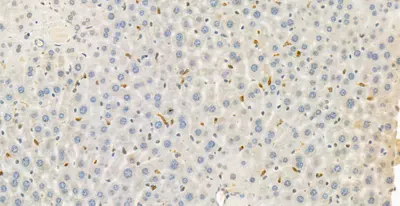 |
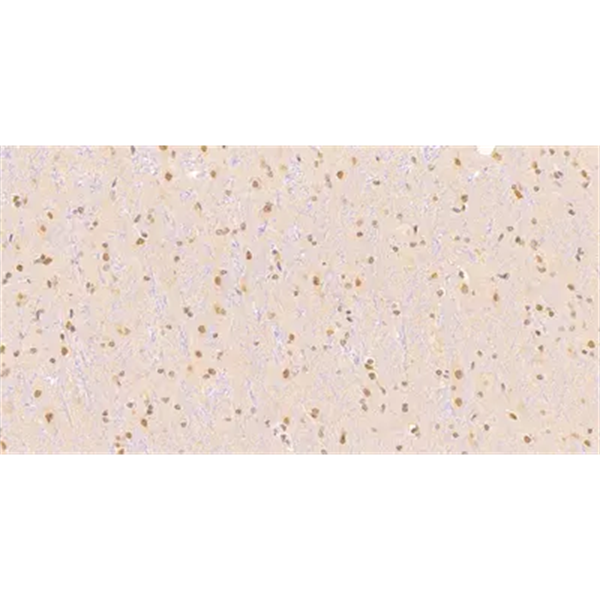
Immunohistochemistry analysis of paraffin-embedded mouse liver using COX1 (GB112399) at dilution of 1: 800 |
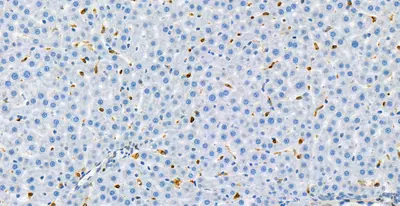 |
Immunohistochemistry analysis of paraffin-embedded rat liver using COX1 (GB112399) at dilution of 1: 800 |
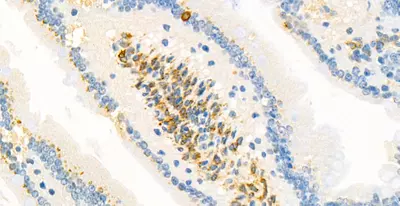 |
Immunohistochemistry analysis of paraffin-embedded mouse duodenum using COX1 (GB112399) at dilution of 1: 800 |
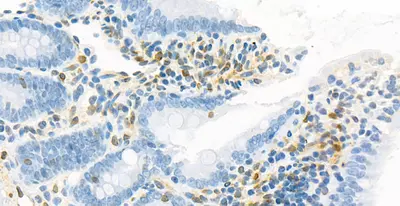 |
Immunohistochemistry analysis of paraffin-embedded rat duodenum using COX1 (GB112399) at dilution of 1: 800 |
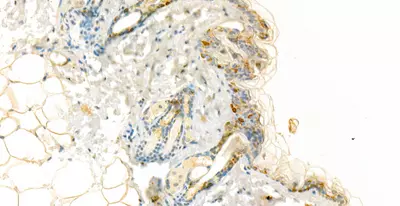 |
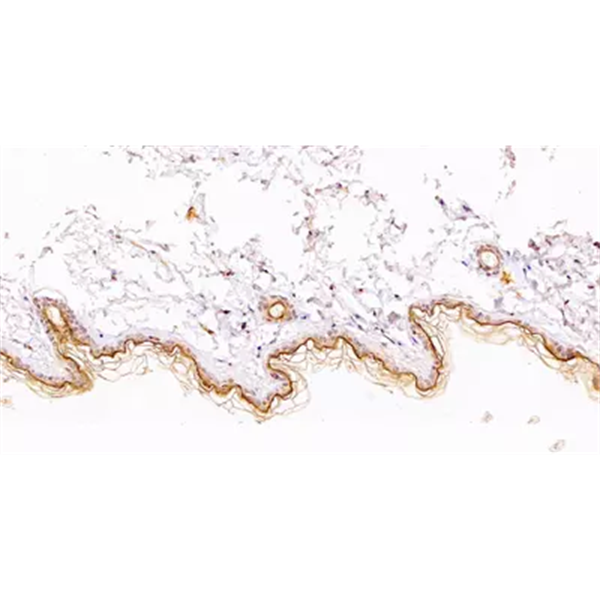
Immunohistochemistry analysis of paraffin-embedded mouse skin using COX1 (GB112399) at dilution of 1: 800 |
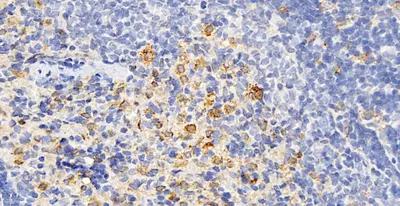 |
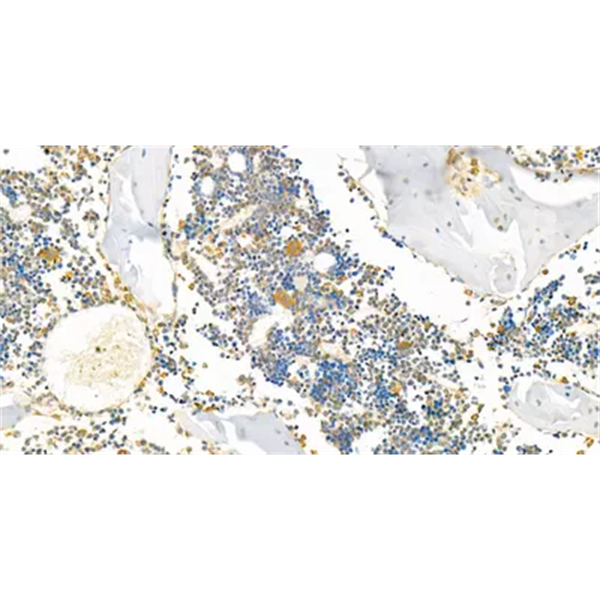
Immunohistochemistry analysis of paraffin-embedded rat spleen using COX1 (GB112399) at dilution of 1: 800 |
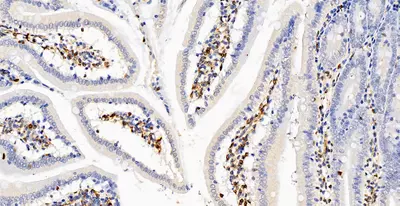 |
Immunohistochemistry analysis of paraffin-embedded rat intestine using COX1 (GB112399) at dilution of 1: 800 |
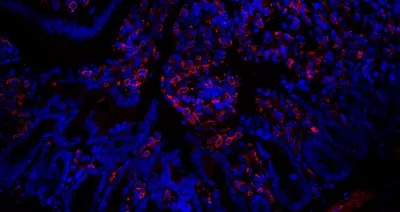 |
Immunofluorescent analysis of paraformaldehyde-fixed mouse duodenum using COX1 (GB112399) at dilution of 1: 650
|
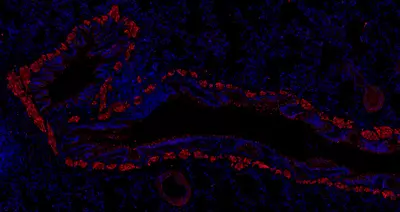 |
Immunofluorescent analysis of paraformaldehyde-fixed rat lung using COX1 (GB112399) at dilution of 1: 650 |
Human Diseases
- Cardiovascular Diseases: Inhibition of COX-1 can reduce thromboxane A2, impacting platelet aggregation and cardiovascular events.
- Gastrointestinal Disorders: COX-1 is involved in maintaining gastric mucosal integrity; its inhibition can lead to ulcers and gastrointestinal bleeding.
- Inflammatory Conditions: Elevated COX-1 activity has been linked to chronic inflammatory diseases, including rheumatoid arthritis and osteoarthritis.
Cellular Signaling Pathways
- Arachidonic Acid Pathway: COX-1 catalyzes the conversion of arachidonic acid to prostaglandins, which are critical mediators in inflammation and pain.
- Platelet Activation Pathway: COX-1-derived thromboxane A2 promotes platelet aggregation, influencing hemostasis.
- Gastric Protection Pathway: Prostaglandins produced by COX-1 play a protective role in the gastric mucosa by stimulating mucus and bicarbonate secretion.
Aliases for COX-1 Gene
- GeneCards Symbol: PTGS1 2
- Prostaglandin-Endoperoxide Synthase 1 2 3 4 5
- PGHS-1 2 3 4 5
- COX1 2 3 4 5
- Cyclooxygenase-1 2 3 4
- PTGHS 2 3 5
- Prostaglandin-Endoperoxide Synthase 1 (Prostaglandin G/H Synthase And Cyclooxygenase) 2 3
- Prostaglandin G/H Synthase 1 3 4
- Prostaglandin H2 Synthase 1 3 4
- PGH Synthase 1 3 4
- EC 1.14.99.1 4 49
- EC 1.14.99 49
- PGG/HS 3
- PCOX1 3
- PES-1 3
- PGHS1 3
- COX-1 4
- PHS 1 4
- COX3 3
- PHS1 3
References
- Rouzer, Carol A, and Lawrence J Marnett. “Cyclooxygenases: Structural and Functional Insights.” Journal of Lipid Research, U.S. National Library of Medicine, Apr. 2009, www.ncbi.nlm.nih.gov/pmc/articles/PMC2674713/.
- Pannunzio, Alessandra, and Mauro Coluccia. “Cyclooxygenase-1 (COX-1) and COX-1 Inhibitors in Cancer: A Review of Oncology and Medicinal Chemistry Literature.” MDPI, Multidisciplinary Digital Publishing Institute, 11 Oct. 2018, www.mdpi.com/1424-8247/11/4/101.
- Smith, C J, et al. “Pharmacological Analysis of Cyclooxygenase-1 in Inflammation.” Proceedings of the National Academy of Sciences of the United States of America, U.S. National Library of Medicine, 27 Oct. 1998, www.ncbi.nlm.nih.gov/pmc/articles/PMC23795/.
- Chandrasekharan, NV, and Daniel L Simmons. “The Cyclooxygenases - Genome Biology.” BioMed Central, BioMed Central, 27 Aug. 2004, genomebiology.biomedcentral.com/articles/10.1186/gb-2004-5-9-241.