Recombinant TEV Protease (His-tag)
Recombinant TEV Protease (His-tag)
Cat. No.: SB-G3409-5000U
Size: 5000U
Description
Recombinant TEV Protease was recombinant expressed as a His-tag Tobacco Etch Virus (TEV) cysteine protease in Escherichia coli. TEV Protease is a commonly used cysteine protease, which can specifically recognize the heptapeptide sequence Glu-Asn-Leu-Tyr-Ph-Gl no -Gly /Ser (ENLYFQG/S) and perform digestion between Gln(Q) and Gly/Ser(G/S) amino acid residues. The optimal temperature of Recombinant TEV Protease was 30 ℃ , and the recombinant TEV protease had high Enzyme activity in the range of 29-34 ℃ . However, when the temperature was at or above 37 ℃ , the enzyme activity decreased sharply. In the actual operation process, in order to preserve the structure and biological activity of the target protein as much as possible, it is recommended to be digested with TEV Protease overnight at 4 ℃ . Recombinant TEV Protease is active in the range of pH 6.0 to 9.0, but it loses its activity when pH is less than or equal to 5. TEV Protease still has high activity in 400 mM imidazole. Therefore, for the purification of target protein containing His tag by nickel column, TEV Protease can be directly added to the purified target protein solution containing high concentration of imi dazole, and the imidazole is removed by dialysis at 4 ℃ and digested simultaneously. It can also be digested with TEV Protease after dialysis to remove His tags. Both the His-tagged TEV Protease and the excised His tag in the target protein solution after enzymatic digestion can be removed by binding to the nickel column.
- Application: It is often used to remove MBP, GST, His or other tag proteins from fusion proteins. The Recombinant TEV Protease itself has a His tag that binds to the nickel column.
- Source : Tobacco Etch Virus (TEV) cysteine protease, recombinant expressed in Escherichia coli, containing His tag.
- Enzyme activity: It is defined as one active unit for 1 h at 30 ° C, pH 8.0 to cleave more than 85% of Recombinant TEV Protease (recombinant TEV protease) in 3 μg substrate.
- Inactivation or inhibition: Common serine Protease inhibitors such as PMSF, AEBSF, bestatin, pepstatin, and EDTA do not inhibit TEV Protease activity. However, Protease inhibitors targeting cysteine residues such as NEM or IAA can significantly inhibit the activity of TEV Pro tease. The activity of TEV Protease remained high in higher concentration of imidazole.
- Purity and concentration: Purity ≥ 95% by SDS-PAGE, 10 U/ μL .
- Recombinant TEV protease storage solution: 50 mM Tris-HCl, 250 mM NaCl, 1 mM EDTA, 5 mM DTT, 50% (v/v) Glycerol, pH 8.0 .
- 10 × TEV Buffer : 500 mM Tris-HCl , 500 mM NaCl , 5 mM EDTA , 10 mM DTT , pH 8.0 .
Storage and transportation
Transport in wet ice packs; store at -20°C, valid for 12 months.
Product Contents
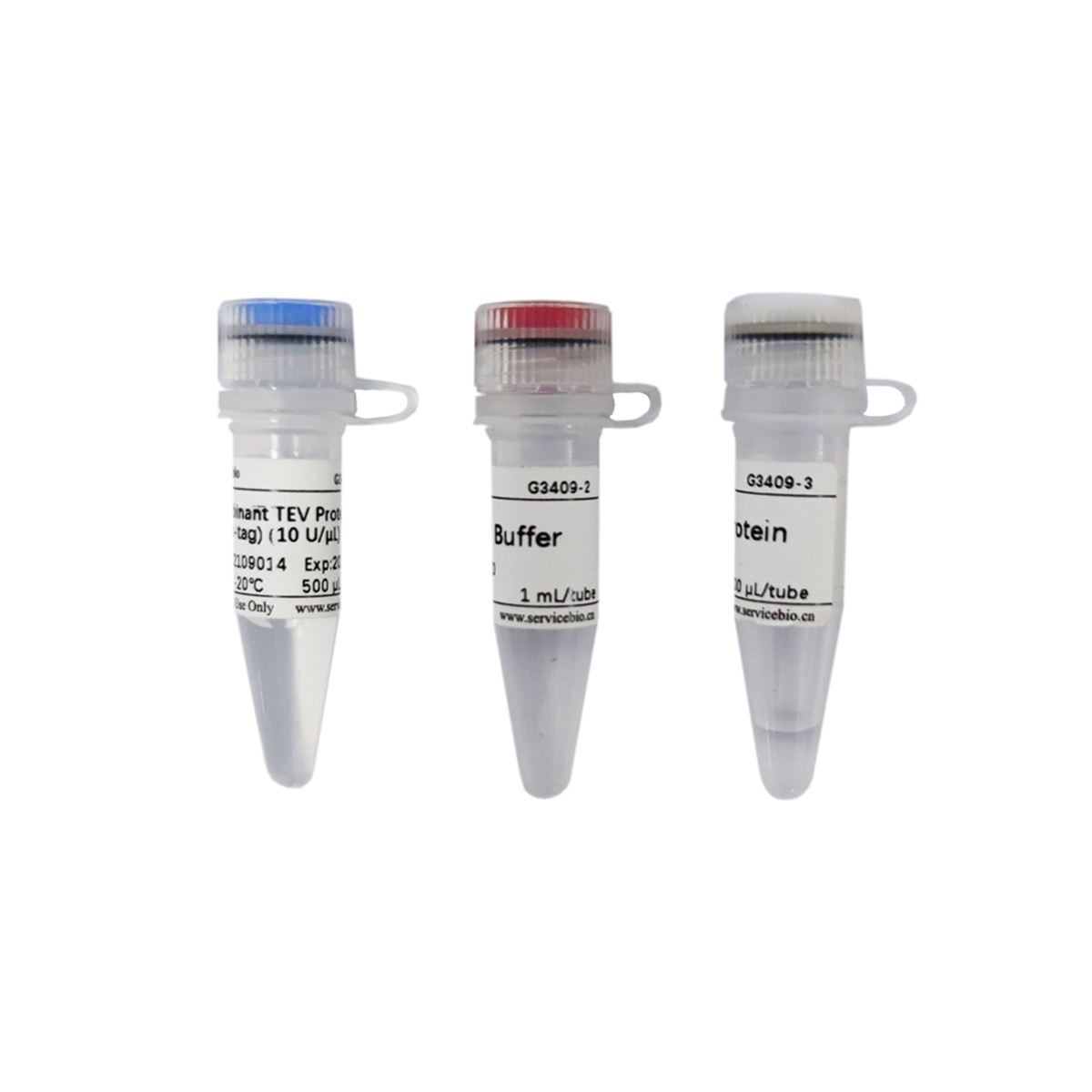
| Component Number | Component | G3409 |
| G3409-1 | Recombinant TEV Protease (His-tag) (10 U/ μL ) | 500 μL |
| G3409-2 | 10 × TEV Buffer | 3 × 1mL |
| G3409-3 | Control Protein | 100 μL |
| Product Manual | 1 copy | |
Assay Protocol
1. Protease digestion system recommended :
| Component | Volume |
| 10 × TEV Buffer | 5 μL |
| Target Proteins | 30μg |
| Recombinant TEV Protease (His-tag) (10 U/ μL ) | 1 μL |
| ddH2O | To 50μL |
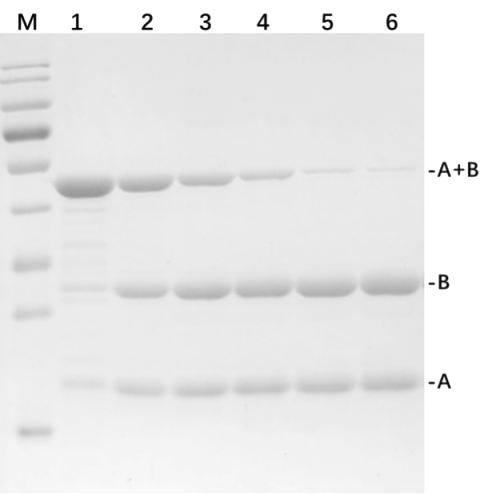
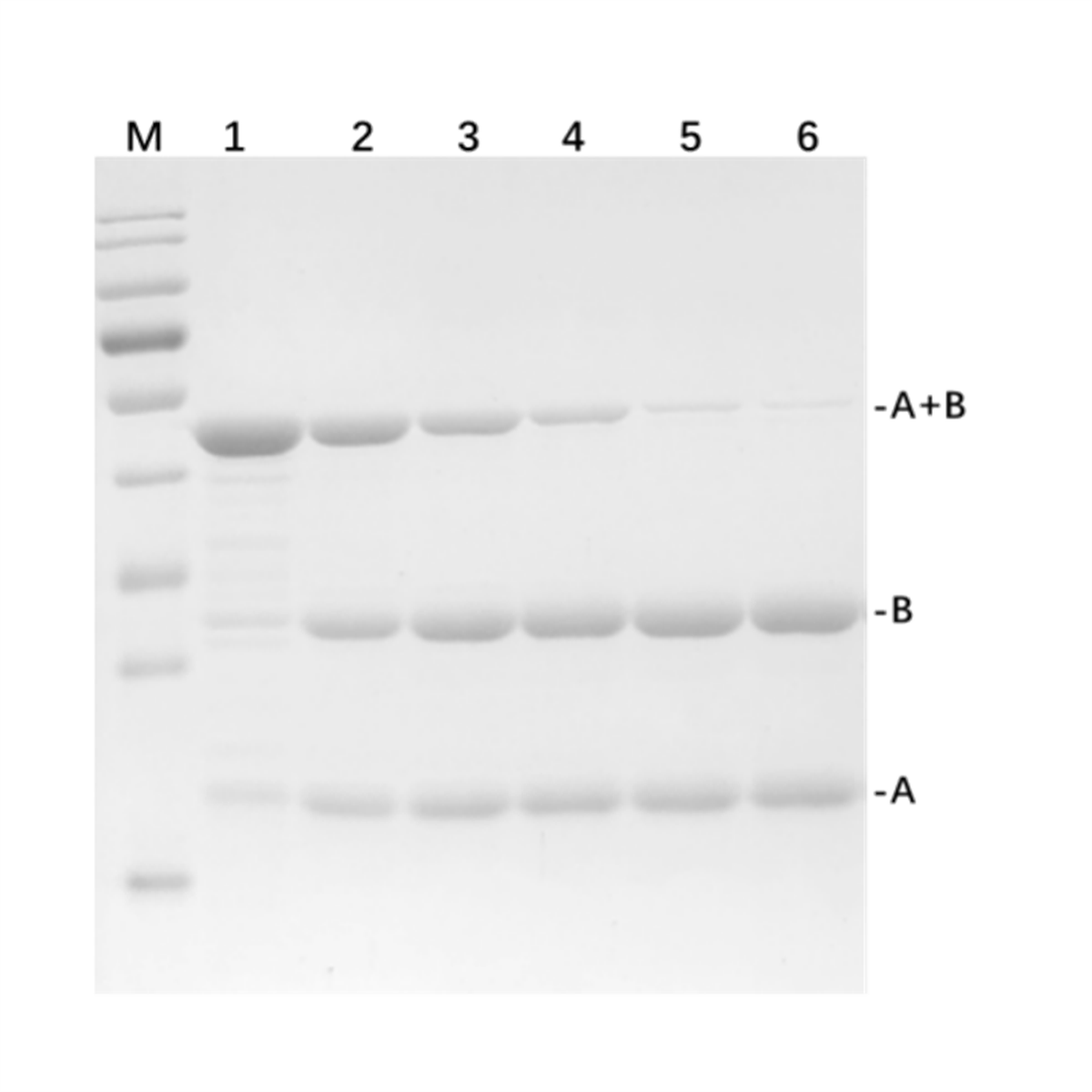
3. 10 μL of enzyme digestion product was taken for SDS-PAGE electrophoresis to evaluate the amount of enzyme digestion and reaction conditions .
Note:
1. Enzyme products should be placed in an ice box or ice bath when used, and stored at -20 ℃ immediately after use. It is recommended to store them separately ;
2. For your safety and health, please wear a lab coat and disposable gloves when operating.