HIV-1 Nef Protein (100 µg)
HIV-1 Nef Protein (100 µg)
| Cat. No. | : FNK-05-012 100 ug, 05-011 20 ug |
| Storage | : Ship with ice-pack and store at-20℃ |
| Product | : Full-size recombinant HIV-1 Nef protein expressed in E.coli. No tag is attached |
| Purity | : Over 90% by SDS-PAGE |
| Protein Concentration | : 0.48mg/ml as determined by BCA method |
| Form | : 50% glycerol, 20 mM Tris-HCl (pH 7.5), 50 mM NaCl, 10 mM mercaptoethanol |
| Applications | : 1) Functional studies of HIV-1 Nef protein : 2) SDS-PAGE and Western blotting : 3) ELISA |
| Data Link | : ProtKB: P03406 (NEF_HV1BR) GenBank: AAA44988 |
Background
HIV-1 Nef is one of the accessory proteins synthesized in the early stage of AIDS virus reproduction and is abundantly found in infected cells. The name derives from its negative factor thought at the beginning but presently it is remarked as the protein which bears the most distinctive biological characteristic of AIDS virus (1). The protein interacts directly with the signal transduction protein of the host T cells and works effectively on AIDS infection or on long term survival of the infected cells or induces apoptosis of non-infected cells (2). It is also involved in endocytosis and degradation of the cell surface receptor proteins such as CD4 and MH4 which are important for AIDS virus infection.
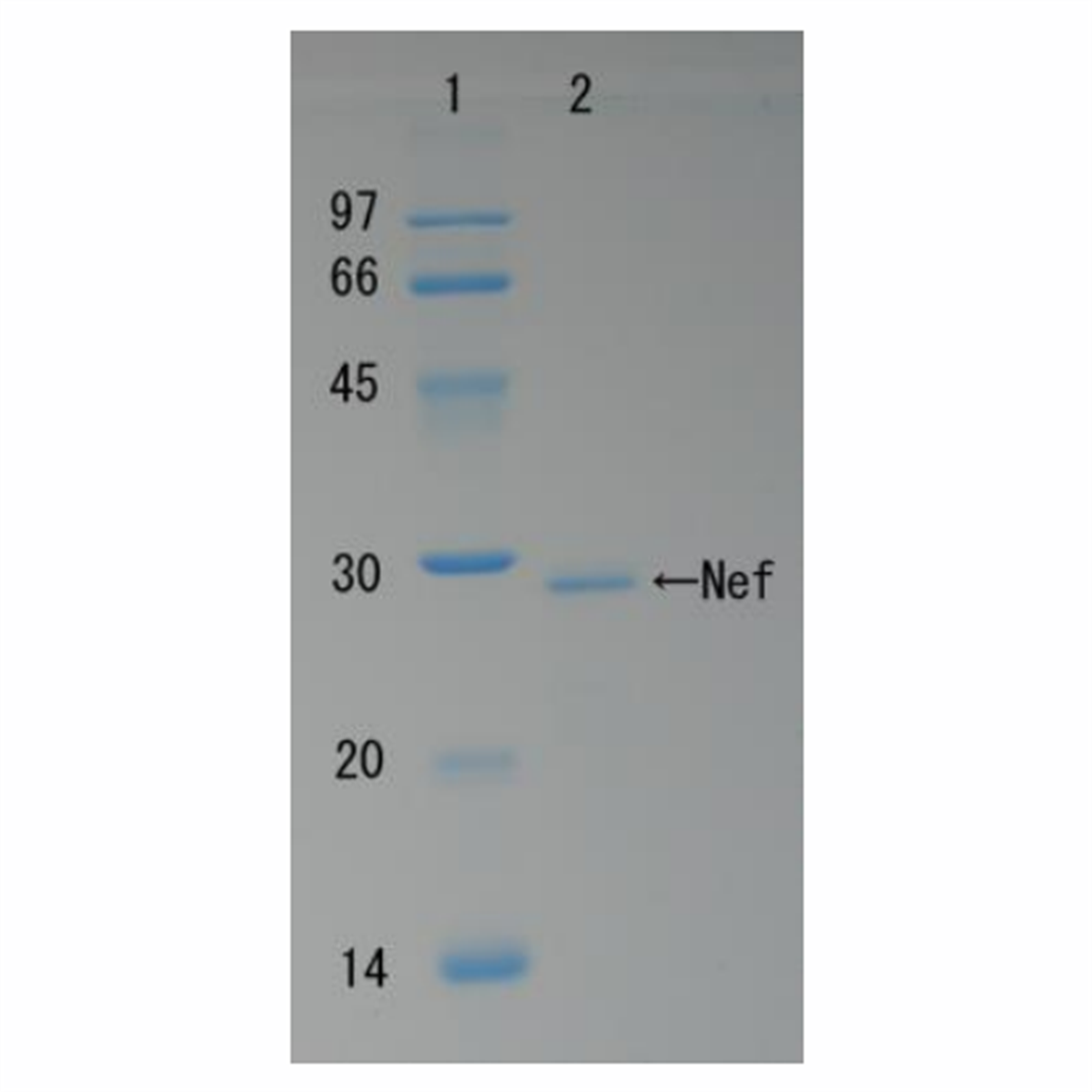
The product is over-expressed as a recombinant protein in E.coli with a plasmid carrying the nef gene of HIV-1 virus, subtype B (3) and highly purified by several steps of chromatography. Its molecular size is 27kD, same as that of Nef purified from AIDS virus particles (Fig1).
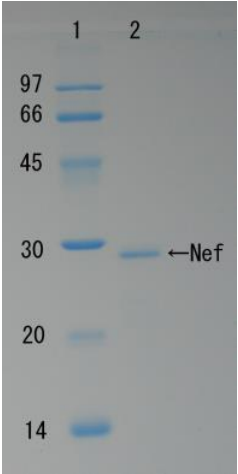
Fig.1 SDS-polyacrylamide gel electrophoresis of HIV-1 Nef protein.
References
- Arora VK et al “Nef: agent of cell subversion.” Microbes Infect 4: 189-199 (2002) Review PMID: 11880052
- Fackler OT and Baur AS “Live and let die: Nef functions beyond HIV replication.” Immunity 16:493-497 (2002) Review PMID: 11970873
- Adachi A et al “Production of acquired immunodeficiency syndrome-associated retrovirus in human and nonhuman cells transfected with an infectious molecular clone.” J Virol 59: 284 -291(1986) PMID: 3016298