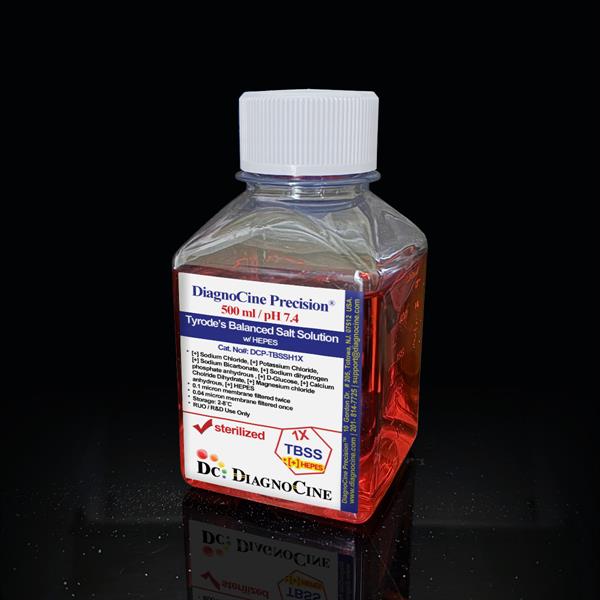

FluxMPS™ Tris-buffered Artificial Seawater (T-ASW)
FluxMPS™ Tris-buffered Artificial Seawater (T-ASW)
An ultra-filtered Tris-buffered Artificial Seawater (T-ASW) supplied as a ready-to-use solution in Ultrapure Type 1, 18.2 MΩ·cm water, formulated for short-duration physiological work with marine invertebrates, larvae, and coral tissue in marine, freshwater and environmental laboratory workflows. Dual-stage filtration system with a 0.04 µm final pore size delivers a low-particulate, reproducible medium, at a released pH of 8.0 ± 0.1. Lead time 1–2 weeks; sometimes in stock - please inquire.
- Ready-to-use solution, ready to use with no preparation required
- Supplied at pH 8.0 ± 0.1; buffering range 7.8 – 8.2
- Tris-buffered, 0.04 µm filtered, not sterile
- Filtered: 0.1 µm ×1 + 0.04 µm ×1, for particulate control; supplied non-sterile
- Filled from ultrapure Type 1 water (18.2 MΩ·cm)
- Stored at 4 °C, protect from light; shelf life 12 months
- Concentration, pH, and additive customisation available on request
- pH8.0 ± 0.1
- Molarity / concentrationArtificial seawater, S = 35, with 20 mM Tris
- Buffering range (pKa)7.8 – 8.2
- Osmolality (USP <785>)~1000 mOsm/kg (seawater-matched)
- Endotoxin (USP <85>)< 0.05 EU/mL
- SterilityNon-sterile
- Filtration0.1 µm ×1 + 0.04 µm ×1
- Water qualityUltrapure Type 1, 18.2 MΩ·cm
- Storage4 °C, protect from light
- Shelf life12 months
Engineered where standard buffers fail: what 0.22 µm lets through, FluxMPS™ stops at 0.04 µm
Conventional 0.22 µm-filtered buffers and media can carry subvisible particulates, colloidal material, and bioburden that seed unwanted growth in culture vessels, shift trace-metal speciation, and raise the reagent blank in low-level analysis. Tris-buffered Artificial Seawater (T-ASW) is built to remove those failure modes at the source.
Filtered for the work it is used in
Final-stage 0.04 µm membrane filtration with particulate performance confirmed by routine testing. Particulate carried into a culture vessel settles onto cells and is counted with them; it also seeds contamination in a flask held for weeks.
Precise, stable pH
Released at pH 8.0 ± 0.1, confirmed by routine quality testing. The useful buffering range is 7.8 – 8.2. Supplied as a ready-to-use solution, so the molarity is defined rather than made up at the bench.
Ultrapure-grade water
Formulated with ultrapure Type 1 water at 18.2 MΩ·cm to keep background conductivity, trace metals, and nuclease activity low.
Tris buffering, with the trade-off stated
The Tris holds pH where a carbonate-buffered seawater would drift down over hours of respiration. It also overrides the natural carbonate system, so this is the wrong medium for ocean acidification work — which this page says rather than leaving you to discover.
Defined, traceable composition
Every component, grade and amount is published on this page rather than held as a proprietary formulation, so the buffer can be reproduced or adjusted against your own protocol.
Customisation on demand
Alternate concentrations and pH values, different counter-ions, and added salts, detergents, chelators, proteins or supplements are available to order.
Dual-stage filtration system
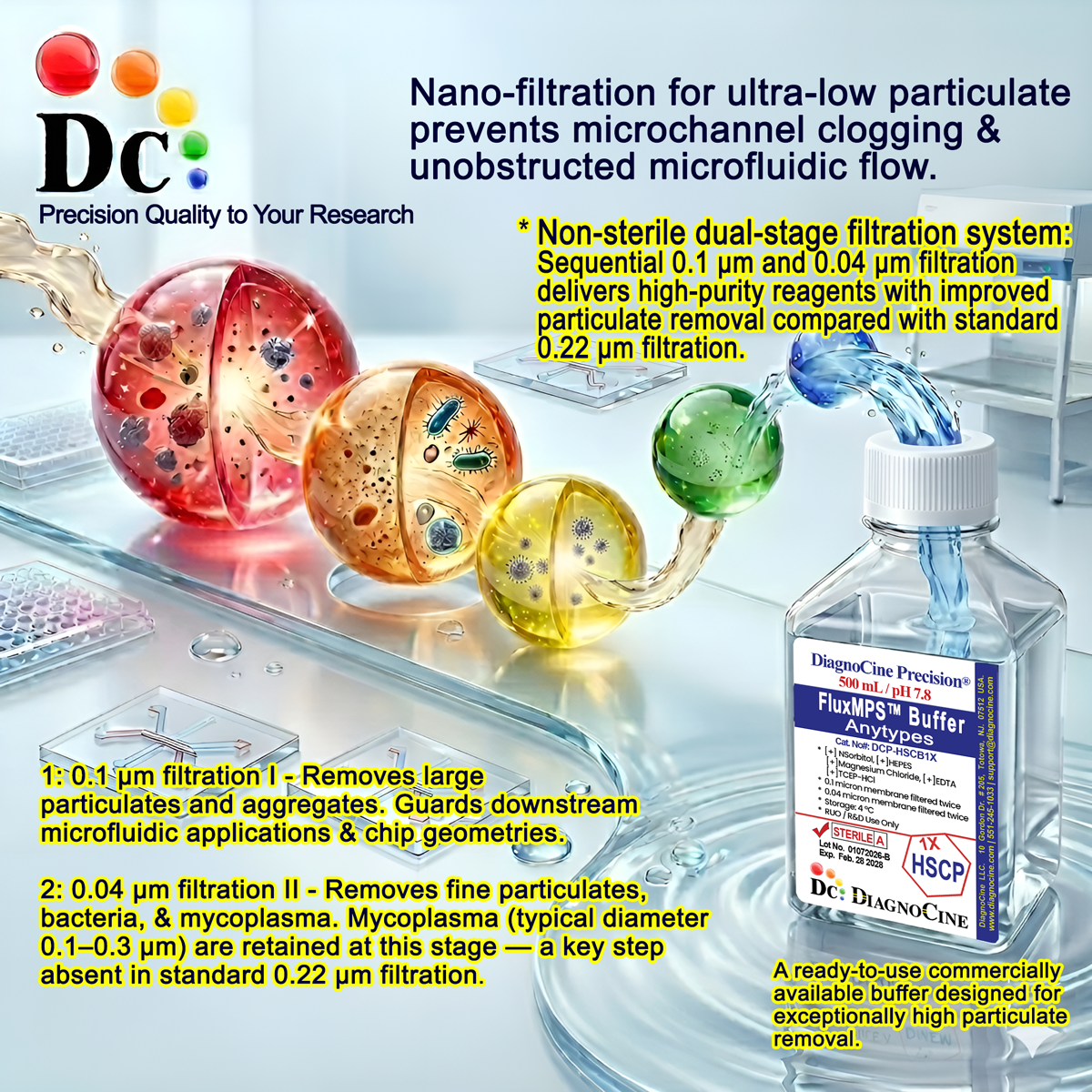
FluxMPS™ Tris-buffered Artificial Seawater (T-ASW) is manufactured with a two-stage filtration cascade that finishes at a 0.04 µm (40 nm) barrier — a pore 5.5 times finer than the single-pass 0.22 µm filtration most laboratory buffers receive. This architecture is the backbone of every FluxMPS™ product. Here it is applied for particulate control rather than sterility assurance: Tris-buffered Artificial Seawater (T-ASW) is supplied non-sterile.
- 1
0.1 µm Filtration I — Coarse Particulate Removal
First-pass 0.1 µm membrane removes large aggregates, undissolved material and gross debris, extending the working life of the fine-pore stage that follows.
- 2
0.04 µm Filtration II — Nano-filtration Polish
A 40 nm (0.04 µm) membrane retains fine particulates and colloidal material that a 0.22 µm membrane passes. The pore is finer than a conventional sterilising-grade membrane, but it is used here for particulate control: the solution is not filled aseptically and is not sterility tested.
Performance vs. conventional buffer
Buffers finished on a single 0.22 µm pass carry subvisible particulates in the range USP <788> describes. The 0.04 µm final stage is 5.5 times finer by pore size and removes colloidal material that a 0.22 µm pass leaves behind — which matters wherever suspended material reaches the measurement: an optical baseline, a column frit, a gel lane. Particulate performance is confirmed by routine testing rather than claimed as a fixed fold-improvement.
© Diagnocine® — DCP-TASW
Where Tris-buffered Artificial Seawater (T-ASW) is used
Tris-buffered artificial seawater at salinity 35 for short-duration work with marine invertebrates, larvae, and coral tissue: acute exposure and ecotoxicity assays, respirometry, rinsing and transfer, and osmotic matching during handling.
Trace Analysis & Low-Background Work
Sub-0.04 µm filtration and ultrapure Type 1 water keep particulate, colloidal, and trace-metal load low in Tris-buffered Artificial Seawater (T-ASW), which is what matters where a reagent blank sets the detection floor or where a culture must stay free of contaminating growth.
- Low Reagent Blank: minimises the particulate and colloidal contribution to trace-level determinations
- Culture Integrity: reduces the bioburden and particulate load introduced into culture vessels and incubations
- Filter-Based Workflows: limits premature loading of membrane filters during sample concentration and eDNA capture
Acute Exposure & Toxicity Testing
Exposure medium for acute marine toxicity tests, where the Tris buffer holds pH steady through the respiration and excretion that would otherwise drive it down over hours.
Larval & Embryo Handling
Short-duration handling of invertebrate larvae and embryos, where osmolarity must match seawater and pH must not drift during manipulation under a microscope.
Coral Tissue & Fragment Work
Holding and manipulating coral fragments and isolated tissue during short procedures, including airbrushing and symbiont separation.
Respirometry & Metabolic Measurement
Respirometry and metabolic rate work where a buffered medium prevents the pH fall that confounds oxygen consumption measurements in a closed chamber.
Short-Term Holding & Transport
Holding and transporting marine invertebrates for hours rather than days, where buffering capacity matters more than the trace nutrition a culture medium supplies.
pH-Controlled Experiments
Experiments needing a fixed, known pH in seawater. Note that Tris buffering overrides the natural carbonate system, so this is not the medium for carbonate chemistry or ocean acidification work.
Specifications at a glance
Measured and declared parameters for Tris-buffered Artificial Seawater (T-ASW) (DCP-TASW).
| Parameter | Specification |
|---|---|
| Formulation / composition | Artificial seawater base in ultrapure, nuclease-free water; see full composition below |
| Appearance | Clear solution, free of visible particulates |
| pH (USP <791>) | 8.0 ± 0.1 USP |
| Osmolality (USP <785>) | ~1000 mOsm/kg (seawater-matched) USP |
| Molarity / concentration | Artificial seawater, S = 35, with 20 mM Tris |
| Conductivity / ionic strength | Confirmed by routine testing |
| Buffering range (pKa) | 7.8 – 8.2 |
| Parameter | Specification |
|---|---|
| Endotoxin (USP <85> BET) | < 0.05 EU/mL USP |
| Sterility (USP <71>) | Not supplied sterile USP |
| Bioburden | Confirmed by routine testing |
| Particulate ≥ 10 µm (USP <788>) | Confirmed by routine testing USP |
| Particulate ≥ 25 µm (USP <788>) | Confirmed by routine testing USP |
| Water purity | Ultrapure Type 1, 18.2 MΩ·cm |
| Manufacturing standard | ISO 13485:2016 ISO |
| Fill environment | ISO Class 5 (Class 100) ISO |
| Parameter | Specification |
|---|---|
| Storage temperature | 4 °C, protect from light |
| Freeze-thaw | Do not freeze |
| Shelf life | 12 months |
| Shipping condition | Cold pack |
| pH stability | Verify at the working temperature; most buffers shift measurably with temperature and ionic strength |
| Parameter | Specification |
|---|---|
| Raw material grade | Tris-buffered, 0.04 µm filtered, not sterile |
| Traceability | Catalogue number DCP-TASW; lot documentation available on request |
| Manufacturing QMS | ISO 13485:2016 certified ISO |
| Regulatory alignment | 21 CFR Part 820 (cGMP) aligned |
| Production method | Compounded, filtered and filled at Diagnocine Precision, Totowa, New Jersey, USA |
| Intended use | For Research Use Only (RUO) |
Full composition
Makes 1 L. Every component is disclosed, with CAS numbers where a single defined substance applies.
| Component | CAS Number | Concentration |
|---|---|---|
| Artificial seawater baseMajor ion matrix at S = 35; salts listed under the base tab | 1 L | |
| Tris baseBuffer, 20 mM | 77-86-1 | 2.42 g |
| Hydrochloric acid, concentratedTitrant | 7647-01-0 | q.s. to pH 8.0 |
| Component | CAS Number | Concentration |
|---|---|---|
| Sodium chloride419 mM Na, 483 mM Cl | 7647-14-5 | 24.48 g |
| Magnesium chloride hexahydrate54.5 mM Mg | 7791-18-6 | 11.08 g |
| Sodium sulfate28.9 mM sulfate | 7757-82-6 | 4.10 g |
| Calcium chloride dihydrate10.6 mM Ca | 10035-04-8 | 1.554 g |
| Potassium chloride9.3 mM K | 7447-40-7 | 0.693 g |
| Sodium bicarbonate2.4 mM alkalinity | 144-55-8 | 0.201 g |
| Potassium bromide0.84 mM bromide | 7758-02-3 | 0.100 g |
| Boric acid0.43 mM borate | 10043-35-3 | 0.0266 g |
| Strontium chloride hexahydrate92 µM strontium | 10025-70-4 | 0.0246 g |
| Sodium fluoride74 µM fluoride | 7681-49-4 | 0.0031 g |
| Ultrapure waterSolvent | 7732-18-5 | q.s. to 1 L |
Handling and storage
- 1
Supplied non-sterile for short-duration work. For extended or axenic culture, sterilise in-house by filtration rather than autoclaving: heating a bicarbonate-containing seawater drives off CO2 and walks the pH upward.
- 2
20 mM is the usual working strength. Some coral and larval protocols go to 50 mM (6.06 g), which holds pH harder but is also more of a metabolic load.
- 3
Tris shifts about 0.03 pH units per degree, so set the pH at the temperature the culture will run at, not on the bench.
Manufacturing & compliance
Tris-buffered Artificial Seawater (T-ASW) is manufactured, filtered, and packaged under controlled, certified conditions.
ISO 13485:2016 QMS
Manufactured under ISO 13485-certified and CE-approved facilities.
Ultrapure Type 1 Water
Formulated with ultrapure, nuclease-free water (18.2 MΩ·cm) to minimise adventitious background.
ISO Class 5 (Class 100) Fill & Finish
Final packaging, quality assurance, and testing performed at the Diagnocine R&D and Quality Testing Center.
Micro-Batch Precision
Specific customisation requests and assembly performed at Diagnocine Precision, Totowa, New Jersey, USA.
Endotoxin (USP <85> BET)
Released to less than 0.05 EU/mL, confirmed by routine bacterial endotoxins testing.
Particulate (USP <788> Method 2)
Subvisible particulate at 10 µm and 25 µm, confirmed by routine testing of the filtration train.
Osmolality (USP <785>)
Determined by freezing-point depression, confirmed by routine testing.
Documentation / CoA
Specifications are confirmed by routine quality testing rather than by testing every lot. Testing and documentation for a specific lot are available as a chargeable service on request.
How DCP-TASW compares
A side-by-side look at Tris-buffered Artificial Seawater (T-ASW) against conventional buffer preparations.
| Parameter | DCP-TASW (FluxMPS™) | Conventional 0.22 µm Filtered Buffer | Standard Alternative Buffer |
|---|---|---|---|
| Defined molarity and released pH | |||
| Final filtration pore size | 0.04 µm | 0.22 µm | 0.22 µm |
| Number of filtration stages | 2 | 1 | 1 |
| Endotoxin specification | < 0.05 EU/mL | Not specified | Not specified |
| USP <788> particulate compliance | |||
| Water quality | Ultrapure Type 1 (18.2 MΩ·cm) | Standard purified water | Standard purified water |
| Manufacturing QMS | ISO 13485:2016 | Not specified | Not specified |
| Microfluidic channel compatibility | |||
| Full composition disclosed | Partial | ||
| Custom formulation available |
Frequently asked questions
Common questions about Tris-buffered Artificial Seawater (T-ASW) (DCP-TASW).
Supporting literature
Curated peer-reviewed literature relevant to this buffer's chemistry and to marine, freshwater and environmental laboratory workflows.
- Harrison, P.J., Berges, J.A. Marine culture media. In: Andersen, R.A. (ed.) Algal Culturing Techniques. Academic Press, 2005, pp. 21–33.
- Kester, D.R., Duedall, I.W., Connors, D.N., Pytkowicz, R.M. Preparation of artificial seawater. Limnology and Oceanography, 1967, 12:176–179. doi:10.4319/lo.1967.12.1.0176
- Guillard, R.R.L., Ryther, J.H. Studies of marine planktonic diatoms. Canadian Journal of Microbiology, 1962, 8:229–239. doi:10.1139/m62-029
- Guillard, R.R.L., Hargraves, P.E. Stichochrysis immobilis is a diatom, not a chrysophyte. Phycologia, 1993, 32:234–236. doi:10.2216/i0031-8884-32-3-234.1
- Keller, M.D., Selvin, R.C., Claus, W., Guillard, R.R.L. Media for the culture of oceanic ultraphytoplankton. Journal of Phycology, 1987, 23:633–638. doi:10.1111/j.1529-8817.1987.tb04217.x
- Berges, J.A., Franklin, D.J., Harrison, P.J. Evolution of an artificial seawater medium: improvements in enriched seawater, artificial water over the last two decades. Journal of Phycology, 2001, 37:1138–1145. doi:10.1046/j.1529-8817.2001.01052.x
- Millero, F.J., Feistel, R., Wright, D.G., McDougall, T.J. The composition of Standard Seawater and the definition of the Reference-Composition Salinity Scale. Deep-Sea Research Part I, 2008, 55:50–72. doi:10.1016/j.dsr.2007.10.001
- Andersen, R.A. (ed.) Algal Culturing Techniques. Academic Press, 2005.
- Intergovernmental Oceanographic Commission. The International Thermodynamic Equation of Seawater — 2010 (TEOS-10). UNESCO IOC Manuals and Guides 56.