

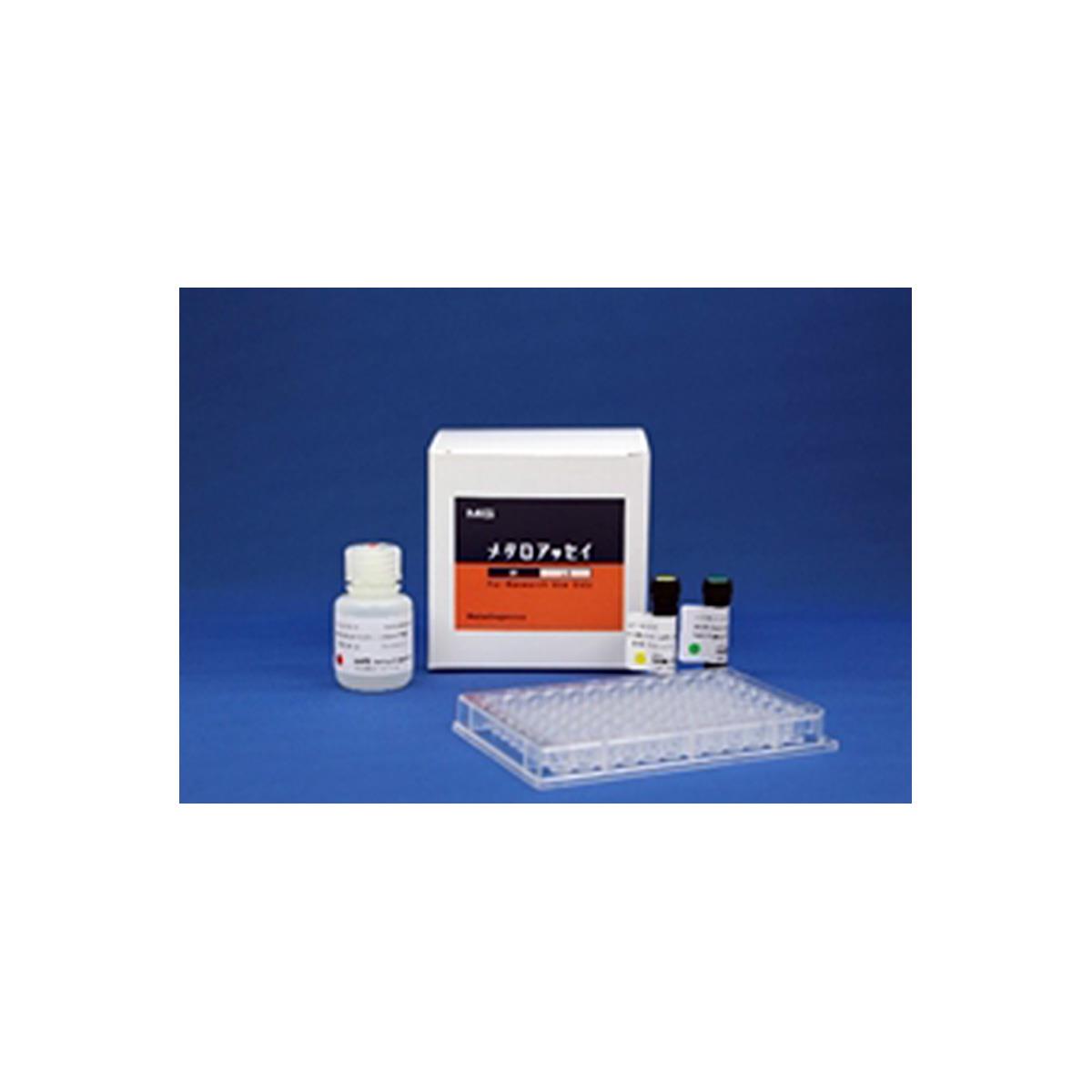
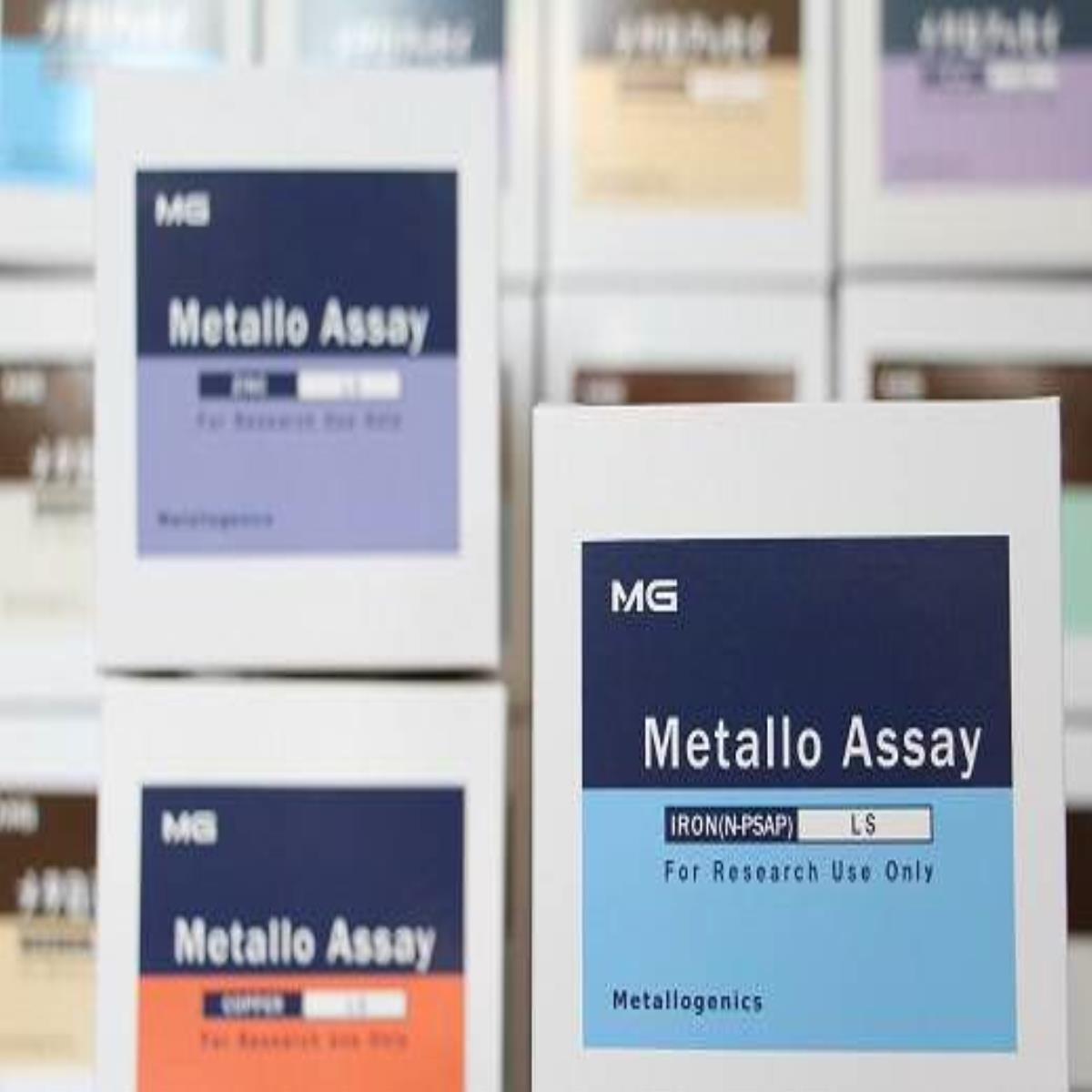
Copper Assay kit LS - 3,5-DiBr-PAESA method, LARGE
Product#: FNK-CU04ME
$578.63
Availability:
Ships in 1-2 Weeks
Copper Assay kit LS - 3,5-DiBr-PAESA method, LARGE
Cat. No. FNK-CU04ME
Size 200 tests / 1 kit
Store 4 oC
Measuring range 3 - 400 ug/dl
Wavelength (maximume wavelength) 570 - 590 nm (580nm)
Chromogen 3,5-DiBr-PAESA
Target Copper (Cu2+ , Cu+)
Description
Metallo Assay Copper Assay Kit LS (DiBr-PAESA Method) can measure Copper ion (Cu2+, Cu+) in the biological samples such as Plasma, Serum, Urine, and wide range of samples by microplate reader.
Metallo Assay Copper Assay kit LS is intended for the quantitative determination of copper in biological sample by 96-well reader use. Target: copper (Cu2+ and Cu+). Measuring range: 3-400 μg/Dl Species: all Sample: serum, plasma, urine, saliva, tissue extract, cell lysate, biological fluid, food, beverage etc. Apparatus: UV/Vis 96-well reader or spectrophotometer Wavelength: 580 nm (570-590nm) Procedure: 10 min
Physiological function of protein holding copper as a cofactor is a regulation of in-vivo redox status. Many of copper enzymes react directly with oxygen. 95% of copper in plasma is bonded with alpha-2-globulin, ceruloplasmin and oxidase of ferroxidase activity. Deficiency of copper causes cardiopathy, osteoporosis, osteoarthritis, Menkes syndrome, and Wilson's disease. It is widely known that copper deficiency lowers the anti-oxidant
function in vivo. On the contrary, excessive dosage or consumption of copper is poisonous to the health.
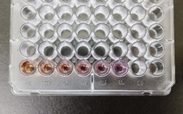
This product is a direct colorimetric assay kit without deproteinization of the sample. Dissociated copper from the ceruloplasmin-copper complex by weakly acid buffer and reduced by means of reducing ascorbic acid (:Cu2+→Cu+). Cu+ ions give a blue colored complex with 3, 5-DiBr-PAESA
(as chromogen). The color intensity is proportional to the amount of copper present in the sample.
Metallo Assay Copper Assay kit LS is intended for the quantitative determination of copper in biological sample by 96-well reader use. Target: copper (Cu2+ and Cu+). Measuring range: 3-400 μg/Dl Species: all Sample: serum, plasma, urine, saliva, tissue extract, cell lysate, biological fluid, food, beverage etc. Apparatus: UV/Vis 96-well reader or spectrophotometer Wavelength: 580 nm (570-590nm) Procedure: 10 min
Physiological function of protein holding copper as a cofactor is a regulation of in-vivo redox status. Many of copper enzymes react directly with oxygen. 95% of copper in plasma is bonded with alpha-2-globulin, ceruloplasmin and oxidase of ferroxidase activity. Deficiency of copper causes cardiopathy, osteoporosis, osteoarthritis, Menkes syndrome, and Wilson's disease. It is widely known that copper deficiency lowers the anti-oxidant
function in vivo. On the contrary, excessive dosage or consumption of copper is poisonous to the health.
This product is a direct colorimetric assay kit without deproteinization of the sample. Dissociated copper from the ceruloplasmin-copper complex by weakly acid buffer and reduced by means of reducing ascorbic acid (:Cu2+→Cu+). Cu+ ions give a blue colored complex with 3, 5-DiBr-PAESA
(as chromogen). The color intensity is proportional to the amount of copper present in the sample.
Notes
- Unstableness of incubation temperature may result in unstable results.
- Use disposable test tube and glassware washed with 1M HNO3 or 1M HCl solution and distilled water.
- Accuracy in pipetting volume for samples and reagents may affect the quality of assay. Please note that samples, standards and Working Reagent must be poured accurately µL level.
- Temperature for chromogen reaction may affect optical density. Please try to extend or shorten chromogen reaction time depending on room temperature.
- In the cell lysate or the tissue extract use as specimen, high concentration of proteins or lipid, may affect observed value. Please remove its by ultrafiltration or centrifugation.
- Heme-containing copper cannot be measured in this assay kit.
1. Sample preparation
◇Serum or Plasma
Insoluble substances in serum and plasma samples should be
removed by filtration or centrifugation. EDTA-plasma cannot
be used.
removed by filtration or centrifugation. EDTA-plasma cannot
be used.
◇Tissue extract, Lysate, Other samples.
Urine (24 hour pooled urine), or other biological fluid:
Add 6M HCl to the sample and adjust pH 2.0-3.0 (e.g. 5-10µL
6M HCl/ 1mL of lysate.). Centrifuge at 6,000 rpm for 15 min.
Collect the supernatant and use it for assay.
6M HCl/ 1mL of lysate.). Centrifuge at 6,000 rpm for 15 min.
Collect the supernatant and use it for assay.
Tissue:
Add 5% TCA solution, vortex 1 min. and incubate at 4-8°C for
30 min. Centrifuge at 6,000 rpm for 15 min. Collect the
supernatant and use it for assay.
30 min. Centrifuge at 6,000 rpm for 15 min. Collect the
supernatant and use it for assay.
* Sample pH should be between pH2 to pH8.
2. Assay preparation
(1)Bring all reagents to room temperature before use.
(2)Prepare enough working Reagent (WR).
(2)Prepare enough working Reagent (WR).
3. Assay procedure.
Procedure using microplate reader.
(1 assay sample 252µL)
?Assay
(1) Add 12 µL of Distilled water (Blank) / STD (Standard)/ sample into each well.
(2) Add 240 µL of Working Reagent ( WR ) to each well and incubate at room temperature for 10 min.
(3) Read the absorbance at 580 nm (main) and 750nm(sub).
(1 assay sample 252µL)
?Assay
(1) Add 12 µL of Distilled water (Blank) / STD (Standard)/ sample into each well.
(2) Add 240 µL of Working Reagent ( WR ) to each well and incubate at room temperature for 10 min.
(3) Read the absorbance at 580 nm (main) and 750nm(sub).
--> OD
* Select the filter: 570-590 nm at 580nm, 700-800 nm at 750 nm.
* Select the filter: 570-590 nm at 580nm, 700-800 nm at 750 nm.
Expiration date and preservation conditions
Storage conditions: Store at 2-8°C. Don’t freeze.
Expiration: 1 year from the date of manufacture.
After the bottles are opened, the kit should be used in 1 month.
Features
- Using microplate reader for assay, no need to use Atomic Absorption Spectrometry or ICP-OES Optical Emission Spectrometry, which have been mainly used so far.
- Good correlation with the result of Atomic Absorption Spectrometry and ICP-OES.
- High throughput measurement by using microplate reader.
- Samples from any animal species can be measured.
- Assay time : 10 minutes
- 1 point calibration with blank – do not need multiple point measurement to make a standard curve (r^2=0.9999).
- Kit does not contain any hazardous components like cyanide or azide as preservative.
- Samples : Serum, Plasma, Urine*, Saliva, Cell lysate, Tissue extract, Hair extract, Water, etc.
The main role of proteins which contain Copper (Cu) is oxidation-reduction function. Most enzymes which contain copper directly react with free-oxygen. 95% of copper in plasma binds to oxidative enzyme, that has alpha-2 globulin, ceruloplasmin and ferroxidase activity.
It is reported that heart-related disease, brittle-bone disease, osteoarthritis, Menkes syndrome, and Wilson's Disease are caused by deficiency of copper. On the other hand, excess copper concentration is also toxic.
Assay Principle
It is reported that heart-related disease, brittle-bone disease, osteoarthritis, Menkes syndrome, and Wilson's Disease are caused by deficiency of copper. On the other hand, excess copper concentration is also toxic.
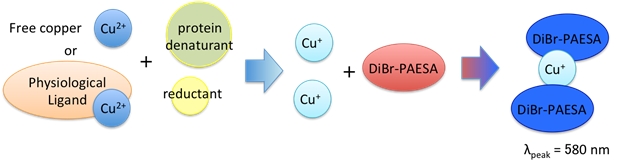
This kit measures copper concentration by color change caused by chelate complex formulation of 3-5 DiBr-PAESA and copper. Copper combined to protein ceruloplasmin is denatured by weak acid and denaturant and then formulates Copper- 3-5 DiBr-PAESA chelate complex. Measuring this complex by 580 nm wavelength and obtain copper concentration.
Sample Preparation

- Samples which do not require preparation
- e.g. Serum, Plasma
- * EDTA treated sample is not suitable for this assay.
- Samples which require acid extraction
- e.g. cell lysate, tissue homogenate and other liquid samples.
- Measurable chemical species is limited as follows:
- Free copper
- Copper binds to protein (Protein-Cu2+, e.g. albumin, metallothionein)
- Lysis buffer contains EDTA is not suitable for this assay.
- Organo-copper and Heme-copper require acidolysis.
- Microwave method and samples which require acidolysis
- e.g samples which contain strong chelate agents such as EDTA, Organo-copper (in the case of single bond -C-Cu-C-), copper in cyclic ligand (Cu-Porphyrin)
* After acidolysis, adjust sample pH in 2 to 3.
Handling Procedure
|
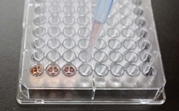
1. Apply DW, Standard and Sample (12 uL) to 96 well plate. |
|
|
2. Add working reagent (240 uL). |
|
|
3. Incubate at room temperature for 10 minutes |
|
|
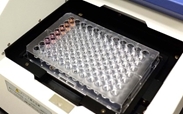
4 .Read the absorbance at 580 nm. |
|
|
5 .Calculate concentration ΔODStd = ODStd – ODBl, ΔODS = ODS – ODBl Copper (μg/dL) = ΔODS/ΔODStd x 200 * ODS : ODsample, ODBl : ODblank, ODStd : ODstandard |
|
Citation
- Metal Ion Release of Manufactured Metal Oxide Nanoparticles Is Involved in the Allergic Response to Inhaled Ovalbumin in Mice. published by Occupational Diseases and Environmental Medicine, Vol.4 No.2, 2016
- Conformational Disorder of the Most Immature Cu,Zn-Superoxide Dismutase Leading to Amyotrophic Lateral Sclerosis J. Biol. Chem., pii: jbc.M115.683763.
- Synthesis of amino-functionalized mesoporous silica sheets and their application for metal ion capture. Journal of Asian Ceramic Societies ; November 15, 2014
- Pheomelanin Formation and Low Tyrosinase Activity in Fading Body Color Variant BdlR Strain Oryzias latipes. J Life Sci ; June, 2014
- A Primary Role for Disulfide Formation in the Productive Folding of Prokaryotic Cu,Zn-superoxide dismutase. J Biol Chem ; June 10, 2014
- Enhanced biofilm formation and/or cell viability by polyamines through stimulation of response regulators UvrY and CpxR in the two-component signal transducing systems, and ribosome recycling factor. Int J Biochem Cell Biol ; November 11, 2012
References
- Abe. A, Saito. Yamashita. S, Noma. A: Sensitive, Direct Colonmetric Assay for Copper in Serum. Clinical Chem, 35(4), p552-554 (1989).
- Sakamoto. A, Terui. Y, Yamamoto. T, Kasahara. T, Nakamura. M, Tomitori. H, Yamamoto. K, Ishihama. A, Michael. A. J, Igarashi. K, Kashiwagi. K: Enhanced biofilm formation and/or cell viability by polyamines through stimulation of response regulators UvrY and CpxR in the two-component signal transducing systems, and ribosome recycling factor, Int J Biochem Cell Biol. 44(11), p1877-86 (2012).
