
Anti-5Methylcytosine Antibody mouse IgM (clone 5MC-CD), Biotin-conjugated
Product#: FNK-51-004
$346.79
Availability:
Ships in 1-2 Weeks
Anti-5-Methylcytosine antibody, mouse IgM (clone 5MC-CD)
Order Information
| Cat No. | Description | Link |
| FNK-51-003 | Unlabeled |  |
| FNK-51-004 | Biotinylated | |
| FNK-51-005 | FITC-conjugated | |
General information
| Cat. No. | :51-00_51-003, 51-00_51-004, 51-00_51-005 |
| Size | :100 µg (51-00_3), 50 µg (51-00_4, 51-00_5) |
| Form | :51-003: Purified mouse IgM 1 mg/ml in PBS with 50% glycerol, filter-sterilized :51-004: Purified biotinylated IgM, 1 mg/ml in PBS with 50% glycerol, filter-sterilized, azide and carrier free :51-005: Purified FITC-conjugated mouse IgM, 1 mg/ml in PBS with 50% glycerol, filter-sterilized |
| Immunogen | :5-Methylcytosine conjugated to bovine serum albumin |
| Clone No. | :5MC-CD |
| Host Animal | :Mouse |
| Isotype | :IgM |
| Reactivity | :DNA with 5-Methylcytosine (methylated DNA), Any species |
| Application | :Immunocytochemistry (Figure below and Ref.1 & 2) (~50-100 fold dilution) :Immuno-blotting detection of DNA with 5-methylocytosine on nitrocellulose (Ref. 3 & 4) (~1000 fold dilution) |
Description
DNA methylation is a type of chemical modification of DNA that can be inherited and subsequently removed without changing the original DNA sequence. Therefore it is part of the epigenetic code and is also the most well characterized epigenetic mechanism. DNA methylation results in addition of a methyl group to DNA — for example, to the number 5 carbon of the cytosine pyrimidine ring — which involves reduction in gene expression. In adult somatic tissues, DNA methylation typically occurs in a CpG dinucleotide context; non-CpG methylation is prevalent in embryonic stem cells. This hybridoma has been constructed by Prof. H. Sano.
Figures
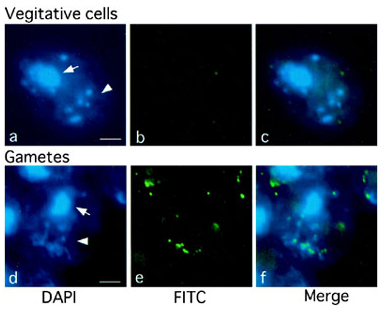 |
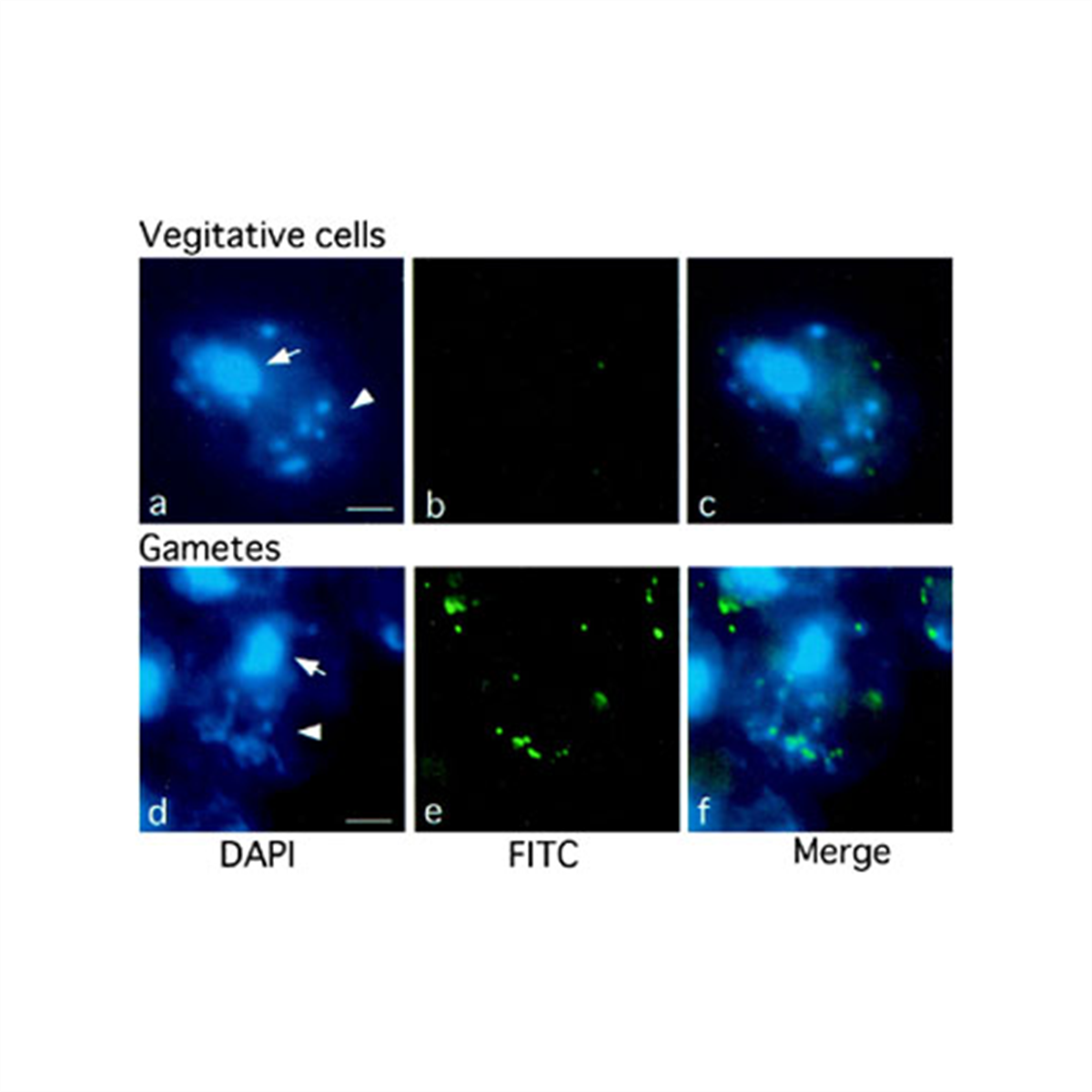
Fig.1 Methylation of chloroplast DNA visualized by immunochemistry. Samples are Chlamidomonas me-1 cells. Left: DAPI-stained cells Middle: Cells stained with anti-5MeC antibody and FITC-conjugated 2nd antibody Right: Merged image Chloroplast DNA is exclusively methylated in gamete cells. |
|
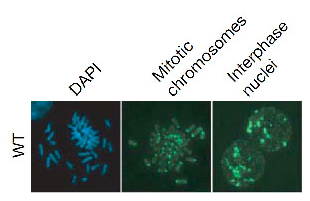 |
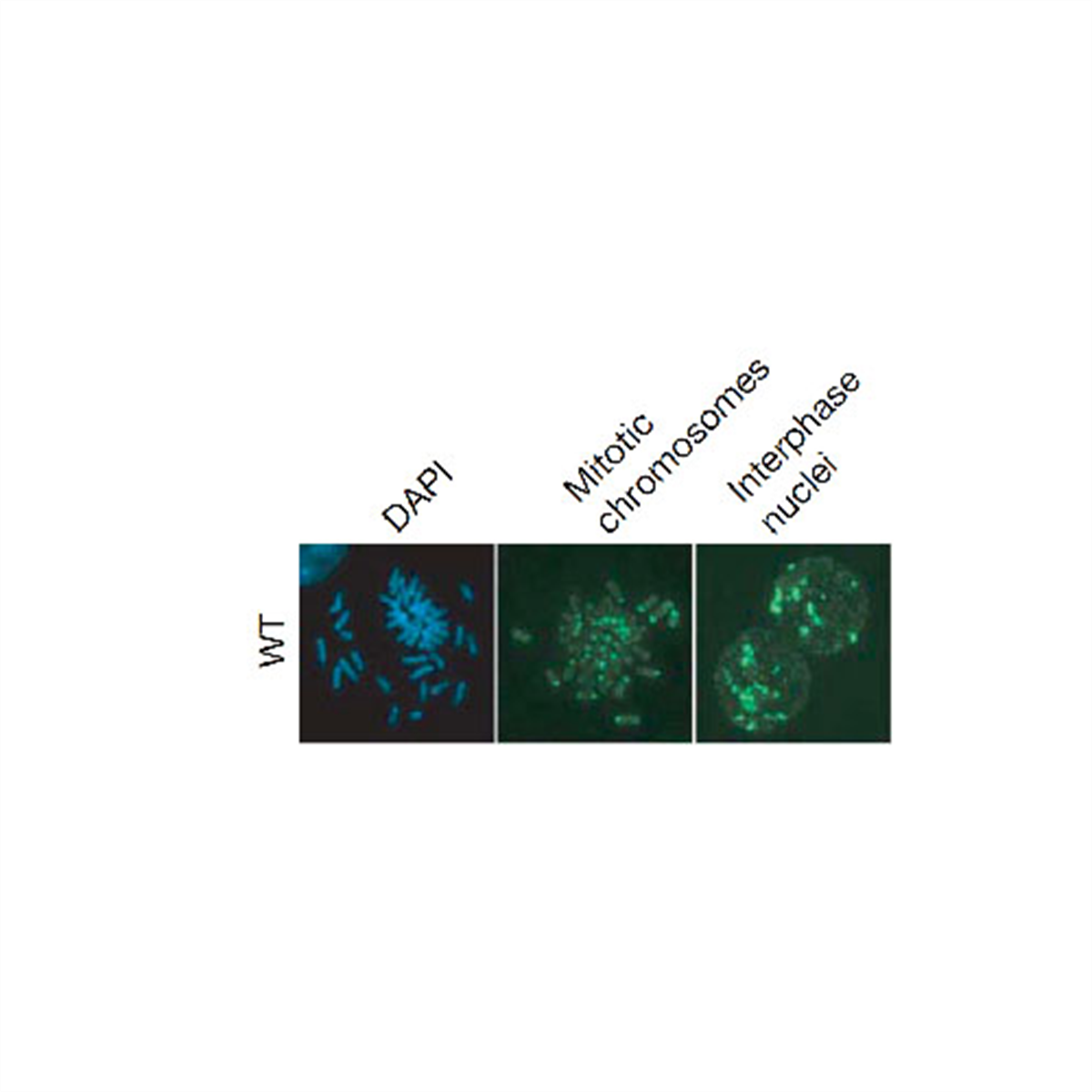
Fig.2 Detection of DNA methylation in mouse embryonic stem cells by immunofluorescence staining with the anti-5MeC antibody Intense 5-methylcytosine staining at pericentromeric regions was seen in the mitotic chromosome and interphase nuclei of ESCs. |
- Type: Primary
- Application: MeDIP (Methylated DNA Immunoprecipitation), MeDIP-Seq, Dot Blot, ELISA
- Species:Mouse
- Recombinant:Yes
- Long Term Storage: -20°C or below
- Shipping Condition: Dry ice
Human Diseases
- Cancer
- Abnormal methylation of DNA is often observed in various cancers, including skin cancers, where mutations frequently arise from the conversion of 5-methylcytosine (5-MeC) to thymine, leading to C to T transitions at CpG sites. This process can contribute to tumorigenesis and cancer progression.
- Autoimmune Diseases
- Research has indicated that heavy methylation in human repetitive DNA subsets can be detected using antibodies against 5-methylcytosine, suggesting a potential link to autoimmune conditions.
- Genetic Disorders
- The deamination of 5-methylcytosine can lead to mutations that may result in genetic diseases. Transition mutations involving C to T changes are among the most common mutations in human genetic disorders.
- Developmental Disorders
- Abnormal DNA methylation can affect genomic imprinting and X chromosome inactivation, processes critical during early development. Disruptions in these processes may lead to developmental disorders.
Cellular Signaling Pathways
- DNA Methylation and Gene Regulation
- The antibody specifically recognizes 5-methylcytosine (5-MeC), which is formed by the addition of a methyl group to the fifth carbon of the cytosine ring, catalyzed by DNA methyltransferases. This modification is crucial for regulating gene expression, genomic imprinting, and X-chromosome inactivation during development.
- Impact on Transcription Factors
- Methylation can alter the binding affinity of transcription factors to DNA, thereby influencing the transcriptional activity of genes. In this context, the antibody can be used to study how changes in DNA methylation affect the signaling pathways that govern gene expression and cellular responses.
- Signal Transduction Mechanisms
- The antibody facilitates the investigation of how methylation status influences various signal transduction pathways, including those involved in cancer progression. Aberrant methylation patterns can disrupt normal signaling, leading to uncontrolled cell growth and malignancy.
- Research Applications
- The Anti-5-Methylcytosine antibody is utilized in various experimental techniques such as methylated DNA immunoprecipitation (MeDIP), immunofluorescence (IF), and dot blotting (DB). These applications help elucidate the dynamics of DNA methylation in different cellular contexts, contributing to our understanding of epigenetic regulation in health and disease.
Aliases for 5-Methylcytosine Gene
- 5-Methylcytosine
- 5-Me Cytidine
- 5-Me Cytosine
- 5-Methyl-Cytidine
- 5-Methyl-Cytosine
- 5-MethylCytidine
- 5-mC
- 5-meC
- Methyl CpG
References
- Sharif J et al “The SRA protein Np95 mediates epigenetic inheritance by recruiting Dmnt1 to methylated DNA” Nature 450: 908-912 (2007) PMID: 17994007
- Nishiyama R et al “A chloroplast-resident DNA methyltransferase is responsible for hypermethylation of chloroplast genes in Chlamydomonas maternal gametes” PNAS 99: 5925-5930 (2002) PMID: 11983892
- Sano H et al “Detection of heavy methylation in human repetitive DNA subsets by a monoclonal antibody against 5-methylcytosine” Biochim Biophys Acta 951:157-65 (1988) PMID: 2847796
- Sano H et al “Identification of 5-methycytosine in DNA fragment immobilized on nitrocellulose paper “PNAS 77:3581-3585 (1980) PMID: 6251470