Notoginsenoside R1
Product#: FNK-NS552501
$230.21
Availability:
Ships in 1-2 Weeks
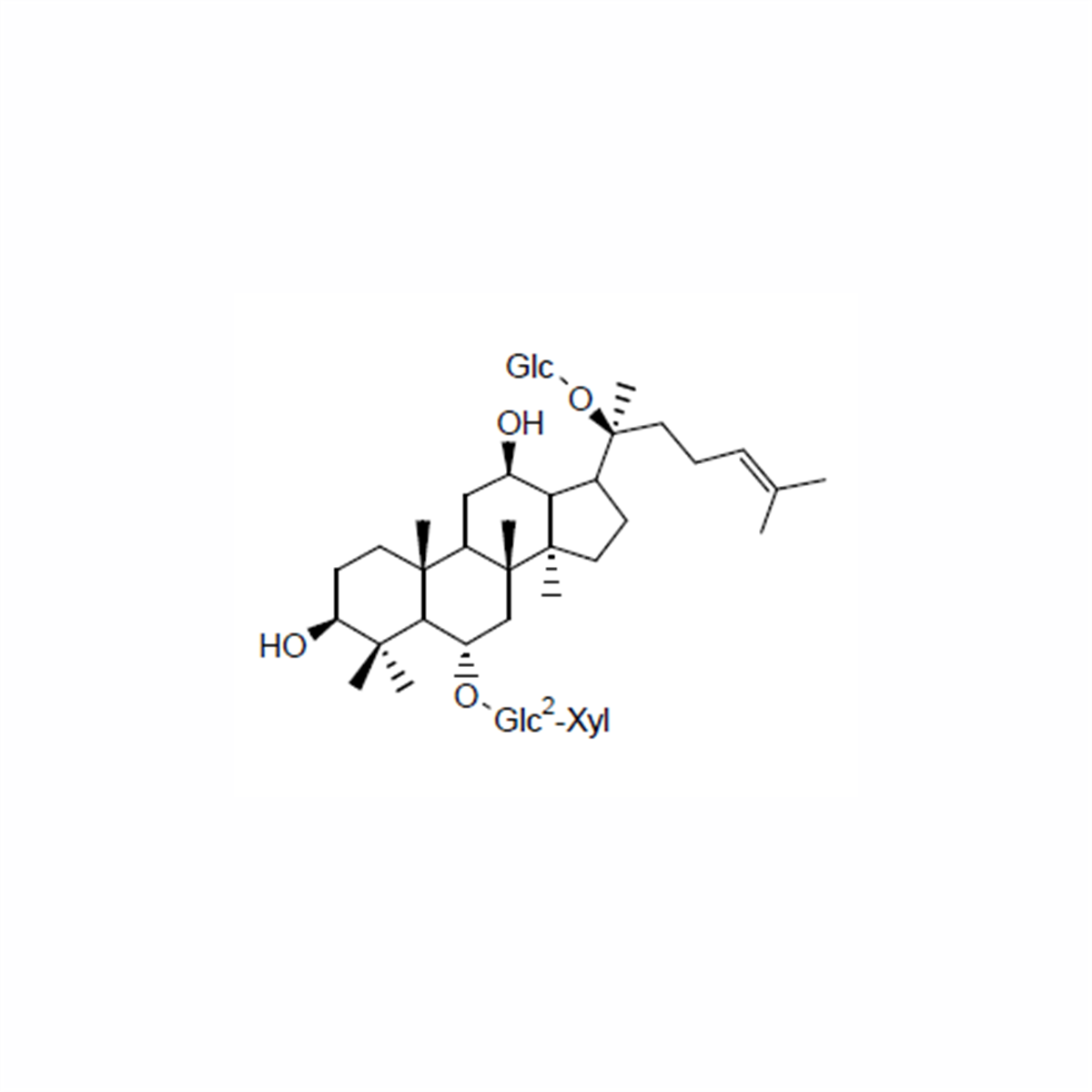
Notoginsenoside R1
- CAT Number : FNK-NS552501
- CAS Number : 80418-24-2
- Molecular Weight : 933.13
- Molecular Formula : C47H80O18
- Pack size: 1 mg
- Store: -20 ℃
- Purity: >99%(HPLC)
Notoginsenoside R1 is a unique saponin compound found primarily in Panax notoginseng (Sanqi ginseng). It is one of the characteristic bioactive components that distinguishes P. notoginseng from other Panax species.
Properties
- Molecular formula: C47H80O18
- Molecular weight: 933.13 g/mol
- Likely a white crystalline powder
- Soluble in methanol and ethanol
- Slightly soluble in water
- Biochemical reagent for ginseng research
- Analytical standard for quality control of P. notoginseng products
- Potential therapeutic applications in cardiovascular and cerebrovascular diseases
- Used in pharmacological studies related to anti-inflammatory and antioxidant effects
- Handle in accordance with good laboratory practices
- Use appropriate personal protective equipment
- Store in a cool, dry place, protected from light
- Avoid ingestion, inhalation, and skin contact
- Dispose of in compliance with local regulations for chemical waste
Cardiovascular diseases:
NGR1 demonstrates cardioprotective effects against ischemia-reperfusion injury by reducing oxidative stress, inflammation, and apoptosis12. It can decrease myocardial infarct size and improve heart function after injury.
Cerebrovascular diseases:
In models of cerebral ischemia-reperfusion injury, NGR1 reduces cerebral infarct volume and neurological deficits1. It exerts neuroprotective effects by suppressing oxidative stress and promoting angiogenesis and neurogenesis.
Renal diseases:
NGR1 shows renoprotective effects in acute kidney injury models by decreasing inflammatory markers and improving renal function.
Gastrointestinal diseases:
In intestinal ischemia-reperfusion injury models, NGR1 attenuates mucosal damage and improves intestinal barrier function.
Osteoarthritis:
NGR1 alleviates inflammation in osteoarthritis by activating the Nrf2/HO-1 signaling pathway, which has antioxidant and anti-inflammatory effects.
Diabetes and related complications:
NGR1 protects against high glucose-induced cardiomyocyte injury, suggesting potential benefits in diabetic cardiomyopathy8. It may also have protective effects in diabetic nephropathy.
Alzheimer's disease:
Studies indicate NGR1 may improve learning and memory functions and reduce neuronal hyperexcitability in Alzheimer's disease models9. It shows neuroprotective effects against amyloid-beta induced damage.
Cancer:
Some research suggests NGR1 may inhibit colorectal cancer metastasis, though more studies are needed to confirm its anticancer potential.
Further research is needed to fully establish its therapeutic efficacy in these areas.
Cell Signaling Pathways Affected
PI3K/Akt pathway:
- NGR1 activates the PI3K/Akt signaling pathway to protect podocytes in diabetic nephropathy.
- It inhibits vascular smooth muscle cell proliferation and migration through regulating the PI3K/Akt pathway .
AMPK/Nrf2/HO-1 pathway:
NGR1 attenuates high glucose-induced cardiomyocyte injury by activating the AMPK/Nrf2 signaling pathway and upregulating HO-1 expression.
ERK1/2 pathway:
NGR1 inhibits the ERK1/2 signaling pathway to reduce apoptosis after traumatic brain injury.
JNK pathway:
NGR1 attenuates oxidative stress-induced osteoblast dysfunction by suppressing activation of the JNK signaling pathway.
AGE-RAGE signaling pathway:
In breast cancer cells, NGR1 inhibits the AGE-RAGE signaling pathway by suppressing RUNX2 expression, leading to ferroptosis.
Wnt/β-catenin pathway:
NGR1 promotes cortical neuron growth by activating the Wnt/β-catenin signaling pathway.
NF-κB pathway:
NGR1 blocks NF-κB activation to protect against cardiac dysfunction.
VEGF-KDR/Flk-1 pathway:
NGR1 exhibits pro-angiogenic activity on endothelial cells via the VEGF-KDR/Flk-1 signaling pathway.
Estrogen receptor signaling:
NGR1 protects against cerebral ischemia-reperfusion injury through estrogen receptor-dependent activation of Akt/Nrf2 pathways.
_1200_600.png)