
NSR Primer Set for mouse
NSR Primer Set for mouse
The NSR Primer Set for mouse (Cat. No. TYB-NSR-102) from TOYOBO is a specialized primer set designed for use in next-generation sequencing (NGS) workflows, especially in single-cell and ultra-low input RNA applications. NSR stands…
Shipping & ordering notice: This product has ICE or DRY ICE shipping requirements, DO NOT select Ground Shipping.
| Product Name | Cat. No. | Size | Storage | Order |
|---|---|---|---|---|
| NSR Primer Set for mouse | TYB-NSR-102 | 96 rxns | -20°C | Current page |
NSR Primer Set for mouse
Size: 96 rxns
Description
The NSR Primer Set for mouse (Cat. No. TYB-NSR-102) from TOYOBO is a specialized primer set designed for use in next-generation sequencing (NGS) workflows, especially in single-cell and ultra-low input RNA applications. NSR stands for “Not So Random” primers, which are engineered to minimize the synthesis of cDNA from ribosomal RNA (rRNA), thereby reducing rRNA contamination in sequencing libraries and improving the efficiency and quality of transcriptome analysis in mouse studies.
Key Features
- Reduces rRNA Contamination: NSR primers are random primers that exclude 6-mer sequences matching mouse rRNA, significantly decreasing the rate of rRNA-derived cDNA and enhancing the detection of target transcripts.
- Optimized for Mouse RNA: Specifically designed for mouse samples, ensuring compatibility and performance in mouse transcriptome studies.
- Versatile Input Range: Suitable for single-cell (1–100 cells) or ultra-low total RNA inputs (10 pg–1 ng), making it ideal for precious or limited mouse samples.
- Comprehensive RNA Detection: Enables detection of both poly(A) and non-poly(A) RNAs, including histone RNAs and long non-coding RNAs (lncRNAs), as well as isoforms and alternative splicing events.
- Full-Length cDNA Synthesis: Supports the preparation of cDNA covering the entire length of target RNAs, including transcripts over 10 kb.
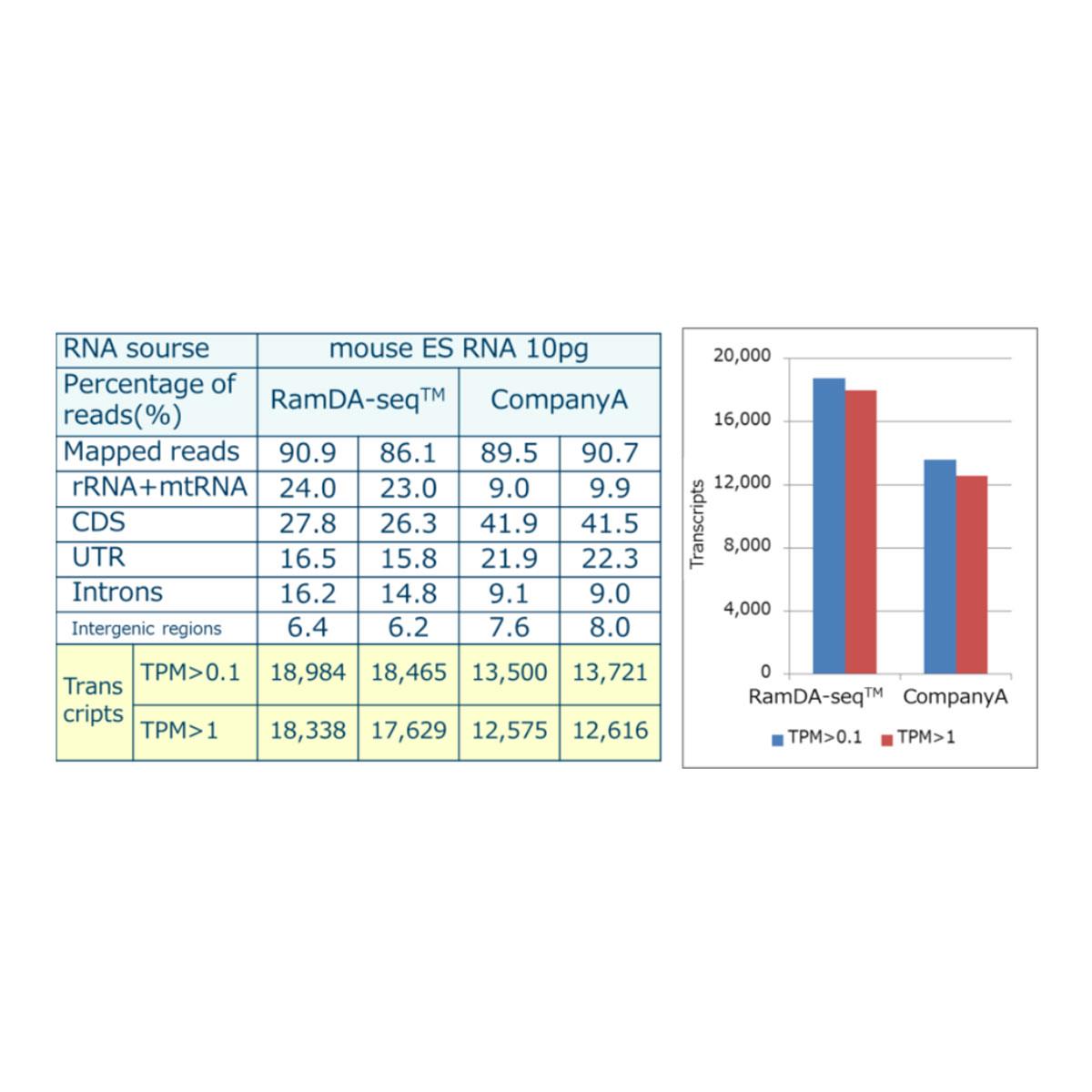
- Improved Gene Detection: Increases the number of detectable genes compared to conventional random primers, enhancing transcriptome coverage in mouse samples—up to approximately 5,000 more genes detected in comparative studies.
Storage Condition
- Store at-20 ℃
Components
| NSR Primer Set for mouse | TYB-NSR-102 |
|---|---|
| 1st NSR Primer Mix for mouse | 54 μL |
| 2nd NSR Primer Mix for mouse | 275 μL |
- Each set supports up to 96 reactions
Recommended Use
- For use with the GenNext™ RamDA-seq™ Single Cell Kit (Code No. TYB-RMD-101, TYB-RMD-101T) or similar workflows requiring efficient cDNA synthesis from low-input or single-cell human RNA samples.
- Replace the standard RT-RamDA™ Primer Mix with the 1st NSR Primer Mix for human during the initial cDNA synthesis step.
| GenNext™ RamDA-seq™ Single Cell Kit (96 rxns) Cat No.: TYB-RMD-101 | GenNext™ RamDA-seq™ Single Cell Kit (24 rxns) Cat No.: TYB-RMD-101T | NSR Primer Set for human Cat No.: TYB-NSR-101 | |
|---|---|---|---|
| Link | .png) |
|
|