Macrosphelide A, 5 mg
Product#: FNK-BLK-0470-5mg
$475.59
Availability:
Ships in 1-2 Weeks
Macrosphelide A (5mg)
Cat No: FNK-BLK-0470-5mg
Product ID and Size
| Cat No. | Description | Size | Link |
| FNK-BLK-0470-100ug | Macrosphelide A | 100μg |  |
| FNK-BLK-0470-1mg | Macrosphelide A | 1mg | |
| FNK-BLK-0470-5mg | Macrosphelide A | 5mg | |
Description
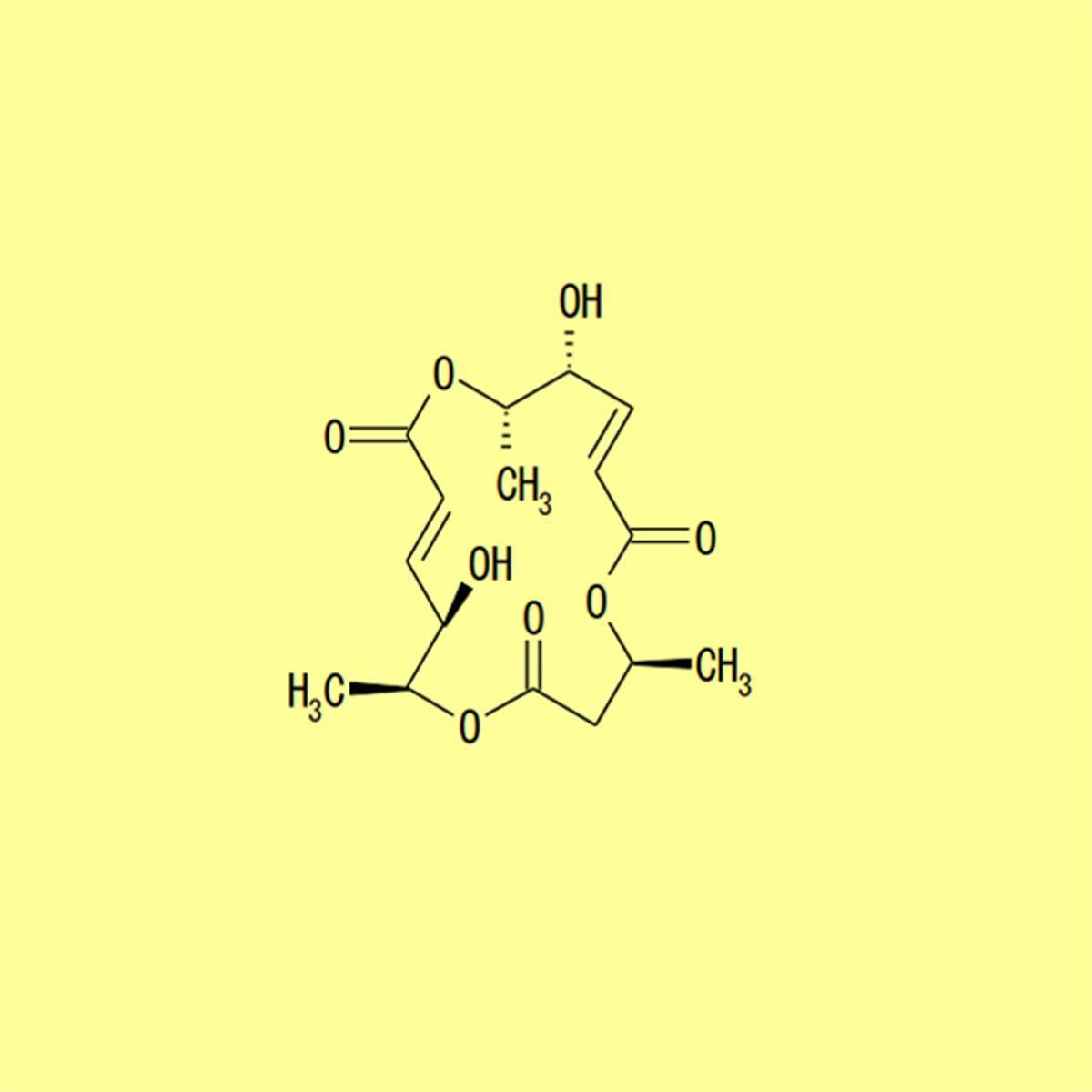
Macrosphelide A, which is a macrolide antibiotic, was isolated from Microsphaeropsis sp. FO-5050 and Coniothyrium minitans. C. minitans is a mycoparasite of sclerotia of Sclerotinia sclerotiorum and Sclerotium cepivorum . Macrosphelide A is a novel inhibitor of cell-cell adhesion molecule. In addition, macrosphelide A showed antifungal activity against S. sclerotiorum and S. cepivorum. Recently, it has been reported that macrosphelide A also was showed antimicrobial activity against Bacillus thuringiensis, Staphylococcus aureus and Lepista nuda.
Origin: Paraconiothyrium sporulosum strain FO-5050
CAS Registry Number: 172923-77-2
CA Index Name: (4S,7E ,13E )-4α,10α,16αTrimethyl-9β,15β-dihydroxy1,5,11-trioxa-7,13- cyclohexadecadiene-2,6,12- trione
Appearance: white solid
Molecular Formula/ Weight: C16H22O8=342.35
Melting Point: 146-149℃
Purity: >98% by HPLC
Solubility: Sol. MeOH, Chloroform, EtOAc, DMSO, Dimethyl Ether Inso. water, Hexane
Handling and Storage: Store at -20℃.
Clinical Signifcance
- Anticancer Activity: Macrosphelide A has shown promise as an anticancer agent. It inhibits the adhesion of HL-60 human leukemia cells to human umbilical vein endothelial cells, which is crucial in preventing cancer metastasis. It also exhibits specific anticancer effects by inactivating enzymes like ENO1, ALDOA, and FH, which are involved in cancer cell metabolism.
- Immunosuppressant Activity: Besides its anticancer properties, Macrosphelide A has demonstrated potent immunosuppressant activity in vivo, which could potentially be useful in conditions requiring immune system modulation.
- Antimicrobial Activity: As a macrolide antibiotic, Macrosphelide A also shows activity against various microorganisms, including some fungi and Gram-positive bacteria.
The compound exhibits anti-cancer properties by targeting specific enzymes involved in the metabolic processes of cancer cells. Specifically, Macrosphelide A has been shown to inactivate enzymes such as enolase 1 (ENO1), aldolase A (ALDOA), and fumarate hydratase (FH), which are critical for the Warburg effect—a metabolic adaptation observed in cancer cells.
References:
- M. Hayashi, et. al., J. Antibiot (Tokyo). 48, 1435-1439 (1995).
- M. P. McQuilken, et. al., FEMS Microbiol. Lett. 219, 27-31 (2003).
- S. Takamatsu, et. al., J. Antibiot (Tokyo). 49, 95-98 (1996).
- N. Tomprefa, et. al., J. Appl. Microbiol. 106, 2048-2056 (2009).