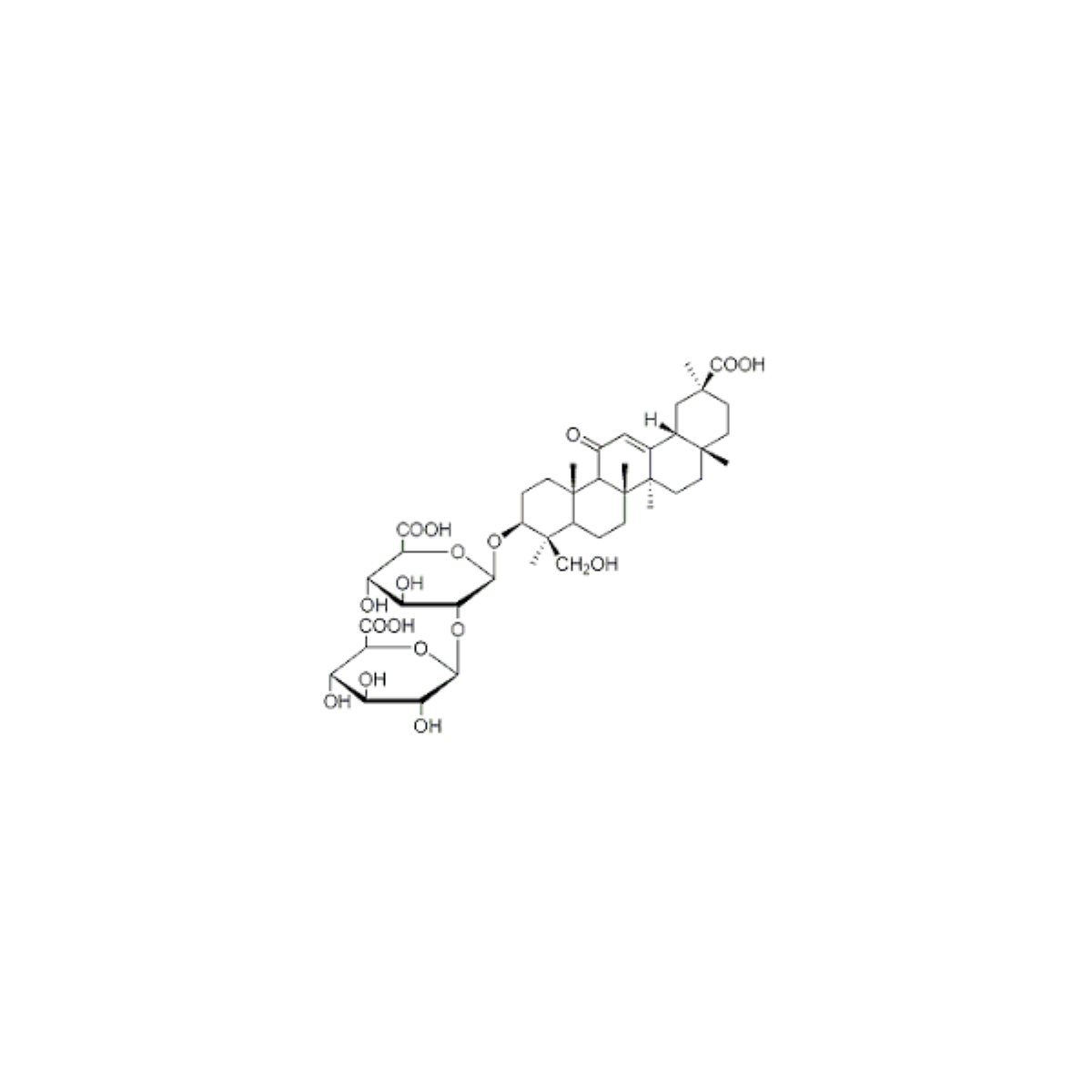
Licoricesaponin G2 (24-Hydroxyglycyrrhizin)
Product#: FNK-2400212
$288.68
Availability:
Ships in 1-2 Weeks
Licoricesaponin G2 (24-Hydroxyglycyrrhizin)
- CAT Number : FNK-2400212
- CAS Number : 118441-84-2
- Molecular Weight : 838.9 g/mol
- Molecular Formula : C42H62O17
- Pack size: 10 mg
- Store: Store at 2-10°C in a dry and dark place.
- Purity: (HPLC) ≥98%
Description
Licoricesaponin G2, also known as 24-Hydroxyglycyrrhizin, is a triterpene saponin found in the roots of Glycyrrhiza uralensis, a species of licorice. This compound is part of the broader family of glycyrrhizin derivatives, which are known for their diverse pharmacological properties.Applications
Licoricesaponin G2 has been studied for its potential biological activities, which include:- Hepatoprotective Effects: Licoricesaponin G2 has shown significant hepatoprotective activities by lowering ALT and AST levels in primary rat hepatocytes injured by D-galactosamine (D-GalN). It also inhibits the activity of phospholipase A2 (PLA2), which may contribute to its liver-protective effects.
- Anti-inflammatory Properties: Like other glycyrrhizin derivatives, Licoricesaponin G2 may exhibit anti-inflammatory effects, making it a candidate for research in inflammatory conditions.
- Antiviral Activity: Glycyrrhizin and its derivatives have been noted for their antiviral properties, particularly against viruses such as hepatitis C and HIV. Licoricesaponin G2 may share these antiviral capabilities.
- Antioxidant Activity: The compound has demonstrated moderate antioxidant activities, which could be beneficial in reducing oxidative stress-related damage
Usage
Licoricesaponin G2 is primarily used in research settings to explore its pharmacological effects. It is suitable for in vitro and in vivo studies aimed at understanding its potential therapeutic benefits and mechanisms of action.Safety and Handling
Storage: Store the product at 2-10°C in a dry and dark place to maintain its stability and efficacy.Handling: Handle with care, using appropriate protective equipment to avoid inhalation or contact with skin and eyes.
Human Diseases
Pulmonary Fibrosis
LG2 demonstrates promising effects in ameliorating pulmonary fibrosis:
LG2 demonstrates promising effects in ameliorating pulmonary fibrosis:
-
It targets the TNF-α signaling pathway and inhibits epithelial-mesenchymal transition (EMT), which are key processes in pulmonary fibrosis development.
-
LG2 modulates the initiation of EMT and fibroblast-to-myofibroblast transition (FMT), as well as extracellular matrix (ECM) degradation.
-
These effects may help delay the progression of pulmonary fibrosis, including as a potential treatment for pulmonary fibrosis associated with COVID-19 recovery.
Inflammatory Conditions
LG2 exhibits anti-inflammatory properties that could be beneficial for various inflammatory disorders:
LG2 exhibits anti-inflammatory properties that could be beneficial for various inflammatory disorders:
-
It displays antibacterial and antioxidant activities in addition to anti-inflammatory effects.
-
LG2 has been effectively used in treating various respiratory conditions, likely due in part to its anti-inflammatory action.
Respiratory Diseases
Beyond pulmonary fibrosis, LG2 shows promise for other respiratory ailments:
Beyond pulmonary fibrosis, LG2 shows promise for other respiratory ailments:
-
Its antibacterial, anti-inflammatory, and antioxidant properties make it potentially useful for treating respiratory tract infections and other respiratory diseases.
TNF-α signaling pathway:
- Licoricesaponin G2 ameliorates pulmonary fibrosis by targeting the TNF-α signaling pathway.
PI3K/AKT pathway:
- While not specifically mentioned for Licoricesaponin G2, related licorice compounds like liquiritigenin have been shown to regulate the PI3K/AKT pathway. This suggests Licoricesaponin G2 may potentially affect this pathway as well.
NF-κB pathway:
- Licorice compounds in general have been found to modulate the NF-κB signaling pathway, indicating Licoricesaponin G2 may have similar effects.
MAPK pathway:
- Related licorice saponins have been shown to affect the MAPK signaling pathway, suggesting Licoricesaponin G2 could potentially target this pathway too.
TLR and NLR signaling pathways:
- Licorice compounds broadly have been found to influence these inflammatory signaling pathways, which may extend to Licoricesaponin G2.