BSA, Flamma® 774
Product#: RSC0114_5 mg
$466.87
Availability:
Ships in 1-2 Weeks
BSA, Flamma® 774
Cat. No. List below
Description
BSA, Flamma® 774 is an advanced fluorescent conjugate that combines the well-characterized properties of bovine serum albumin (BSA) with the exceptional fluorescence capabilities of the Flamma® 774 dye. This versatile reagent offers researchers a powerful tool for a wide range of biological imaging and quantitative applications, particularly in the near-infrared (NIR) spectrum.
BSA, Flamma® 774 serves as a powerful tool in numerous biological research areas such as quantitative studies of electroporation, measurement of plasma volume, intracellular protein processing investigations, fluorescent tracer in applications requiring well-defined physical dimensions, deep tissue and in vivo imaging, fluorescence-guided surgery
Near-infrared fluorescence microscopy, flow cytometry, single-molecule detection studies, protein trafficking and localization experiments, biodistribution studies, lymphatic imaging, and tumor margin detection.
BSA, Flamma® 774 is part of the Flamma® Fluor family of dyes, known for their superior performance in bioconjugation applications. The dye maintains its excellent fluorescence properties when conjugated to BSA, ensuring minimal self-quenching and high signal-to-noise ratios in experimental settings.
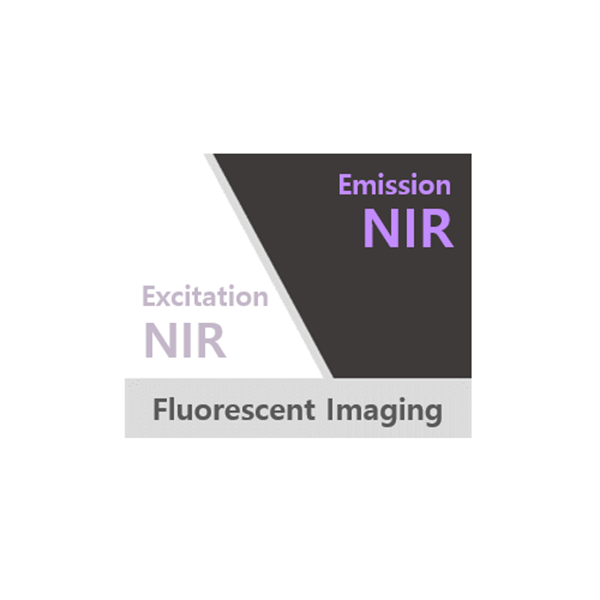
The conjugate's excitation maximum at 774 nm makes it compatible with specialized NIR laser lines used in advanced fluorescence microscopy and flow cytometry systems. Its emission maximum at 806 nm provides bright NIR fluorescence that is ideal for deep tissue imaging, in vivo studies, and multi-color experiments where spectral separation is crucial.
The BSA component of this conjugate serves as an excellent model protein for various biological studies. Its well-defined structure and size make it particularly useful for applications where a specific molecular dimension is required, such as in studies of membrane permeability or cellular uptake mechanisms.
BSA, Flamma® 774 represents an advanced fluorescent tool that combines the benefits of a well-understood protein carrier with cutting-edge fluorophore technology. Its exceptional brightness, photostability, and NIR spectral properties make it an ideal choice for researchers seeking a reliable and high-performance option for their fluorescence-based studies in cellular and molecular biology, particularly in applications where deep tissue penetration, minimal autofluorescence, and defined molecular size are critical factors.
What are the advantages?
1. Brightness: The high absorption and quantum yield of Flamma® 774 ensure strong fluorescence signals, even at low concentrations.
2. Stability: Excellent photostability allows for extended imaging sessions without significant signal loss.
3. Near-IR Emission: Significantly reduced autofluorescence and improved tissue penetration compared to visible spectrum dyes.
4. Versatility: The well-characterized BSA molecule provides a reliable platform for various experimental designs.
5. Defined Size: The known dimensions of BSA make it ideal for studies requiring precise molecular size control.
6. Biocompatibility: BSA's natural properties ensure good compatibility with biological systems.
7. Minimal Spectral Overlap: The NIR emission reduces bleed-through in multi-color imaging experiments.
8. Low Phototoxicity: NIR excitation minimizes damage to live specimens during imaging.
9. Reduced Light Scattering: NIR wavelengths experience less scattering in biological tissues, allowing for clearer imaging at greater depths.
10. Improved Signal-to-Noise Ratio: The large Stokes shift (32 nm) helps to minimize background interference.
BSA, Flamma® 774 serves as a powerful tool in numerous biological research areas such as quantitative studies of electroporation, measurement of plasma volume, intracellular protein processing investigations, fluorescent tracer in applications requiring well-defined physical dimensions, deep tissue and in vivo imaging, fluorescence-guided surgery
Near-infrared fluorescence microscopy, flow cytometry, single-molecule detection studies, protein trafficking and localization experiments, biodistribution studies, lymphatic imaging, and tumor margin detection.
BSA, Flamma® 774 is part of the Flamma® Fluor family of dyes, known for their superior performance in bioconjugation applications. The dye maintains its excellent fluorescence properties when conjugated to BSA, ensuring minimal self-quenching and high signal-to-noise ratios in experimental settings.
The conjugate's excitation maximum at 774 nm makes it compatible with specialized NIR laser lines used in advanced fluorescence microscopy and flow cytometry systems. Its emission maximum at 806 nm provides bright NIR fluorescence that is ideal for deep tissue imaging, in vivo studies, and multi-color experiments where spectral separation is crucial.
The BSA component of this conjugate serves as an excellent model protein for various biological studies. Its well-defined structure and size make it particularly useful for applications where a specific molecular dimension is required, such as in studies of membrane permeability or cellular uptake mechanisms.
BSA, Flamma® 774 represents an advanced fluorescent tool that combines the benefits of a well-understood protein carrier with cutting-edge fluorophore technology. Its exceptional brightness, photostability, and NIR spectral properties make it an ideal choice for researchers seeking a reliable and high-performance option for their fluorescence-based studies in cellular and molecular biology, particularly in applications where deep tissue penetration, minimal autofluorescence, and defined molecular size are critical factors.
What are the advantages?
1. Brightness: The high absorption and quantum yield of Flamma® 774 ensure strong fluorescence signals, even at low concentrations.
2. Stability: Excellent photostability allows for extended imaging sessions without significant signal loss.
3. Near-IR Emission: Significantly reduced autofluorescence and improved tissue penetration compared to visible spectrum dyes.
4. Versatility: The well-characterized BSA molecule provides a reliable platform for various experimental designs.
5. Defined Size: The known dimensions of BSA make it ideal for studies requiring precise molecular size control.
6. Biocompatibility: BSA's natural properties ensure good compatibility with biological systems.
7. Minimal Spectral Overlap: The NIR emission reduces bleed-through in multi-color imaging experiments.
8. Low Phototoxicity: NIR excitation minimizes damage to live specimens during imaging.
9. Reduced Light Scattering: NIR wavelengths experience less scattering in biological tissues, allowing for clearer imaging at greater depths.
10. Improved Signal-to-Noise Ratio: The large Stokes shift (32 nm) helps to minimize background interference.
Specifications
- Fluorophore: Flamma® 774
- Protein subtype: Albumin protein
- Excitation/Emission Max.(nm): 774/806
- Strong Absorption: High molar extinction coefficient
- High Fluorescence Quantum Yield: Ensures bright fluorescence signals
- Excellent Photostability: Ideal for long-term imaging studies and applications requiring extended illumination
- Molecular weight: ~66.5 kDa
- Appearance: Yellow Solid
- Storage conditions: 4 ℃, protect from light
***These properties are maintained after conjugation to BSA, ensuring reliable and consistent performance in various experimental settings. The dye's spectral characteristics make it an excellent alternative to other popular NIR fluorophores, such as IRDye 800CW or Alexa Fluor 790***
Table 1. List of Fluorescent BSA
| Quick link (Cat.#) | Series | Ex * (nm) | Em* (nm) |
| RSC0102 | BSA, Flamma® 488 | 495 | 519 |
| RSC0105 | BSA, Flamma® 552 | 550 | 565 |
| RSC0106 | BSA, Flamma® 560 | 560 | 589 |
| RSC0110 | BSA, Flamma® 581 | 581 | 596 |
| RSC0111 | BSA, Flamma® 648 | 648 | 663 |
| RSC0112 | BSA, Flamma® 675 | 675 | 691 |
| RSC0113 | BSA, Flamma® 749 | 749 | 774 |
| RSC0114 | BSA, Flamma® 774 | 774 | 806 |
Overview
Albumin, making up 55 to 62% of the serum protein, is one of the few carbohydrate-free proteins in blood plasma that plays an important role in maintaining the colloidal osmotic pressure. Albumin also acts as a plasma carrier of several hydrophobic steroid hormones and as a transport protein for hemin and fatty acids. Bovine serum albumin (BSA) is a small (~66.5 kDa), stable, moderately non-reactive protein that has been utilized in numerous biochemical applications including ELISA, Western blot, immunohistochemistry, etc. BSA enable to increase antibody functionality and longevity and serves as both a standard in protein quantitation and a stabilizing component in DNA blunt end and replacement assays. Bovine serum albumin (BSA) conjugates are commonly used as tracers in applications where physical dimensions are important. Specifically, fluorescent BSA conjugates have been used in many applications such as quantitative studies of electroporation, measurement of plasma volume, intra cellular protein processing. BioActs provides a wide range of fluorophore-conjugated BSA analogs as well-defined molecular weight tracers for a variety of applications.
Citation & Reference
1. A beta Pix Pak2a signaling pathway regulates cerebral vascular stability in zebrafish. Liu J. Proc Natl Acad Sci U S A. 2007 Aug 28;104(35):13990-5
2. Cell mechanics control rapid transitions between blebs and lamellipodia during migration. Bergert M. Proc Natl Acad Sci U S A.2012 Sep 4;109(36):14434-9.
3. Measuring molecular rupture forces between single actin filaments and actin-binding proteins. Ferrer JM. Proc Natl Acad Sci U S A.2008 Jul 8;105(27):9221-