


Anti Human VDR mouse monoclonal antibody (H4537)
Anti Human VDR mouse monoclonal antibody (H4537)
VDR: Vitamine D Receptor
DiagnoCine offers excellent VDR | Vitamin D Receptor Antibody ligand-inducible transcription factors, receptor for the secondary bile acid, lithocholic acid, downstream targets of vitamin D3, mineral metabolism, immune response and cancer, type II vitamin D-resistant rickets
Human diseases include Vitamin D-Dependent Rickets, Type 2A & Rickets, Ca, cAMP and Lipid Signaling and Nuclear Receptor transcription disorders, steroid hormone receptor activity & calcium homeostasis-related diseases.
Anti- VDR | Vitamin D Receptor Antibody has excellent quality and this highly pure antibody can be adapted for Western Blots, IHC, and other methods with optimization.
Vitamin D receptors (VDRs) are members of the NR1I family, which also includes pregnane X receptors (PXR) and constitutive androstane receptors (CAR). They form heterodimers with retinoid X receptor family members, and are expressed in the intestine, thyroid and kidney.
General information
| Cat. No. | :FNK-PP-H4537-00 |
| Size | :100 ul |
| Antigen Species | :Human |
| Host Species | :Mouse |
| Cross Reactivity | :Human/ Mouse/ Rat |
| Purification | :Ammonium sulfate fractionation. |
| Clone No | :H4537 |
| Lot. | :A-1 |
| Concentration | :1 mg/mL |
| Ig Class | :G2a |
| Nomenclature | :NR1I1 |
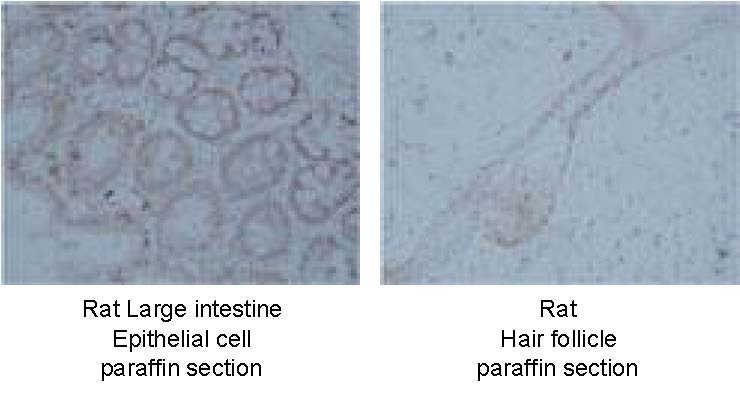
| Application | :ELISA (0.1 ug/mL(A450=0.2)),Western Blot (1 ug/mL), Immunohistochemistry (20-40 ug/mL) |
| Specificity |
:This antibody specifically recognizes human VDR and cross reacts with mouse and rat VDR.
|
| Storage | :Store at 2 - 8 ºC up to one month. For long-term storage, the solution may be frozen in working aliquots. Repeated freezing and thawing is not recommended. Storage in a frost-free freezer is not recommended. |
| Form | :Physiological saline with 0.1% NaN3 as a preservative |
| Genbank | :J03258 |
Description
Vitamin D receptor (VDR; NR1I1) is a member of steroid receptor related to the PXR and CARs. The natural ligand of VDR is 1, 25 di-hydroxyvitamin D3. VDR is expressed in osteoblasts, osteocytes, osteoclasts, bone, bone marrow, thymus and small intestine. VDR plays critical roles in calcium homeostasis, bone development and mineralization, as well as control of cell growth and differentiation. RXRs are the major partners for VDR since by heterodimerizing with VDR they increase their DNA-binding affinity and select the correct spacing of direct repeat elements.
Origin
Note
References
- Jae Mi Suh, et al. Mol Endocrinol, Dec. 2006, 20(12): 3412-3420
- Jun Qin, et al. Developmemtal Dynamics, 2007, 236: 810-820
Aliases for VDR Gene
- Vitamin D Receptor 2 3 5
- NR1I1 2 3 4
- Vitamin D (1,25- Dihydroxyvitamin D3) Receptor 2 3
- Protein Phosphatase 1, Regulatory Subunit 163 2 3
- Nuclear Receptor Subfamily 1 Group I Member 1 3 4
- 1,25-Dihydroxyvitamin D3 Receptor 3 4
- Vitamin D3 Receptor 3 4
- PPP1R163 2 3
- Vitamin D Nuclear Receptor Variant 1 3
- 1,25- Dihydroxyvitamin D3 Receptor 2
- VDR 5
