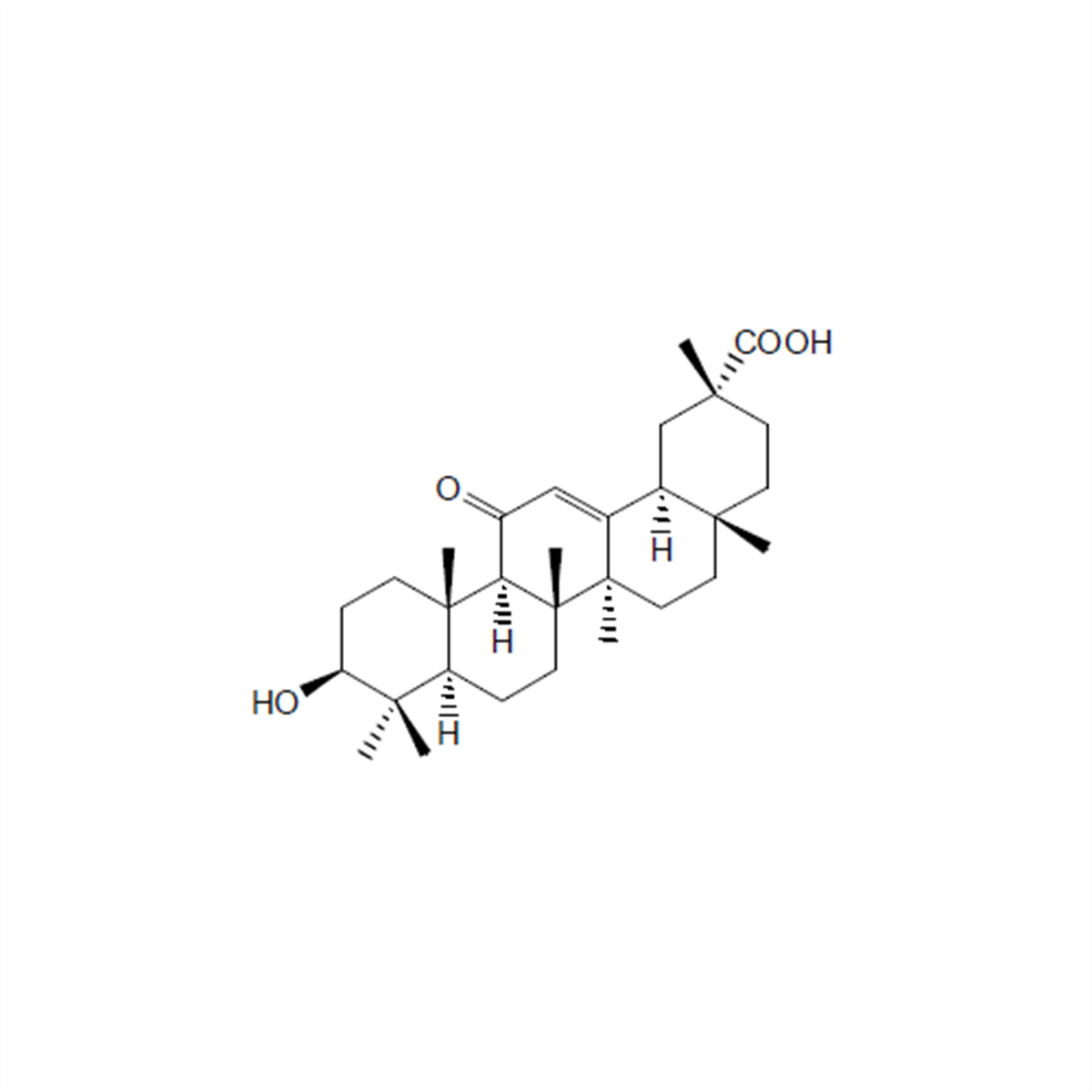
18α-Liquiritic acid
Product#: FNK-NH081202
$780.26
Availability:
Ships in 1-2 Weeks
18α-Liquiritic acid
- CAT Number : FNK-NH081202
- CAS Number : 10379-78-9
- Molecular Weight : 470.68
- Molecular Formula : C30H46O4
- Pack size: 5 mg
- Store: 2-10 ℃
- Purity: >98%(HPLC)
18α-Liquiritic acid is likely a triterpenoid compound found in licorice (Glycyrrhiza species). It is probably studied for its potential biological activities and as a marker compound in licorice extracts.
Property
- Chemical Formula: C30H46O4
- Molecular Weight: Approximately 470.68 g/mol
- Appearance: Likely a white to off-white crystalline powder
- Solubility: Probably poorly soluble in water, soluble in organic solvents
- Research: Used in studies investigating the biological activities of licorice compounds
- Analytical Standard: Possibly used as a reference compound in licorice extract analysis
- Natural Product Research: May be studied for its potential pharmacological properties
- Storage: Store in a cool, dry place, protected from light
- Handling: Use appropriate personal protective equipment
- Safety Measures: For research use only; not for human consumption without proper testing and approval
- Anti-Inflammatory Properties
- 18α-Liquiritic acid exhibits anti-inflammatory effects, which may be beneficial for various inflammatory conditions. It suppresses the expression of pro-inflammatory genes and inhibits the production of inflammatory mediators, potentially alleviating symptoms in diseases characterized by chronic inflammation.
- Metabolic Disorders
- Some research suggests that 18α-liquiritic acid may have effects on glucose metabolism. This property could be relevant for metabolic disorders like diabetes, though more specific studies are needed to confirm its efficacy and mechanisms of action in this area.
- Skin Conditions
- While most studies focus on 18β-glycyrrhetinic acid, the structural similarity of 18α-liquiritic acid suggests it may also have beneficial effects on skin health. The 18β isomer has been shown to promote proliferation and migration of dermal fibroblasts and keratinocytes, which are important for wound healing and skin regeneration. 18α-Liquiritic acid might share some of these properties, potentially benefiting skin conditions and wound healing processes.
- Antimicrobial Activity
- Glycyrrhetinic acid derivatives have demonstrated antimicrobial properties. While most research focuses on 18β-glycyrrhetinic acid, 18α-liquiritic acid may also possess similar antimicrobial effects. These compounds have shown efficacy against various pathogens, including antibiotic-resistant bacteria like methicillin-resistant Staphylococcus aureus (MRSA).
- Potential Antioxidant Effects
- Like other glycyrrhetinic acid derivatives, 18α-liquiritic acid may have antioxidant properties. This could be beneficial in diseases associated with oxidative stress, such as cardiovascular diseases, neurodegenerative disorders, and certain types of cancer.
- TGF-β1/Smad Signaling Pathway
- 18α-GA downregulates the TGF-β1/Smad signaling pathway by:
- Decreasing mRNA and protein expression of Smad3
- Increasing expression of Smad7
- Reducing phosphorylation of Smad3
- Inhibiting DNA binding activities of transcription factors SP-1, AP-1 and NF-κB
- These effects lead to decreased expression of type I and III collagen, potentially inhibiting fibrosis.
- 18α-GA downregulates the TGF-β1/Smad signaling pathway by:
- NF-κB Signaling Pathway
- 18α-GA exhibits anti-inflammatory effects by inhibiting the NF-κB pathway through:
- Attenuating phosphorylation of NF-κB p65 and IκBα
- Inhibiting nuclear translocation of NF-κB p65
- This results in reduced expression of pro-inflammatory genes like iNOS and COX-2.
- 18α-GA exhibits anti-inflammatory effects by inhibiting the NF-κB pathway through:
- MAPK Signaling Pathway
- 18α-GA modulates the MAPK pathway by:
- Dose-dependently inhibiting LPS-induced phosphorylation of ERK
- Having little effect on phosphorylation of JNK or p38
- 18α-GA modulates the MAPK pathway by:
- Other Affected Pathways
- - Reduces expression of cell-cell interaction proteins like N-cadherin and VE-cadherin
- - Modulates the JNK/NF-κB pathway to alleviate oxidative damage in periodontal tissue