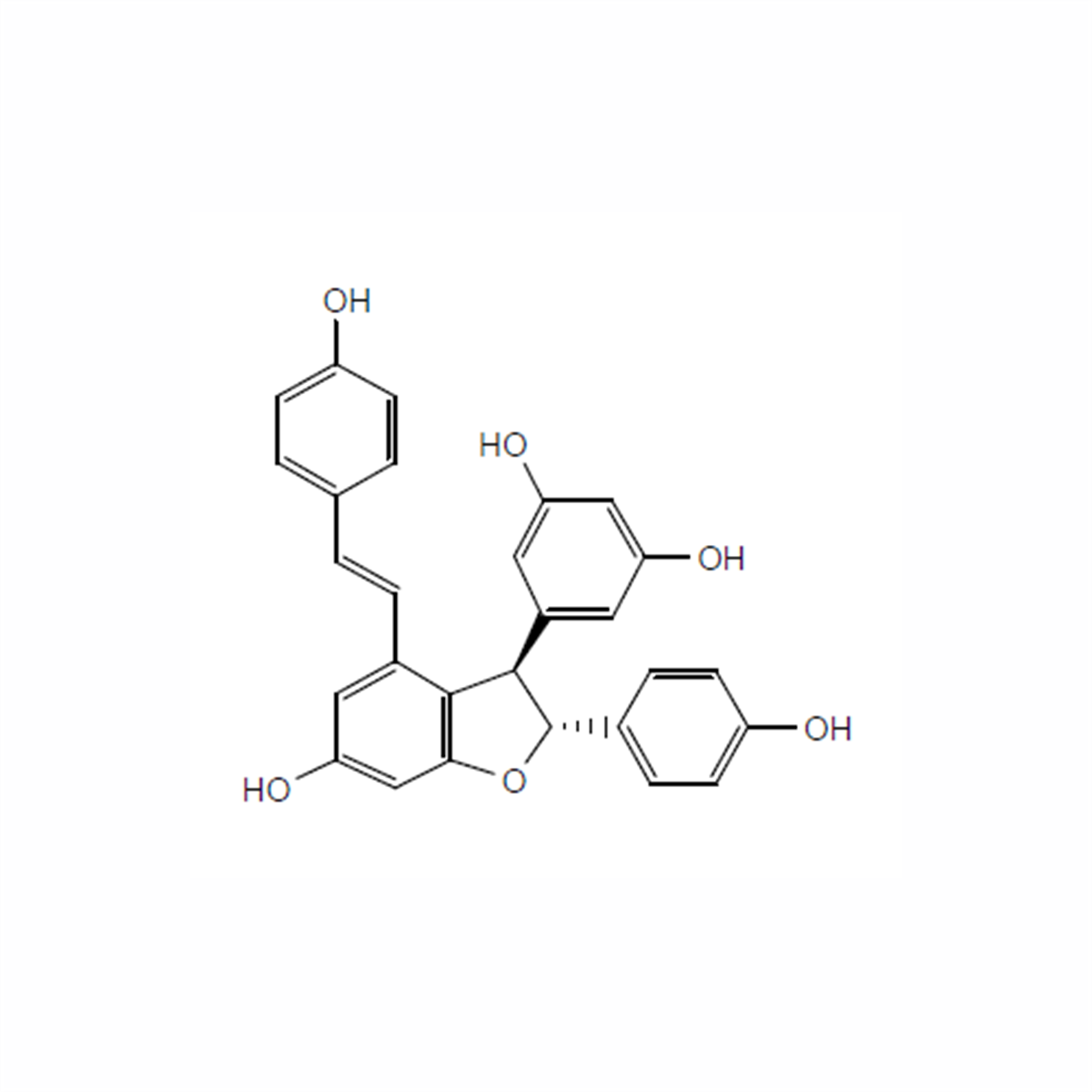
(-)-ε-Viniferin
Product#: FNK-NS301401
$416.16
Availability:
Ships in 1-2 Weeks
(-)-ε-Viniferin
- CAT Number : FNK-NS301401
- CAS Number : 62218-08-0
- Molecular Weight : 454.47
- Molecular Formula : C28H22O6
- Pack size: 2 mg
- Store: -20 ℃
- Purity: >99%(HPLC)
(-)-ε-Viniferin is a naturally occurring stilbenoid compound, specifically a resveratrol dimer, found in various plant sources including grapevines (Vitis vinifera). It is a bioactive molecule with potential therapeutic properties and antioxidant effects.
Properties
- Molecular formula: C28H22O6
- Molecular weight: 454.47 g/mol
- Appearance: Likely a white to off-white crystalline powder
- Solubility: Poorly soluble in water, soluble in organic solvents like methanol
- Melting point: Approximately 157°C (dec.)
- Research tool for studying stilbenoids and their biological effects
- Investigated for potential anti-obesity, antidiabetic, and cardioprotective properties
- Used in studies related to natural product chemistry and pharmacology
- Potential applications in nutraceutical and pharmaceutical research
- For research use only - not for human consumption without proper evaluation
- Handle with appropriate personal protective equipment
- Store at -20°C in a cool, dry place, protected from light and moisture
- Avoid inhalation and contact with skin and eyes
Neurodegenerative Diseases
Viniferin has demonstrated neuroprotective effects in models of neurodegenerative diseases:
In Alzheimer's disease models, ε-viniferin decreased amyloid deposits and reduced neuroinflammation more effectively than resveratrol. It also partially prevented cognitive decline in mice.
ε-viniferin showed neuroprotective effects in models of Huntington's disease through its antioxidative and anti-inflammatory properties.
Cardiovascular Health
Viniferin appears to have beneficial effects on vascular health:
Both ε-viniferin and δ-viniferin stimulated wound repair in vascular endothelial cells more effectively than resveratrol at lower concentrations.
The compounds activated endothelial nitric oxide synthase and induced expression of sirtuin 1 and heme oxygenase-1, suggesting they may help prevent atherosclerosis.
Metabolic Disorders
Viniferin shows promise for obesity and related metabolic conditions:
ε-viniferin reduced fat accumulation in cell and animal studies. It also prevented development of obesity comorbidities like type 2 diabetes, dyslipidemia, hypertension and fatty liver.
α-viniferin demonstrated ameliorating effects on hyperuricemia and associated kidney injury in mice.
Cancer
Some studies indicate potential anticancer properties:
R-viniferin showed more potent inhibition of prostate cancer cell growth compared to resveratrol.
Viniferin extracts demonstrated antiplasmodial activity against malaria parasites in vitro.
Liver Disease
Viniferin appears to have hepatoprotective effects:
A combination of resveratrol and ε-viniferin reduced DNA damage and exhibited protective effects on antioxidant pathways in a rat model of acute liver failure.
Cellular Signaling Pathways Affected
SIRT1 Pathway:
Both ε-viniferin and δ-viniferin induced expression of sirtuin 1 (SIRT1) in vascular endothelial cells.
SIRT1 activation was involved in the wound repair processes stimulated by viniferin compounds.
Nitric Oxide (NO) Signaling:
Viniferin compounds activated endothelial nitric oxide synthase (eNOS) and increased NO production.
The stimulatory effects of viniferins on wound repair were suppressed by NO synthase inhibitors.
Heme Oxygenase-1 (HO-1) Pathway:
Viniferin treatment induced expression of HO-1 in vascular endothelial cells.
HO-1 was involved in the wound repair processes stimulated by viniferin compounds.
AKT Signaling:
α-Viniferin decreased AKT phosphorylation in lung cancer cells.
Caspase Signaling:
α-Viniferin increased cleavage of caspase 3 and PARP, leading to apoptosis induction in cancer cells.
TGF-β/SMAD Pathway:
α-Viniferin and ε-viniferin inhibited TGF-β1-induced phosphorylation of SMAD2 and SMAD3 in lung cancer cells.
Antioxidant Pathways:
Viniferin compounds induced expression of antioxidant enzymes like catalase.
AMPK Pathway:
Trans-ε-viniferin was reported to activate AMP-activated protein kinase (AMPK).