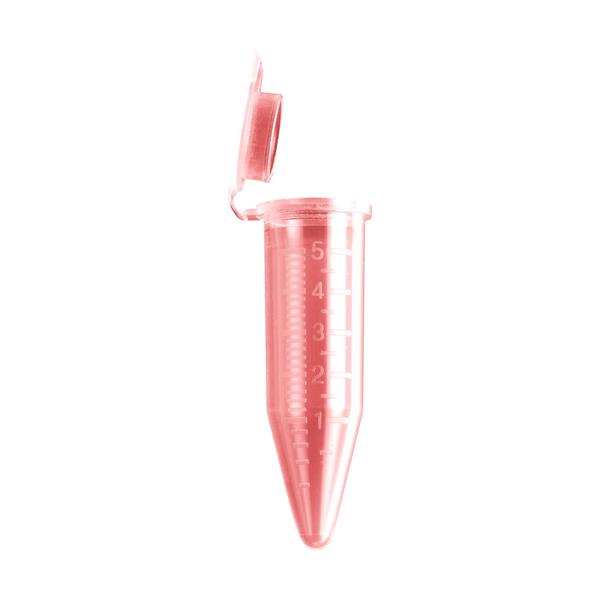
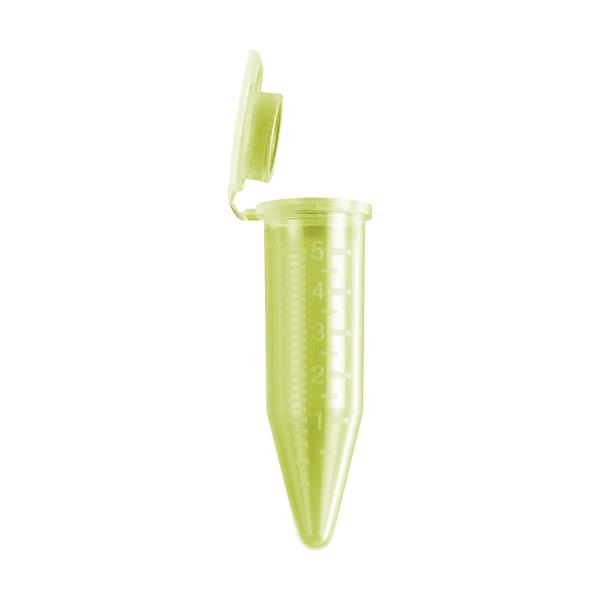
Ultrapure Water, Type 1, 500ml, Non-Sterile
FluxMPS™ Ultrapure Water, Type 1, 500 mL, Non-Sterile
FluxMPS™ Ultrapure Water, Type 1, 500 mL, Non-Sterile is an MPS-grade, deionized Type I ultrapure water produced through demineralization, deionization, and endotoxin detoxification, finished with dual-pass 0.1-micron membrane filtration. Free of DNase, RNase, Protease and Endonucleases, it is built for HPLC, GC, ICP-MS, cell culture, chemistry, and molecular biology workflows, and is available Non-pH-Adjusted (pH 4.5-5) or NaOH pH-Adjusted (pH 7.4).
- Type I Ultrapure Water, CAS 7732-18-5, molecular formula H2O
- Purified by demineralization, deionization, and endotoxin detoxification, then dual-pass 0.1-micron membrane filtration (0.04-micron polish available on request)
- Tested Electrolytic Conductivity Standard ASTM 0.05 µS/cm; water purity 0.015 to 0.005 microSiemens/cm
- Free of DNase, RNase, Protease & Endonucleases
- Available Non-pH-Adjusted (pH 4.5-5) or NaOH pH-Adjusted (pH 7.4)
- Non-Sterile grade for HPLC, GC, ICP-MS, cell culture, chemistry & molecular studies
- Suitable for general PCR use (DNA-based, gDNA, abundant RNA targets); not intended for delicate PCR applications such as endpoint or qPCR
- RUO – Research Use Only; not for human consumption, therapeutic, or clinical use
- pH Options4.5–5 (Non-Adjusted) or 7.4 (NaOH-Adjusted)
- Molecular FormulaH2O
- CAS Number7732-18-5
- Conductivity0.05 µS/cm (ASTM)
- Water Purity0.015 to 0.005 microSiemens/cm
- Filtration0.1 µm membrane, dual-pass
- SterilityNon-Sterile
- Nuclease StatusDNase/RNase/Protease/Endonuclease-Free
- Size500 mL
- Intended UseRUO – Research Use Only
Engineered where standard deionized water falls short
Single-pass filtered or general laboratory deionized water can carry trace ionic contaminants, particulates, and nuclease activity that compromise precision, accuracy, and reproducibility — and can interfere with sensitive instrumentation such as HPLC and ICP-MS. FluxMPS™ Type I Ultrapure Water is purified and filtered specifically to minimize these interferences.
Microchannel-safe purity
Dual-pass 0.1-micron membrane filtration removes particulates and reduces bioburden, protecting sensitive microfluidic channels, valves, and sensors from fouling; an optional 0.04-micron polish is available on request.
Defined pH options
Supplied Non-pH-Adjusted (pH 4.5-5, the natural state of ultrapure water exposed to air) or NaOH pH-Adjusted to physiological pH 7.4, so researchers can match the pH their protocol requires.
Ultrapure-grade water
Produced through demineralization, deionization, and endotoxin detoxification on top-tier purification systems, reaching a tested electrolytic conductivity of 0.05 µS/cm (ASTM standard) and water purity of 0.015 to 0.005 microSiemens/cm.
Low background for sensitive analysis
Free of DNase, RNase, Protease and Endonucleases, minimizing background interference in HPLC, GC, ICP-MS, and molecular biology assays where trace contamination can skew results.
Defined, traceable composition
CAS 7732-18-5, molecular formula H2O, produced under a repeatable multi-step purification and filtration process for consistent lot-to-lot quality.
Customization on demand
pH adjustment (Non-Adjusted pH 4.5-5 or NaOH-Adjusted pH 7.4) and optional 0.04-micron polishing filtration are available on request — contact support@diagnocine.com.
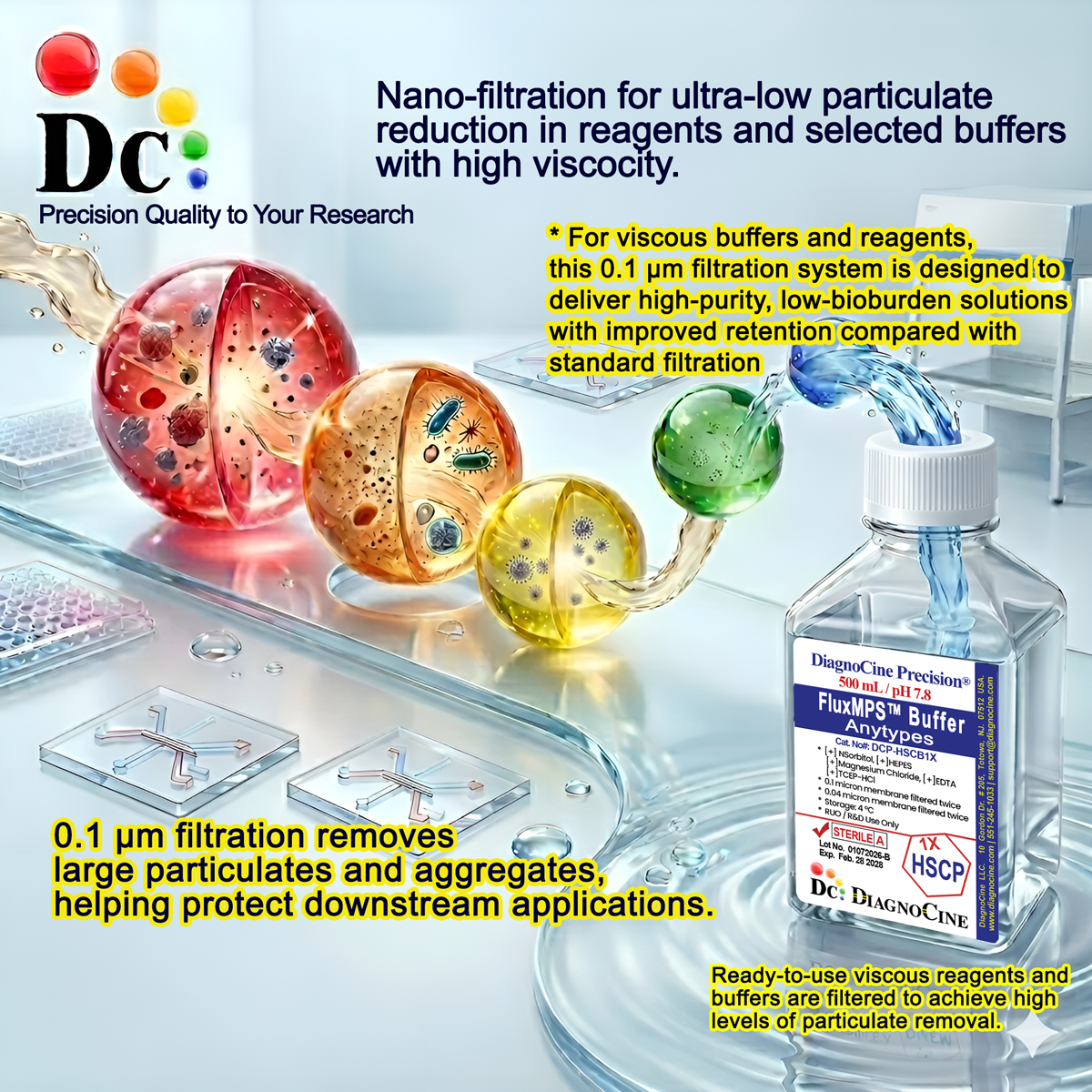
Single-stage 0.1 µm dual-pass filtration
FluxMPS™ Ultrapure Water is finished with 0.1-micron membrane filtration performed in sequence, twice, ahead of packaging, reducing particulates and bioburden. This product is supplied Non-Sterile and is not terminally sterilized.
-
1
0.1 µm Dual-Pass Membrane Filtration
Water is passed through a 0.1-micron membrane twice in sequence, removing particulates and reducing bioburden ahead of filling. An additional 0.04-micron polishing pass can be added on request for applications requiring finer particulate control.
Performance vs. standard deionized water
Sequential 0.1-micron membrane filtration performed twice removes finer particulates than a single-pass process, helping protect downstream microfluidic components and analytical instrumentation such as HPLC and ICP-MS systems.
© Diagnocine® — DCP-T1UH2O-500N
Where FluxMPS™ Ultrapure Water is used
Type I ultrapure water is essential wherever precision, accuracy, and reproducibility matter: it minimizes contaminants that could interfere with sensitive instrumentation, protects cell culture and biological studies from contamination, and supports trace element analysis and chemical reagent preparation without introducing background impurities.
Automated Bioreactors & Robotics
Automated bioreactor and liquid-handling robotics platforms benefit from consistently low-particulate water. For workflows requiring additional polishing beyond the standard dual-pass 0.1-micron filtration, an optional 0.04-micron membrane pass is available to further reduce particulate load before packaging.
- Total Particulate Exclusion: Dual-pass 0.1-micron filtration reduces particulate load ahead of packaging.
- Valve & Sensor Protection: Lower particulate content helps protect microvalves, sensors, and fine-bore tubing from fouling.
- Extended Perfusion Stability: Consistent, low-ionic-background water supports stable long-duration perfusion protocols.
Inquiry Required: Contact support@diagnocine.com to request the optional 0.04-micron polished grade for automated bioreactor and robotics platforms.
Micro Physiological System (MPS) & Chip
Used to prepare wash buffers, perfusion media, and reagent dilutions for organ-on-a-chip (OoC), tissue-on-a-chip (ToC), body-on-a-chip (BoC), and lab-on-a-chip (LoC) platforms where low particulate and ionic background matter.
Wash, Dilution & Reconstitution
Serves as the base water for lysis buffers, serial dilutions, and reagent reconstitution where trace contaminants could interfere with downstream detection.
iPSC-Derived Model Handling
Supports preparation of wash and rinse solutions used around iPSC-derived neuronal, cardiomyocyte, and hepatocyte cultures, where nuclease-free, low-particulate water helps protect cell viability.
Endothelial & Primary Cell Perfusion
Used to prepare perfusion and rinse buffers for endothelial and primary cell culture systems where consistent water quality supports reproducible results.
ELISA, Blotting & Blocking
A dependable base for wash buffers, blocking solutions, and reagent dilutions used in ELISA, western blotting, IHC, and IF protocols.
HPLC, GC, ICP-MS & Trace Analysis
Tested low conductivity (0.05 µS/cm, ASTM standard) helps prevent instrument drift, contamination, and background interference in HPLC, GC, and ICP-MS trace element analysis.
Detailed product specifications
Specifications below reflect this product's own stated parameters; parameters not provided in the source documentation are omitted rather than estimated.
| Parameter | Specification |
|---|---|
| Molecular Formula | H2O (CAS 7732-18-5) |
| pH, Non-Adjusted | 4.5 – 5 |
| pH, NaOH-Adjusted (on request) | 7.4 |
| Electrolytic Conductivity ASTM | 0.05 µS/cm |
| Water Purity Range | 0.015 to 0.005 microSiemens/cm |
| Ionic Content | Deionized (demineralization and deionization) |
| Parameter | Specification |
|---|---|
| Sterility | Non-Sterile |
| Endotoxin Reduction | Detoxification step included in purification process |
| Nuclease Content | Free of DNase, RNase, Protease, and Endonucleases |
| Filtration | 0.1 µm membrane, dual-pass (0.04 µm polish available on request) |
| Water Quality Standard USP | Exceeds USP purification requirements (manufacturer-stated) |
| Manufacturing Standard ISO | ISO 13485:2016 |
| Parameter | Specification |
|---|---|
| pH Stability | May decrease toward pH 4.5 upon exposure to air as CO2 is absorbed; this does not indicate contamination |
| pH Measurement Handling | Use a pH meter designed for low-conductance ultrapure water for accurate readings |
| Intended Use | Research Use Only (RUO) |
| Parameter | Specification |
|---|---|
| Raw Material Grade | Type I Ultrapure Water (CAS 7732-18-5) |
| Production Method | Demineralization, deionization, endotoxin detoxification, and dual-pass 0.1 µm membrane filtration |
| Traceability | Lot-released, CAS-referenced |
| Manufacturing QMS ISO | ISO 13485:2016 |
| Regulatory Alignment USP | Exceeds USP purification requirements (manufacturer-stated) |
| Intended Use | RUO – Not for Human Consumption, Therapeutic, or Clinical Use |
Full composition
FluxMPS™ Ultrapure Water, Type 1 is a single-component aqueous solvent; no buffering salts are included. The pH 7.4 variant is finished with a NaOH pH adjustment; the Non-Adjusted variant carries no additional pH-modifying component.
| Component | CAS Number | Concentration |
|---|---|---|
| Water (Type I Ultrapure, H2O) | 7732-18-5 | Solvent (sole component) |
| Sodium Hydroxide (NaOH) – pH adjustment, pH 7.4 variant only | 1310-73-2 | Titrated to pH 7.4 |
Manufacturing & compliance
DiagnoCine's Type I ultrapure water is produced on top-tier purification systems using purification bead and filter units selected to guarantee water purity, under an ISO 13485:2016 quality management system.
ISO 13485:2016 QMS
Manufactured under a certified ISO 13485:2016 quality management system, ensuring consistent process control and traceability.
Ultrapure Type 1 Water
Produced through demineralization, deionization, endotoxin detoxification, and a relay of membrane filtration steps on top-tier purification equipment.
Controlled Non-Sterile Production
Produced under quality-controlled purification and filtration steps without a terminal sterilization step; supplied Non-Sterile for research applications where aseptic processing is not required.
Micro-Batch Precision
Lot-released, CAS-referenced documentation supports consistent, traceable quality from batch to batch.
Endotoxin & Detoxification
Purification includes an endotoxin detoxification step; a specific EU/mL specification is not assigned for this Non-Sterile grade product.
Particulate & Filtration
Finished with dual-pass 0.1-micron membrane filtration; an additional 0.04-micron polishing pass is available on request.
pH Options
Available Non-pH-Adjusted (pH 4.5-5) or NaOH pH-Adjusted (pH 7.4).
Documentation
Certificate of Analysis (CoA) available on request.
How DCP-T1UH2O-500N compares
A side-by-side look at how FluxMPS™ Ultrapure Water compares with conventional laboratory water grades.
| Parameter | DCP-T1UH2O-500N (FluxMPS™) | Conventional Deionized Water (Single-Pass) | Standard Type II/III Lab Water |
|---|---|---|---|
| Water Purity Grade | check_circle Type I Ultrapure | cancel Type II | cancel Type III |
| Filtration Method | check_circle 0.1 µm dual-pass membrane | cancel Single-pass 0.22 µm | cancel Basic carbon/RO filtration |
| Electrolytic Conductivity Tested (ASTM) | check_circle 0.05 µS/cm | cancel Not specified | cancel Not specified |
| Endotoxin Detoxification Step | check_circle Included | cancel Not typically included | cancel Not included |
| Nuclease-Free (DNase/RNase/Protease/Endonuclease) | check_circle Yes | cancel Not verified | cancel Not verified |
| pH Customization (Non-Adjusted / NaOH-Adjusted) | check_circle Yes | cancel No | cancel No |
| Optional 0.04 µm Polishing Filtration | check_circle Available on request | cancel Not available | cancel Not available |
| Manufacturing QMS | check_circle ISO 13485:2016 | cancel Not specified | cancel Not specified |
| USP Purification Alignment | check_circle Exceeds USP requirements (manufacturer-stated) | cancel Not verified | cancel Not verified |
| Custom Formulation / Grade Options | check_circle Available on request | cancel No | cancel No |
Frequently asked questions
Common questions about FluxMPS™ Ultrapure Water, Type 1, 500 mL, Non-Sterile.
Supporting literature
Curated literature supporting the role of ultrapure Type I water in analytical chemistry, cell culture, and microfluidic research.
- Ranville, J. F. et al. Water purity considerations in trace metal analysis by ICP-MS. Anal. Chim. Acta. doi:10.1016/j.aca.2004.06.001
- Huber, L. Water quality requirements for HPLC and UHPLC applications. J. Chromatogr. A. doi:10.1016/j.chroma.2007.01.129
- Freimann, S. et al. Deionization and reverse osmosis approaches to laboratory-grade ultrapure water. Water Res. doi:10.1016/j.watres.2011.03.007
- Meltzer, T. H. & Jornitz, M. W. Filtration and purification in the biopharmaceutical industry. CRC Press. doi:10.1201/9780203027129
- Light, T. S. Industrial analysis and applications of pH and conductivity measurements in ultrapure water. Anal. Chem. doi:10.1021/ac00061a711
- Freeman, D. H. Impact of water purity on cell culture reproducibility. In Vitro Cell. Dev. Biol. Anim. doi:10.1007/s11626-014-9812-4
- Bury, D. et al. Endotoxin control in laboratory water systems. PDA J. Pharm. Sci. Technol. doi:10.5731/pdajpst.2012.00854
- Halder, M. E. et al. Microfluidic organ-on-a-chip systems: reagent and buffer quality considerations. Lab Chip. doi:10.1039/C7LC00519A
- ASTM D1125-14. Standard Test Methods for Electrical Conductivity and Resistivity of Water. ASTM International. doi:10.1520/D1125-14R19