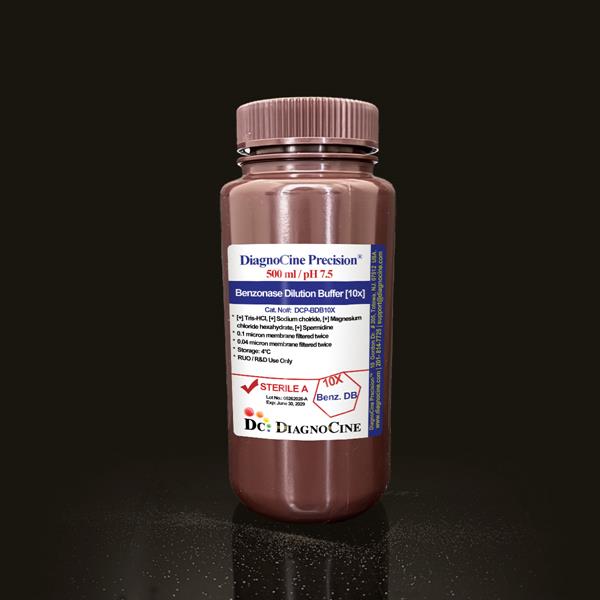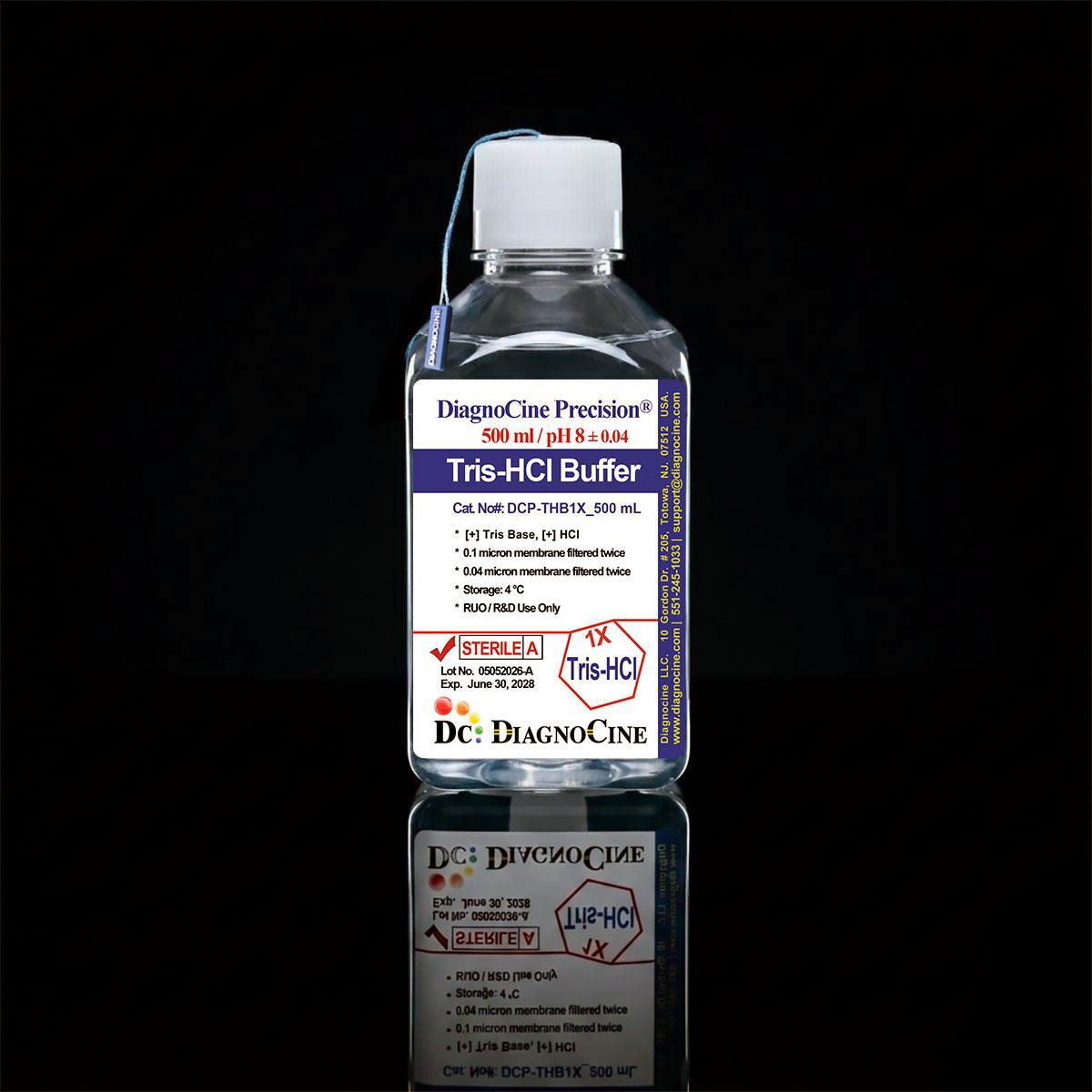
Tris-HCl Buffer, Sterile [1X]
FluxMPS™ Tris-HCl Buffer, Sterile [1X]
An MPS-grade, quadruple-stage ultra-filtered Tris-HCl buffer built for molecular biology, protein work, and microfluidic / organ-on-a-chip (OoC) applications. Formulated from 1M Tris base and adjusted to a stable pH of 8 ± 0.04 with HCl, it buffers reliably across pH 7.0 to 9.0 without interfering with most biochemical reactions or common divalent ions.
- Quadruple-stage filtration — 0.1 µm membrane (twice) and 0.04 µm membrane (twice) — for microchannel-safe, mycoplasma-resistant purity
- Stable pH 8 ± 0.04 with buffering capacity across pH 7.0 to 9.0
- 1M Tris base composition, adjusted with HCl, compatible with most biochemical reactions and common ions such as calcium and magnesium
- No detectable DNase or RNase activity after 18 hr incubation at room temperature
- Manufactured in ISO 13485:2016-certified, CE-approved facilities
- Suited to gel electrophoresis, nucleic acid work, protein extraction/purification, cell lysis, and cell culture applications
- Customization available for concentration, pH, and additive content — contact support@diagnocine.com
- pH8 ± 0.04
- Molarity1M Tris base
- Buffering RangepH 7.0 – 9.0
- Filtration0.1 µm x2 + 0.04 µm x2
- DNase ActivityNone detected
- RNase ActivityNone detected
- Storage4°C
- Shelf Life2 years
- ManufacturingISO 13485:2016
- Intended UseRUO
Engineered where standard buffers fail
Conventional single-pass, 0.22 µm-filtered buffers can carry subvisible particulates and residual bioburden that accumulate in narrow microfluidic channels, drift ionic conditions, and add background to sensitive assays. FluxMPS™ Tris-HCl Buffer is built to a tighter standard from the first filtration pass onward.
Microchannel-safe purity
Quadruple-stage 0.1 µm and 0.04 µm membrane filtration, each applied twice, is designed to keep microfluidic and organ-on-a-chip (OoC) channels free of the particulate load that clogs standard single-pass buffers.
Precise, stable pH
Formulated to pH 8 ± 0.04 with buffering capacity spanning pH 7.0 to 9.0, keeping downstream reactions and protein-protein interactions free from abrupt pH shifts.
Ultrapure-grade water
Prepared with Ultrapure Type 1 water (18.2 MΩ·cm), reducing trace contaminants relevant to sensitive molecular and cell-based work.
Low background for sensitive work
Tris-HCl does not significantly interfere with or inhibit most biochemical reactions, enzymes, or common ions such as calcium and magnesium, supporting clean results in electrophoresis and protein purification.
Defined, traceable composition
Made from 1M Tris base adjusted with HCl, with no detectable DNase or RNase activity after 18 hr incubation at room temperature.
Customization on demand
Alternate concentrations, pH values, and additions of chemicals, compounds, proteins, or supplements can be requested for your protocol.
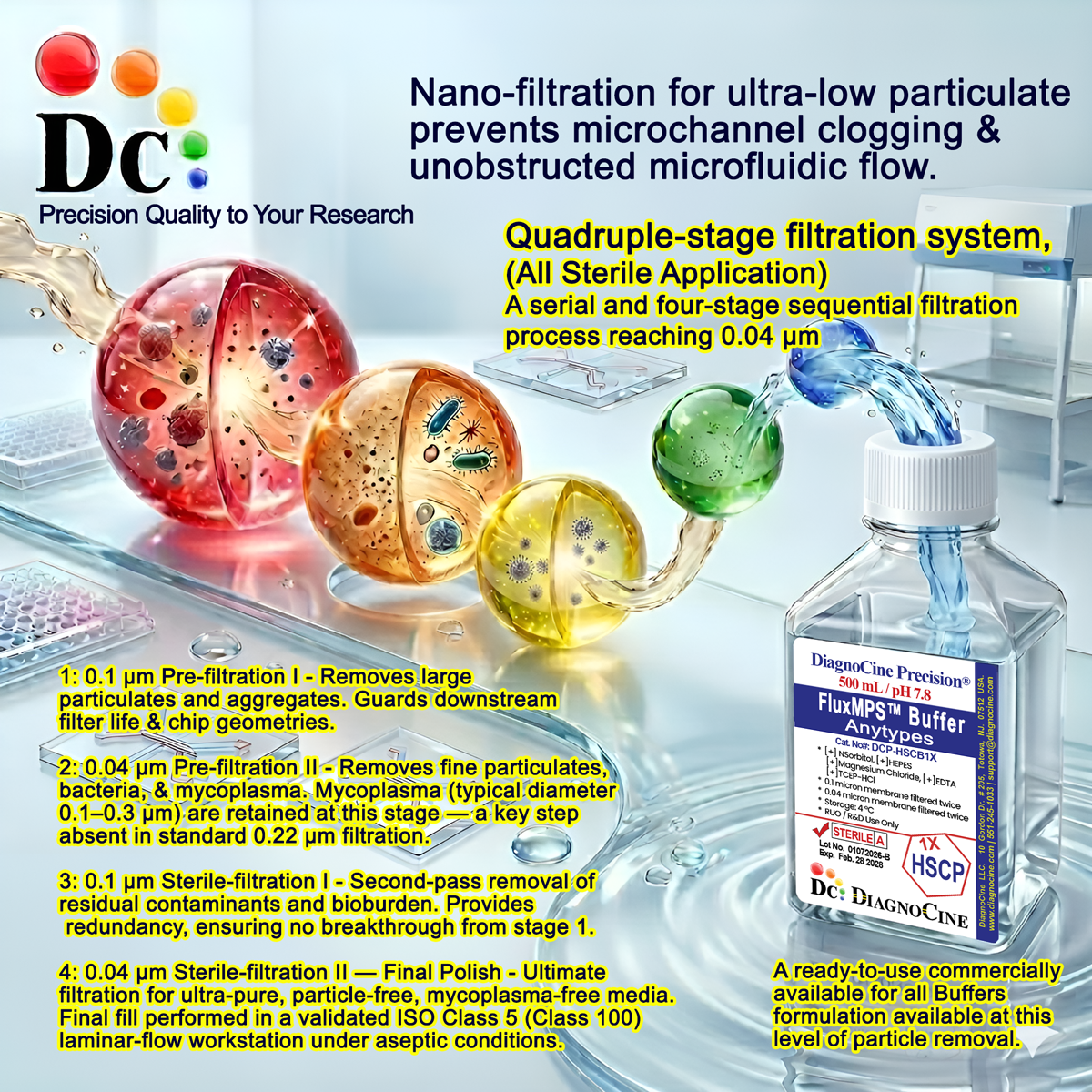
Quadruple-stage filtration system
FluxMPS™ Tris-HCl Buffer, Sterile [1X] is filtered-sterilized with 0.1 µm membrane filtration twice and 0.04 µm membrane filtration twice, in a sterile environment, to help prevent mycoplasma contamination.
-
1
0.1 µm Pre-filtration I
First pass through a 0.1 µm membrane removes large particulates and aggregates, extending the life of downstream filters.
-
2
0.04 µm Pre-filtration II
A 0.04 µm membrane pass retains fine particulates and bioburden ahead of the final sterile-filtration stages.
-
3
0.1 µm Sterile-filtration I
A second 0.1 µm pass provides redundancy against particulate and microbial breakthrough.
-
4
0.04 µm Sterile-filtration II — Final Polish
A second 0.04 µm pass, performed in a sterile environment, delivers the final polish. Mycoplasma organisms can be as small as approximately 0.2 microns, so this final stage is sized well below that threshold to help prevent mycoplasma contamination.
Performance vs. conventional buffer
Sequential 0.1 µm and 0.04 µm filtration, each applied twice, removes finer particulates than a single 0.22 µm pass used in conventional buffer, and is performed in a sterile environment to help prevent mycoplasma contamination.
© Diagnocine® — DCP-THB1X
Where FluxMPS™ Tris-HCl Buffer is used
Tris-HCl buffer is widely used across molecular biology and cell biology workflows, including gel electrophoresis, nucleic acid work, protein extraction/purification, and cell culture media preparation, and it extends naturally into microfluidic and organ-on-a-chip (OoC) systems.
Automated Bioreactors & Robotics
For automated bioreactor and robotic liquid-handling platforms with the tightest particulate tolerances, an optional 0.01 µm (10 nm) ultra-filtered variant of this buffer is available on inquiry.
- Total Particulate Exclusion — supports platforms requiring particulate control beyond the standard quadruple-stage architecture
- Valve & Sensor Protection — helps protect fine-bore valves, sensors, and microfluidic tubing from fouling
- Extended Perfusion Stability — supports longer unattended perfusion runs in automated systems
Inquiry Required: Contact support@diagnocine.com to request the 0.01 µm ultra-filtered grade for automated bioreactor or robotics use.
Micro Physiological System (MPS) & Chip
Quadruple-stage filtered Tris-HCl buffer for use in microfluidic devices, tissue chips, and organ-on-a-chip platforms where particulate control matters.
Cell Lysis & Buffer Preparation
Used to prepare cell lysis buffers for cell culture work, taking advantage of Tris-HCl's mild, non-interfering buffering behavior.
DNA/RNA Handling
No detectable DNase or RNase activity supports use in nucleic acid extraction, storage, and downstream molecular biology procedures.
Cell Perfusion & Media Prep
Compatible with common ions such as calcium and magnesium, supporting use in cell culture media and perfusion buffer preparation.
Extraction, Purification & Electrophoresis
Used in protein extraction and purification techniques, for storing purified proteins, and in preparing SDS-PAGE gel solutions and electrophoresis running buffers.
Microscopy & Optical Sensing
Low interference with biochemical processes supports use alongside confocal microscopy and biosensor-based readouts.
Physical, chemical, and quality parameters
Specifications as measured and declared for FluxMPS™ Tris-HCl Buffer, Sterile [1X].
| Parameter | Specification |
|---|---|
| Formulation / Composition | 1M Tris base, pH adjusted with HCl |
| Appearance | Clear, colorless liquid |
| pH (USP <791>) | 8 ± 0.04 |
| Buffering Range | pH 7.0 to 9.0 |
| Molarity | 1M Tris base |
| Parameter | Specification |
|---|---|
| Sterility (USP <71>) | Filtered 0.1 µm membrane twice and 0.04 µm membrane twice in a sterile environment |
| DNase Activity | None detected (18 hr incubation with plasmid DNA, room temperature) |
| RNase Activity | None detected (18 hr incubation with ribosomal RNA, room temperature) |
| Water Quality | Ultrapure Type 1 water (18.2 MΩ·cm) |
| Parameter | Specification |
|---|---|
| Storage Temperature | 4°C |
| Shelf Life | 2 years |
| Parameter | Specification |
|---|---|
| Manufacturing QMS | ISO 13485:2016 certified facilities |
| Regulatory Alignment | CE-approved facilities |
| Production Method | Filter-sterilized: 0.1 µm membrane (twice) and 0.04 µm membrane (twice) |
| Facility Location | Final customization and assembly at DiagnoCine Precision, Totowa, New Jersey, USA |
| Intended Use | Research Use Only (RUO) |
Full composition
Tris-HCl buffer system prepared from Tris base adjusted to target pH with hydrochloric acid.
| Component | CAS Number | Concentration |
|---|---|---|
| Tris base | 77-86-1 | 1M |
| Hydrochloric acid (HCl) | 7647-01-0 | To adjust pH (pH 8 ± 0.04) |
Manufacturing & compliance
FluxMPS™ Tris-HCl Buffer, Sterile [1X] is manufactured under ISO 13485-certified and CE-approved facilities, with final packaging, quality assurance, and testing performed at the DiagnoCine R&D and Quality Testing Center.
ISO 13485:2016 QMS
Manufactured under an ISO 13485-certified and CE-approved quality management system.
Ultrapure Type 1 Water
Prepared with Ultrapure Type 1 water (18.2 MΩ·cm) as the aqueous base.
Quadruple-Stage Sterile Filtration
Filter-sterilized with 0.1 µm membrane filtration twice and 0.04 µm membrane filtration twice in a sterile environment.
Micro-Batch Precision
Specific customization requests and final assembly are completed at DiagnoCine Precision in Totowa, New Jersey, USA.
DNase Activity
None detected after 18 hr incubation of plasmid DNA with this product at room temperature.
RNase Activity
No RNase activity detected after 18 hr incubation of ribosomal RNA with this product at room temperature.
Sterility (USP <71>)
Filtered 0.1 µm membrane twice and 0.04 µm membrane twice in a sterile environment.
Documentation / CoA
A Certificate of Analysis is available on request.
How DCP-THB1X compares
A comparison of FluxMPS™ Tris-HCl Buffer against conventional single-pass filtered buffer.
| Parameter | DCP-THB1X (FluxMPS™) | Conventional Buffer (0.22 µm filtered) | Standard Alternative (0.22 µm filtered) |
|---|---|---|---|
| Buffering range | pH 7.0 – 9.0 | Varies | Varies |
| Final filtration pore size | 0.04 µm | 0.22 µm | 0.22 µm |
| Number of filtration stages | 4 | 1 | 1 |
| DNase / RNase activity | check_circle None detected | cancel Not typically verified | cancel Not typically verified |
| Water quality | Ultrapure Type 1 (18.2 MΩ·cm) | Standard purified water | Standard purified water |
| Manufacturing QMS | check_circle ISO 13485:2016 | cancel | cancel |
| Microfluidic channel compatibility | check_circle | cancel | cancel |
| Custom formulation | check_circle | cancel | cancel |
Frequently asked questions
Common questions about FluxMPS™ Tris-HCl Buffer, Sterile [1X] (DCP-THB1X).
Supporting literature
Curated references relevant to Tris-HCl buffer chemistry, molecular biology applications, and microfluidic/organ-on-a-chip systems.
- Good NE, Winget GD, Winter W, Connolly TN, Izawa S, Singh RM. Hydrogen ion buffers for biological research. Biochemistry. 1966. doi:10.1021/bi00866a011
- Stoll VS, Blanchard JS. Buffers: principles and practice. Methods Enzymol. 1990. doi:10.1016/0076-6879(90)82008-P
- Laemmli UK. Cleavage of structural proteins during the assembly of the head of bacteriophage T4. Nature. 1970. doi:10.1038/227680a0
- Huh D, Matthews BD, Mammoto A, Montoya-Zavala M, Hsin HY, Ingber DE. Reconstituting organ-level lung functions on a chip. Science. 2010. doi:10.1126/science.1188302
- Bhatia SN, Ingber DE. Microfluidic organs-on-chips. Nat Biotechnol. 2014. doi:10.1038/nbt.2989
- Sackmann EK, Fulton AL, Beebe DJ. The present and future role of microfluidics in biomedical research. Nature. 2014. doi:10.1038/nature13118
- Halldorsson S, Lucumi E, Gomez-Sjoberg R, Fleming RMT. Advantages and challenges of microfluidic cell culture in polydimethylsiloxane devices. Biosens Bioelectron. 2015. doi:10.1016/j.bios.2014.07.029
- van Meer BJ, de Vries H, Firth KSA, et al. Small molecule absorption by PDMS in the context of drug response bioassays. Biochem Biophys Res Commun. 2017. doi:10.1016/j.bbrc.2017.01.096