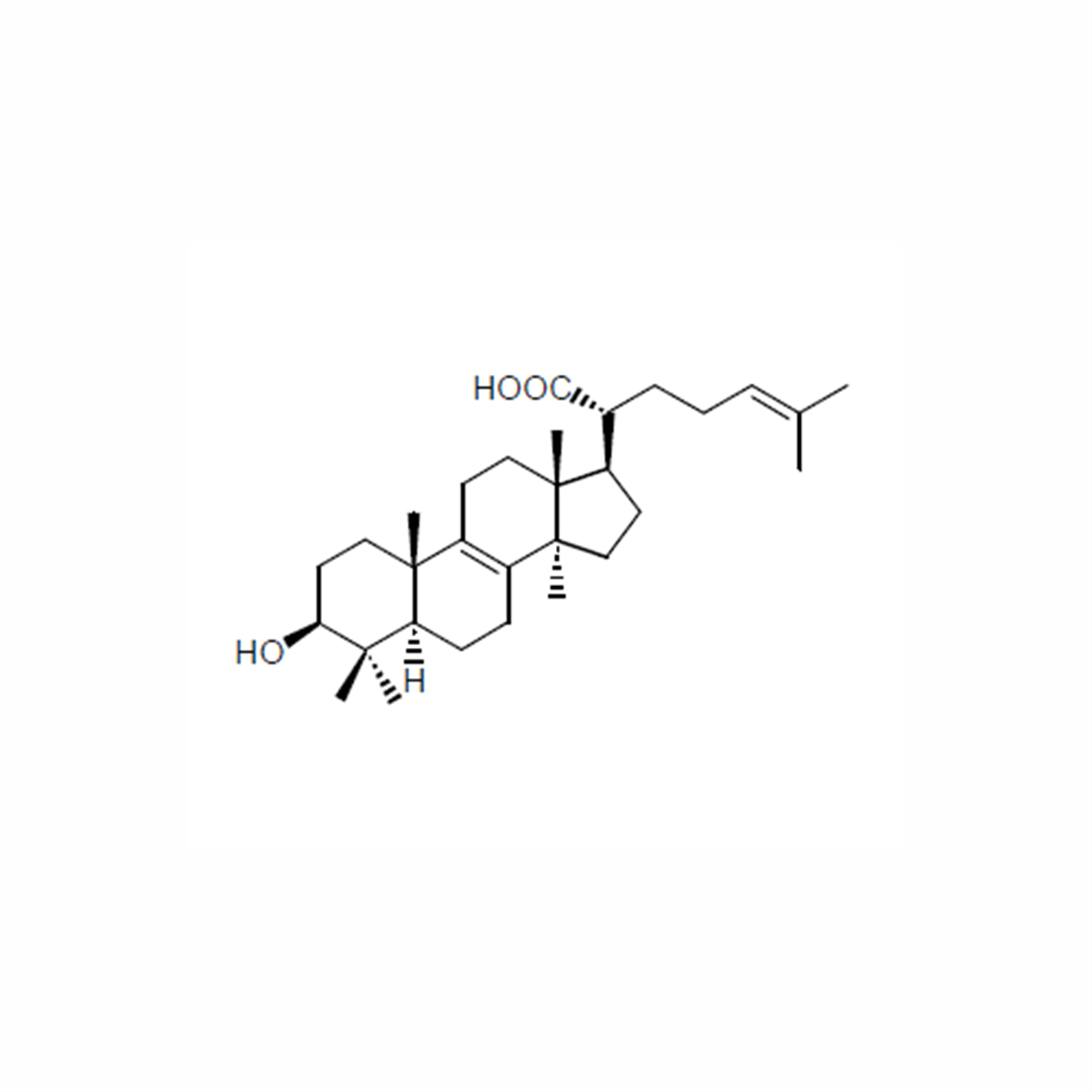
Trametenolic acid
Product#: FNK-NS230502
$416.16
Availability:
Ships in 1-2 Weeks
Trametenolic acid
- CAT Number : FNK-NS230502
- CAS Number : 24160-36-9
- Molecular Weight : 456.70
- Molecular Formula : C30H48O3
- Pack size: 5 mg
- Store: -20 °C
- Purity: >99%(HPLC)
Trametenolic acid is an anti-inflammatory sterol isolated from the fungus Inonotus obliquus, also known as Chaga mushroom. It is a triterpenoid compound with various biological activities.
Properties
- Chemical formula: C30H48O3
- Molecular weight: 456.7 g/mol
- Appearance: Likely a white to off-white crystalline powder
- Classification: Triterpenoid, sterol
- Anti-inflammatory research
- Anticancer studies
- H+/K+-ATPase inhibition research
- Natural product research and discovery
- Potential use in pharmaceutical development
- Cytotoxicity studies
- Thrombin inhibition research
- Use appropriate personal protective equipment
- Store in a cool, dry place in tightly closed containers
- Handle with care and avoid skin contact or inhalation
- Specific safety data not provided; treat as a potentially hazardous research chemical
Diabetic Nephropathy
Trametenolic acid (TA) has shown significant protective effects against diabetic nephropathy:
- Reduced the ratio of kidney weight to body weight, indicating improved kidney health
- Lowered blood urea nitrogen (BUN) and serum creatinine (Scr) levels, suggesting better kidney function
- Decreased urine albumin levels, indicating improved protein retention by the kidneys
- Alleviated histopathological changes in the kidneys of diabetic mice
- Increased expression of nephrin and podocin proteins, which are crucial for maintaining kidney filtration barriers
Oxidative Stress and Inflammation
TA exhibits potent antioxidant and anti-inflammatory properties:
- Increased activities of antioxidant enzymes superoxide dismutase (SOD) and catalase (CAT)
- Enhanced levels of reductive glutathione (GSH), an important cellular antioxidant
- Decreased levels of malondialdehyde (MDA), a marker of oxidative stress
- Activated the Nrf2 signaling pathway, increasing expression of antioxidant enzymes
- Inhibited the NF-κB signaling pathway, reducing expression of pro-inflammatory cytokines
Cancer
TA and related compounds from Inonotus obliquus (Chaga mushroom) have shown anti-cancer potential:
- Inhibited proliferation of various cancer cell lines, including gastric, breast, and prostate cancer cells
- Displayed cytotoxicity against human lung cancer cell line A549
- Showed anti-proliferative activity on PC3 (prostate cancer), AGS (gastric cancer), and MCF-7 (breast cancer) cell lines
Other Potential Effects
While more research is needed, TA may have additional health benefits:
- Potential neuroprotective effects against ischemia-reperfusion injury in the brain
- Possible broader applications in managing diabetes beyond nephropath
Nrf2/HO-1 Pathway
TA activates the Nrf2 (Nuclear factor erythroid 2-related factor 2) signaling pathway:
- Increases expression of Nrf2, HO-1 (heme oxygenase-1), and NQO-1 (NAD(P)H:quinone oxidoreductase-1) proteins
- Nrf2 activation leads to upregulation of antioxidant defense enzymes
- This pathway is crucial for defending against oxidative stress
NF-κB Signaling Pathway
TA inhibits the NF-κB (Nuclear factor kappa B) signaling pathway:
- Decreases protein expression of P-NF-κB/NF-κB
- Reduces expression of downstream proinflammatory cytokines TNF-α, IL-1β, and IL-6
- This inhibition contributes to TA's anti-inflammatory effects
PI3K/Akt/mTOR Signaling Pathway
TA modulates the PI3K/Akt/mTOR pathway:
- This modulation is associated with TA's neuroprotective effects against cerebral ischemia and reperfusion injury
- The pathway is also involved in TA's ability to inhibit tumor cell proliferation
MicroRNA-10a Regulation
- TA has been shown to protect against cerebral ischemia and reperfusion injury through modulation of microRNA-10a, in addition to the PI3K/Akt/mTOR pathway