

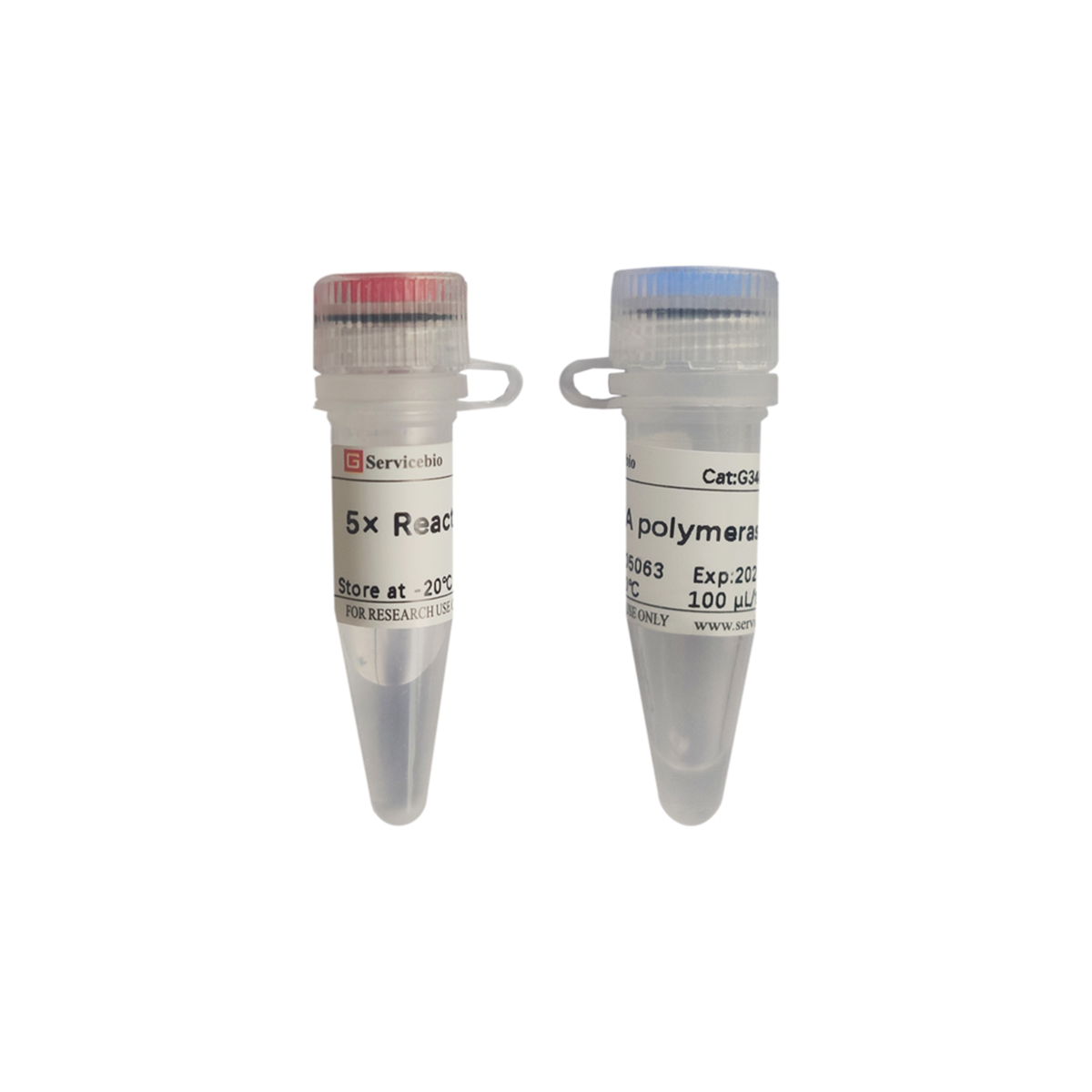
T7 RNA Polymerase
T7 RNA Polymerase
Cat. No.: SB-G3402-5000U
Size: 5000U
Description
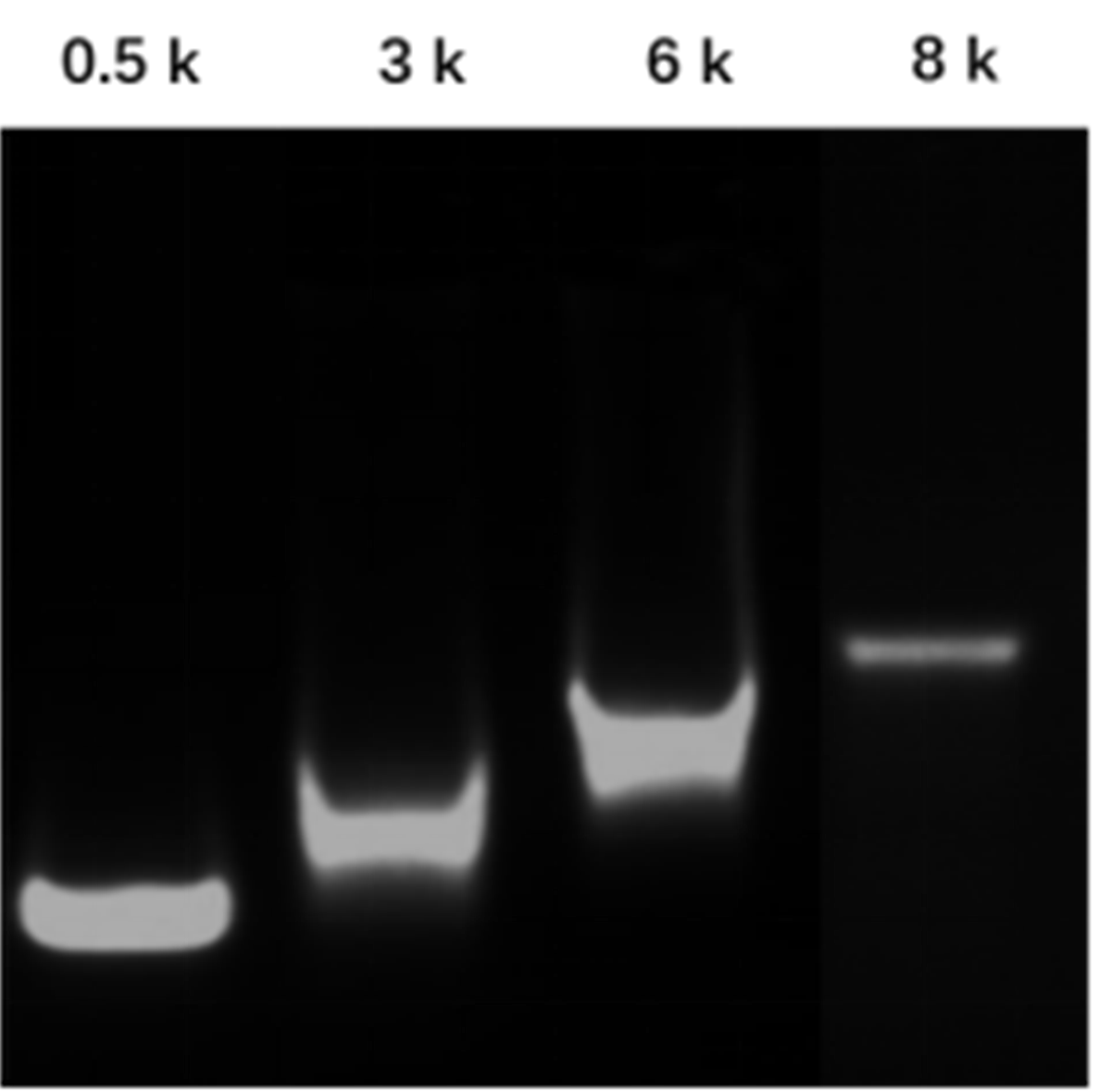
This product, T7 RNA polymerase, is derived from the recombinant expression of T7 bacteriophage and Escherichia coli. It is a DNA-dependent 5′-3′ RNA polymerase that highly specifically recognizes the sequence of the T7 promoter. It uses single-stranded or double-stranded DNA containing the T7 promoter sequence as a template and NTP as a substrate to synthesize single-stranded RNA complementary to the DNA downstream of the promoter. The company's T7 RNA polymerase is a mutant with better performance screened by directed evolution. It can recognize modified NTPs and is used for the synthesis of various labeled RNAs. It is suitable for the preparation of RNAs with a length of 100-8000 nt. The main applications: in vitro RNA synthesis, T7 RNA polymerase-mediated biosensors, etc.
- Source : derived from T7 phage, recombinantly expressed in Escherichia coli.
- Definition of enzyme activity: at 37°C and pH 8.0, the amount of enzyme required to incorporate 1 nmol of [ 3H]ATP into the acid-insoluble precipitate within 1 hour is defined as one enzyme activity unit.
- Purity and concentration: SDS-PAGE detection purity ≥ 95%; endogenous nucleic acid residue < 1 pg/μL (qPCR detection); 50 U/μL.
- Inactivation or inhibition: T7 RNA polymerase can be inactivated by heating at 70°C for 10 minutes. Metal ion chelating agents, concentrations greater than 150 mM sodium, potassium or ammonium salts can significantly inhibit the activity of T7 RNA polymerase.
- Enzyme Storage Buffer: 50 mM Tris-HCl, 150 mM NaCl, 5 mM DTT, 0.1 mg/mL BSA, 50% Glycerol, pH 8.0.
- 5×Reaction Buffer: 200 mM Tris-HCl, 30 mM MgCl2 , 50 mM DTT, 50 mM NaCl, 10 mM spermidine, pH 7.9.
Figure 1. Electropherograms of RNA transcripts of different lengths
Storage and Handling Conditions
Component
| Component Number | Component | G3420-100U |
| G3402-1 | T7 RNA polymerase | 100 μL |
| G3402-2 | 5×Reaction Buffer | 500 μL |
| Product Manual | 1 copy | |
Steps
1. RNA synthesis:
| Component | Volume |
| 5×Reaction Buffer | 4 μL |
| NTP Mixture | 2 mM each |
| Template DNA | 0.5-1 μg |
| T7 RNA polymerase | 1 μL |
| Nuclease-Free Water | To 20 μL |
Set up the reaction system as above, mix gently and incubate the system at 37°C for about 2 h. Note: RNase Inhibitor (recommended G3414) can be added to the reaction system to 1 U/μL to prevent RNase contamination; adding thermostable inorganic pyrophosphatase (recommended G3421) to the reaction system can significantly increase the yield of RNA transcription;
2. After the reaction is complete, add 2 μL of 0.5 M EDTA to the system or cool the reaction system to -20°C to terminate the reaction.
Precautions
1. The process of RNA synthesis should be carried out under RNase-free conditions.
2. For efficient transcription of a specific region, it is recommended to pre-cut the template DNA downstream of the region with blunt ends or 5' overhanging ends.
3. The combination of spermidine in 5×Reaction Buffer and nucleic acid may form insoluble matter. It is recommended to configure the reaction system at room temperature and add the template at the end.
4. Enzyme products should be placed in an ice box or ice bath when used, and should be stored at -20°C immediately after use. It is recommended to store in separate packages.
5. For your safety and health, please wear a lab coat and disposable gloves for operation.