No More Sales- inactivated
For assistance or inquiries, please contact us.
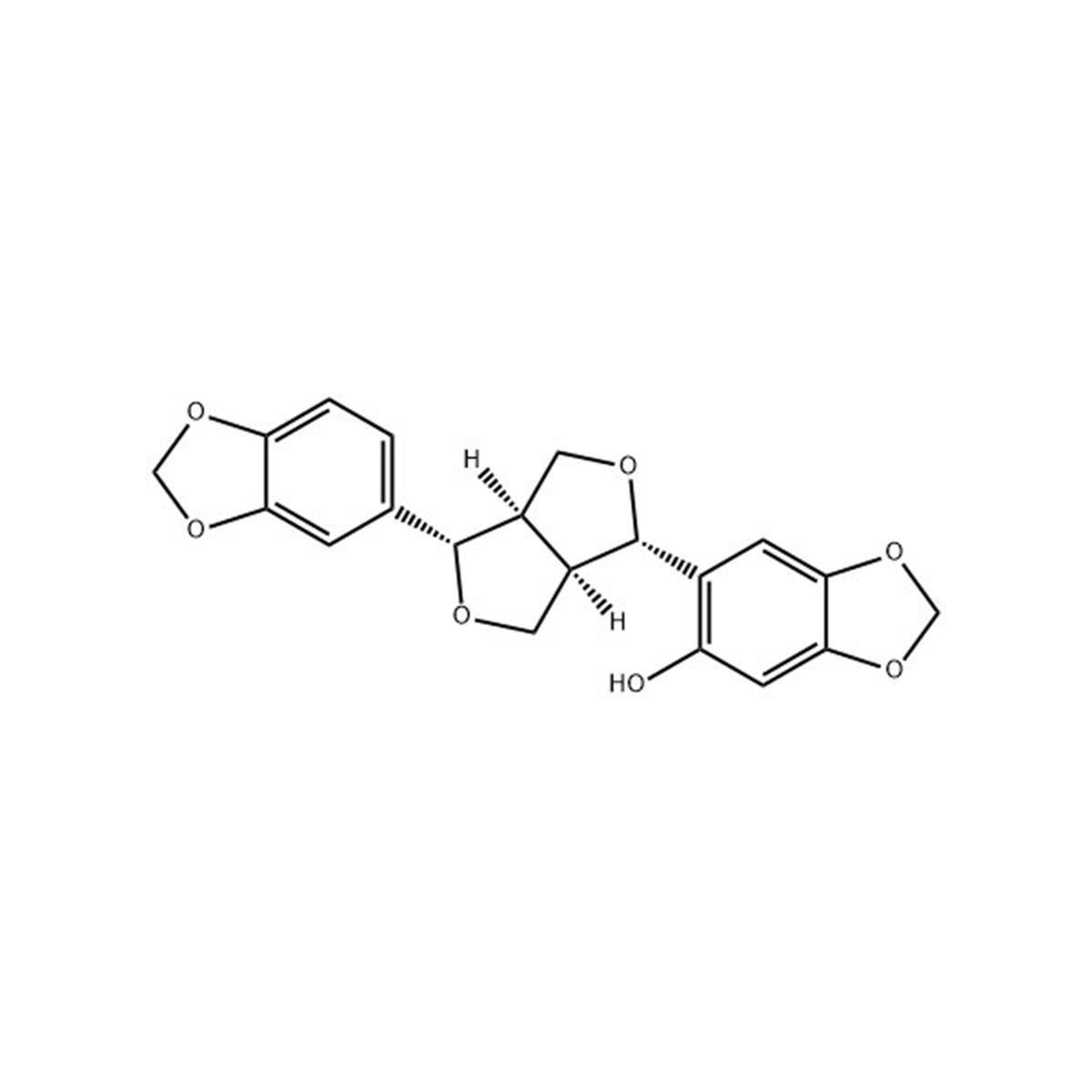
Sesaminol
Cat. No: inactived-FNK-NS182102
Natural compound
Terpenoid 12352200
Size: 10mg
Storage: -20°C, Dark Strage
CAS NO : 74061-79-3
Product description
Sesaminol is a natural organic compound found in sesame seeds and sesame oil, known for its strong antioxidant, anti-inflammatory, and neuroprotective properties. It is a lignan derived from sesame (Sesamum indicum L.) seeds.
Properties
- Molecular weight: 370.4 g/mol
- Chemical formula: C20H18O7
- CAS Number: 74061-79-3
- IUPAC Name: 6-[(3S,3aR,6S,6aR)-3-(3,4-dimethoxyphenyl)-2,3,3a,4,5,6-hexahydro-1H-benzo[c]chromen-6-yl]-1,3-benzodioxol-5-ol
Applications and usage
- Used in pharmaceutical and nutraceutical research
- Potential applications in the prevention and treatment of neurodegenerative diseases, particularly Parkinson's disease
- Exhibits antioxidant, anti-inflammatory, antidepressant, and neuroprotective effects
Safety and handling
- Handle with appropriate personal protective equipment
- Use in a well-ventilated area
- Avoid inhalation, ingestion, and contact with skin and eyes
- Store in a cool, dry place in a tightly closed container
Involved human diseases
Parkinson's Disease
Sesaminol has demonstrated significant potential in preventing and mitigating the effects of Parkinson's disease:
- Neuroprotective Effects
- Sesaminol protects nerve cells from damage in laboratory cultures and prevents Parkinson's symptoms in animal models1.
- It reduces oxidative stress, which is a major cause of cell loss in the substantia nigra, a brain region affected by Parkinson's1.
Alzheimer's Disease
Sesame seed oil (SSO) has shown potential to alleviate memory impairment and neurodegeneration in Alzheimer's patients1.
Affected Cellular Signaling Pathways
Nrf2-ARE Signaling Pathway
- Sesaminol activates the Nrf2-ARE (Nuclear factor erythroid 2-related factor 2 - Antioxidant Response Element) signaling pathway34.
- It promotes the nuclear translocation of Nrf2, a protein involved in the cellular response to oxidative stress34.
- This activation enhances the expression of antioxidant enzymes, such as NQO1 (NAD(P)H:quinone oxidoreductase 1) and γ-glutamyl cysteine synthetase (γ-GCS)3.
Oxidative Stress Response
- Sesaminol reduces the production of intracellular reactive oxygen species (ROS)34.
- It enhances the cellular defense system against oxidative stress3.
NF-κB Pathway
- Sesaminol inhibits the NF-κB pathway induced by various carcinogens, inflammatory stimuli, and cytokines2.
- It suppresses the degradation of IκBα (inhibitor of NF-κB) by inhibiting its phosphorylation and the activation of IκBα protein kinase2.
mTORC1 Signaling
- Sesaminol inhibits mTORC1 (mammalian target of rapamycin complex 1 signaling1.
Cyclin D1 Regulation
- Sesaminol reduces the expression of cyclin D1 at both mRNA and protein levels1.
- It promotes the proteasomal degradation of cyclin D1 protein1.
TAK1 Kinase Pathway
- Sesaminol inhibits the activation of TAK1 (Transforming growth factor beta-activated kinase 1) kinase, which is upstream of the NF-κB pathway2.