

RecQ DNA Helicase
Select Funakoshi
- See below table
Description
E. coli RecQ helicase contributes to the genomic stability as the prototype of RecQ family DNA helicases, mutations of which genes are associated with premature aging and cancer susceptibility, known as Bloom’s and Werner’s syndromes (1).
RecQ helicase functions in both early and late stages of homologous recombination and unwinds DNAs with particular structures, such as the fork structure for replication, the Holliday junction which is an intermediate of recombination, telomere, quadruplex G4-DNA, etc. In replication fork, it forms a complex with topoisomerase III and regulates DNA topology (1, 2).
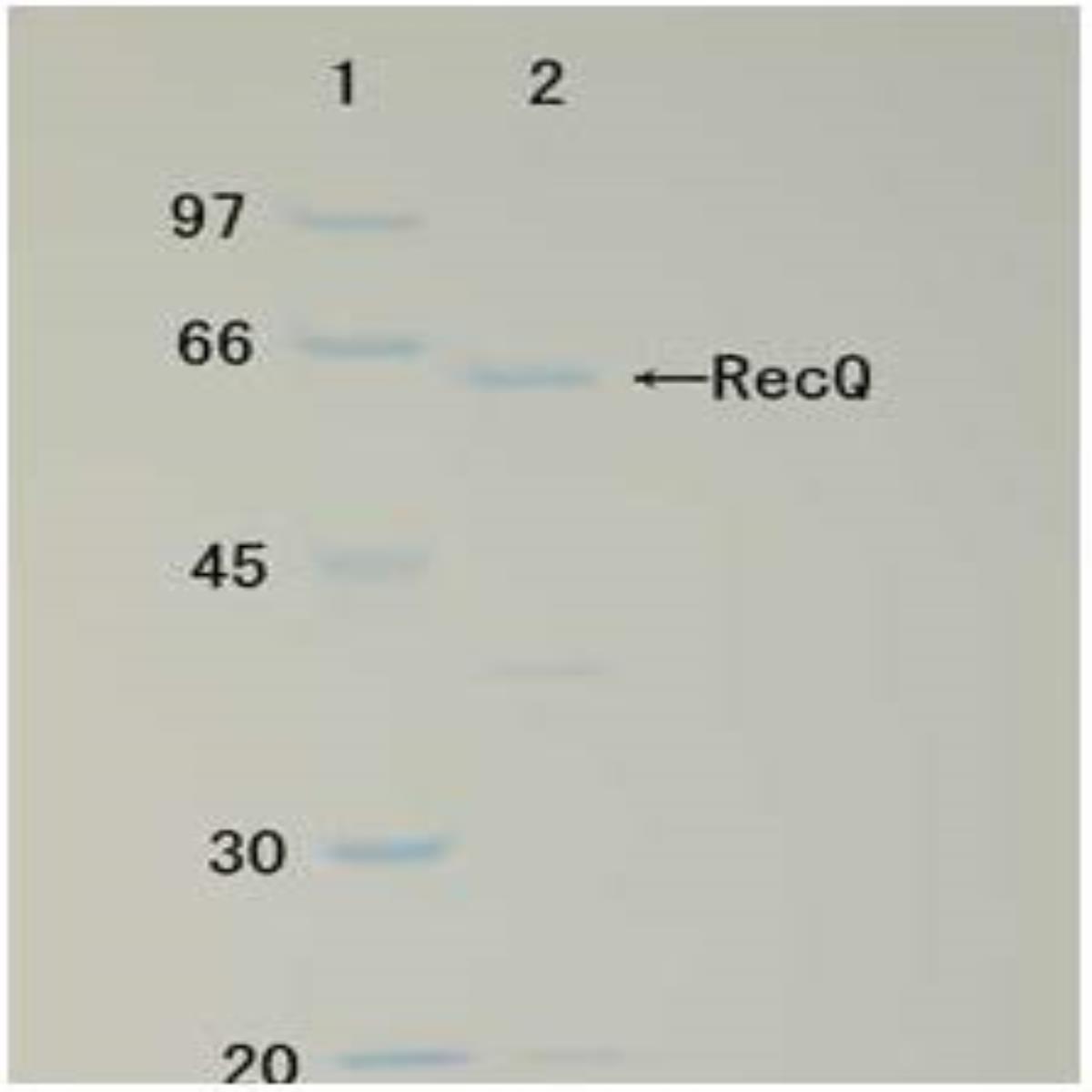
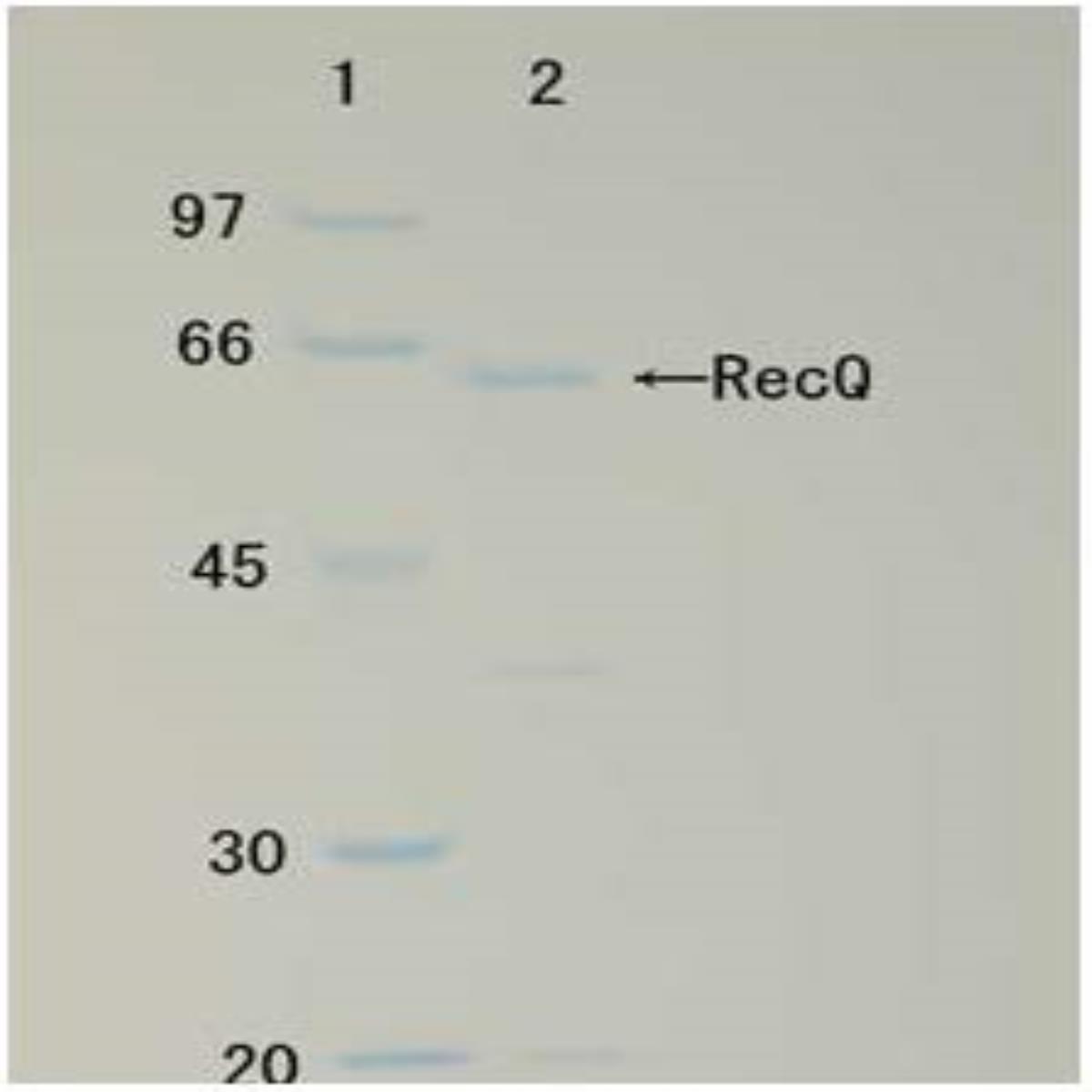
The product is over-produced as a recombinant protein and highly purified by several steps of chromatography. A single band is observed by SDS-PAGE at 64 kD (Fig 1).

Fig.1 Polyacrylamide gel electrophoresis of RecQ protein
| Image | Cat.No: | Size | Origin | Concentration | Storage | Link |
 |
FNK-01-004 |
100µg | E.coli | 0.5mg/ml | Store at -80°C |  |
| FNK-01-003 | 20µg | |
Applications
- Studies on mechanisms of DNA recombination, replication and repair.
- Application for genetic engineering. For dissociation of special structure DNA.
Specification
BiochemicalActivities Unwinding duplex DNA, dependent on ATP. DNA-dependent ATPase (Ref.2).
Purity Over 90% by SDS-PAGE (CBB staining)
Protein concentration 0.5 mg/ml as measured by BCA method
Form 50% glycerol, 20 mM Tris-HCl (pH 7.5), 1 mM EDTA, 50 mM KCl, 1 mM DTT
Storage -70℃
Data Link UniProtKB/Swiss-Prot P15043 (RECQ_ECOLI)
References
- Hickson I "RecQ helicases: caretakers of the genome.” Nat. Rev. Cancer 3:169-78 (2003) Review PMID: 12612652
- Hishida T et al “Role of the Escherichia coli RecQ DNA helicase in SOS signaling and genome stabilization at stalled replication forks.”Genes Dev 18:1886-1897 (2004) PMID: 15289460