Ppc-1, MitoUncoupler
Product#: FNK-FDV-0011
$358.80
Availability:
Ships in 1-2 Weeks
Ppc-1, MitoUncoupler
Cat. No. FNK-FDV-0011
Storage Store at -20℃. For reconstituted solution, store at +4℃. Protected from light.
Size 5 mg
Reconstituion Reconstitute at 10 mM as stock solution in DMSO. ※In the case of poor solubility, vortex or heat it at 37℃.
Description
Increasing mitochondria's oxigen consumption without inhibiting ATP synthesis
Ppc-1, MitoUncoupler

Ppc-1 is a newly isolated molecule from Polysphondylium pseudo-candidum. It shows comparatively mild uncoupling activity in Mitochodria.
According to papers, following effects are reported in Ppc-1:
- Ppc-1 stimulates oxygen consumption without inhibiting ATP synthesis in mitochondria, isolated from mouse liver. 1), 2)
- Ppc-1 administrated mouse shows inhibition of weight gain, without affecting liver and kidney. 1), 2)
- Cell proliferation is inhibited without inducing cell death, in Ppc-1 treated 3T3-L1 cells. 3)
Ppc-1 is a novel small molecule derived from cellular slime mold Polysphondylium pseudo-candidum. It enhances oxygen consumption in a dose-dependent manner and acts as moderate mitochondrial oxidative phosphorylation uncoupler without adverse effects on ATP production. In addition, Ppc-1 shows little cytotoxicity and enable us to use it in vivo.
Features
- Comparatively mild uncoupling activity.
- Low effect on ATP synthesis or degradation.
- Low active oxygen generation.
- Low cytotoxicity.
- Cell proliferation is inhibited by adding Ppc-1 to culture medium.
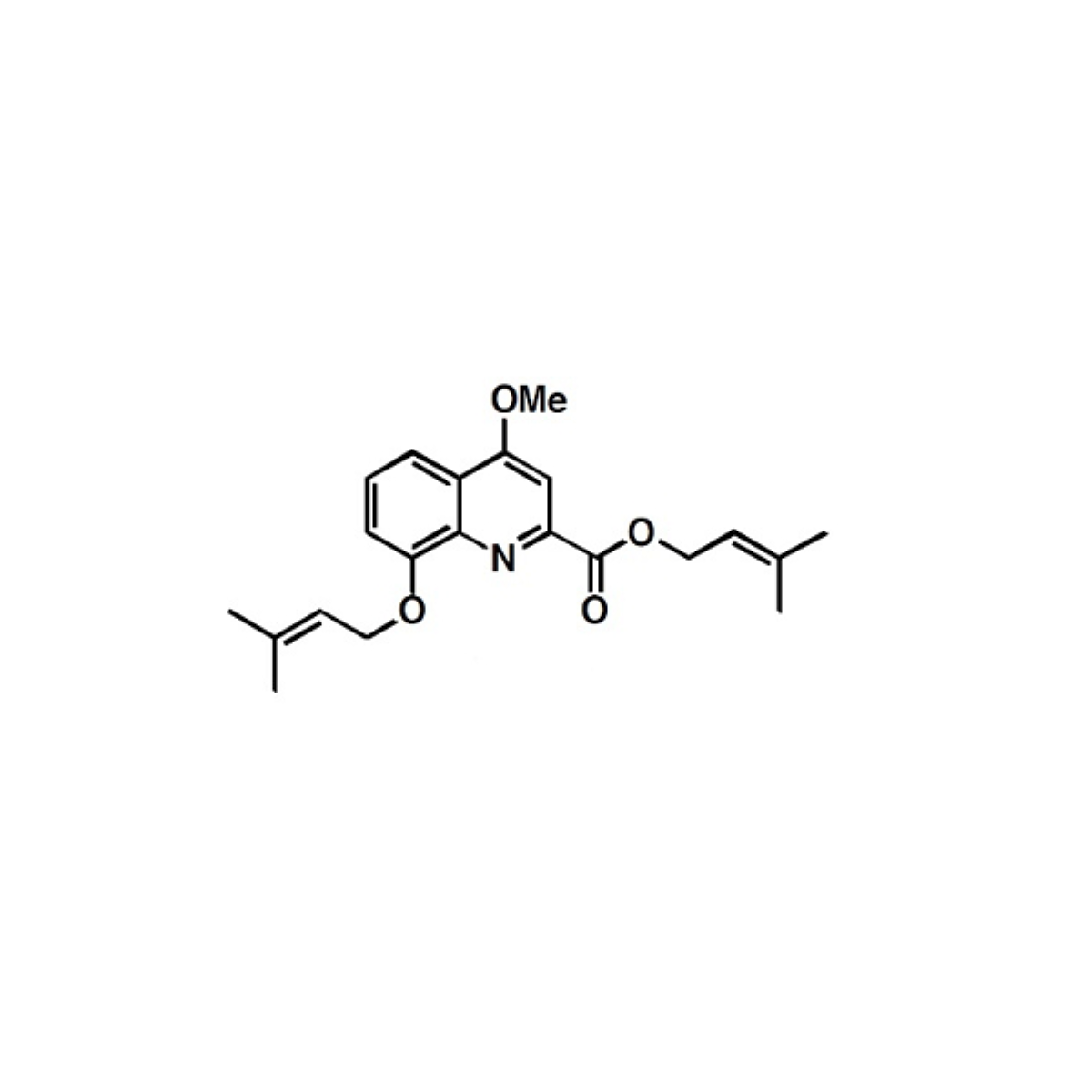
- Chemical Name :3-Methylbut-2-enyl 4-methoxy-8-(3-methylbut-2-enyloxy)quinoline-2-carboxylate
- CAS number :1245818-17-0
- Molecular Formula :C21H25NO4
- Molecular Weight :355.43
- Purity :>=98%
- Soluble in DMSO
Reference
- Suzuki T, et. al, PLoS One. 2015 Feb10; 10(2):e0117088.
- Kikuchi H, et. al, Bioorg Med Chem., 23(1): 66-72(2015).
- Kikuchi H, et. al, Tetrahedron, 66: 6000-6007(2010).