Poly(A) Polymerase
Poly(A) Polymerase
Cat. No.: SB-G3453-500U
Size: 500U
Description
Poly(A) Polymerase, also known as Poly(A) tailing enzyme, is derived from Escherichia coli and catalyzes the addition of AMP converted from ATP to the 3' end of single-stranded RNA in a template-independent manner to form a Poly(A) tail. Poly(A) RNA Polymerase has high tailing efficiency and can add 20-200 A bases to the 3' end of RNA. Main applications: RNA end labeling, mRNA synthesis in vitro, etc.
- Source: derived from Escherichia coli and expressed recombinantly by Escherichia coli.
- Definition of enzyme activity: at 37°C and pH 8.0, the amount of enzyme required to incorporate 1 nmol AMP into the RNA end within 10 minutes is defined as 1 enzyme activity unit.
- Purity and concentration: SDS-PAGE detection purity > 95%; endogenous nucleic acid residue < 1 pg/μL (qPCR detection); 5 U/μL.
- Inactivation or inhibition: EDTA to a concentration of 10 nM or heating at 65°C for 20 minutes to inactivate.
- Enzyme storage buffer: 20 mM Tris-HCl, 300 mM NaCl, 1mM DTT, 1mM EDTA, 0.1% Triton X-100, 50% Glycerol, pH 7.5.
- 10хPAP Reaction buffer: 500 mM Tris-HCl, 2.5 mM NaCl, 100 mM MgCl2 , pH 8.0.
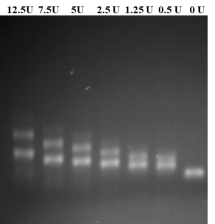
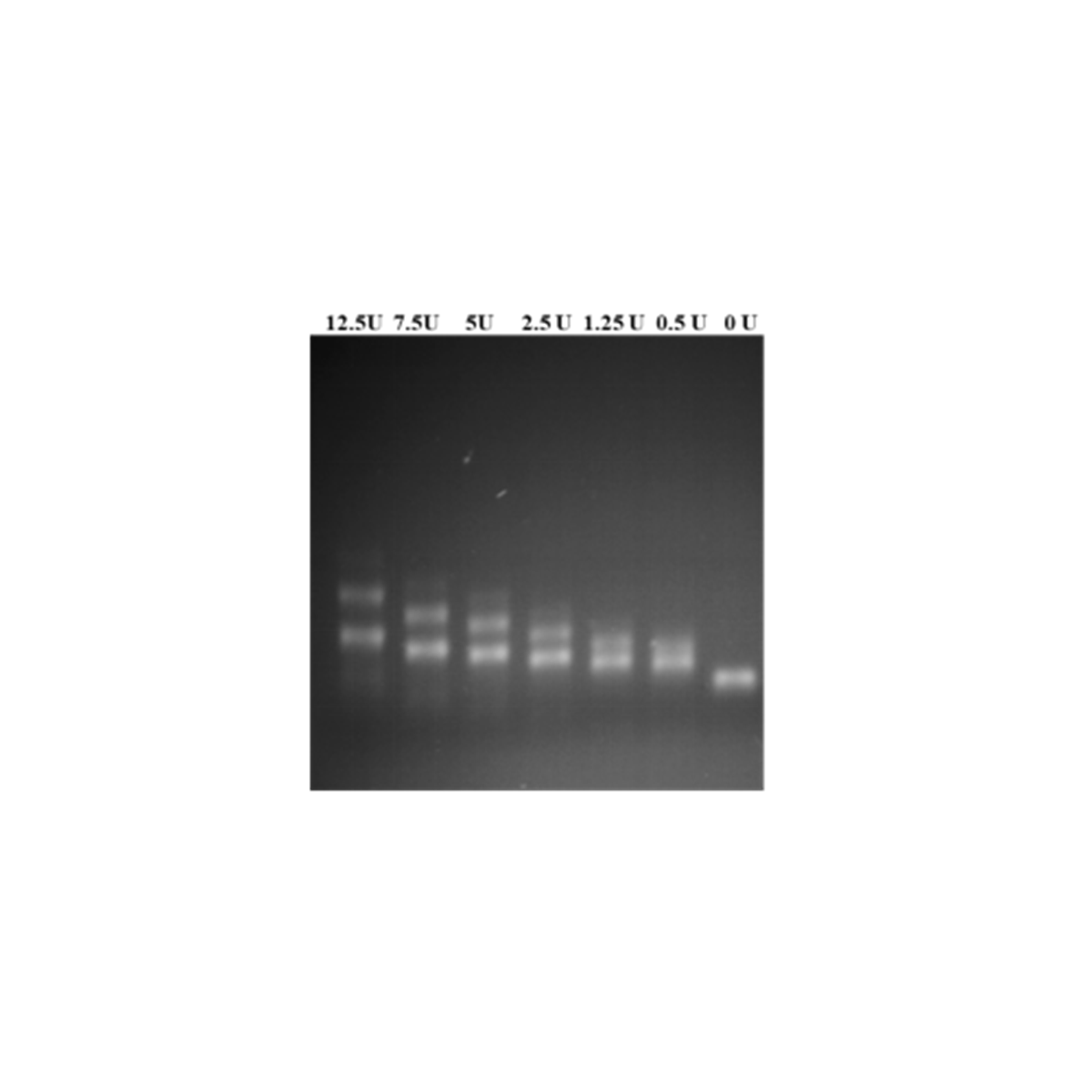
Figure 1. Effect diagram of 300 nt single-stranded RNA with poly(A) tail. 20 μL reaction system, 0.5 μg single-stranded RNA (300 nt), added different amounts of Poly(A) RNA Polymerase, incubated at 37°C for 30 min, and incubated at 65°C for 20 min to terminate the reaction.
Storage and Handling Conditions
Transport with wet ice; Store at -20℃, valid for 12 months.Component
| Component Number | Component | G3453-500U |
| G3453-1 | Poly(A) Polymerase | 100 μL |
| G3453-2 | 10хPAP Reaction buffer | 500 μL |
| Product Manual | 1 copy | |
1. Refer to the following table to configure the reaction system:
| Component | Volume |
| Nuclease-Free water | To 20 μL |
| 10хPAP Reaction buffer | 2 μL |
| 10 mM ATP | 2 μL |
| RNase Inhibitor (40 U/μL) | 0.5 μL |
| RNA | x μL |
| Poly(A) Polymerase | 1 μg |
Precautions
1. Involving RNA operation, it is necessary to strictly follow the specifications of RNA operation to avoid RNase contamination. Relevant reagents and consumables need to be treated with DEPC to remove RNase or ensure that they are RNase free.
2. The enzyme can also be reacted with M-MuLV reverse transcriptase reaction buffer, and the reaction requires divalent cations such as Mg2+ to be active.
3. The length of the A tail added to RNA is affected by factors such as the amount of enzyme, ATP concentration, and reaction time. Different experiments require different amounts of A to be added. The length of A can be adjusted by reducing the reaction time. The enzyme can add about 30 A bases when reacting at 37°C for 30 minutes, and about 100 A bases can be added in 1 hour.
4. For your safety and health, please wear a lab coat and disposable gloves for operation.