

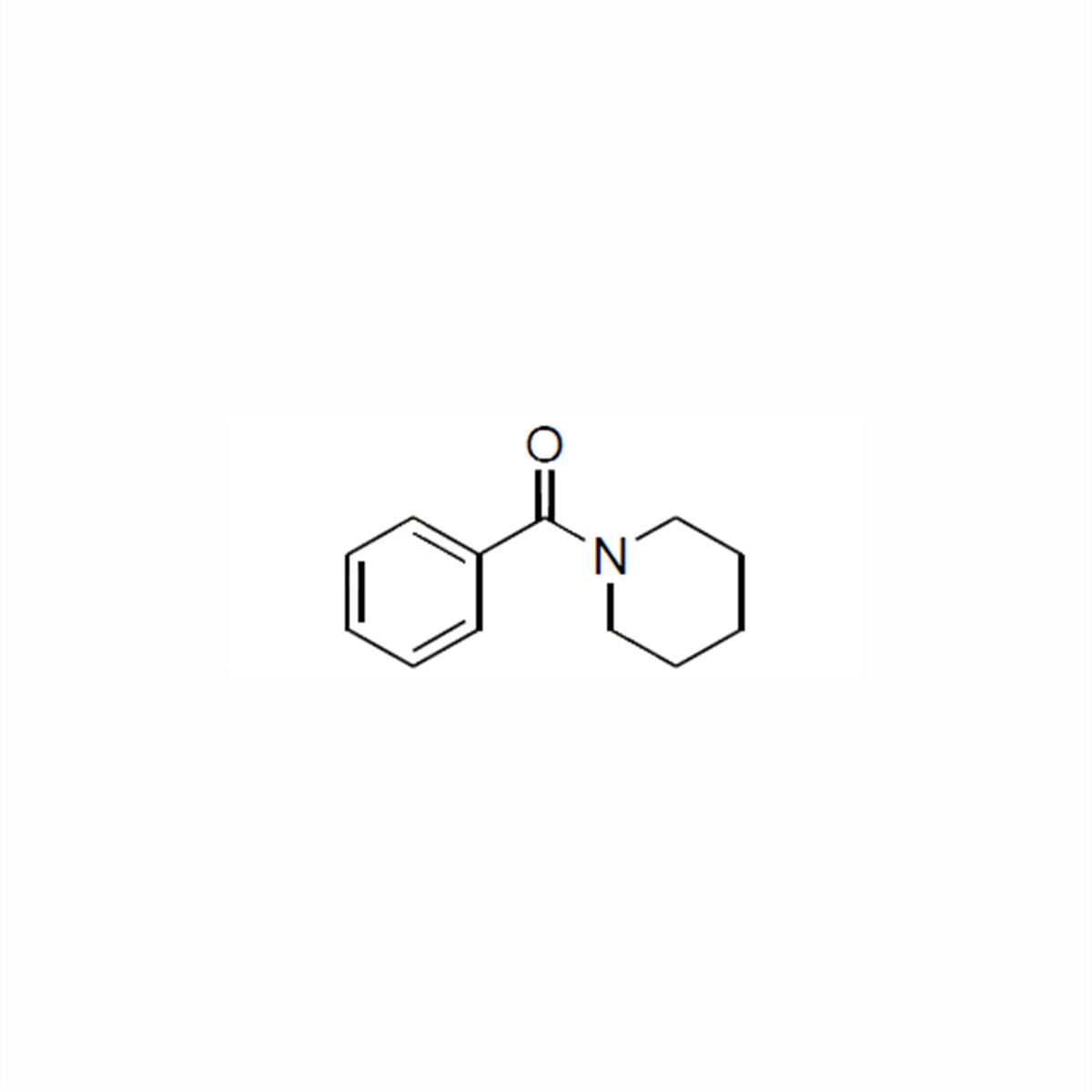
Phenyl(piperidin-1-yl)methanone
Product#: Gly-GMSM-112
$300.00
Availability:
Ships in 1-2 Weeks
Phenyl(piperidin-1-yl)methanone
- CAT Number : Gly-GMSM-112
- CAS Number : 776-75-0
- Molecular Weight : 189.25
- Molecular Formula : C12H15NO
- Pack size: 5 g
Phenyl(piperidin-1-yl)methanone is an organic compound consisting of a phenyl group and a piperidine ring connected by a carbonyl group. It is likely used as an intermediate in organic synthesis and pharmaceutical research.
Properties
- Molecular formula: C12H15NO
- Molecular weight: 189.25 g/mol
- Physical state: Likely a solid at room temperature
- Structure: Contains a phenyl ring, a piperidine ring, and a connecting carbonyl group
- Used as an intermediate in organic synthesis
- Potential applications in the development of pharmaceuticals and fine chemicals
- May be used in the synthesis of complex molecules or as a building block in chemical reactions
- Handle with care in a well-ventilated area
- Wear appropriate personal protective equipment (PPE) such as gloves, safety glasses, and lab coat
- Store in a cool, dry place away from incompatible materials
- Avoid skin contact, inhalation, or ingestion
- May be an eye and skin irritant; avoid exposure
Metabolic and CNS Disorders: Compounds containing the phenyl(piperidin-1-yl)methanone structure have been studied for their ability to inhibit 11β-hydroxysteroid dehydrogenase type 1 (11β-HSD1). This inhibition is potentially beneficial in treating metabolic syndrome, which includes conditions like type 2 diabetes, obesity, and associated disorders such as insulin resistance and cardiovascular diseases. Additionally, these compounds may help in treating central nervous system (CNS) disorders, including Alzheimer's disease and other dementias1.
Cancer Treatment: The benzoylpiperidine fragment, which is structurally related to phenyl(piperidin-1-yl)methanone, has shown promise in cancer treatment. Derivatives of this fragment have demonstrated notable antiproliferative activity against various cancer cell lines, including breast and ovarian cancers. These compounds act as reversible inhibitors of enzymes like monoacylglycerol lipase (MAGL), which are involved in cancer cell proliferation23.
Neuropsychiatric Disorders: Some derivatives of phenyl(piperidin-1-yl)methanone have been explored for their potential use as neuroleptic drugs due to their ability to bind to serotoninergic and dopaminergic receptors. These compounds have shown effects similar to classical antipsychotics but with potentially fewer side effects3.
