PLEASE INQUIRE! Telomere Staining Reagent A (Texas Red Conjugated)
Product#: FNK-TRed-HPTH59-A
$98,765.00
Availability:
Ships in 24 hours
Telomere Staining Reagent A (Texas Red Conjugated)
We kindly ask that you make an inquiry before purchasing to confirm the price.
Since prices may change depending on the time of purchase, the listed price may not always apply.
The displayed price is for reference only and should not be considered the actual price.
Please make an inquiry to obtain the correct and current price
support@diagnocine.com
Cat. No. FNK-TRed-HPTH59-A
Size: 1 Kit
Storage: -20ºC
Description:
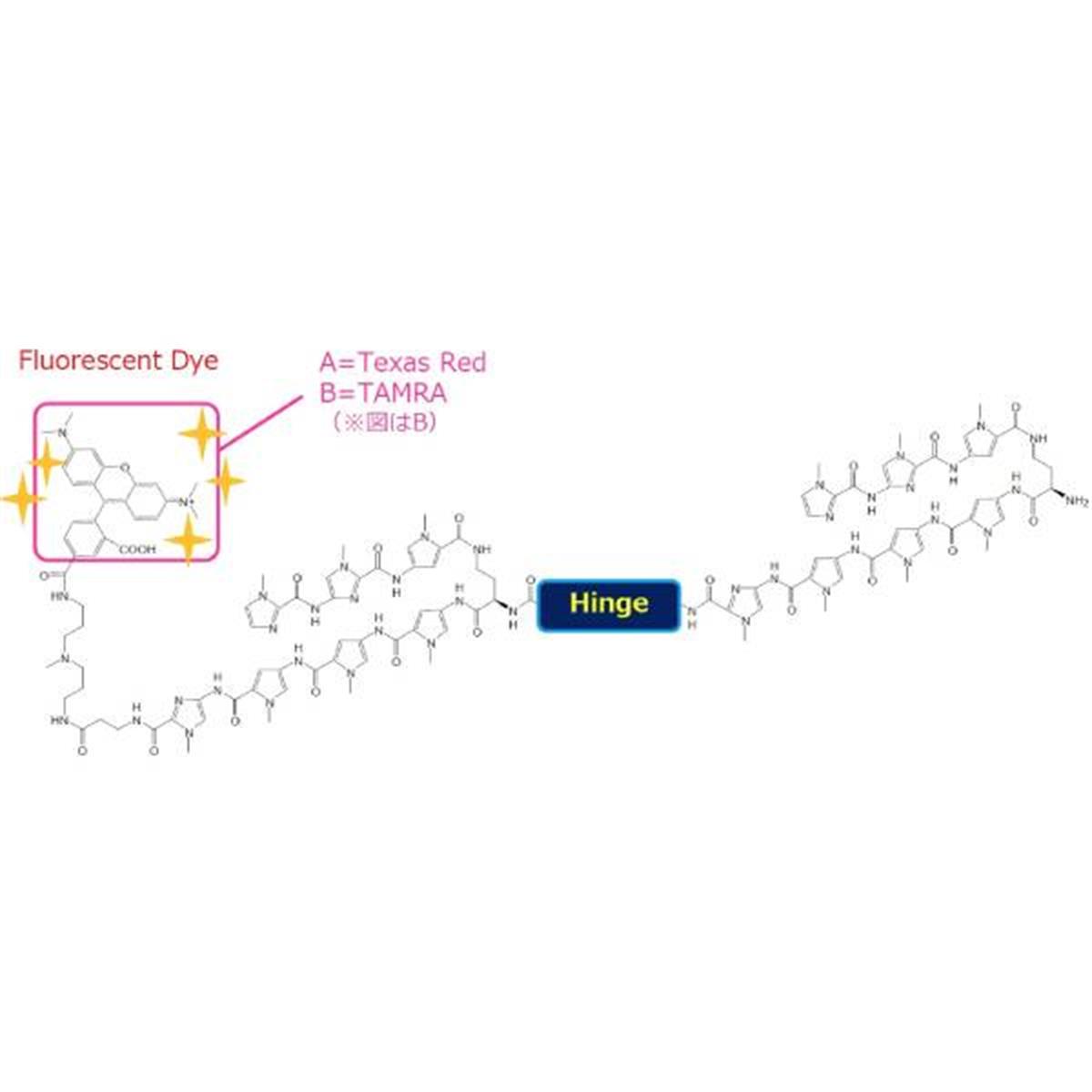
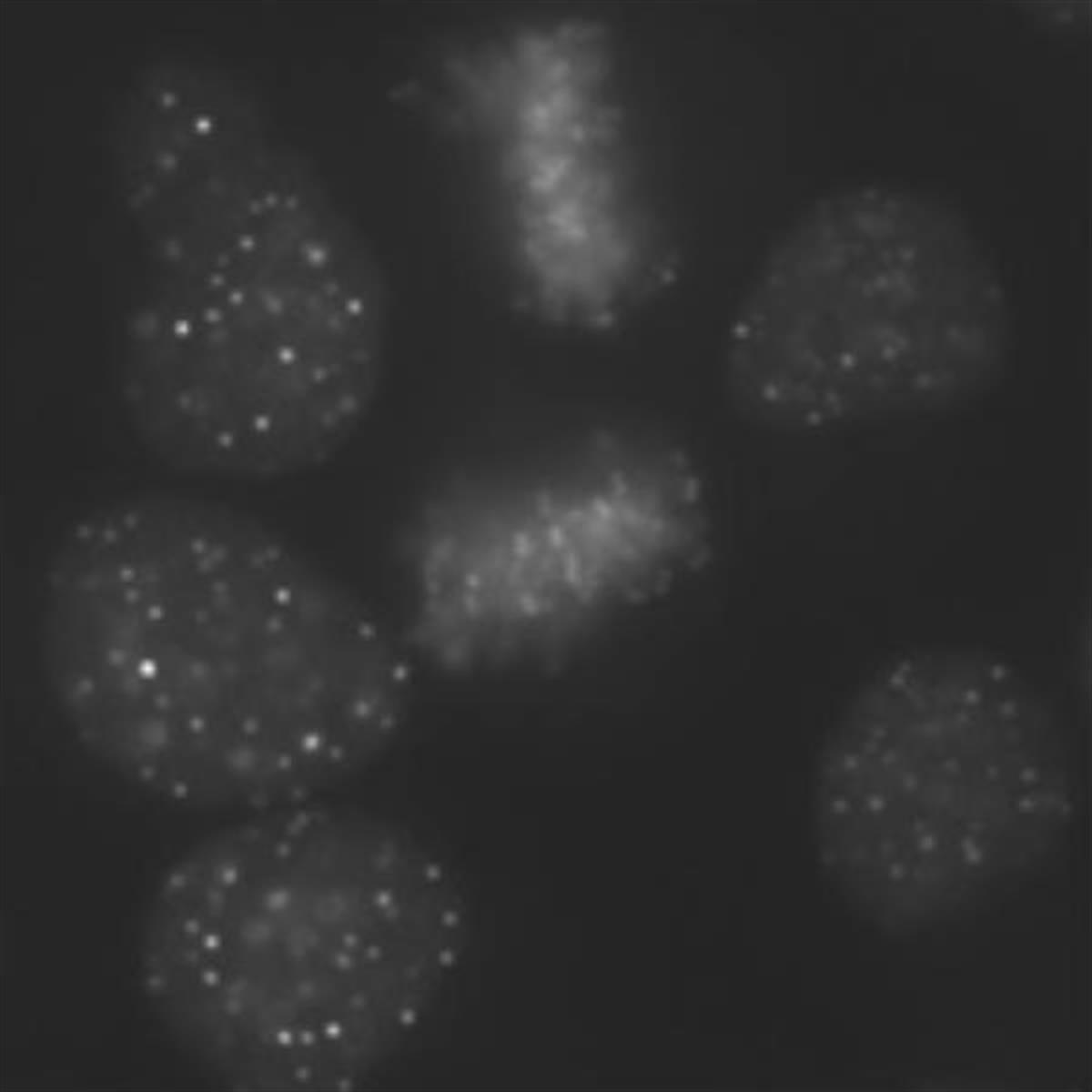
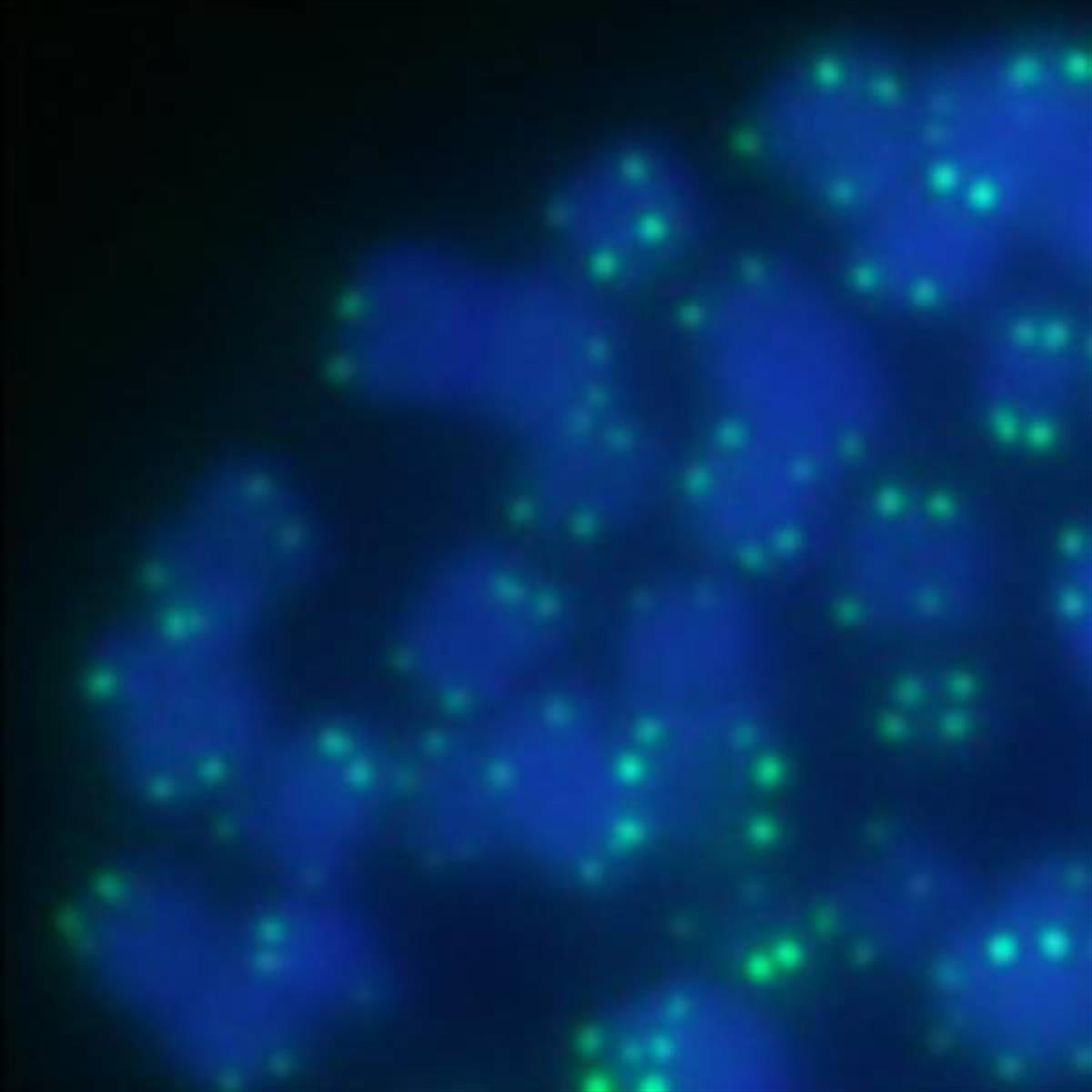
A fluorescently labeled polyamide that specifically stains the telomeres of chromosomes.
Telomeres are simple repeating base sequences located at the terminal regions of chromosomes, and in vertebrates they are (TTAGGG) repeating sequences. It has been proposed that telomere length is associated with cancer and individual aging (progeria), and is becoming increasingly important as a target for molecular imaging.
Details:
Telomere DNA on chromosomes is determined by fluorescencein situ hybridization (FISH)) using The development of this probe was carried out with the cooperation of Professor Sugiyama of Kyoto University and Professor Maejima of the National Institute of Genetics in the 2013 "Kyoto Innovative Medical Technology Research and Development Grant Project". , developed a highly reproducible synthetic method that enables a sustained supply of fluorescently labeled polyamide.
The fluorescent label HPTH59, developed by Hi-Pep Research Institute Co., Ltd., can specifically fluorescently stain telomeric DNA much more easily and quickly than PNA FISH or Southern blotting methods. Masu. As a result of our research, we found that the genomic background outside the telomere region was low, and we were able to stain telomeres more selectively. fluorescently labeled peptide nucleic acid (PNA) probes However, it is difficult for PNA (peptide nucleic acid) to move into cells. A tandem polyamide (TH59) that specifically binds to the vertebrate telomere repeat sequence (TTAGGG) has been reported (Reference 1).
Features:
- PIPA (Pyrrole-imidazole polyamide), a compound invented by Professor Durban of the California Institute of Technology, which is made by linking pyrrole-imidazole with a peptide bond, can be quickly transferred to the intracellular nucleus, and there is almost no non-specific adsorption of the probe. It is superior to conventional DNA probe methods and FISH using PNA probes in terms of performance and sensitivity.
- PIPA binds to the minor groove of double-stranded DNA, allowing direct visualization of telomeres without disrupting telomere structure during the hybridization step.
- Semi-quantification is possible because the fluorescence intensity reflects the length of telomeres.
- Telomere staining probe-A (#TRed-HPTH59-A) is a compound from references 1 and 2.
- Telomere staining probe-B (#TAMRA-HPTH59-B) is a partially optimized product (Reference 3).
References:
1. Maeshima K, Janssen S, Laemmli UK., EMBO J., 20:3218-3228 (2001).
2. Kawamoto Y., et al., J. Am. Chem. Soc., 135 :16468-16477 (2013).
3. Hirata A, et al., J. Am. Chem. Soc., 136:11546-11554 (2014).