
NpFlamma® ROS 380
Size of product (mg)
-
1 mg

-
5 mg

-
25 mg




NpFlamma® ROS 380
Cat. No. SSH0001
Description
Key Features:
1. Particle size: 100 ± 20 nm
2. Excitation/Emission maxima: 380/450 nm
3. H2O2-selective fluorescence activation
4. Minimal background fluorescence in the inactivated state
5. Strong red-shifted emission upon oxidation by H2O2
6. Appearance: White solution
7. Solubility: Deionized water
8. Storage: -20°C, protected from light
Applications:
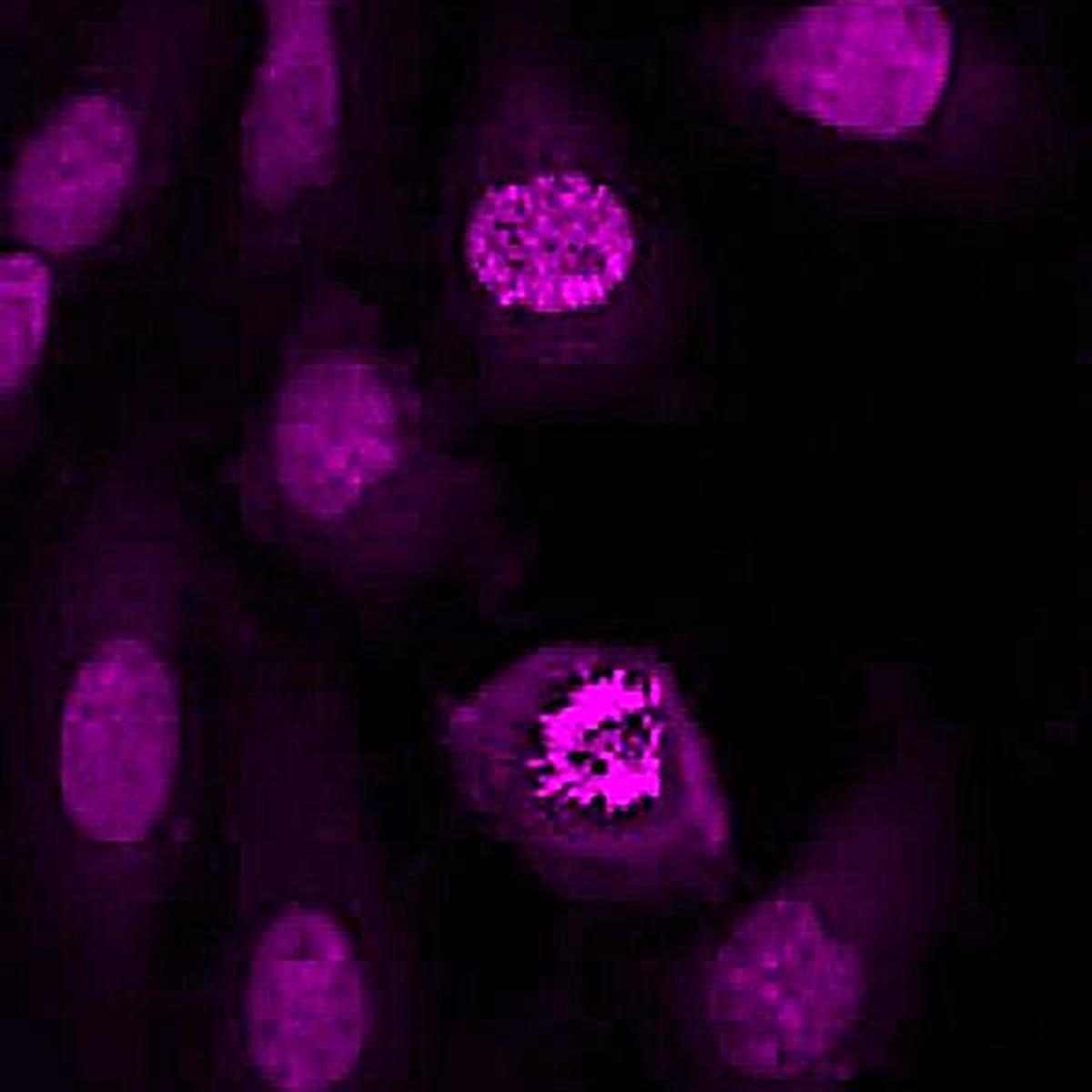
1. Real-time imaging of low-level H2O2 involved in cellular processes
2. Monitoring oxidative stress in living cells
3. Quantitative H2O2 detection in biological and physiological analyses
4. Studying oxidative cell processes
5. Investigating redox signaling pathways
6. Assessing mitochondrial function and dysfunction
Advantages:
1. High selectivity for H2O2
2. Minimal interference from background fluorescence
3. Ability to detect low levels of H2O2 in real-time
4. Chemically-induced emission eliminates excitation light interference
5. Quantitative measurements of H2O2 levels
6. Suitable for live-cell imaging
7. Stable colloidal suspension for improved cellular uptake and distribution
NpFlamma® ROS 380 offers a unique approach to H2O2 detection by utilizing a chemical reaction-based activation mechanism. In its inactivated state, the nanoparticle exhibits minimal fluorescence, reducing background noise and improving signal-to-noise ratios. Upon exposure to H2O2, the reactive fluorophores within the nanoparticle undergo oxidation, resulting in a strong red-shifted emission.
This probe's ability to detect low levels of H2O2 makes it particularly valuable for studying subtle changes in cellular redox states and signaling pathways. The nanoparticle design enhances cellular uptake and distribution, allowing for more comprehensive imaging of intracellular H2O2 dynamics.
Researchers can use NpFlamma® ROS 380 to investigate various biological processes involving H2O2, such as cell signaling, inflammation, and oxidative stress-related pathologies. Its quantitative nature enables precise measurements of H2O2 levels, facilitating the study of oxidative stress in various physiological and pathological conditions.
The probe's compatibility with live-cell imaging techniques makes it an excellent tool for monitoring dynamic changes in H2O2 levels over time, providing valuable insights into cellular responses to various stimuli and environmental factors.
Specifications
- Fluorophore: NpFlamma® ROS 380
- Application: Cellular activity imaging
- Reacting with: hydrogen peroxide
- Excitation/Emission Max.(nm): 380/450
- Particle size: 100 20 nm
- Appearance: White Solution
- Solubility: Deionized Water
- Storage conditions: -20 ℃, protect from light
Citation & Reference
- Fluorogenic nanoreactor assembly with boosted sensing kinetics for timely imaging of cellular hydrogen peroxide. J Heo, CK Lim, Chem. Commun., 2016, 52, 1131-1134.
-
Szili, E.J.; Hong, S.-H.; Oh, J.-S.; Gaur, N.; Short, R.D. Tracking the penetration of plasma reactive species in tissue models. Trends Biotechnol. 2018, 36, 594–602.
-
Zhang, J.J.; Wang, X.Z.; Kwon, T.; Huynh, D.L.; Chandimali, N.; Kim, N.; Kang, T.Y.; Ghosh, M.; Gera, M.; Lee, S.B.; et al. Innovative approach of non-thermal plasma application for improving the growth rate in chickens. Int. J. Mol. Sci. 2018, 19, 2301.
-
Zhunussova, A.; Vitol, E.A.; Polyak, B.; Tuleukhanov, S.; Brooks, A.D.; Sensenig, R.; Friedman, G.; Orynbayeva, Z. Mitochondria-mediated anticancer effects of non-thermal atmospheric plasma. PLoS ONE 2016, 11, e0156818.
-
Furuta, T.; Shi, L.; Toyokuni, S. Non-thermal plasma as a simple ferroptosis inducer in cancer cells: A possible role of ferritin. Pathol. Int. 2018, 68, 442–443.
-
Ji, W.-O.; Lee, M.-H.; Kim, G.-H.; Kim, E.-H. Quantitation of the ROS production in plasma and radiation treatments of biotargets. Sci. Rep. 2019, 9, 19837.
-
Ahn, H.J.; Kim, K.I.; Hoan, N.N.; Kim, C.H.; Moon, E.; Choi, K.S.; Yang, S.S.; Lee, J.-S. Targeting cancer cells with reactive oxygen and nitrogen species generated by atmospheric-pressure air plasma. PLoS ONE 2014, 9, e86173.
-
Zhang, J.J.; Chandimali, N.; Kim, N.; Kang, T.Y.; Kim, S.B.; Kim, J.S.; Wang, X.Z.; Kwon, T.; Jeong, D.K. Demethylation and microRNA differential expression regulate plasma-induced improvement of chicken sperm quality. Sci. Rep. 2019, 9, 8865.