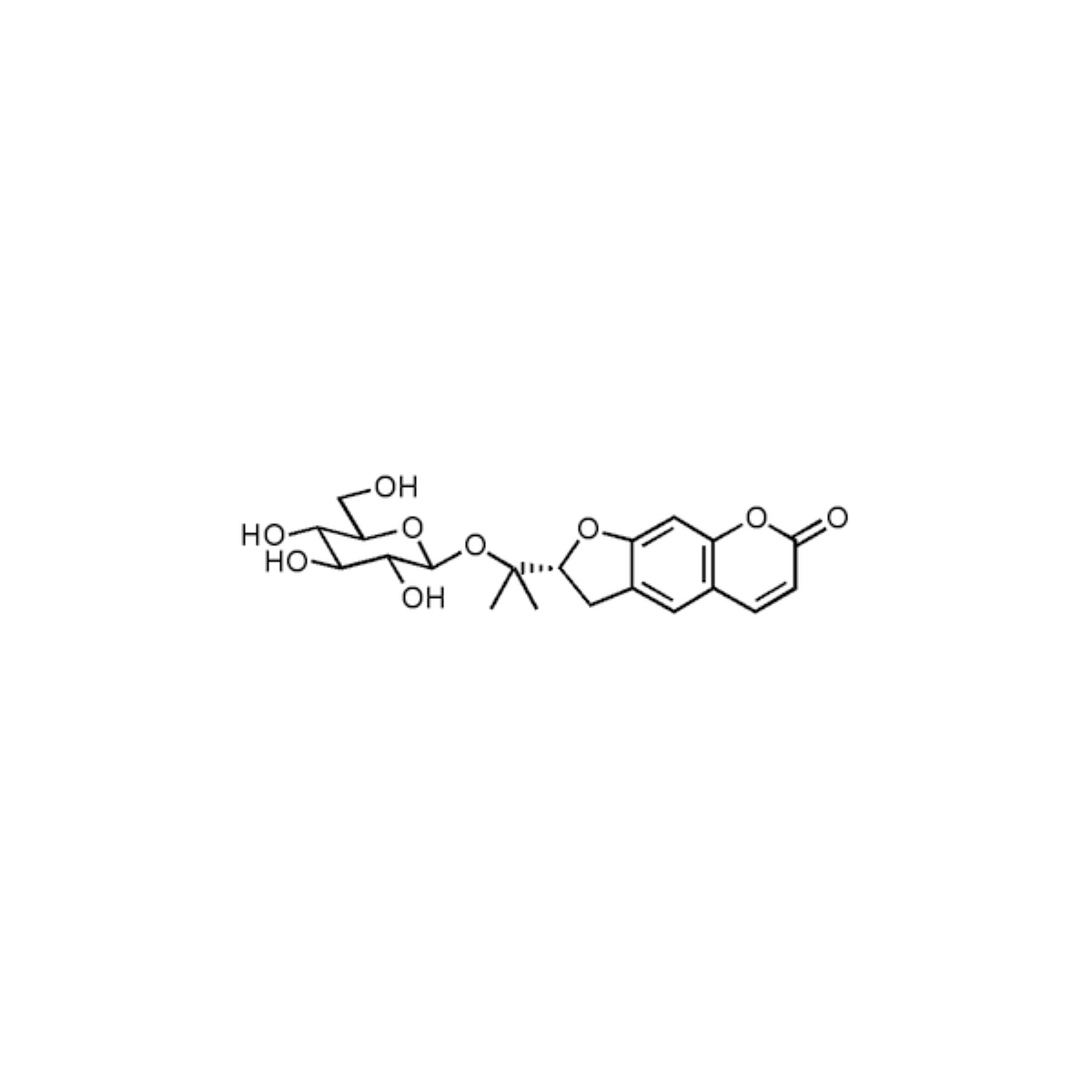
Nodakenin
Product#: FNK-NS320102
$416.16
Availability:
Ships in 1-2 Weeks
Nodakenin
Cat No: FNK-NS320102
Size: 5 mg
Storage: -20 oC
M. F.: C20H24O9
M. W.: 408.40
Purify: >= 99%(HPLC)
CAS: 95-31-8
Storage: -20 oC
M. F.: C20H24O9
M. W.: 408.40
Purify: >= 99%(HPLC)
CAS: 95-31-8
Affects on Human Diseases
Renal Diseases
Nodakenin has demonstrated protective effects against renal fibrosis and kidney injury:
- It alleviated obstructive nephropathy by reducing inflammation, macrophage infiltration, and extracellular matrix deposition in a mouse model of unilateral ureteral obstruction.
- The compound blunted Snail1-induced fibrosis and suppressed TGF-β1 signaling in renal epithelial cells.
Liver Diseases
Studies have shown nodakenin's hepatoprotective properties:
- In a lipopolysaccharide (LPS)-induced liver injury mouse model, nodakenin exhibited anti-inflammatory, antioxidant, and anti-apoptotic effects.
- It reduced serum aminotransferase levels, improved oxidative status, and attenuated pathological damage in the liver.
- Nodakenin inhibited pro-inflammatory mediator secretion and regulated apoptosis-related proteins like caspase-3 and Bcl-2.
Cancer
Nodakenin has shown potential anti-cancer effects, particularly in breast cancer:
- It induced ROS-dependent apoptotic cell death and ER stress in breast cancer cell lines.
- Nodakenin increased intracellular Ca2+ release and upregulated ER stress markers like GRP78, ATF4, and CHOP.
- The compound demonstrated synergistic effects when combined with thapsigargin, enhancing ER stress responses in breast cancer cells.
Obesity and Metabolic Disorders
Nodakenin has shown promise in addressing obesity and related complications:
- It repressed obesity by inhibiting adipogenesis and adipose tissue inflammation in cell and animal models.
- Nodakenin regulated adipogenic differentiation factors and triglyceride synthesis via VLDLR inhibition.
- In high-fat diet-induced obese mice, nodakenin administration reduced weight gain, dyslipidemia, and fatty liver development.
Osteoarthritis
Recent research has explored nodakenin's potential in osteoarthritis treatment:
- It attenuated cartilage degradation and inflammatory responses in a mouse model of knee osteoarthritis.
- Nodakenin's effects were mediated through regulation of the mitochondrial Drp1/ROS/NLRP3 axis.
Inflammatory Conditions
Nodakenin has demonstrated broad anti-inflammatory properties:
- It showed inhibitory effects on mast cell-mediated allergic inflammation.
- The compound suppressed lipopolysaccharide-induced inflammatory responses in macrophages.
Cell Signaling Pathways Affected
TGF-β/Smad pathway:
- Nodakenin suppressed Smad3 phosphorylation in TGF-β1-treated renal epithelial cells and in a UUO mouse model of kidney fibrosis.
NF-κB pathway:
- Nodakenin inhibited NF-κB p65 phosphorylation in the UUO model.
- It suppressed NF-κB signaling in lipopolysaccharide-treated macrophages.
PERK/ER stress pathway:
- Nodakenin induced ER stress and apoptosis via activation of the PERK-mediated signaling pathway in breast cancer cells.
ROS/Nox4 pathway:
- Nodakenin induced ROS generation and apoptosis through Nox4 activation in breast cancer cells.
ERK/MAPK pathway:
- Nodakenin inhibited the MEK/ERK1/2 pathway in adipocytes and obese mice.
VLDLR pathway:
- Nodakenin suppressed the VLDLR signaling pathway to inhibit adipogenesis and obesity in cell and animal models.
Snail1 signaling:
- Nodakenin downregulated Snail1 expression to alleviate renal fibrosis in a UUO model.
Inflammasome pathway:
- Nodakenin regulated the mitochondrial Drp1/ROS/NLRP3 axis to attenuate cartilage degradation and inflammation in osteoarthritis.
Caspase-dependent apoptosis pathway:
- Nodakenin induced caspase-3 dependent apoptosis in breast cancer cells.