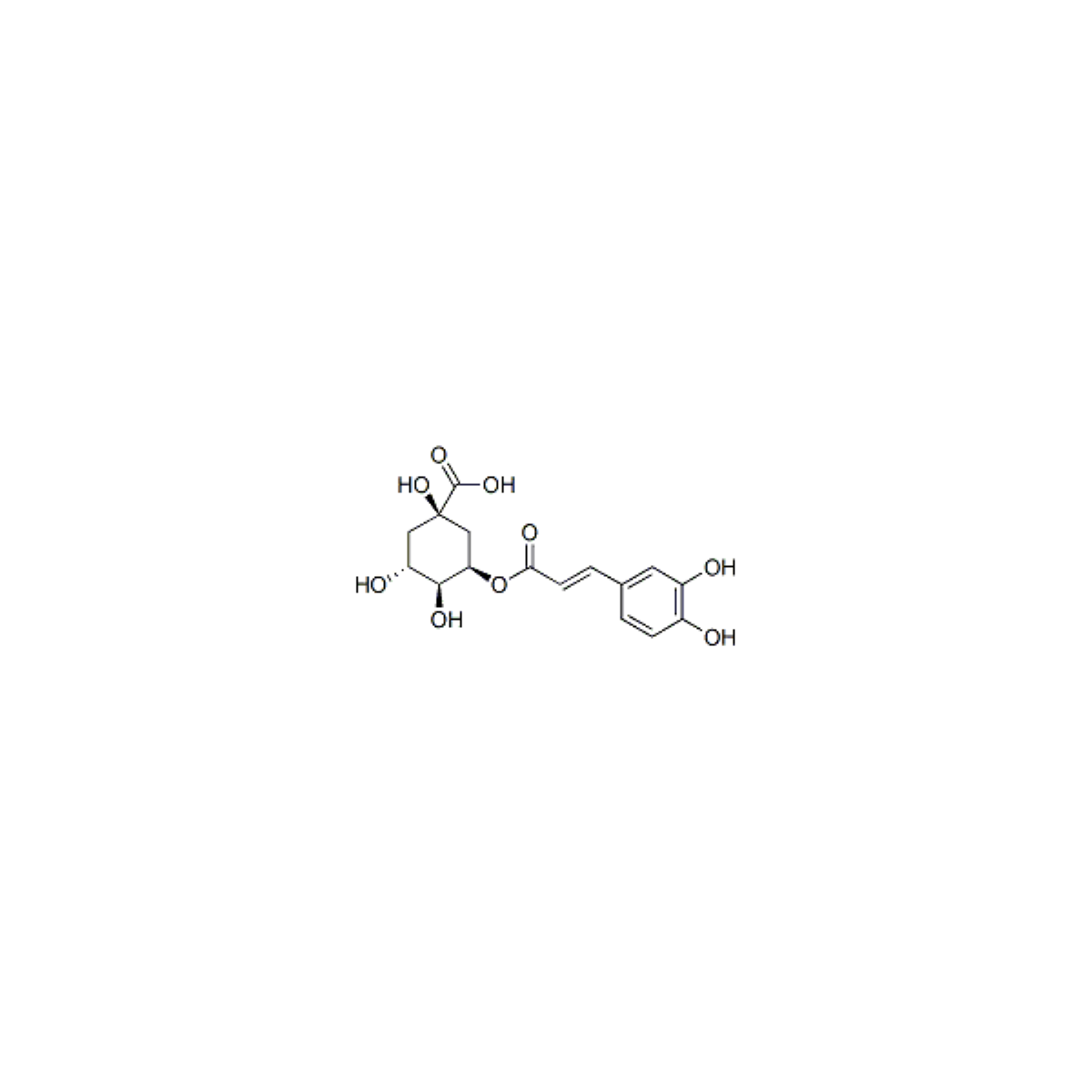
Neochlorogenic Acid
Product#: FNK-2400263
$751.33
Availability:
Ships in 1-2 Weeks
Neochlorogenic Acid
- CAT Number : FNK-2400263
- CAS Number : 906-33-2
- Molecular Weight : 354.3
- Molecular Formula : C16H18O9
- Pack size: 10 mg
- Store: Store at -20℃ in a dry and dark place.
- Purity: (HPLC) ≥98%
Neochlorogenic acid is a naturally occurring chlorogenic acid isomer found in various plants, particularly in coffee beans and some fruits. It is a phenolic compound with antioxidant properties.
Property
- Chemical Formula: C16H18O9
- Molecular Weight: 354.31 g/mol
- Appearance: Likely a white to off-white crystalline powder
- Solubility: Soluble in water and polar organic solvents
- Research: Used in studies investigating its antioxidant and biological activities
- Nutraceuticals: Potential ingredient in dietary supplements due to its health benefits
- Food Industry: May be used as a natural antioxidant in food products
- Analytical Standard: Used as a reference compound in coffee and plant extract analysis
- Storage: Store in a cool, dry place, protected from light
- Handling: Use appropriate personal protective equipment
- Safety Measures: For research use only; not for human consumption without proper testing and approval
- Liver Diseases
- NCA shows protective effects against liver disorders:
- - It attenuates hepatic lipid accumulation and improves nonalcoholic fatty liver disease (NAFLD) by downregulating miR-34a and activating the SIRT1/AMPK pathway.
- - NCA reduces the expression of lipogenesis-associated genes and increases the expression of fatty acid β-oxidation enzymes, helping to maintain lipid homeostasis in the liver.
- NCA shows protective effects against liver disorders:
- Cardiovascular Diseases
- The compound may have beneficial effects on heart health:
- - NCA's antioxidant properties could potentially protect against cardiovascular diseases by reducing oxidative stress.
- - It may help improve vascular health by inhibiting the adhesion and chemotaxis of neutrophils to vascular endothelial cells.
- Metabolic Disorders
- NCA shows promise in addressing metabolic issues:
- It has been studied for its effects on glucose metabolism, suggesting potential benefits for diabetes management.
- - NCA demonstrates hypolipidemic effects, which could be beneficial in treating obesity and related metabolic disorders.
- NCA shows promise in addressing metabolic issues:
- Neurological Diseases
- The neuroprotective properties of NCA may be beneficial for brain health:
- It has shown potential in protecting against neurodegenerative diseases like Alzheimer's and Parkinson's by reducing oxidative stress and neuroinflammation.
- NCA may cross the blood-brain barrier, exerting direct neuroprotective effects on brain tissue.
- The neuroprotective properties of NCA may be beneficial for brain health:
- Inflammatory Conditions
- NCA exhibits anti-inflammatory properties that could be beneficial in various inflammatory disorders:
- It has been shown to reduce the expression of inflammatory markers and inhibit inflammatory pathways.
- NCA exhibits anti-inflammatory properties that could be beneficial in various inflammatory disorders:
Cell Signaling Pathways Affected
- AMPK/Nrf2 Pathway
- nCGA activates the AMPK/Nrf2 signaling pathway, which plays a crucial role in combating oxidative stress and reducing inflammation. Specifically:
- nCGA increases the expression of HO-1 by activating the AMPK/Nrf2 pathway
- This activation leads to increased production of antioxidant enzymes
- The protective effects of nCGA can be reversed by AMPK inhibitors, highlighting the importance of this pathway
- nCGA activates the AMPK/Nrf2 signaling pathway, which plays a crucial role in combating oxidative stress and reducing inflammation. Specifically:
- NF-κB Pathway
- nCGA inhibits the activation of the NF-κB signaling cascade, which is a key regulator of inflammatory responses:
- - It suppresses the phosphorylation of IKK, IκB, and p65 proteins
- - nCGA also inhibits the upstream TLR4/MyD88 signaling that leads to NF-κB activation
- - This inhibition results in reduced production of pro-inflammatory cytokines like TNF-α and IL-6
- nCGA inhibits the activation of the NF-κB signaling cascade, which is a key regulator of inflammatory responses:
- MAPK Pathway
- The MAPK signaling pathway, which includes ERK, p38, and JNK, is also modulated by nCGA[7]:
- nCGA inhibits the phosphorylation of ERK1/2, p38, and JNK
- This inhibition leads to reduced inflammatory responses and oxidative stress
- In cardiac injury models, nCGA's protective effects are linked to JNK pathway inhibition
- The MAPK signaling pathway, which includes ERK, p38, and JNK, is also modulated by nCGA[7]:
- Other Affected Pathways
- JAK-STAT Pathway: nCGA attenuates JAK-1 and STAT-1 phosphorylation, which are involved in inflammatory signaling
- PI3K/Akt Pathway: nCGA treatment decreases the levels of PI3K and phosphorylated Akt in certain cell types
- Ras/ERK Pathway: nCGA nullifies the OH-induced upregulation of Ras and phosphorylated ERK