

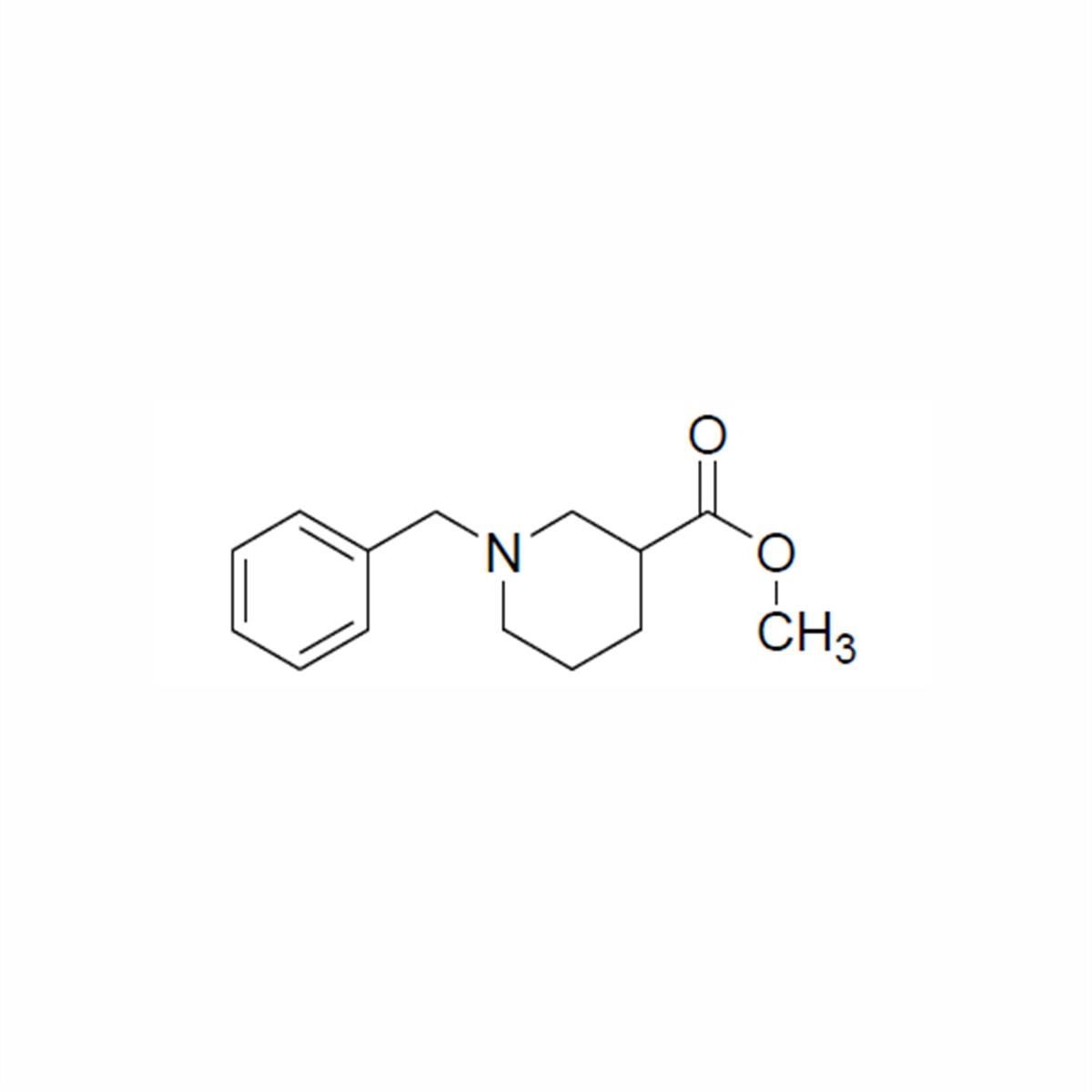
Methyl 1-benzylpiperidine-3-carboxylate
Product#: Gly-GMSM-119
$300.00
Availability:
Ships in 1-2 Weeks
Methyl 1-benzylpiperidine-3-carboxylate
- CAT Number : Gly-GMSM-119
- CAS Number : 50585-91-6
- Molecular Weight : 233.31
- Molecular Formula : C14H19NO2
- Pack size: 5 g
Methyl 1-benzylpiperidine-3-carboxylate is an organic compound with the molecular formula C14H19NO2. It is a methyl ester derivative of 1-benzylpiperidine-3-carboxylic acid.
Properties
- Molecular weight: 233.31 g/mol
- Chemical formula: C14H19NO2
- CAS Number: 50585-91-6
- Purity: ≥95-97%
- Used for laboratory research purposes
- Potential applications in pharmaceutical and chemical research
- Wear appropriate personal protective equipment
- Handle in a well-ventilated area
- Avoid skin contact, eye contact, and inhalation
- Store in a cool, dry place in a tightly closed container
6-Methoxy-2-methylquinoline-4-carboxylic acid and related quinoline carboxylic acid derivatives have shown potential in treating or affecting several diseases:
Cancer
Quinoline carboxylic acid compounds have demonstrated anti-cancer properties:
- Some 6-methoxy-2-arylquinoline analogues exhibited inhibitory effects against P-glycoprotein (P-gp), which is involved in multidrug resistance in cancer cells1.
- Compounds 5a and 5b, which are alcoholic quinoline derivatives, significantly inhibited P-gp efflux at 10 μM concentration1.
- These P-gp inhibitors were able to reverse multidrug resistance and increase the anticancer activity of daunorubicin in resistant cancer cell lines1.
Quinoline carboxylic acids have shown promise as potential antitubercular agents:
- 2-Arylquinoline 4-carboxylic acid (QCA) analogs were designed and synthesized as inhibitors of Mycobacterium tuberculosis2.
- Two QCA derivatives, 7i and 7m, demonstrated strong inhibitory activity against both replicating and non-replicating M. tuberculosis2.
- These compounds were found to inhibit M. tuberculosis DNA gyrase, suggesting a potential mechanism of action2.
Affected Cell Signaling Pathways
PI3K/AKT/mTOR Pathway
Quinoline compounds have shown inhibitory effects on the PI3K/AKT/mTOR signaling cascade, which regulates cell survival, proliferation, and metabolism2. This pathway is often dysregulated in cancer cells. Some key points:
- Several quinoline derivatives are currently in clinical trials as PI3K/mTOR inhibitors.
- Omipalisib, a quinoline compound, demonstrates potent inhibition of both PI3K and mTOR.
- This pathway is closely connected to cell survival processes like proliferation, apoptosis, and angiogenesis.
Some quinoline derivatives can inhibit components of the Ras/Raf/MEK/ERK signaling cascade2. This pathway is critical for cell proliferation and survival. Key findings include:
- Certain quinoline compounds can disrupt protein-protein interactions in this pathway.
- Some derivatives may stabilize Ras in its inactive state, halting downstream signaling.
Quinoline compounds have demonstrated effects on inflammatory signaling pathways4:
- They can attenuate NF-κB activity in lipopolysaccharide (LPS)-activated macrophages.
- Some derivatives suppress the phosphorylation of MAPKs (ERK, JNK, p38) in response to inflammatory stimuli.
- This leads to decreased production of inflammatory mediators like nitric oxide (NO), TNF-α, and IL-6.
