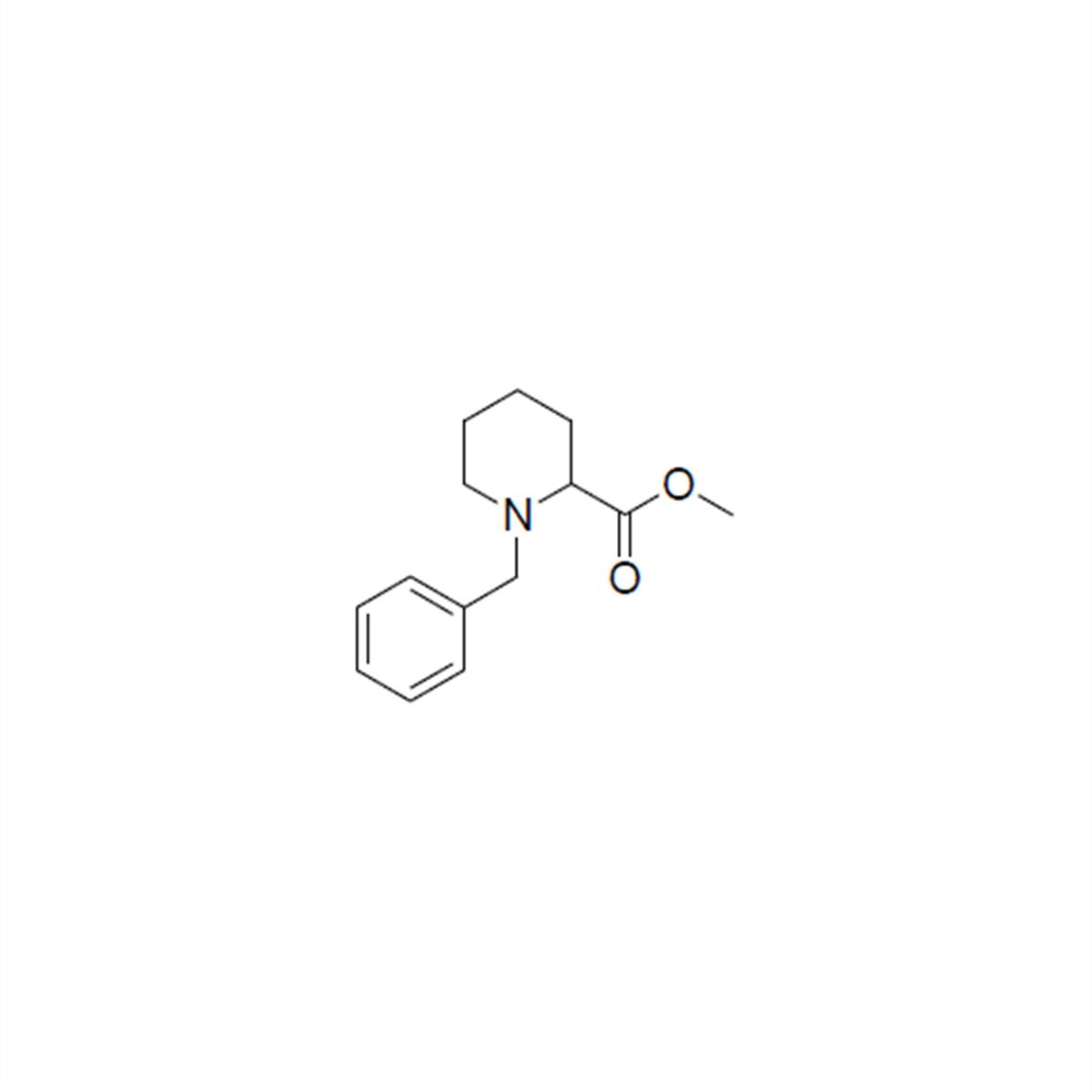
Methyl 1-benzylpiperidine-2-carboxylate
Product#: Gly-GMSM-105
$300.00
Availability:
Ships in 1-2 Weeks
Methyl 1-benzylpiperidine-2-carboxylate
- CAT Number : Gly-GMSM-105
- CAS Number : 124619-69-8
- Molecular Weight : 233.31
- Molecular Formula : C14H19NO2
- Pack size: 5 g
Methyl 1-benzylpiperidine-2-carboxylate is an organic compound with the chemical formula C14H19NO2 that is used as an intermediate in organic synthesis.
Properties:
- Pale yellow liquid at room temperature
- Molecular weight: 233.31 g/mol
- Boiling point: 310.8±35.0°C (predicted)
- Density: 1.093±0.06 g/cm³ (predicted)
- pKa: 7.62±0.10 (predicted)
- Used as an intermediate in the synthesis of various pharmaceutical compounds
- Potential use in research and development
- No direct commercial applications reported
- Avoid exposure through inhalation, skin contact, or ingestion
- Use appropriate personal protective equipment including gloves and fume hood
- Store refrigerated at 2-8°C
- Dispose of properly as chemical waste
- Avoid release to the environment
Neurodegenerative Disorders
Alzheimer's Disease
Derivatives of 1-benzylpiperidine have demonstrated potential as cholinesterase inhibitors for the treatment of Alzheimer's disease3. Specifically:
Compounds containing the 1-benzylpiperidine moiety have shown good inhibitory activity against acetylcholinesterase, a key enzyme target in Alzheimer's treatment3.
Novel N-benzylpiperidine carboxamide derivatives have been designed and synthesized as potential cholinesterase inhibitors3.
Some of these compounds, like 1-benzyl-N-(5,6-dimethoxy-8H-indeno[1,2-d]thiazol-2-yl)piperidine-4-carboxamide, have shown promising in vitro activity3.
These compounds also demonstrate potential for multi-target approaches in Alzheimer's treatment:
Some derivatives exhibit dual cholinesterase inhibition along with antiaggregatory and antioxidant effects1.
Certain compounds target multiple factors involved in Alzheimer's pathology, including amyloid beta and tau protein aggregation, and the beta secretase enzyme (BACE-1)1.
Cancer
Piperidine derivatives have shown relevance in various types of cancer:
- Non-Small Cell Lung Cancer
- Some piperidine-containing compounds have been designed as inhibitors of anaplastic lymphoma kinase (ALK) and c-ros oncogene 1 kinase (ROS1), which are implicated in non-small cell lung cancer1.
- Breast Cancer and Melanoma
- Certain piperidine derivatives have demonstrated significant activity against breast cancer cell lines and murine melanoma, with the ability to induce apoptosis1.
- Colorectal Cancer