

Lamda Protein Phosphatase (400 units/μl)
Product#: FNK-02-300
$109.64
Availability:
Ships in 1-2 Weeks
Lamda Protein Phosphatase (400 units/μl)
Cat. No. FNK-02-300
Size 20000 units (400U/ul)
Shipping and Storage Sent at 4℃ or -20℃ and store at -20℃. Do not freeze below -20℃
Description
Lambda Protein Phosphatase ( l-PPase) is a Mn2+-dependent protein phosphatase with activity towards phosphorylated serine, threonine and tyrosine residues. It is the 221 amino-acid product of the ORF221 open reading frame on bacteriophage lambda (1,2).
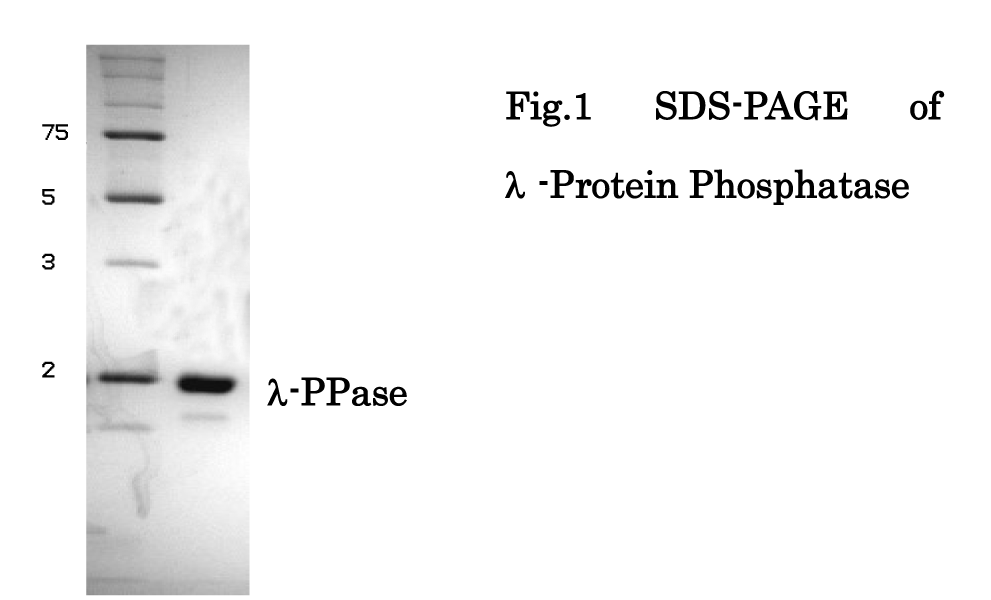
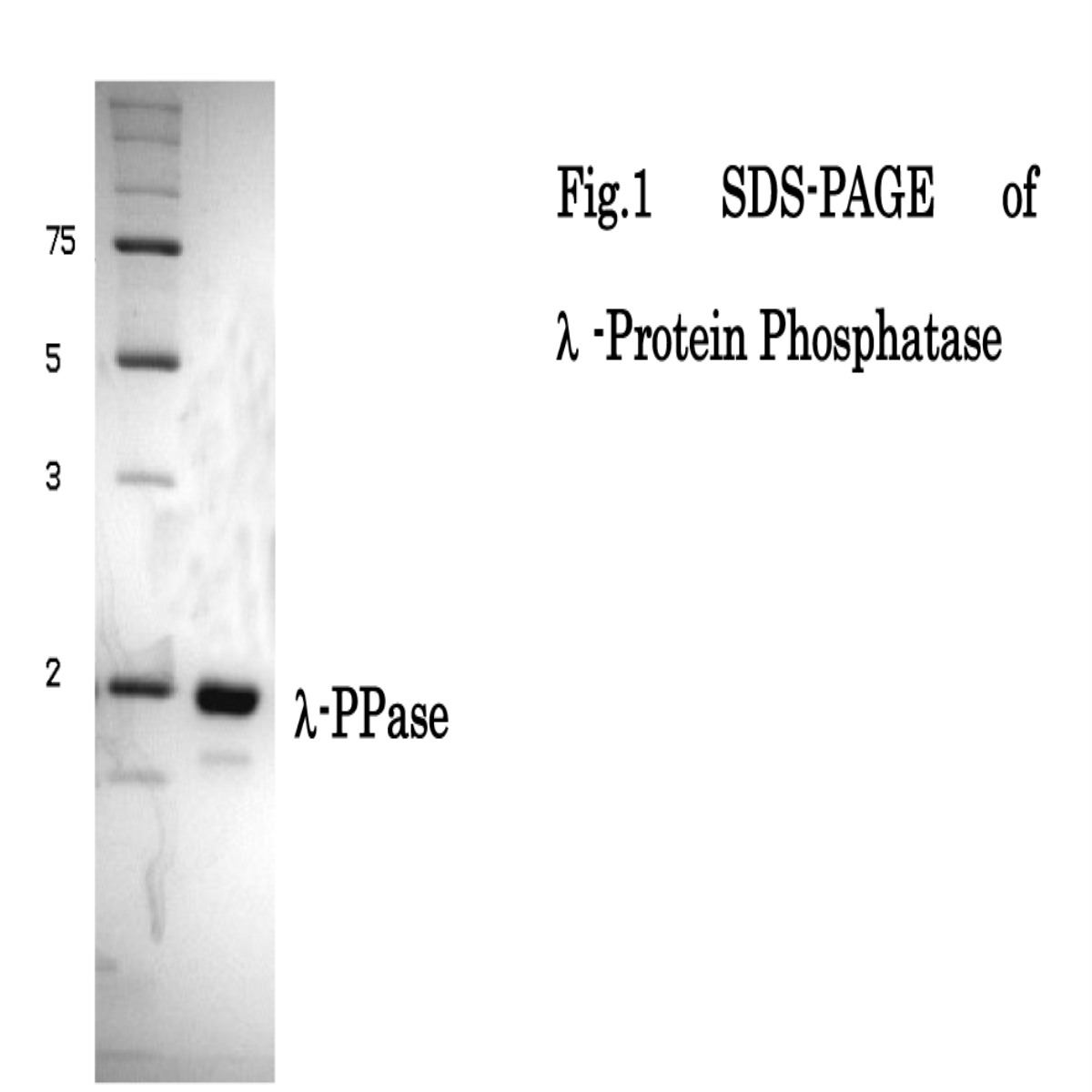
Functional full-length recombinant λProtein Phosphatase (λ-PPase) expressed in E.coli. It is a Mn+2-dependent protein phosphatase with activity towards phosphorylated serine, threonine, tyrosine and histidine residues. It is the 221 amino-acid product of ORF221 open reading frame on bacteriophage lambda (1, 2). This product is an intact enzyme of high quality without tag.
Applications
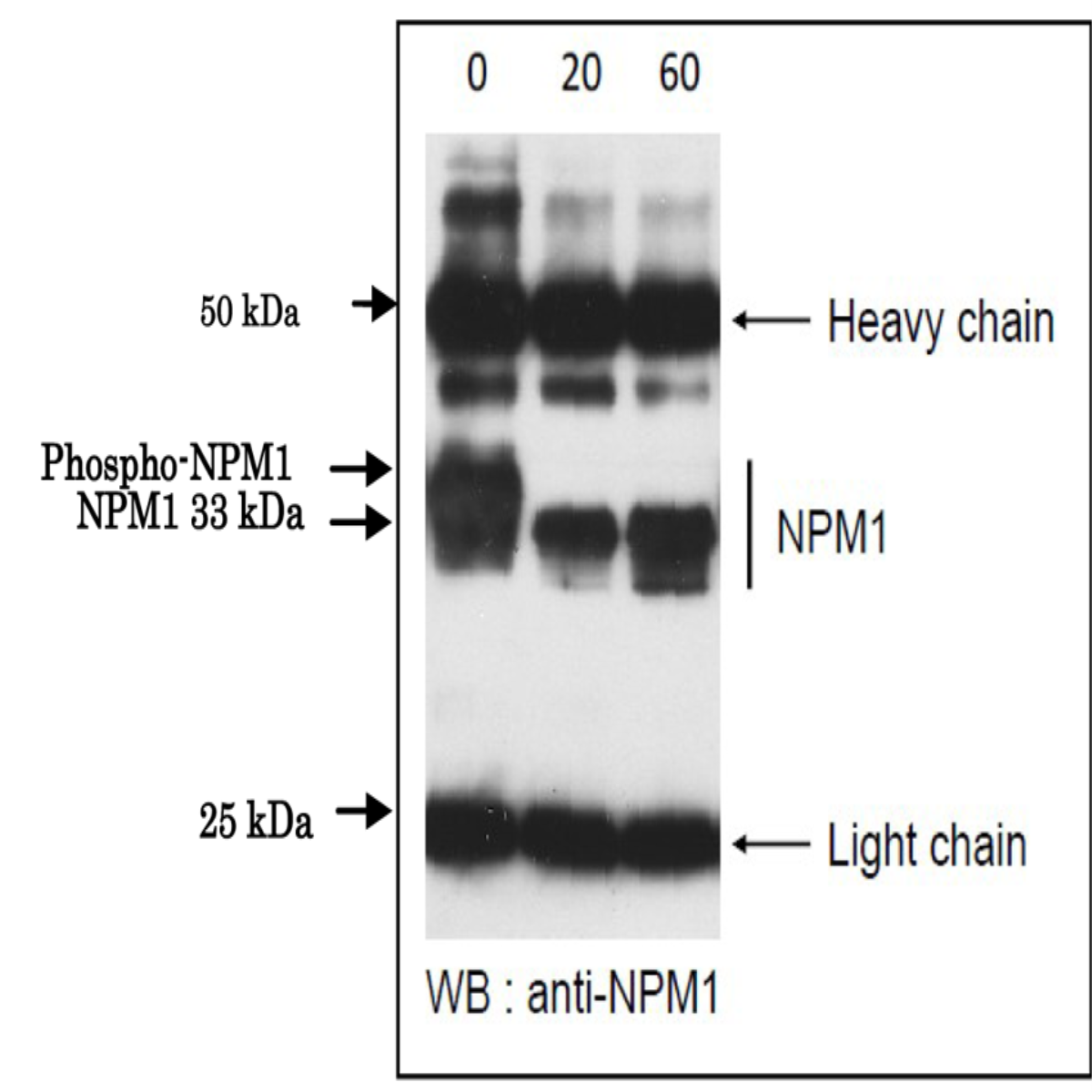
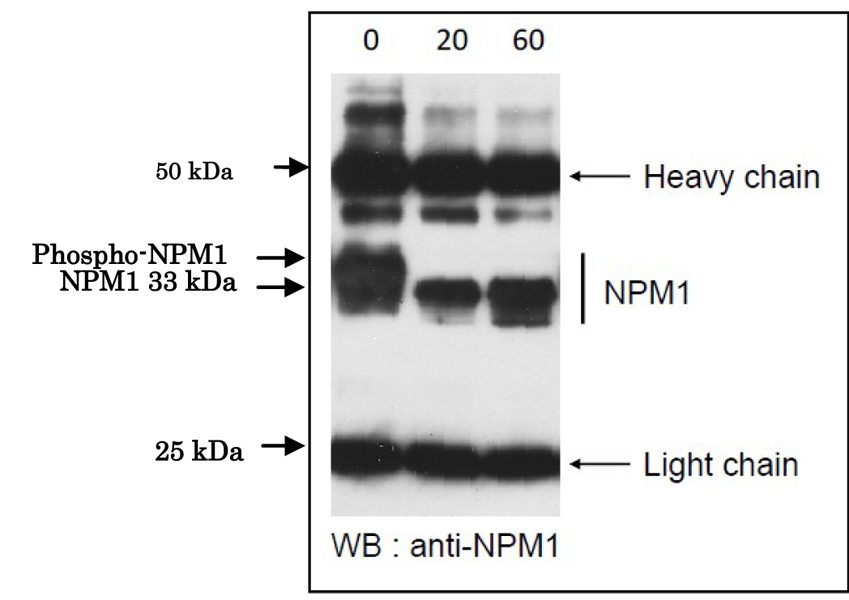
λ-PPase can be used to release phosphate groups from phosphorylated serine, threonine, tyrosine and histidine residues in proteins (2). It should be noted that different proteins are dephosphorylated at different rates. Optimal reaction temperature is 30℃. Inclusion of protease inhibitor cocktail and shortest incubation time is desired when assays are done with crude samples.
Form
400 U/ul λ-PPase in 50mM HEPES (pH 7.5), 100mM NaCl, 2mM dithiothreitol, 0.1 mM MnCl2, 0.1mM EDTA, 50% glycerol, 0.01% Brij 35.
Activity
400 U/ul, where one unit is defined as the amount of enzyme that hydrolyzes 1 nmole of p-nitrophenyl phosphate per minute at 30℃. Unit definition assays are performed with 50mM p-nitrophenyl phosphate in λ-PPase buffer, supplemented with 2 mM MnCl2 in a 50 ul reaction.
Specific Activity
~400,000 U/mg
Purity
Greater than 95% as determined by SDS-PAGE (CBB staining) that contains no detectable protease activity Reagents Supplied with
Enzyme
10 x λ-PPase Reaction Buffer: [500mM Tris-HCl (pH 7.6), 1M NaCl, 20mM dithiothreitol, 1mM EDTA, 0.1% Brij 35] 10 x Mn2+ (20 mM MnCl2)
Data Link
UniProtKB/Swiss-Prot P03772 (PP_LAMBD)
|
|
|
Reference
This product has been used in the following publications.
- Tomii S et al. Cortical Actin Alteration at the Matrix-Side Cytoplasm in Lung Adenocarcinoma Cells and Its Significance in Invasion. Pathobiology.2017; 84(4):171-183. PMID: 28002815
- Tojima T et al. Steering neuronal growth cones by shifting the imbalance between exocytosis and endocytosis. J Neurosci. 2014 May 21;34(21):7165-78. PMID: 24849351
- Moriyama T et al.SUMO-modification and elimination of the active DNA demethylation enzyme TDG in cultured human cells. Biochem Biophys Res Commun. 2014 May 9;447(3):419-24. PMID: PMID: 24727457
- Cohen PTW & Cohen P (1989) “Discovery of a protein phosphatase activity encoded in the genome of bacteriophage ?.” Biochem J. 260: 931-934 PMID: 2548489
- Zhuo S et al (1993) “Expression, purification, crystallization, and biochemical characterization of recombinant protein phosphatase.” J.Biol.Chem.268:17754-17761 PMID: 8394350
