Hyaluronan Binding Protein, Recombinant, [HABP]
Hyaluronan Binding Protein, Recombinant [HABP]
Cat. No. FNK-BC40
Store at -20°C, Store vial at -20℃ to -80℃. Avoid freeze / thaw cycles.
Size 200µl
Features & Usage
• Histochemistry and Cytochemistry.
• Detection of membrane-transferred hyaluronan,
• ELISA,
• hyaluronan purification with affinity column
Purpose of Use
For detection of the hyaluronan (HA)
Histochemistry and Cytochemistry
Detection of membrane-transferred hyaluronan
ELISA
Description
hyaluronan purification with affinity column Hyaluronan binding protein rHABP is produced by expression induced culturing in the presence of IPTG using E.coli BL21(DE3)RIL transfected with human versican G1-domain expression vector pRK172VG1. As compared with animal-derived HABP, the high biological safety is confirmed. rHAB doesn't bind to other Glycosaminoglycan and DNA and specifically detects the hyaluronan (HA).Biotin is attached to rHAB to make the biotin-HABP.
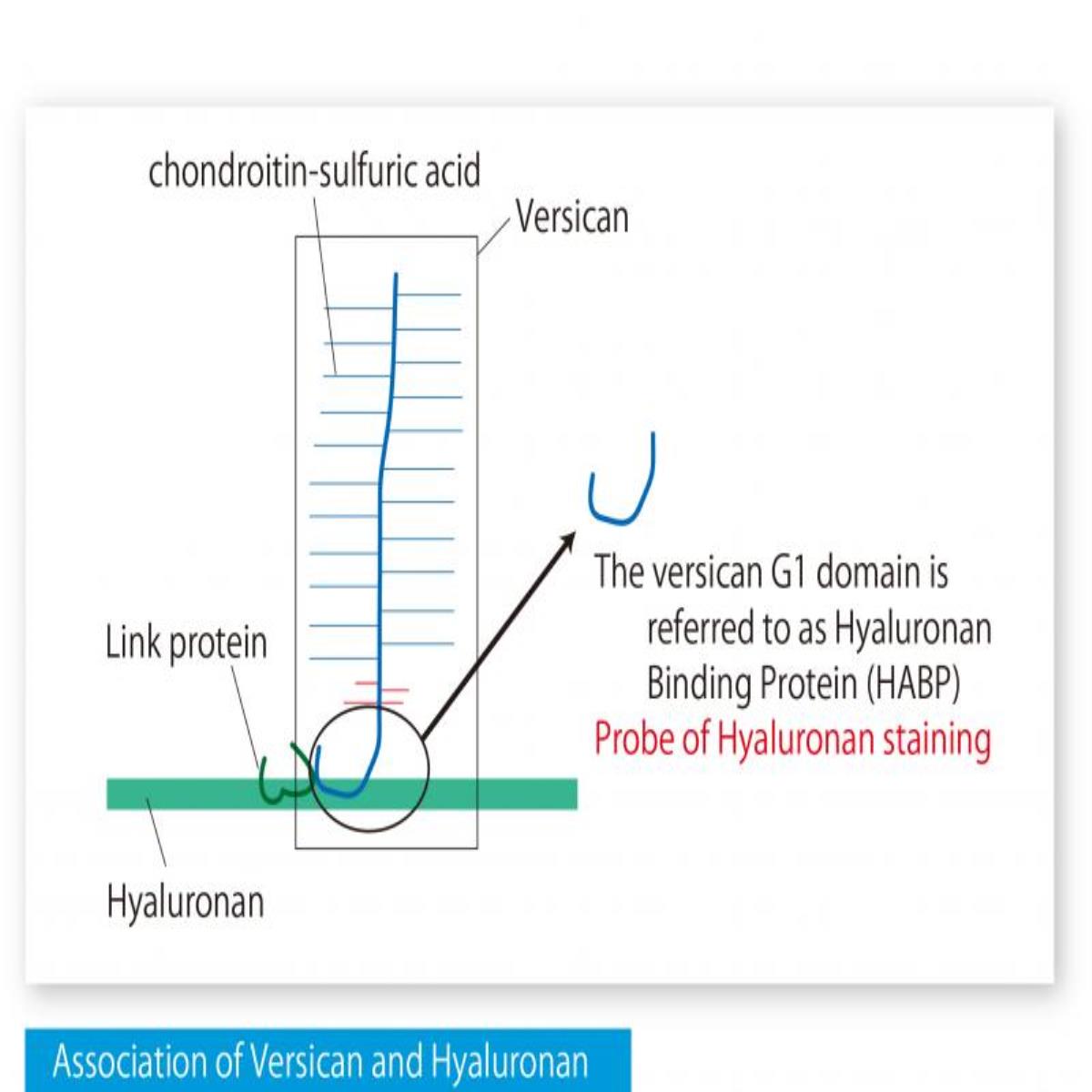
Versican G1 domain bind specifically to hyaluronan and doesn't bind to other glycosaminoglycan DNA.
Versican G1 domain can use probe for hyaluronan detection.
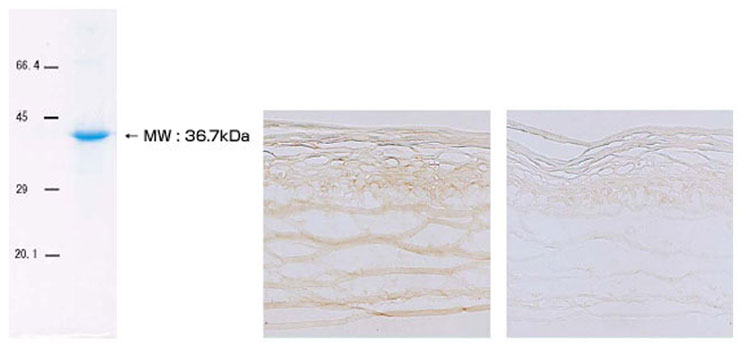
Sample : human skin rHABP.-biotin (Cat# HKD-BC41) 2ug / ml
Sourse
Buffer
Characterization
Applications
The optimal dilution for specific application should be determined by the investigator.
References
- Tengblad A. A comparative study of the binding of cartilage link protein and the hyaluronate-binding region of the cartilage proteoglycan to hyaluronate-substituted Sepharose gel. Biochem J.1981Nov;199(2):297-305.
- Tengblad A. Quantitative analysis of hyaluronate in nanogram amounts. Biochem J. 1980 Jan 1;185(1):101-5.