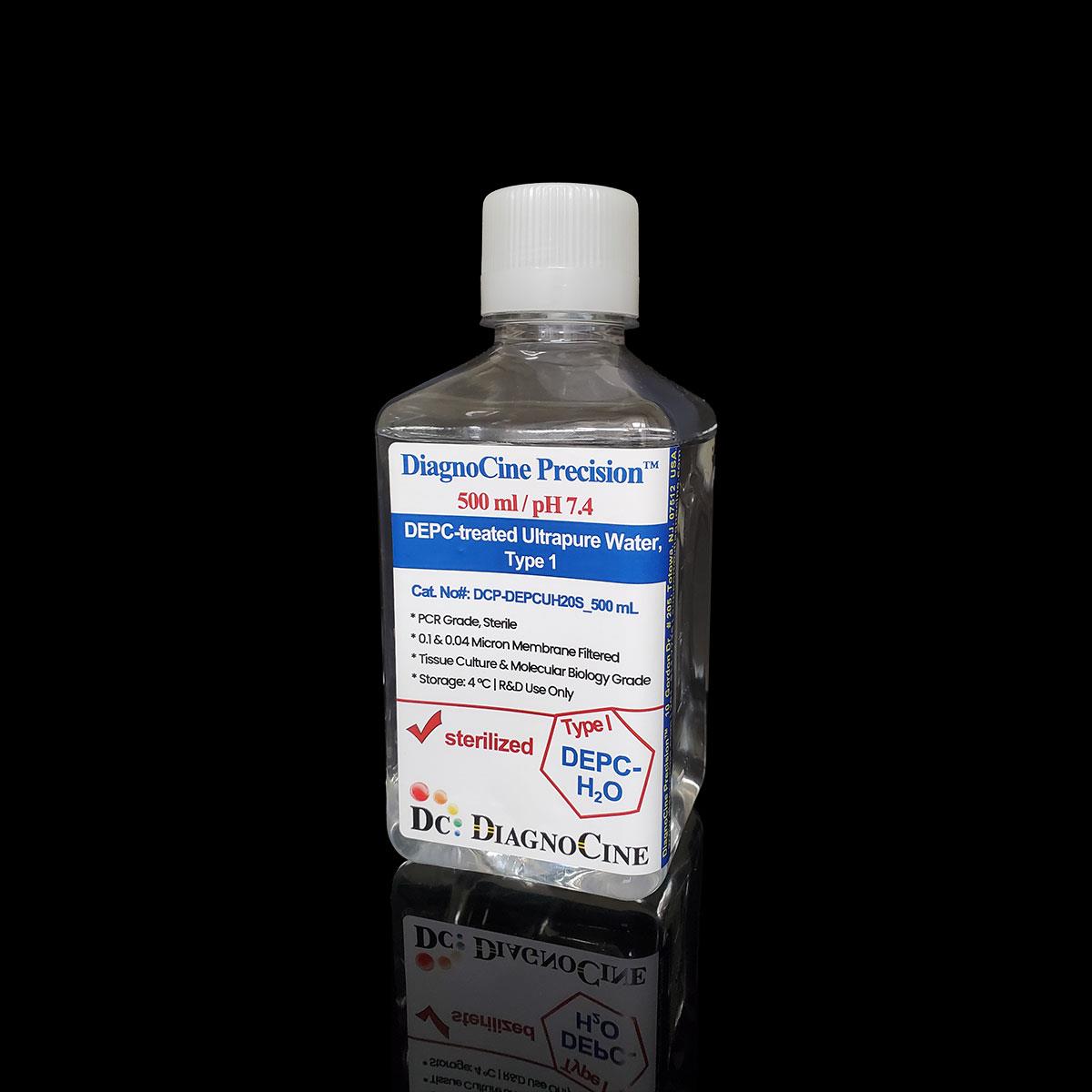
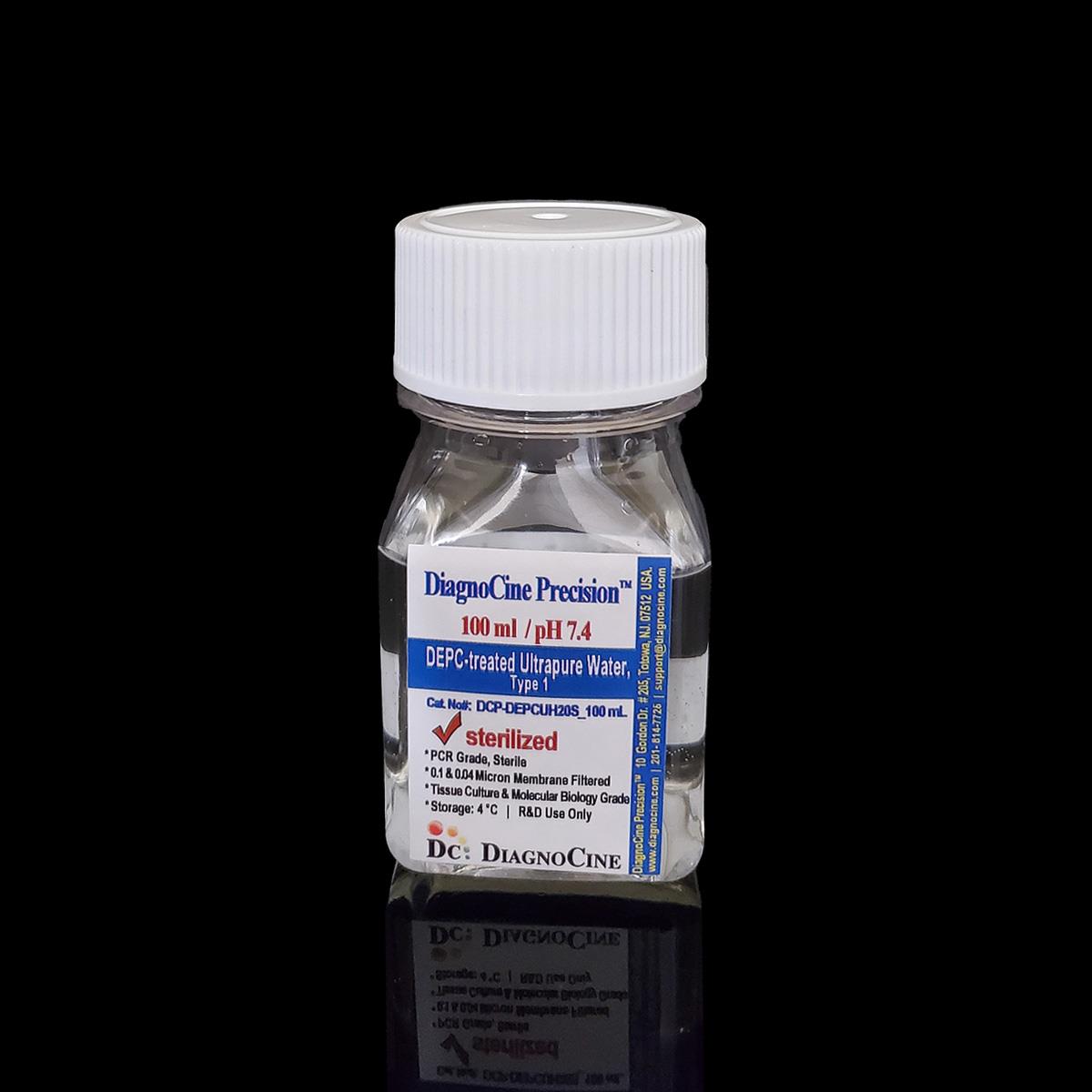
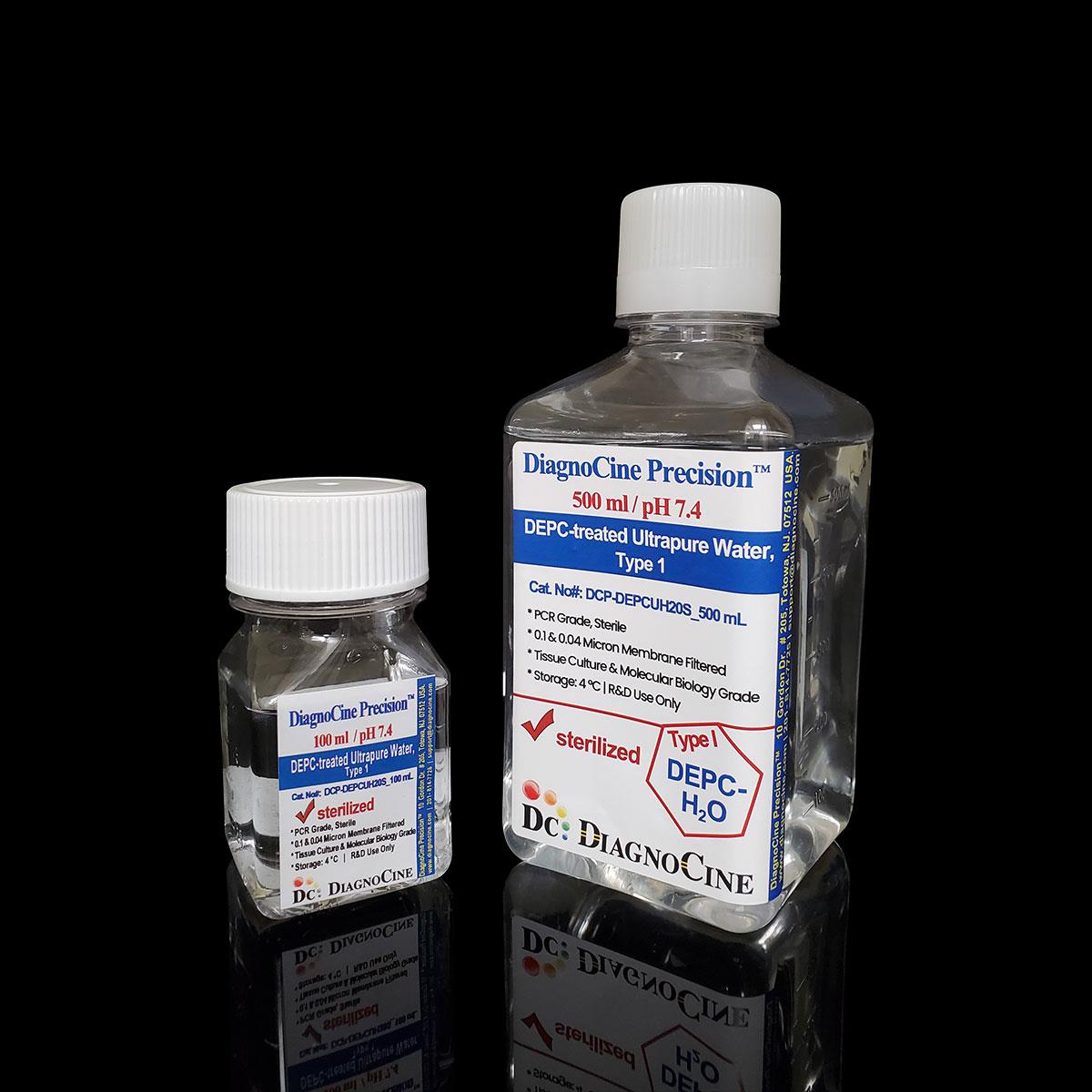
UltraClean DEPC treated Ultrapure Water, Type 1, Sterile
FluxMPS™ UltraClean DEPC-treated Ultrapure Water, Type 1, Sterile
An MPS-grade, DEPC-treated Ultrapure Type 1 water engineered for RNase-sensitive molecular biology workflows. Quadruple-stage filtered (0.1 µm membrane twice, 0.04 µm membrane twice) and formulated with 0.1% DEPC to inactivate RNase activity, this endotoxin-free, DNase/RNase-free water is built for microchannel-safe use in PCR, RT-PCR, qPCR, and organ-on-a-chip (OoC) sample preparation.
- Quadruple-stage filtration: 0.1 µm membrane (x2) + 0.04 µm membrane (x2)
- 0.1% DEPC treatment for RNase inactivation
- Endotoxin Free, DNase/RNase Free, Mycoplasma Free
- pH 7.4 (at 1X concentration)
- Built on Ultrapure Type 1 water
- ISO 13485-certified, CE-approved manufacturing
- Customizable pH, concentration, and additives on request
- pH (at 1X)7.4
- AppearanceClear, Colorless Liquid
- EndotoxinEndotoxin Free
- SterilityFiltered in a sterile environment
- Nuclease StatusDNase/RNase Free
- Mycoplasma StatusMycoplasma Free
- Filtration0.1 µm x2 + 0.04 µm x2
- Storage4 °C
- Shelf Life24 months
- Water QualityUltrapure Type 1, 18.2 MΩ·cm
Engineered where standard DEPC water falls short
DEPC (diethylpyrocarbonate) is a strong acylating agent that inactivates RNase enzymes in water through covalent modification of histidine residues, making DEPC-treated water a powerful, though not absolute, ribonuclease inhibitor. DEPC has additional documented activity - it inhibits ryanodine binding to the ryanodine/Ca2+ receptor channel in skeletal muscle in a dose-time dependent manner while increasing Ca2+ permeability of sarcoplasmic reticulum (SR) vesicles, inactivates nucleases during isolation of undegraded polynucleotides, inhibits platelet-activating factor (PAF) acetylhydrolase, and has served as a probe for the topography of 5.8S rRNA in yeast ribosomes. Conventional single-pass 0.22 µm-filtered DEPC water can carry residual subvisible particulate, inconsistent RNase inactivation, and endotoxin carryover that compromises RNA-sensitive assays and microfluidic channels.
Microchannel-safe purity
Final 0.04 µm polishing pass reduces subvisible particulate consistent with USP <788> expectations, protecting narrow microfluidic and chip-based flow paths.
Reliable RNase inactivation
Prepared with 0.1% DEPC treatment of Ultrapure Type 1 water followed by a full autoclave cycle, sufficiently eliminating RNase for downstream molecular applications.
Ultrapure-grade water
Built on Ultrapure Type 1 water (18.2 MΩ·cm), the same base water quality referenced in USP <85> purity practices.
Low background for RNA workflows
Endotoxin-free, DNase/RNase-free, and Mycoplasma-free status supports low-background PCR, RT-PCR, and qPCR reactions.
Defined, traceable composition
Prepared from 0.1% DEPC added to Ultrapure Type 1 water, with all packaging, QA, and testing performed at the DiagnoCine R&D and Quality Testing Center.
Customization on demand
Other concentrations, additions of chemicals, compounds, proteins, supplements, different pH, and modifications are available - contact support@diagnocine.com.
Quadruple-stage filtration system
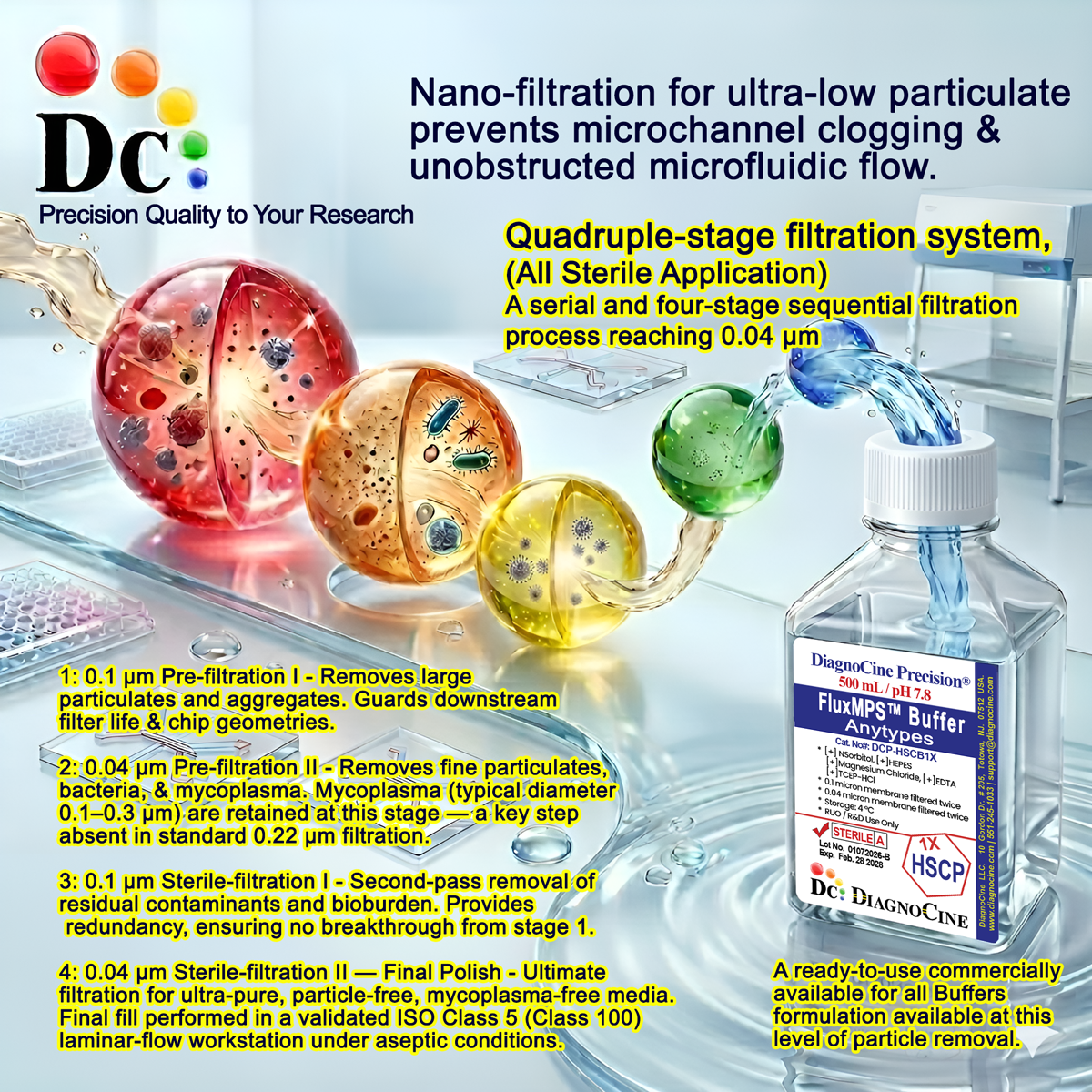
This water is filtered through a 0.1 µm membrane twice and a 0.04 µm membrane twice before DEPC treatment and a full autoclave cycle, giving a four-stage purity architecture suited to RNase-sensitive and microfluidic-scale applications.
-
1
0.1 µm Pre-filtration I
First 0.1 µm membrane pass removes larger particulate and aggregates ahead of downstream processing.
-
2
0.04 µm Pre-filtration II
First 0.04 µm membrane pass retains finer particulates and bioburden ahead of sterile-filtration.
-
3
0.1 µm Sterile-filtration I
Second 0.1 µm membrane pass provides redundancy ahead of final polishing.
-
4
0.04 µm Sterile-filtration II - Final Polish
Second 0.04 µm membrane pass provides the final polish; a 0.04 µm (40 nanometer) pass is finer than the smallest mycoplasma types, which are approximately 0.2 microns, helping prevent mycoplasma contamination.
Performance vs. conventional DEPC water
Sequential 0.1 µm and 0.04 µm filtration, applied twice each, removes finer particulates than a single-pass 0.22 µm filtration commonly used for conventional DEPC-treated water.
© Diagnocine® - DCP-DEPCUH20S
Where DCP-DEPCUH20S performs
DEPC-treated Ultrapure Type 1 water is highly recommended for PCR, RT-PCR, and qPCR, and is broadly applicable anywhere RNase-free, nuclease-free water is required for RNA-sensitive sample preparation, including microfluidic and organ-on-a-chip workflows.
Automated Bioreactors & Robotics
For automated bioreactor and robotic liquid-handling platforms, an optional 0.01 µm (10 nm) ultra-filtered variant of this DEPC-treated water is available, providing an additional polishing step beyond the standard 0.04 µm stage for systems with narrow valves and sensor lines.
- Total Particulate Exclusion for automated fluidic paths
- Valve & Sensor Protection in robotic liquid handlers
- Extended Perfusion Stability in continuous-flow systems
Inquiry Required: the 0.01 µm (10 nm) ultra-filtered grade is available upon request - contact support@diagnocine.com.
Micro Physiological System (MPS) & Chip
RNase-free water for on-chip nucleic acid workflows and reagent dilution in microfluidic devices.
Wash, Dilution & Reconstitution
DEPC-treated water for RNase-free lysis, dilution, and reconstitution steps ahead of PCR, RT-PCR, and qPCR.
iPSC-Derived Model Handling
Nuclease-free water for RNA work in iPSC-derived model preparation and downstream expression analysis.
Endothelial & Primary Cell Perfusion
Endotoxin-free water for reagent preparation in endothelial and primary cell RNA studies.
ELISA, Blotting & Blocking
Ultrapure, RNase-free water for buffer and reagent preparation in immunoassay and blotting workflows.
Microscopy & Optical Sensing
Low-particulate, low-endotoxin water for probe dilution and reagent prep in imaging and biosensor workflows.
Specifications at a glance
Measured and declared parameters for DCP-DEPCUH20S, as stated in the product's quality control record.
| Parameter | Specification |
|---|---|
| Formulation / Composition | 0.1% DEPC in Ultrapure Type 1 Water |
| Appearance | Clear, Colorless Liquid |
| pH (USP <791>, at 1X concentration)USP | 7.4 |
| Parameter | Specification |
|---|---|
| Endotoxin (USP <85> BET)USP | Endotoxin Free |
| Sterility (USP <71>)USP | Filtered in a sterile environment |
| Nuclease Status | DNase/RNase Free |
| Mycoplasma Status | Mycoplasma Free |
| Water Quality | Ultrapure Type 1 Water, 18.2 MΩ·cm |
| Manufacturing StandardISO | ISO 13485-certified, CE-approved |
| Fill Environment | ISO Class 5 (Class 100) |
| Parameter | Specification |
|---|---|
| Storage Temperature | 4 °C |
| Shelf Life | 24 months |
| Parameter | Specification |
|---|---|
| Raw Material Grade | Ultrapure Type 1 Water, molecular biology grade DEPC |
| Traceability | Packaged, QA, and tested at the DiagnoCine R&D and Quality Testing Center; customization assembled at DiagnoCine Precision, Totowa, New Jersey, USA |
| Manufacturing QMSISO | ISO 13485-certified |
| Regulatory Alignment | CE-approved |
| Production Method | 0.1% DEPC added to Ultrapure Type 1 water, filtered 0.1 µm membrane twice and 0.04 µm membrane twice, then fully autoclaved |
| Intended Use | Research Use Only; PCR, RT-PCR, qPCR |
Full composition
DCP-DEPCUH20S is prepared by adding 0.1% DEPC to Ultrapure Type 1 water, followed by a full autoclave cycle to sufficiently eliminate RNase activity.
| Component | CAS Number | Concentration |
|---|---|---|
| DEPC (Diethylpyrocarbonate) | 1609-47-8 | 0.1% |
| Ultrapure Type 1 Water | 7732-18-5 | To volume |
Manufacturing & compliance
DCP-DEPCUH20S is manufactured under ISO 13485-certified and CE-approved facilities of DiagnoCine Precision, with final packaging, quality assurance, and testing performed at the DiagnoCine R&D and Quality Testing Center, and specific customization and assembly completed at DiagnoCine Precision in Totowa, New Jersey, USA.
ISO 13485:2016 QMS
Manufactured under an ISO 13485-certified quality management system.
Ultrapure Type 1 Water
Base water quality of 18.2 MΩ·cm consistent with Type 1 ultrapure standards.
ISO Class 5 Fill & Finish
Aseptic fill environment supporting sterile, low-particulate packaging.
Micro-Batch Precision
Customization requests and assembly completed at DiagnoCine Precision, Totowa, New Jersey, USA.
Endotoxin - USP <85> BET
Endotoxin Free.
Particulate - USP <788> Method 2
Quadruple-stage filtration (0.1 µm x2, 0.04 µm x2) supports low subvisible particulate.
Sterility - USP <71>
Filtered in a sterile environment.
Documentation / CoA
Certificate of Analysis available upon request.
How DCP-DEPCUH20S compares
A side-by-side view of DCP-DEPCUH20S against conventional single-pass filtered DEPC water and a standard 0.22 µm-filtered alternative.
| Parameter | DCP-DEPCUH20S (FluxMPS™) | Conventional 0.22 µm-Filtered DEPC Water | Standard Alternative (0.22 µm Filtered) |
|---|---|---|---|
| DEPC RNase Inactivation | check_circle | check_circle | cancel |
| Final Filtration Pore Size | 0.04 µm (dual pass) | 0.22 µm (single pass) | 0.22 µm (single pass) |
| Number of Filtration Stages | 4 | 1 | 1 |
| Endotoxin Free | check_circle | check_circle | cancel |
| USP Particulate Compliance | check_circle | cancel | cancel |
| Ultrapure Type 1 Water Base | check_circle | check_circle | cancel |
| Manufacturing QMS (ISO 13485) | check_circle | cancel | cancel |
| Microfluidic / PCR Channel Compatibility | check_circle | cancel | cancel |
| Custom Formulation Available | check_circle | cancel | cancel |
Frequently asked questions
Common questions about DCP-DEPCUH20S UltraClean DEPC-treated Ultrapure Water, Type 1, Sterile.
Supporting literature
Curated literature relevant to DEPC-treated water, RNase inhibition, ultrapure water quality, and microfluidic/organ-on-a-chip applications.
- Bhat P, et al. Organs-on-chips: a primer for microfluidic device fabrication and application. Lab Chip. 2016.doi:10.1039/C6LC00450D
- Solomon EI, et al. Diethylpyrocarbonate as an inhibitor of ribonuclease and other enzymes. Biochim Biophys Acta. 1976.doi:10.1016/0005-2744(76)90042-1
- Wolf B, et al. Diethylpyrocarbonate: a probe for histidine and other residues in proteins and nucleic acids. Methods Enzymol. 1970.doi:10.1016/0076-6879(77)46018-9
- Rees WA, et al. Behavior of diethyl pyrocarbonate as a probe for RNA secondary structure. Biochemistry. 1993.doi:10.1021/bi00071a017
- Green AR, et al. Effect of DEPC on ryanodine receptor calcium release channels. Biochem J. 1998.doi:10.1042/bj3290209
- Egner U, et al. Inhibition of platelet-activating factor acetylhydrolase by diethylpyrocarbonate. FEBS Lett. 1987.doi:10.1016/0014-5793(87)80392-2
- Peattie DA. Direct chemical method for sequencing RNA. Proc Natl Acad Sci USA. 1979.doi:10.1073/pnas.76.4.1760
- McKenzie R. Endotoxin testing for pharmaceutical and biotechnology products - USP <85> overview. Am Pharm Rev. 2015.doi:10.1002/jps.24329
- Razin S, et al. Molecular biology and pathogenicity of mycoplasmas. Microbiol Mol Biol Rev. 1998.doi:10.1128/MMBR.62.4.1094-1156.1998
- Sackmann EK, et al. The present and future role of microfluidics in biomedical research. Nature. 2014.doi:10.1038/nature13118