UltraClean DEPC Treated TE Buffer, 1X
FluxMPS™ UltraClean DEPC Treated TE Buffer, 1X
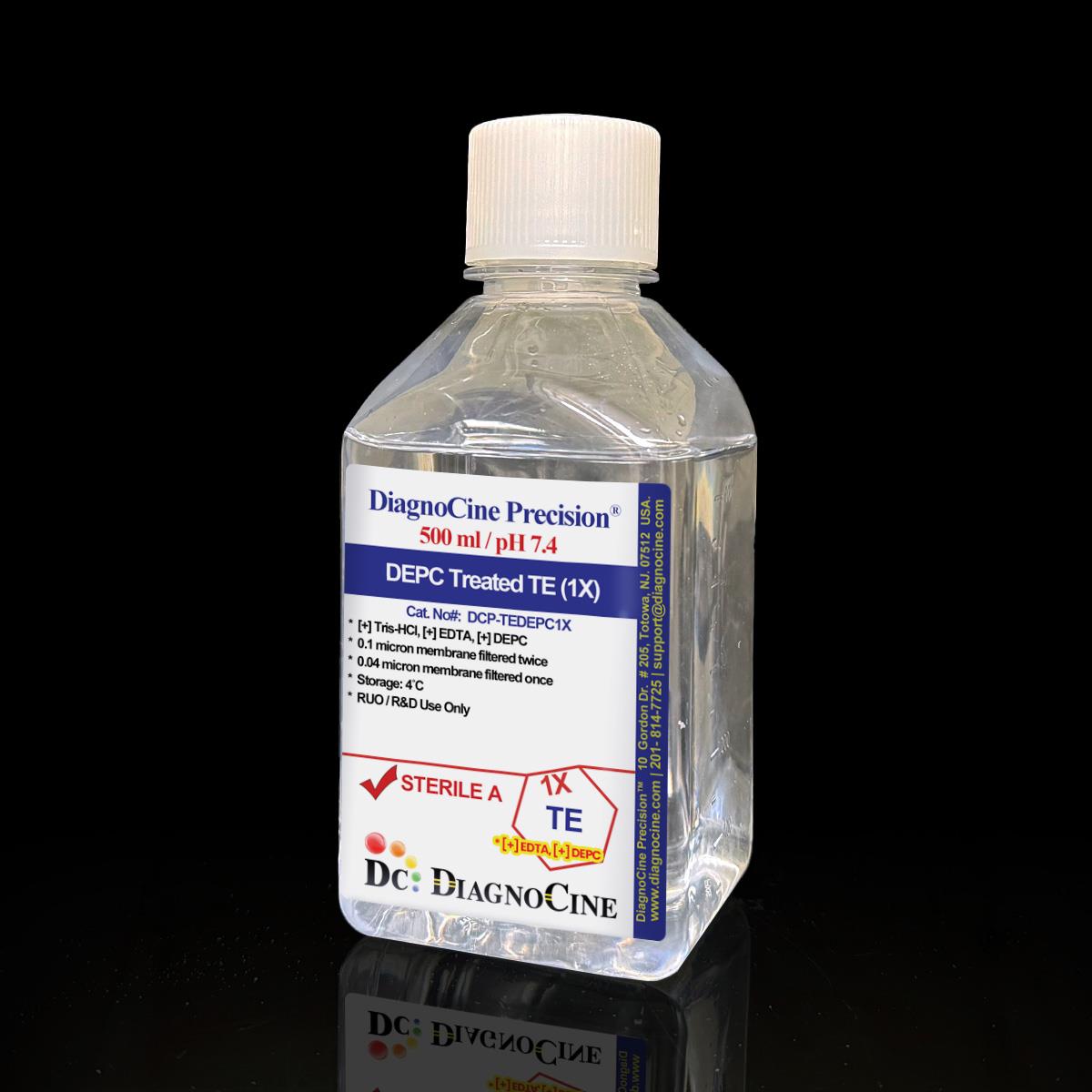
An MPS-grade, nuclease-free Tris-EDTA (TE) buffer treated with diethyl pyrocarbonate (DEPC) for the safe storage and handling of RNA and DNA. Quadruple-stage 0.1 µm / 0.04 µm filtration and DEPC inactivation of RNase/DNase deliver an ultra-clean, sterile, ready-to-use 1X solution built for demanding molecular biology and microfluidic nucleic-acid workflows.
- Filtered 0.1 µm membrane twice and 0.04 µm membrane twice for a quadruple-stage purity architecture
- DEPC-treated, nuclease-free formulation eliminates RNase and DNase activity
- Stable pH 7.4 Tris-EDTA buffering system protects nucleic acid integrity
- Sterile, aseptically filtered, ready-to-use 1X solution
- Formulated with ultrapure Type 1 water (18.2 MΩ·cm), DEPC-treated and nuclease-free
- Manufactured under ISO 13485-certified, CE-approved facilities
- Suited to RNA/DNA workflows in microfluidic and organ-on-a-chip (OoC) sample handling
- Custom concentrations, pH, and additive formulations available on request
- pH7.4
- Tris-HCl10 mM
- EDTA1.0 mM
- Nuclease ActivityNone detected (DEPC-treated)
- Filtration0.1 µm x2 + 0.04 µm x2
- SterilitySterile, aseptically filtered
- Water QualityDEPC-treated, nuclease-free
- Storage4°C
- Shelf Life24 months
- ManufacturingISO 13485 / CE-approved
Engineered where standard TE buffer falls short
Conventional 0.22 µm-filtered TE buffer can carry subvisible particulates, residual RNase/DNase activity, and pH drift that compromise nucleic acid integrity, downstream PCR/qPCR results, and microfluidic channel performance. FluxMPS™ UltraClean DEPC Treated TE Buffer is built to remove these failure points at the source.
Microchannel-safe purity
A 0.04 µm final-polish filtration stage, applied as part of a quadruple-stage process, is designed in alignment with USP <788> particulate matter control principles for microfluidic and channel-based systems.
Precise, stable pH
Buffered at pH 7.4 using a Tris-HCl / EDTA chemistry that maintains a consistent pH and preserves nucleic acid integrity during storage and experimental use.
Ultrapure-grade water
Formulated with DEPC-treated, nuclease-free water and ultrapure reagents, consistent with Ultrapure Type 1 water (18.2 MΩ·cm) and USP <85> quality expectations.
Low background for nucleic acid workflows
Nuclease-free chemistry protects sensitive RNA and DNA samples from enzymatic degradation, supporting clean results in PCR, qPCR, and quantification workflows.
Defined, traceable composition
A simple, defined formulation of Tris-HCl (10 mM) and EDTA (1.0 mM) in DEPC-treated, nuclease-free water — supplied ready-to-use as a 1X solution.
Customization on demand
Alternate concentrations, additional chemicals, compounds, proteins, or supplements, different pH, and other modifications are available — contact support@diagnocine.com.
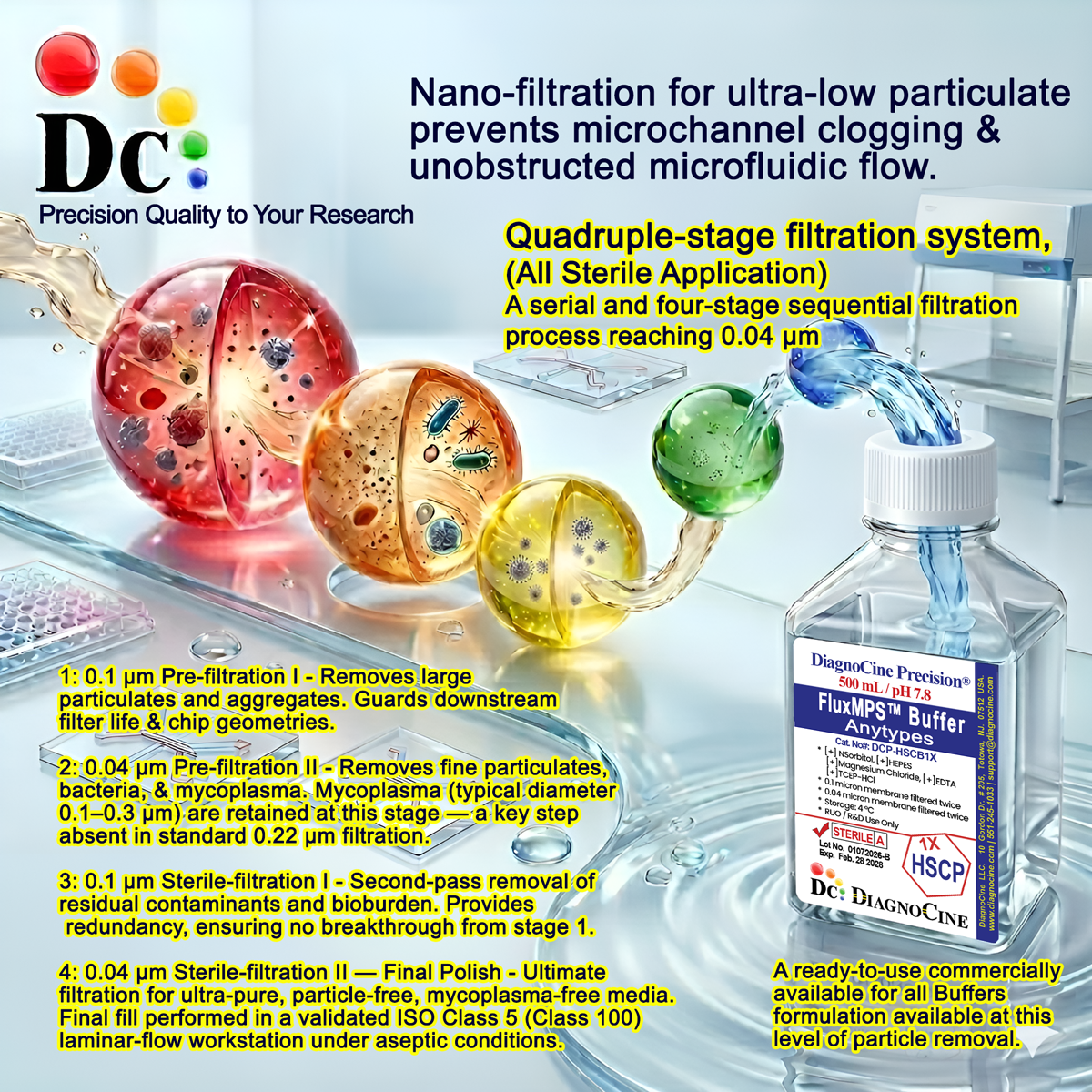
Quadruple-stage filtration system
UltraClean DEPC Treated TE Buffer is filtered through a 0.1 µm membrane twice and a 0.04 µm membrane twice, providing sequential coarse-to-fine particulate removal beyond a single conventional filtration pass.
- 1
0.1 µm Pre-filtration I
First 0.1 µm pass removes large particulates and aggregates, extending downstream filter life.
- 2
0.04 µm Pre-filtration II
First 0.04 µm pass retains fine particulates and bioburden ahead of final sterile filtration.
- 3
0.1 µm Sterile-filtration I
Second 0.1 µm pass provides redundant particulate reduction ahead of final polishing.
- 4
0.04 µm Sterile-filtration II — Final Polish
Second 0.04 µm pass delivers the final aseptic polish supporting mycoplasma contamination prevention; the smallest known mycoplasma organisms are about 0.2 micron.
Performance vs. conventional buffer
Sequential 0.1 µm and 0.04 µm filtration, each applied twice, removes finer particulates than a single conventional 0.22 µm pass, while DEPC treatment inactivates residual RNase and DNase activity for cleaner nucleic acid storage and handling.
© Diagnocine® — DCP-TEDEPC1X
Where UltraClean DEPC Treated TE Buffer is used
Designed for RNA and DNA storage and handling, PCR/qPCR preparation, mRNA purification and quantification, cDNA synthesis, and general molecular biology, with a purity profile suited to microfluidic and organ-on-a-chip nucleic-acid sample handling.
Automated Bioreactors & Robotics
For automated liquid-handling, robotics, and closed bioreactor platforms where the finest particulate control is critical, an optional 0.01 µm (10 nm) ultra-filtered variant of this buffer is available.
- Total Particulate Exclusion — supports the lowest particulate burden for sensitive automated systems
- Valve & Sensor Protection — helps protect fine-bore valves, sensors, and microfluidic components from fouling
- Extended Perfusion Stability — supports longer uninterrupted run times in automated and perfusion-based workflows
Inquiry Required: the 0.01 µm (10 nm) ultra-filtered grade is available on request — contact support@diagnocine.com.
Micro Physiological System (MPS) & Chip
Nuclease-free buffer for nucleic acid handling in microfluidic and chip-based platforms.
Wash, Dilution & Reconstitution
Supports safe storage, dilution, and reconstitution of RNA and DNA samples.
iPSC-Derived Model Handling
Nuclease-free TE buffer for nucleic acid workflows in iPSC-derived model systems.
Endothelial & Primary Cell Perfusion
Compatible with nucleic acid workflows supporting primary and endothelial cell studies.
ELISA, Blotting & Blocking
Nuclease-free, low-contamination buffer suited to sample prep supporting downstream assay workflows.
Microscopy & Optical Sensing
Low-particulate formulation supports clean sample handling ahead of imaging and biosensor workflows.
Full technical specifications
Values below reflect this product's stated formulation, quality control, and manufacturing parameters.
| Parameter | Specification |
|---|---|
| Formulation | Tris-HCl, EDTA, DEPC-treated nuclease-free water to volume |
| Appearance | Colorless, clear solution |
| pH USP <791> | 7.4 |
| Tris-HCl Concentration | 10 mM |
| EDTA Concentration | 1.0 mM |
| Parameter | Specification |
|---|---|
| Sterility USP <71> | Sterile, aseptically filtered |
| Nuclease Activity | None detected (DEPC-treated) |
| Water Quality | DEPC-treated, nuclease-free; Ultrapure Type 1 water (18.2 MΩ·cm) |
| Filtration System | 0.1 µm membrane (twice) and 0.04 µm membrane (twice) |
| Manufacturing Standard ISO 13485 | ISO 13485-certified, CE-approved facilities |
| Fill Environment | ISO Class 5 (Class 100) aseptic fill |
| Parameter | Specification |
|---|---|
| Storage Temperature | 4°C |
| Shelf Life | 24 months |
| Use Restriction | Use before expiry date on product label |
| pH Stability | Maintained via Tris buffering system |
| Parameter | Specification |
|---|---|
| Raw Material Grade | Ultrapure reagents, DEPC-treated nuclease-free water |
| Traceability | QA and testing performed at DiagnoCine R&D and Quality Testing Center |
| Manufacturing QMS | ISO 13485:2016 |
| Regulatory Alignment | CE-approved manufacturing facilities |
| Production Method | DEPC treatment; aseptic 0.04 µm filtration; custom assembly at DiagnoCine Precision, Totowa, New Jersey, USA |
| Intended Use | Research Use Only (RUO) |
Full composition
UltraClean DEPC Treated TE Buffer is a defined Tris-EDTA system prepared in DEPC-treated, nuclease-free water.
| Component | CAS Number | Concentration |
|---|---|---|
| Tris-HCl | 1185-53-1 | 10 mM |
| EDTA | 60-00-4 | 1.0 mM |
| Water (DEPC-treated, nuclease-free) | 7732-18-5 | To volume |
Manufacturing & compliance
Manufactured under ISO 13485-certified and CE-approved facilities, with final packaging, quality assurance, and testing performed at the DiagnoCine R&D and Quality Testing Center.
ISO 13485:2016 QMS
Manufactured under ISO 13485-certified, CE-approved facilities.
Ultrapure, DEPC-Treated Water
Formulated with DEPC-treated, nuclease-free water and ultrapure reagents.
ISO Class 5 Fill & Finish
Aseptic fill supports the sterile, ready-to-use 1X buffer format.
Custom Assembly Precision
Specific customization requests and assembly are completed at DiagnoCine Precision in Totowa, New Jersey, USA.
Sterility USP <71>
Sterile, aseptically filtered buffer supplied ready-to-use.
Nuclease Inactivation
DEPC treatment inactivates RNases and DNases in the formulation.
Filtration USP <788>
0.1 µm membrane (twice) and 0.04 µm membrane (twice), aligned with particulate control principles.
Documentation / CoA
Certificate of Analysis available for this lot on request.
How DCP-TEDEPC1X compares
A side-by-side look at UltraClean DEPC Treated TE Buffer versus conventional TE buffer options.
| Parameter | DCP-TEDEPC1X (FluxMPS™) | Conventional TE Buffer (0.22 µm filtered) | Standard Alternative (0.22 µm filtered) |
|---|---|---|---|
| Nuclease-Free (DEPC-Treated) | check_circle | cancel | cancel |
| Final Filtration Pore Size | 0.04 µm | 0.22 µm | 0.22 µm |
| Number of Filtration Stages | 4 | 1 | 1 |
| Sterility / Aseptic Filtration | check_circle | cancel | cancel |
| USP <788> Particulate Control Principles | check_circle | cancel | cancel |
| Water Quality | DEPC-treated, nuclease-free, Type 1 (18.2 MΩ·cm) | Standard purified water | Standard purified water |
| Manufacturing QMS | ISO 13485:2016 | cancel | cancel |
| Microfluidic & Molecular Workflow Compatibility | check_circle | cancel | cancel |
| pH Stability (Tris-Buffered) | check_circle | check_circle | check_circle |
| Custom Formulation Available | check_circle | cancel | cancel |
Frequently asked questions
Answers to common questions about UltraClean DEPC Treated TE Buffer, 1X.
Supporting literature
Curated literature relevant to DEPC-treated buffers, nuclease inactivation, and nucleic acid handling in molecular biology and microfluidic workflows.
- Sambrook, J. and Russell, D.W. Molecular Cloning: A Laboratory Manual. Preparation and use of DEPC-treated water and solutions. doi:10.1101/pdb.rec8365
- Blumberg, D.D. Creating a ribonuclease-free environment. Methods in Enzymology. doi:10.1016/0076-6879(87)52063-1
- Farrell, R.E. RNA Methodologies: A Laboratory Guide for Isolation and Characterization. doi:10.1016/C2009-0-64129-2
- Bustin, S.A. et al. The MIQE Guidelines: Minimum Information for Publication of Quantitative Real-Time PCR Experiments. Clin Chem. doi:10.1373/clinchem.2008.112797
- Huggett, J.F. et al. The digital MIQE guidelines. Clin Chem. doi:10.1373/clinchem.2013.206375
- Ingham, C.J. et al. Elimination of nuclease activity for sensitive nucleic acid handling. Nucleic Acids Res. doi:10.1093/nar/gni063
- Bhatia, S.N. and Ingber, D.E. Microfluidic organs-on-chips. Nat Biotechnol. doi:10.1038/nbt.2989
- Zhang, B. et al. Organ-on-a-chip devices advance to market. Lab Chip. doi:10.1039/C6LC00461J
- Rasmussen, R.S. et al. Mycoplasma contamination in cell culture: sources, detection, and elimination. Biologicals. doi:10.1016/j.biologicals.2010.09.007