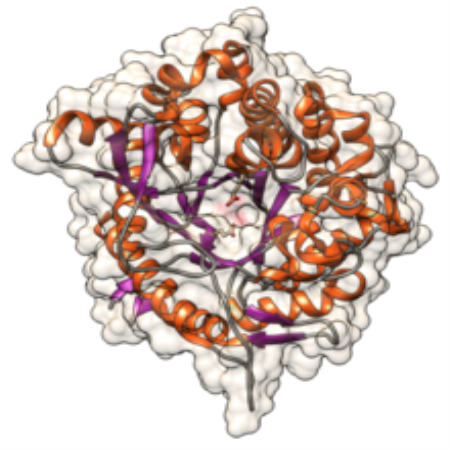
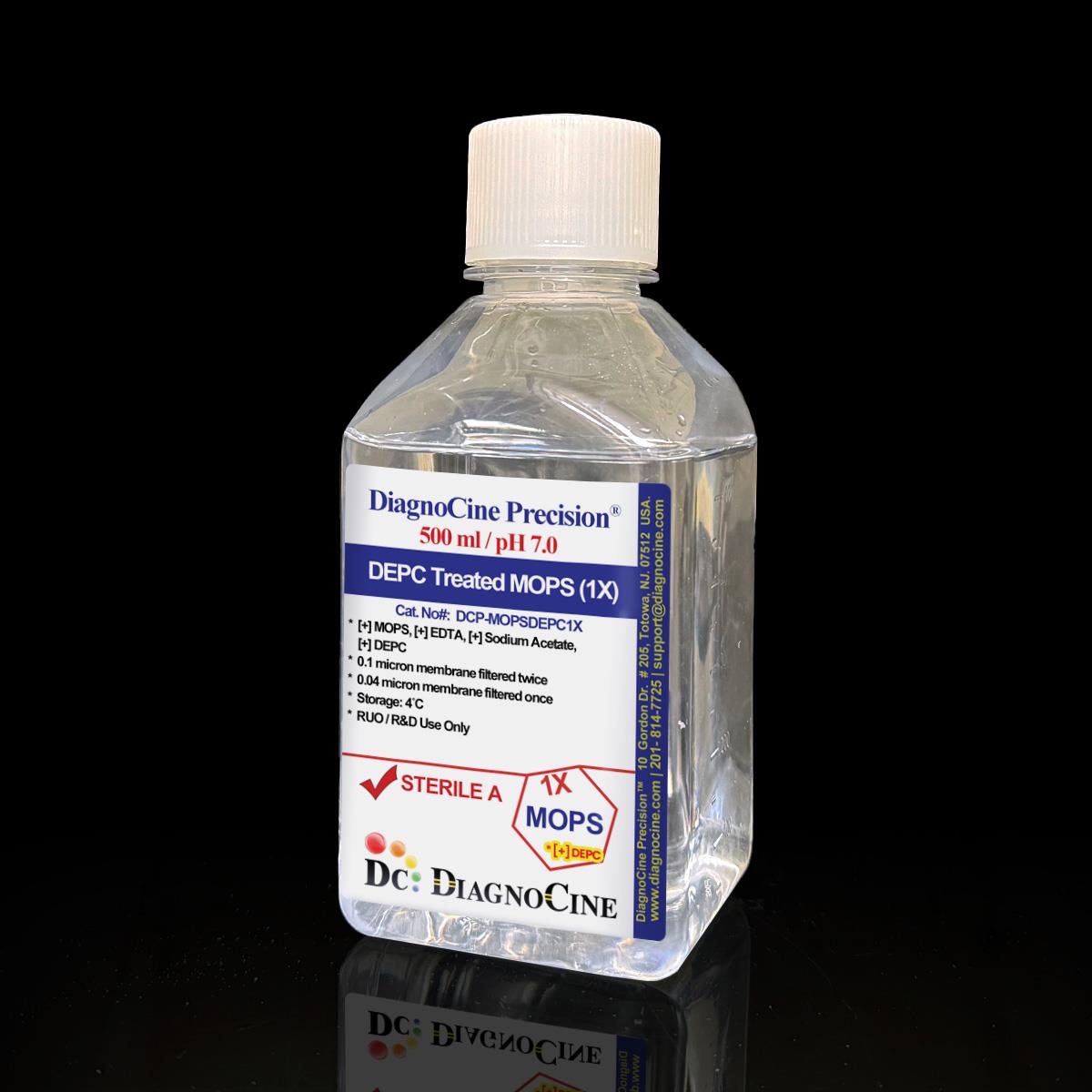
UltraClean DEPC Treated MOPS Buffer, 1X
FluxMPS™ UltraClean DEPC Treated MOPS Buffer, 1X
An MPS-grade, sterile MOPS electrophoresis buffer built for nuclease-sensitive RNA and DNA workflows. Treated with diethyl pyrocarbonate (DEPC) and ultra-filtered through a 0.1 µm membrane twice and a 0.04 µm membrane twice, it delivers precise pH 7.0 buffering with a defined 20 mM MOPS / 5 mM sodium acetate / 1 mM EDTA formulation for microchannel-safe, nuclease-free workflows.
- Sterile, ultrapure buffer filtered through a 0.1 µm membrane twice and a 0.04 µm membrane twice
- DEPC-treated and nuclease-free, inactivating RNases and DNases to protect RNA and DNA integrity
- Precise pH 7.0 with defined 20 mM MOPS, 5 mM sodium acetate, and 1 mM EDTA composition
- Manufactured with molecular biology-grade reagents in ISO 13485-certified, CE-approved facilities
- Colorless, clear, sterile solution suited for RNA electrophoresis, Northern blotting, and sample preparation
- Available in 500 mL and 1000 mL sizes, with custom pH, concentration, and additive formulations on request
- pH7.0
- FormulationMOPS, Sodium Acetate, EDTA
- MOPS Concentration20 mM
- EDTA Concentration1 mM
- Nuclease StatusRNase/DNase-free (DEPC-treated)
- Filtration0.1 µm x2 + 0.04 µm x2
- SterilitySterile
- AppearanceColorless, clear solution
- Storage4 °C
- Shelf Life12 months
Engineered where standard nuclease-sensitive buffers fail
Conventional single-pass 0.22 µm-filtered buffers can carry residual particulates, trace nucleases, and inconsistent pH that compromise RNA integrity, microchannel performance, and assay background. UltraClean DEPC Treated MOPS Buffer addresses each failure mode with defined chemistry and multi-stage purification.
Microchannel-safe purity
Sequential 0.1 µm and 0.04 µm membrane filtration, each applied twice, reduces particulate load beyond a single conventional pass.
Precise, stable pH
Defined 20 mM MOPS, 5 mM sodium acetate, and 1 mM EDTA formulation is manufactured to pH 7.0 for reproducible RNA electrophoresis performance.
Ultrapure-grade water
Formulated with DEPC-treated, nuclease-free water manufactured under Ultrapure Type 1 water (18.2 MΩ·cm) standards, per USP <85>.
Low background for RNA work
Nuclease-free, DEPC-treated chemistry supports Northern blotting, RNA electrophoresis, and other nuclease-sensitive imaging and detection workflows.
Defined, traceable composition
Every component — MOPS, sodium acetate, EDTA, and DEPC-treated water — is manufactured to a fixed, documented concentration.
Customization on demand
Alternate concentrations, additional chemicals, compounds, proteins, supplements, and pH values are available on inquiry.
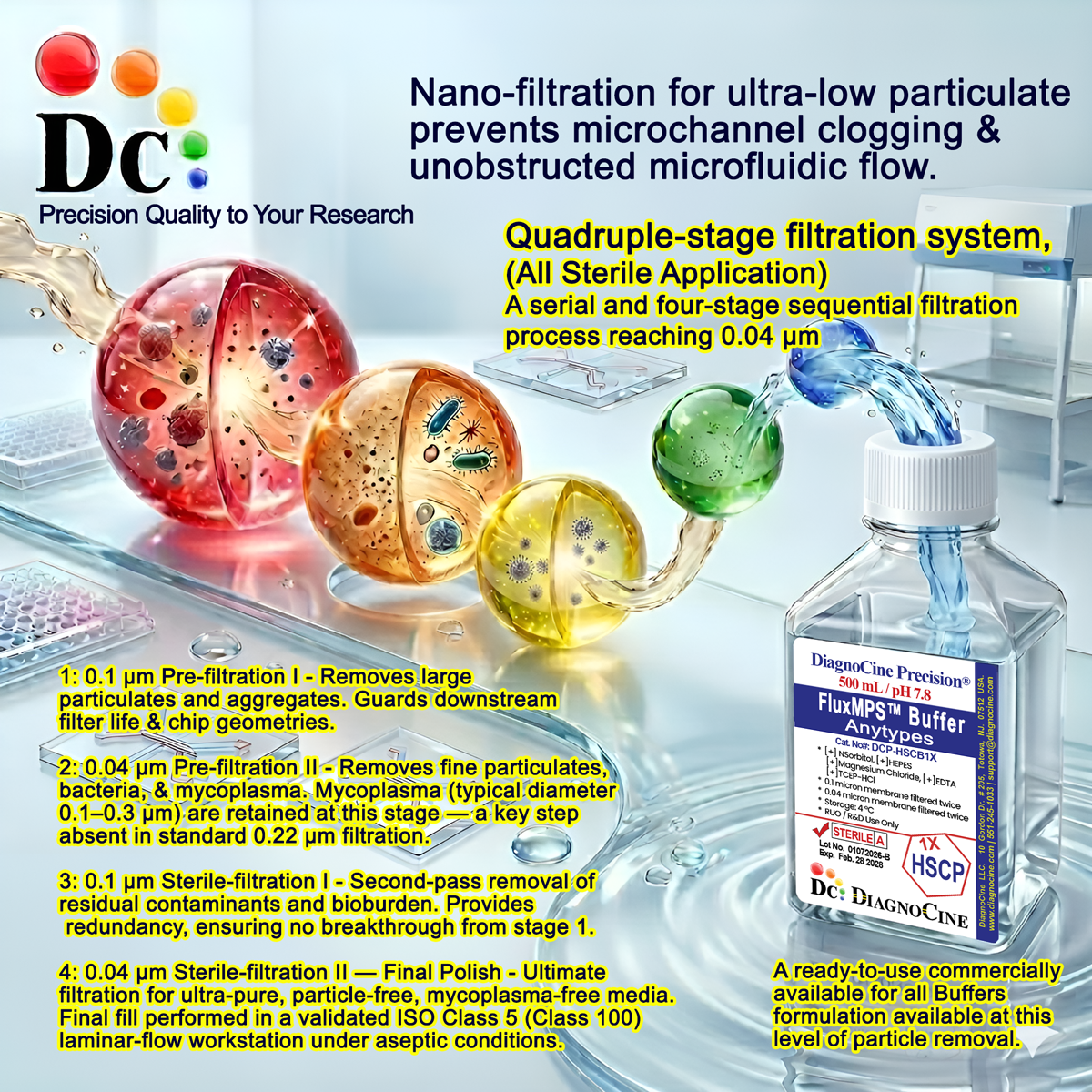
Quadruple-stage filtration system
DCP-MOPSDEPC1X is sterile-filtered through a 0.1 µm membrane twice and a 0.04 µm membrane twice, a four-pass architecture designed to remove progressively finer particulates and protect nuclease-sensitive RNA and DNA workflows.
-
1
0.1 µm Pre-filtration I
Removes large particulates and aggregates, extending the service life of downstream filtration stages.
-
2
0.04 µm Pre-filtration II
Retains fine particulates and bioburden; mycoplasma species can be as small as approximately 0.2 micron, well above this membrane's rating.
-
3
0.1 µm Sterile-filtration I
A second 0.1 µm pass provides redundancy ahead of final polishing.
-
4
0.04 µm Sterile-filtration II — Final Polish
A second 0.04 µm pass delivers the final polish under an ISO Class 5 (Class 100) aseptic fill, preventing mycoplasma contamination.
Performance vs. conventional buffer
Sequential 0.1 µm and 0.04 µm membrane filtration, each applied twice, removes finer particulates than a single conventional 0.22 µm pass, supporting nuclease-sensitive RNA and DNA workflows.
© Diagnocine® — DCP-MOPSDEPC1X
Where UltraClean DEPC Treated MOPS Buffer is used
Formulated for sensitive molecular biology applications, especially those involving RNA, and suitable for a range of nuclease-free workflows.
Automated Bioreactors & Robotics
For automated perfusion and robotics platforms, an optional 0.01 µm (10 nm) ultra-filtered variant of this buffer is available on request.
- Total Particulate Exclusion for sensitive automated fluid paths
- Valve & Sensor Protection in long-run robotic liquid handling
- Extended Perfusion Stability for automated bioreactor workflows
Inquiry Required: Contact support@diagnocine.com to request the 0.01 µm ultra-filtered grade.
Micro Physiological System (MPS) & Chip
Nuclease-free, ultra-filtered formulation compatible with RNA-sensitive microfluidic and chip-based workflows.
RNA & DNA Sample Preparation
Used in the preparation and handling of RNA and DNA samples to prevent nuclease-mediated degradation.
iPSC-Derived Model Handling
Usable as a buffering agent in cell culture media for mammalian cell models, including stem cell-derived systems.
Endothelial & Primary Cell Perfusion
Suitable as a buffering agent in cell culture media for bacteria, yeast, and mammalian cells, including primary cell perfusion protocols.
RNA Electrophoresis & Blotting
Ideal for agarose gel electrophoresis of RNA, such as in Northern blot analysis, due to its nuclease-free, RNA-integrity-preserving formulation.
Protein Purification & Optical Sensing
Suitable for use as a buffer in protein purification protocols and chromatography where nuclease-free conditions are required.
Product specifications
All values below are specific to DCP-MOPSDEPC1X as manufactured and released.
| Parameter | Specification |
|---|---|
| Formulation / Composition | MOPS, Sodium Acetate, EDTA in DEPC-treated, nuclease-free water |
| Appearance | Colorless, clear solution |
| pH USP <791> | 7.0 |
| MOPS Concentration | 20 mM |
| Sodium Acetate Concentration | 5 mM |
| EDTA Concentration | 1 mM |
| Parameter | Specification |
|---|---|
| Sterility | Sterile, sterile-filtered |
| Nuclease Status | RNase/DNase-free (DEPC-treated) |
| Filtration System | 0.1 µm membrane (twice) and 0.04 µm membrane (twice) |
| Water Quality | DEPC-treated, nuclease-free water |
| Manufacturing Standard ISO 13485 | ISO 13485-certified, CE-approved |
| Fill Environment | ISO Class 5 (Class 100) |
| Parameter | Specification |
|---|---|
| Storage Temperature | 4 °C |
| Shelf Life | 12 months |
| Expiry | Use before expiry date on product label |
| Parameter | Specification |
|---|---|
| Raw Material Grade | Molecular biology-grade reagents |
| Manufacturing Site | DiagnoCine Precision, Totowa, New Jersey, USA |
| Manufacturing QMS | ISO 13485-certified |
| Regulatory Alignment | CE-approved |
| Production Method | DEPC treatment with sterile 0.1 µm / 0.04 µm filtration (twice each) |
| Intended Use | Research Use Only (RUO) |
Full composition
Every component of DCP-MOPSDEPC1X is manufactured to a defined concentration and released per lot.
| Component | CAS Number | Concentration |
|---|---|---|
| MOPS | 1132-61-2 | 20 mM |
| Sodium Acetate | 127-09-3 | 5 mM |
| EDTA | 60-00-4 | 1 mM |
| Water (DEPC-treated, nuclease-free) | 7732-18-5 | To volume |
Manufacturing & compliance
DCP-MOPSDEPC1X is manufactured under ISO 13485-certified and CE-approved facilities, with final packaging, quality assurance, and testing performed at the DiagnoCine R&D and Quality Testing Center.
ISO 13485:2016 QMS
Manufactured under ISO 13485-certified and CE-approved facilities (Suppliers of DiagnoCine Precision).
Ultrapure Water
Formulated with DEPC-treated, nuclease-free water.
ISO Class 5 Fill & Finish
Filter-sterilized with 0.1 µm and 0.04 µm filtration twice under an ISO Class 5 (Class 100) fill.
Micro-Batch Precision
All specific customization requests and assembly are accomplished at DiagnoCine Precision in Totowa, New Jersey, USA.
Nuclease-Free Verification
DEPC treatment inactivates RNases and DNases, ensuring suitability for RNA work and other nuclease-sensitive applications.
Mycoplasma Prevention
0.1 µm and 0.04 µm filtration applied twice prevents mycoplasma contamination.
Appearance & pH Release
Released as a colorless, clear solution at pH 7.0.
Documentation / CoA
Certificate of Analysis available on request.
How DCP-MOPSDEPC1X compares
A side-by-side view of DCP-MOPSDEPC1X against conventional single-pass filtered MOPS buffers.
| Parameter | DCP-MOPSDEPC1X (FluxMPS™) | Conventional (0.22 µm filtered) buffer | Standard alternative (0.22 µm filtered) buffer |
|---|---|---|---|
| Nuclease Treatment (DEPC) | check_circle | cancel | cancel |
| Final Filtration Pore Size | 0.04 µm | 0.22 µm | 0.22 µm |
| Number of Filtration Stages | 4 | 1 | 1 |
| Water Quality | DEPC-treated, nuclease-free | Standard purified water | Standard purified water |
| Manufacturing QMS | check_circle ISO 13485 | cancel | cancel |
| Microfluidic Channel Compatibility | check_circle | cancel | cancel |
| Custom Formulation Available | check_circle | cancel | cancel |
Frequently asked questions
Answers to common questions about DCP-MOPSDEPC1X.
Supporting literature
Curated literature relevant to DEPC treatment, MOPS buffering, RNA electrophoresis, and microfluidic buffer use.
- Fedorcsak, I. & Ehrenberg, L. Effects of diethyl pyrocarbonate and methyl methanesulfonate on nucleic acids and nucleases. Acta Chem Scand. doi:10.3891/acta.chem.scand.20-0107
- Lehrach, H. et al. RNA molecular weight determinations by gel electrophoresis under denaturing conditions, a critical reexamination. Biochemistry. doi:10.1021/bi00591a005
- Good, N. E. et al. Hydrogen ion buffers for biological research. Biochemistry. doi:10.1021/bi00866a011
- Huang, Y. et al. Engineering microfluidic organ-on-a-chip systems for drug screening and disease modeling applications. Micromachines. doi:10.3390/mi11070599
- Bhatia, S. N. & Ingber, D. E. Microfluidic organs-on-chips. Nat Biotechnol. doi:10.1038/nbt.2989
- Masters, J. R. Mycoplasma infection of cell cultures. Nat Rev Mol Cell Biol. doi:10.1038/nrm757
- Farrell, R. E. RNA Methodologies: A Laboratory Guide for Isolation and Characterization. Academic Press. doi:10.1016/C2009-0-64086-X
- Sackmann, E. K. et al. The present and future role of microfluidics in biomedical research. Nature. doi:10.1038/nature13118