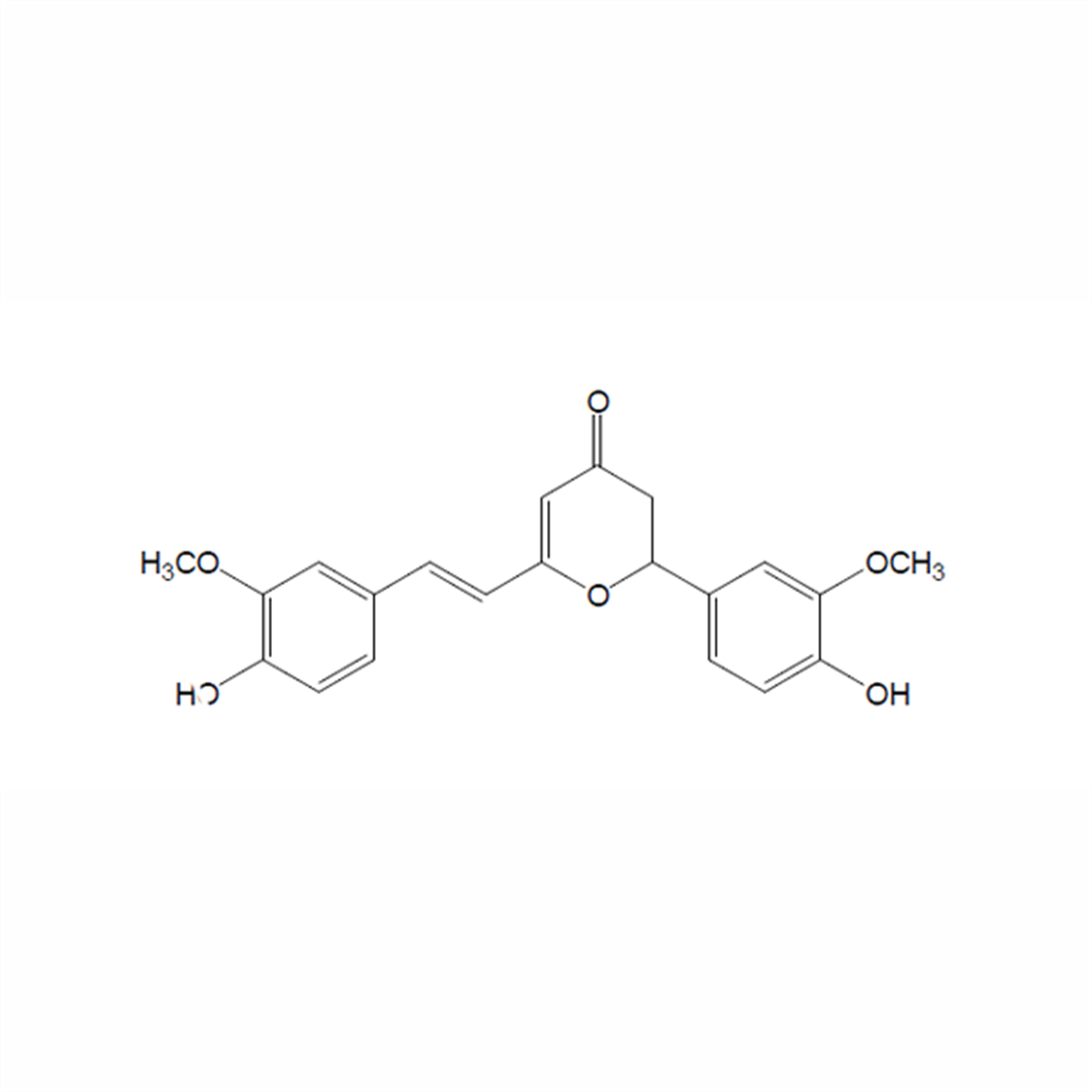
Cyclocurcumin (synthetic)
Product#: FNK-NH040402
$346.79
Availability:
Ships in 1-2 Weeks
Cyclocurcumin (synthetic)
- CAT Number : FNK-NH040402
- CAS Number : 153127-42-5
- Molecular Weight : 368.38
- Molecular Formula : C21H20O6
- Pack size: 5 mg
- Store: 2-10 ℃
- Purity: >98%(HPLC)
- Cyclocurcumin (synthetic) is a laboratory-produced analog of the natural compound curcumin, designed to potentially enhance bioavailability and therapeutic effects.
- Potential research applications in areas where curcumin has shown promise, such as anti-inflammatory, antioxidant, and anticancer studies.
- May be used in comparative studies with natural curcumin to evaluate enhanced bioavailability or efficacy.
- Handle with appropriate personal protective equipment including gloves and safety goggles.
- Store in a cool, dry place, protected from light and moisture.
- Neuroprotective Effects: Cyclocurcumin has shown promising results in neuroprotection, particularly in models of neurodegenerative diseases like Parkinson's and Alzheimer's disease. It has been found to inhibit neurotoxicity and oxidative stress, which are key factors in the progression of these diseases.
- Cardiovascular Benefits: Cyclocurcumin may play a role in treating cardiovascular disorders by inhibiting vasoconstriction and platelet aggregation. It has demonstrated a higher efficacy than curcumin in preventing thrombotic diseases without affecting normal hemostasis.
- Anti-inflammatory Properties: This compound has demonstrated the ability to modulate immune responses, notably by inhibiting the release of tumor necrosis factor-alpha (TNF-α) from macrophages. This suggests potential use in treating inflammatory diseases such as rheumatoid arthritis.
- Cancer Treatment: Cyclocurcumin has been studied for its ability to inhibit cell proliferation in cancer models, such as breast cancer cell lines. It may also work synergistically with curcumin to enhance anti-cancer effects.
- Autoimmune Diseases: Cyclocurcumin's immune-modulating properties also suggest potential in treating autoimmune diseases, although more research is needed to fully understand its efficacy and mechanisms in these contexts.
Cyclocurcumin is a compound related to curcumin, which is known for its potential therapeutic effects, particularly in cancer treatment. While specific studies on cyclocurcumin's role in cell signaling pathways are limited, insights can be drawn from the broader research on curcumin, to which cyclocurcumin is structurally related.
Curcumin, the active component of turmeric, has been extensively studied for its ability to modulate various cellular signaling pathways involved in cancer progression, including:
- PI3K/Akt/mTOR Pathway: Curcumin can inhibit the PI3K/Akt/mTOR signaling pathway, which is crucial for cell proliferation, growth, and survival. This pathway is often activated in cancers, and its inhibition by curcumin can lead to reduced tumor growth and increased apoptosis (programmed cell death) in cancer cells.
- Wnt/β-Catenin Pathway: Curcumin is known to interfere with the Wnt/β-catenin signaling pathway, which is involved in cell proliferation and differentiation. By modulating this pathway, curcumin can inhibit processes like epithelial-mesenchymal transition (EMT), which is associated with cancer metastasis.
- JAK/STAT Pathway: This pathway is involved in the regulation of immune responses and cell growth. Curcumin's ability to modulate this pathway contributes to its anti-inflammatory and anti-cancer effects.
- NF-κB Pathway: Curcumin can inhibit the NF-κB signaling pathway, which plays a role in inflammation and cancer cell survival. This inhibition can lead to reduced inflammation and enhanced apoptosis in cancer cells.
- MAPK Pathway: Curcumin affects the MAPK pathway, which is involved in cell division and differentiation. Its modulation can lead to reduced cancer cell proliferation and increased sensitivity to chemotherapy.