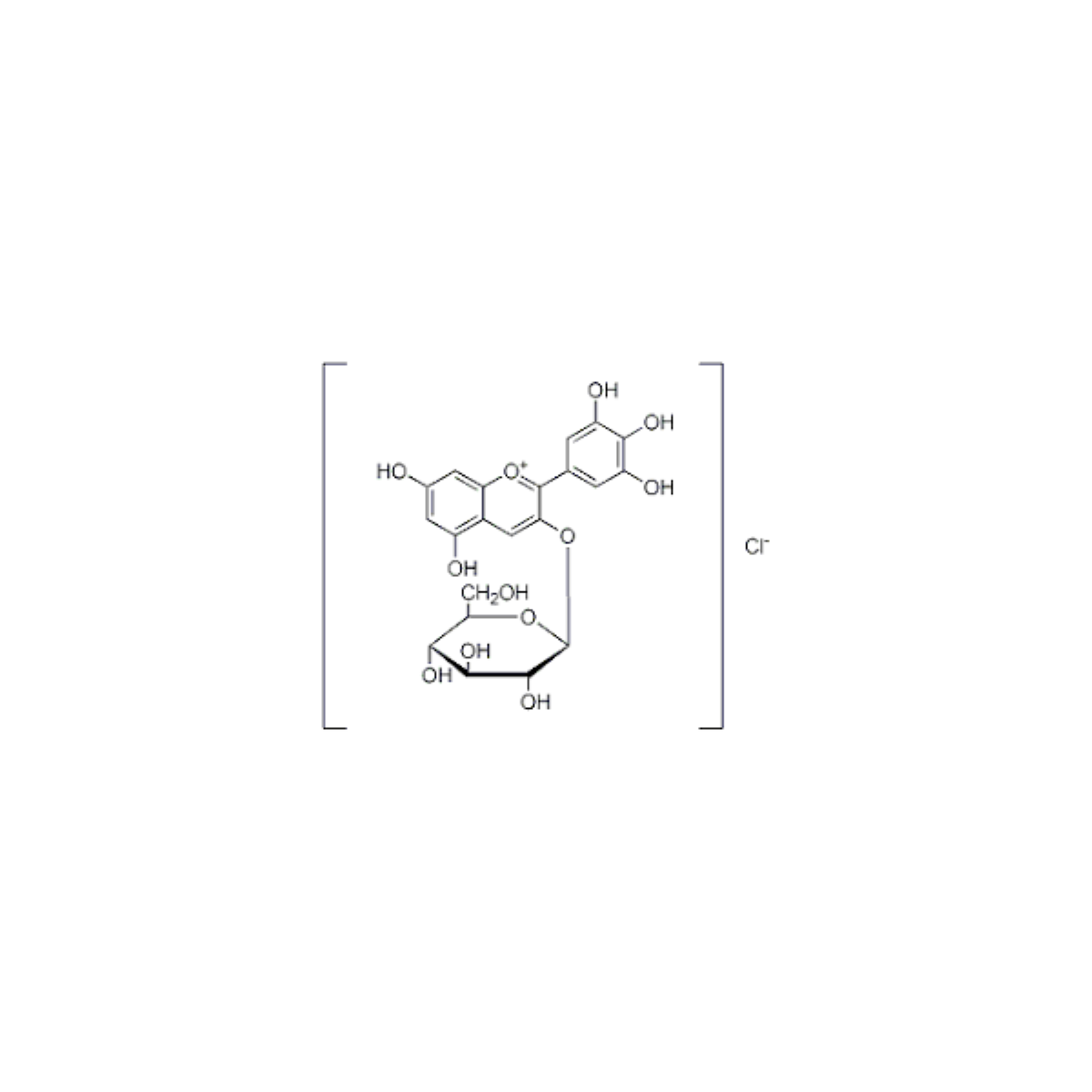
Cyanidin 3-Glucoside Chloride (10 mg)
Product#: FNK-2400037
$295.32
Availability:
Ships in 24 hours
Cyanidin 3-Glucoside Chloride (10 mg)
- CAT Number : FNK-2400037
- CAS Number : 7084-24-4
- Molecular Weight : 484.8
- Molecular Formula : C21H21O11Cl
- Pack size: 10 mg
- Store: Store at -20℃ in a dry and dark place.
- Purity: (HPLC) ≥98%
Cyanidin 3-Glucoside Chloride is an anthocyanin, a type of flavonoid pigment found in many red, purple, and blue fruits and vegetables. It is a glycosylated form of cyanidin with a glucose molecule attached at the 3-position, typically isolated as a chloride salt.
Property
- Chemical Formula: C21H21ClO11
- Molecular Weight: 484.8 g/mol
- Appearance: Deep purple to red crystalline powder
- Solubility: Soluble in water and polar organic solvents
- Research: Used in studies investigating its antioxidant and biological activities
- Food Industry: Natural food colorant and functional ingredient
- Nutraceuticals: Potential ingredient in dietary supplements
- Analytical Standard: Used as a reference compound in food and plant extract analysis
- Storage: Store in a cool, dry place, protected from light
- Handling: Use appropriate personal protective equipment
- Safety Measures: Generally recognized as safe (GRAS), but handle with care in research settings
- Diabetes
- C3G has exhibited anti-diabetic properties by:
- Decreasing fasting blood glucose levels in diabetic animal models
- Reducing insulin resistance and increasing insulin secretion
- Improving blood sugar control after meals
- C3G has exhibited anti-diabetic properties by:
- Metabolic Syndrome
- Studies on rats have shown that C3G can reverse symptoms of metabolic syndrome, which includes abdominal obesity, high blood pressure, and elevated glucose levels[2].
- Cardiovascular Health
- C3G may protect the heart and blood vessels by:
- Reducing oxidative stress
- Lowering cholesterol levels and increasing beneficial HDL cholesterol
- Decreasing heart damage in diabetic animal models
- Inhibiting blood platelet aggregation, potentially preventing blood clots
- C3G may protect the heart and blood vessels by:
- Liver Protection
- Dietary C3G has been shown to reverse signs of liver damage in mice with liver injury by reducing inflammation and cell death.
- Gastrointestinal Health
- Inflammatory Bowel Diseases (IBD)
- C3G has demonstrated potential in managing IBD, including ulcerative colitis and Crohn's disease, through:
- Antioxidative, anti-inflammatory, and cytoprotective effects
- Inhibition of the NF-κB pathway and activation of the Nrf2 pathway
- Reduction of pro-inflammatory cytokines
- Modulation of gut microbiota, increasing beneficial bacteria
- C3G has demonstrated potential in managing IBD, including ulcerative colitis and Crohn's disease, through:
- Helicobacter Pylori Infection
- C3G has shown promise in reducing cell death in human stomach cells affected by H. Pylori by blocking the release of toxins.
- Cancer
- Research has indicated potential anti-cancer properties of C3G:
- Induction of apoptosis in MCF-7 breast cancer cells
- Upregulation of pro-apoptotic genes and downregulation of anti-apoptotic genes
- Potential inhibition of immune checkpoints PD-1 and PD-L1, which may enhance anti-tumor immune responses
- Research has indicated potential anti-cancer properties of C3G:
- Wound Healing and Tissue Regeneration
- C3G has been found to stimulate the production of Hepatocyte Growth Factor (HGF) in normal human dermal fibroblasts, which may be beneficial for organ regeneration, wound healing, and embryogenesis.
- MAPK/ERK Pathway
- C3G has been shown to modulate the MAPK (Mitogen-Activated Protein Kinase) pathway, particularly the ERK (Extracellular signal-Regulated Kinase) signaling cascade. This pathway is involved in cell proliferation, differentiation, and survival.
- NF-κB Signaling
- C3G inhibits the NF-κB (Nuclear Factor kappa-light-chain-enhancer of activated B cells) pathway, which is crucial for inflammation, immune response, and cell survival.
- STAT3 Pathway
- The STAT3 (Signal Transducer and Activator of Transcription 3) signaling pathway is affected by C3G. This pathway is important in cell growth, apoptosis, and immune response.
- AKT Signaling
- C3G modulates the AKT (Protein Kinase B) signaling pathway, which plays a role in cell survival, growth, and metabolism.
- Nrf2 Pathway
- C3G activates the Nrf2 (Nuclear factor erythroid 2-related factor 2) pathway, which regulates the expression of antioxidant proteins that protect against oxidative damage.
- β-catenin/MGMT Pathway
- In certain cancer cells, C3G has been shown to inhibit the β-catenin/MGMT pathway by upregulating miR-214-5p, potentially reversing chemotherapy resistance.
- Apoptotic Pathways
- C3G influences apoptotic pathways by regulating the expression of pro-apoptotic genes (e.g., Bax, p53, Caspase3) and anti-apoptotic genes (e.g., Bcl2).